Leading debates, shaping the future
Our world undoubtedly faces countless challenges. To surmount the problems of today and tomorrow, we need people who can think critically, act responsibly and find solutions. These three aspects distinguish the teaching activities of the Faculty of Educational and Social Sciences (FB 06). Equipped with subject-relevant and personal competence from these fields, students acquire the tools to shape the socio-political debates of the future.
Wars, humanitarian emergencies, an overheated planet, pandemics, economic insecurity – almost every day we hear reports on natural catastrophes and political conflicts from crisis-ridden regions. This makes it all the more important to constantly reevaluate social, political, environmental and economic strategies and objectives. Social and educational sciences provide helpful expertise in this regard. Consequently, it is no wonder that the Faculty of Educational and Social Sciences aims to provide its students with the personal and subject-relevant skills necessary to help shape current and future debates. ‘We believe it is important to incorporate the social challenges of today and tomorrow into our curriculum,’ says Head of Faculty Professor Thorsten Quandt. The institutes of Education (IfE), Communication (IfK) and Political Science (IfPol) and Sociology (IfS) are among the oldest and largest in Germany. ‘Problem-solving, critical evaluation and responsible action are the three central aspects of our teaching activities,’ adds Professor Matthias Freise, Vice-Dean for Student Affairs and Digitalisation. The faculty’s four research facilities integrate “research-oriented learning” in both teaching and non-teaching degree programmes, during which students independently carry out their own research projects.
Institute of Education (IfE) – A diverse thematic and methodological spectrum in 400 courses per semester
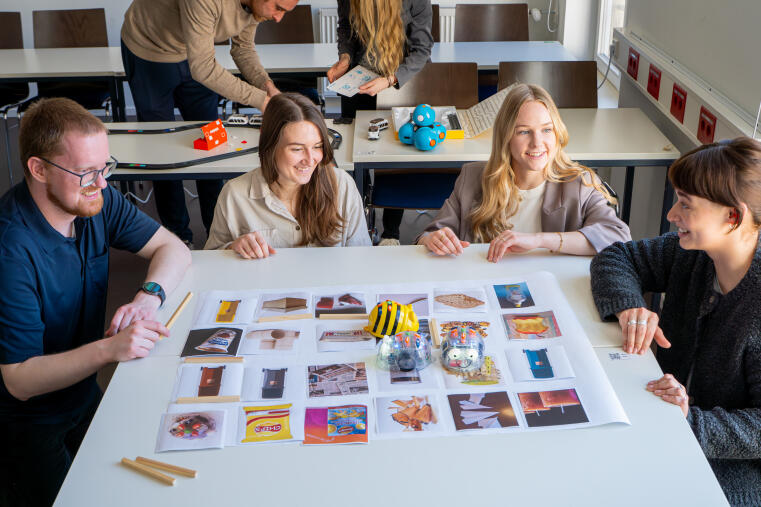
Whether in the family, preschool, school, on the job or in one’s free time, education plays a significant role for people of all ages and in all areas of life. Students majoring in educational science learn how to supervise and support children, adolescents and adults on their educational journey. The Institute of Education (IfE) offers some 400 courses each semester, comprising a diverse range of themes and didactic methodology. Thanks to its size, the instructors not only teach students the fundamentals of educational science. They also offer lectures and seminars that address democratisation, digitalisation and inclusive education. The IfE focuses on providing pedagogical qualification to future teachers for all types of schools in Germany. There are also non-teaching degree programmes in educational science, as well as a teacher training programme in the subject Educational Theory.
Department of Communication (IfK) – Applying theory and practice to shape responsible-minded communication of tomorrow
The degree programmes in “Communication science” teach students the methods, knowledge and media-practical skills necessary for working in media- and communication-related fields independently and in a responsible manner, as well as conducting applied and university-based research. The Department of Communication (IfK) is characterised by small learning groups, intensive student supervision and the combination of academic training and the acquisition of initial job experience in journalism, strategic communication and the media industry. In research seminars, the students independently explore such topics as social media activism, the politicisation of sport journalism, and accessible and discrimination-free communication. Along with lectures held by expert professionals, the curriculum is supplemented by excursions to editorial offices, agencies and companies. In addition to the bachelor’s and master’s programme in “Communication Science” and “Strategic Communications”, the IfK began offering a new master’s programme in “Knowledge and Communication” in the winter semester 2025/26.
Institute of Political Science (IfPol) – Leading the way with an international curriculum for the past 25 years
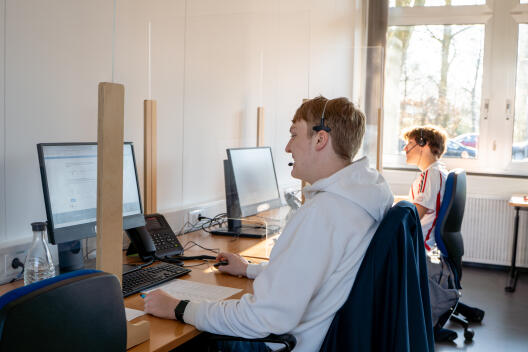
Gerhard Lehmbruch, one of the founding fathers of German political science, defined politics as follows: ‘Politics is that human undertaking which aims to forge general binding rules and decisions in and between groups of people.’ The curriculum at the Institute of Political Science (IfPol) is characterised by a diverse array of subject combinations and many opportunities to specialise and gain professional orientation. Internationalisation plays a special role in this mix. For the past 25 years, IfPol has been working together with the French university of political science, Sciences Po Lille, and the Dutch University of Twente in Enschede. In cooperation with these partners, IfPol offers four joint degree programmes in English, French and German. In fact, it has played a pioneering role in engaging in this type of university partnership. The teaching unit in social sciences, in which IfPol participates along with the Institute of Sociology and the Institute of Economic Education, is the largest teacher training facility in North Rhine-Westphalia for all types of schools in the subject of Social Sciences.
Institute of Sociology (IfS) – Explaining societal developments with social-scientific methods
Introducing students to a broad spectrum of social-scientific methods is one of the distinguishing features of instruction at the Institute of Sociology (IfS). These include standardised questionnaires, qualitative interviews and modern video analyses. For example, the IfS has been in charge of conducting “Münster Barometer” together with the newspaper Westfälische Nachrichten since 1993. This makes the student-conducted survey of local residents the longest running research project at the University of Münster. While the bachelor’s programmes focus on building a theoretical, empirical and methodical basis of knowledge, the master’s programmes offer a research-oriented learning environment. The students learn together in small groups, jointly develop empirical studies in research seminars and participate in excursions. Not only does this provide students with more individual academic supervision, but also an opportunity to study current societal trends in depth. Another highlight is the new master’s programme in “Diversity and Social Inequality” which commenced in the winter semester 2025/26.
Text: Kathrin Nolte