Welcome to the working group of Prof. Dr. A. Kappes
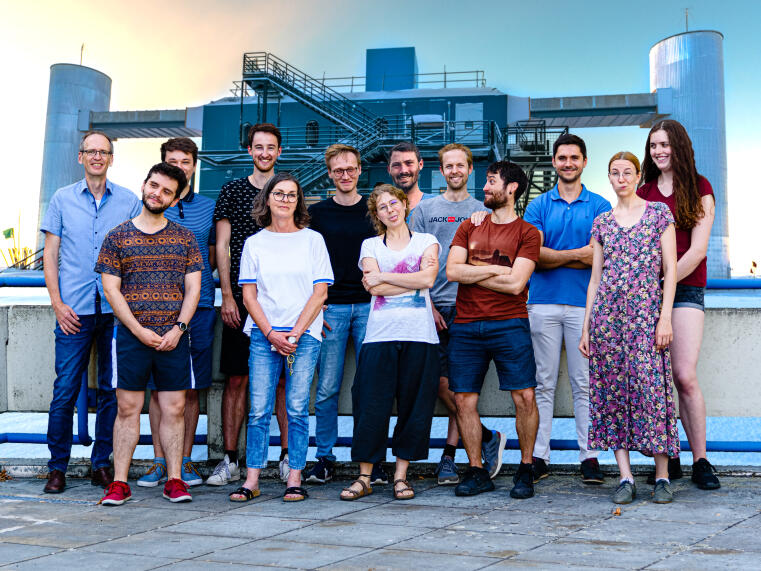
group photo
© AG Kappes

Who we are

Our group is working in the field of astroparticle physics with the IceCube neutrino telescope and is actively involved in the planning of its extensions, IceCube Upgrade and IceCube-Gen2. For example, we are developing optical sensors for the application in extreme environments like in the deep ice at the South Pole. We are also working in cooperation with the geophysics department on the investigation of seismic influences at the Einstein Telescope gravity wave detector.

Our research is supported by the University of Münster and the DFG, as well as the BMFTR.

AG News

Click the heading for more information - A list of all working group news can be found under "News"
© Ill. Niklas Elmehed © Nobel Prize Outreach

Nobel Prize in Physics 2026 Francis Halzen

Our research group congratulates Francis Halzen on winning the 2026 Nobel Prize in Physics, which was awarded to him for decisive contributions to the IceCube Neutrino Observatory and the discovery of high-energy neutrinos of astrophysical origin. We are very excited to have contributed to this scientific achievement through our research.

For more information about the Nobel Prize, please visit the official Nobel Prize website. 

  • Popular science information about the Nobel Prize: Link
  • Scientific background: Link

© IceCube Collaboration/Science Communication Lab for CRC 1491

“IceCube” Observatory provides evidence of neutrinos in the Milky Way for the first time

The “IceCube” Consortium – an international team of researchers – has for the first time provided evidence of the emission of high-energy neutrinos from the Milky Way. The working group headed by Prof. Alexander Kappes from the Institute of Nuclear Physics at Münster University is also involved in the experiment.

Financial support of research projects for students

The rector's office of the University of Münster supports innovative and scientific projects, initiated and carried out by students (including PhDs), with 5000 Euros. It is important that these projects do not overlap with the regular curricular studies. The maximum age is 27. Further information can be found on the web page of the research consulting SAFIR, who will help you with your application.