
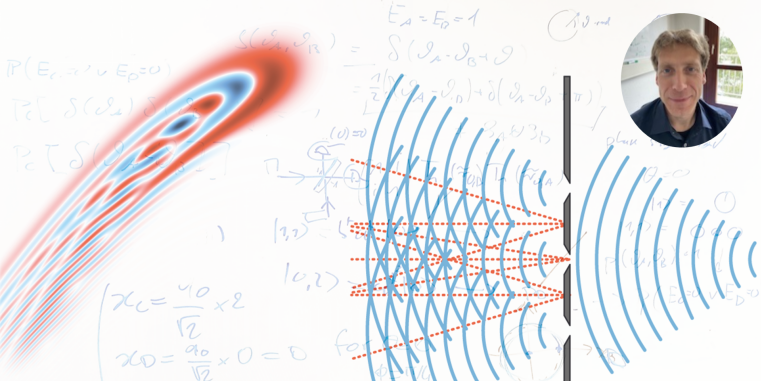
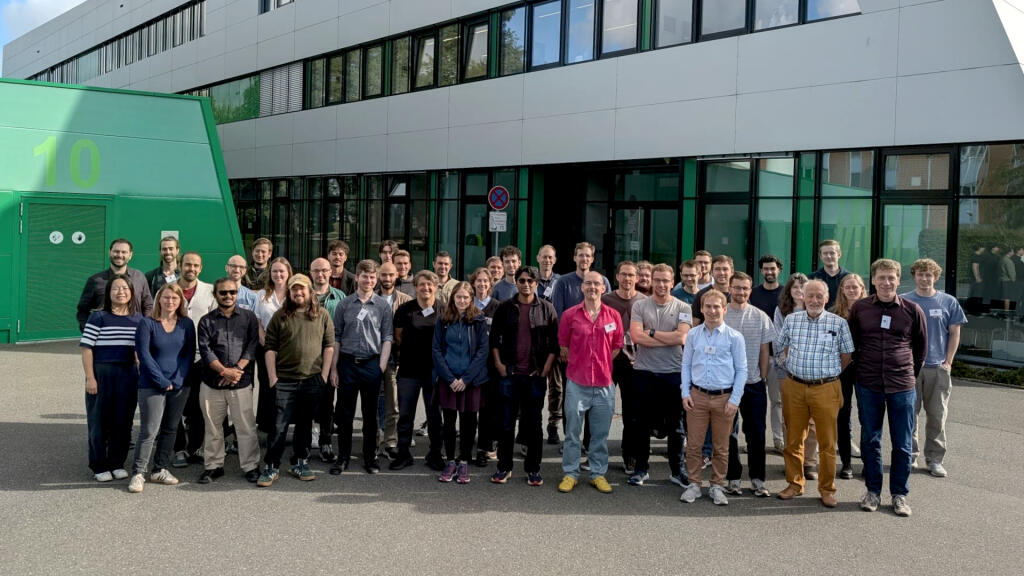

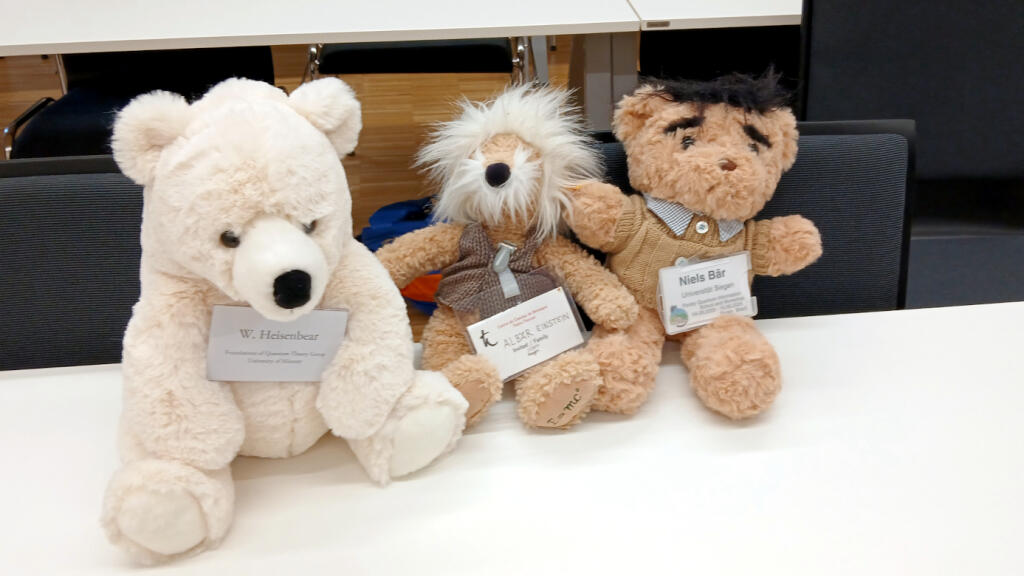
From 21 to 24 September 2026, the international workshop Structure of Quantum Theory, organized by Prof. Matthias Kleinmann and Dr. Hippolyte Dourdent, will bring leading researchers to the Center for Soft Nanoscience in Münster. The programme explores Bell inequalities, contextuality, quantum causality and generalized probabilistic theories, while providing ample time for scientific exchange and new collaborations. Further information, including the list of speakers and the full programme, is available on the workshop website.
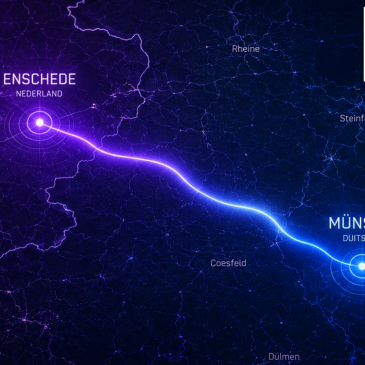
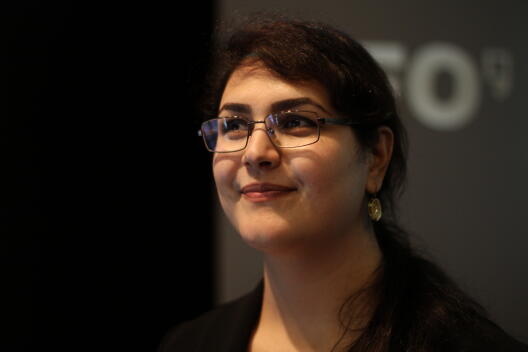
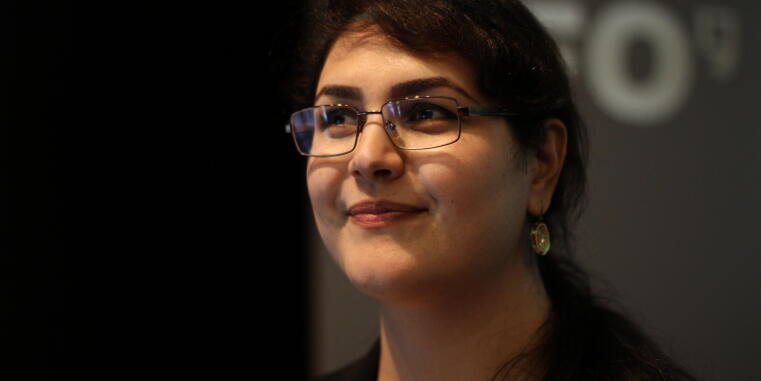
The Department for Quantum Technology welcomes a new research group: In July 2026, the Theoretical Quantum Communication Group officially started its work at the Faculty of Physics of the University of Münster under the leadership of Junior Professor Dr. Zahra Raissi.
The group develops the theoretical foundations and practical concepts for future quantum communication systems, focusing on quantum networks, quantum error correction, and quantum cryptography. A central theme is the design and characterization of complex quantum resources — from multipartite entanglement and graph states to higher-dimensional quantum systems (qudits) — that enable communication, computation, and security beyond the capabilities of classical technologies. The research is carried out in close collaboration with experimental groups in Münster and Paderborn as well as industrial partners in quantum photonics and communication.
Before joining the University of Münster, Zahra Raissi led an independent junior research group at Paderborn University. She received her Ph.D. from the Institute of Photonic Sciences (ICFO) in Barcelona and held postdoctoral positions at ICFO and Virginia Tech.
The group's work is supported by several nationally and internationally funded projects, including the BMFTR Quantum Futur project Q-SCALAR (Quantum Secure Communication with Adaptive Layers and Ranks) and a German–Israeli Foundation (GIF) project on graph states, entanglement, and quantum computation, conducted in collaboration with Tel Aviv University.
The group is currently expanding: A fully funded PhD position in quantum error correction for quantum networks is now open, and further PhD, postdoctoral, and student assistant positions will be advertised in the coming months. Interested candidates are encouraged to contact Prof. Dr. Zahra Raissi (zahra.raissi@uni-muenster.de).
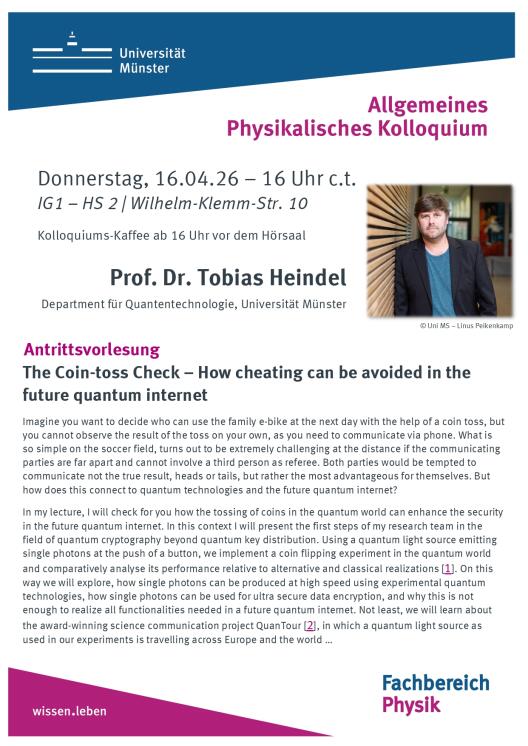
On 16 April 2026, Prof. Dr. Tobias Heindel, newly appointed professor at the Department for Quantum Technology at the University of Münster, gave his inaugural lecture entitled “The Coin-toss Check – How cheating can be avoided in the future quantum internet”. In front of a large audience, he introduced how quantum cryptographic protocols beyond quantum key distribution can contribute to secure communication in future quantum networks. A central focus was a recent publication in Nature Communications, part of the Nature Portfolio, in which quantum strong coin flipping was experimentally implemented using single photons generated by a semiconductor quantum dot. Rather than following a conventional scientific lecture format, Prof. Heindel adopted an accessible approach inspired by “Checker Tobi” with Tobias Krell and KiKA von ARD und ZDF. The lecture combined current research in quantum cryptography with vivid and engaging science communication. A similar format is planned for the Kids Lectures in Münster.

Together with researchers from the Technical University of Berlin and the Chinese Academy of Sciences in Beijing, the Photonic Quantum Networks group has demonstrated enhanced security in quantum coin flipping — a fundamental cryptographic building block for scenarios where communicating parties do not trust each other. For the first time, a deterministic single-photon source was used to implement this protocol, achieving a security advantage over both classical methods and previous quantum implementations based on attenuated lasers. The work extends the reach of quantum cryptography beyond quantum key distribution and represents a step towards more complex protocols in a future quantum internet. Read the full interview with Prof. Heindel in the University of Münster news portal.
Original publication: D. A. Vajner, K. Kaymazlar, F. Drauschke, L. Rickert, M. von Helversen, H. Liu, S. Li, H. Ni, Z. Niu, A. Pappa, T. Heindel (2026): Nature Communications 17, 2074; DOI: 10.1038/s41467-026-69995-9
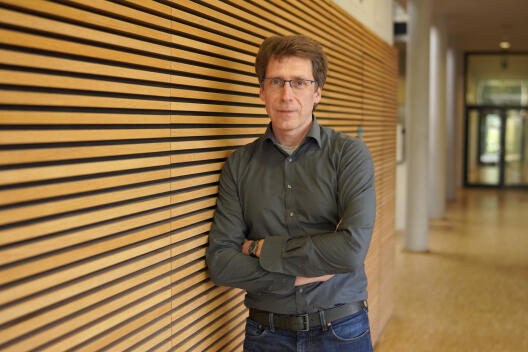
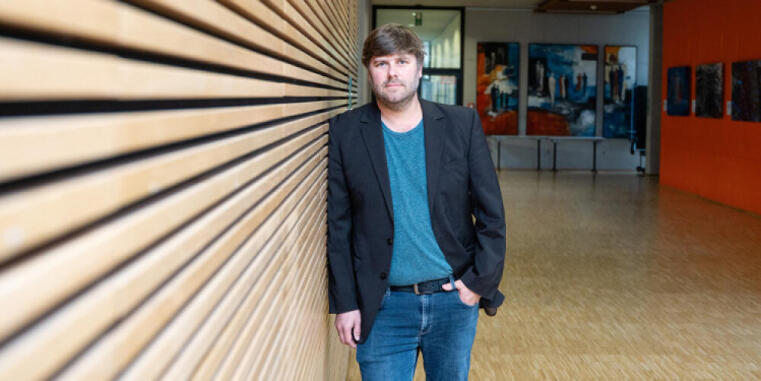
We welcome Prof. Dr. Matthias Kleinmann as a new professor at the Department of Quantum Technology. He leads the research group for the Foundations of Quantum Theory, where he investigates the theoretical basis of quantum physics and its structure as an operational physical theory. The primary goal of his work is to precisely formulate and better understand the principles of quantum mechanics to enable both new experimental tests and future quantum technological applications.
In his research, Prof. Dr. Matthias Kleinmann focuses particularly on the specifics of quantum dynamics, correlations in composite quantum systems, and the characterization of technological and fundamental quantum systems. Another key area of his work involves analyzing measurements as quantum physical processes and applying quantum information theory concepts to new physical contexts. He joins the University of Münster from the University of Siegen, bringing extensive international experience from research stays at the renowned IQOQI Innsbruck, in Belo Horizonte (Brazil), and Bilbao (Spain), as well as from his time as an interim professor at the University of Duisburg-Essen.
Prof. Kleinmann’s theoretical focus ideally complements the mission of the Department of Quantum Technology. His research provides the groundwork for quantum information processing, communication, and sensing. By linking his work with the infrastructure at CeNTech, SoN, and the Münster Nanofabrication Facility, he helps strengthen quantum sciences at the Faculty of Physics and advance the control of quantum systems for new applications.
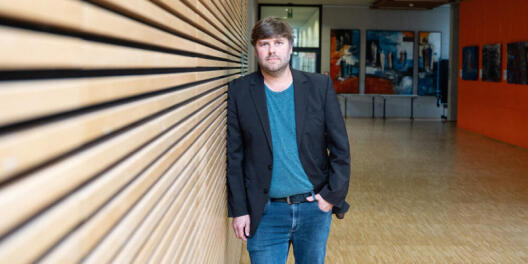
We welcome Prof. Dr. Tobias Heindel as a new professor at the Department for Quantum Technology. A profile in wissen|leben presents his research on building blocks for the quantum internet and quantum communication.
Prof. Dr. Tobias Heindel is the new professor of Photonic Quantum Networks at the Department for Quantum Technology and heads the working group of the same name. He conducts research on building blocks for the quantum internet and quantum communication, whose security is based on the laws of quantum physics – including quantum light sources and individual photons (“light particles”).
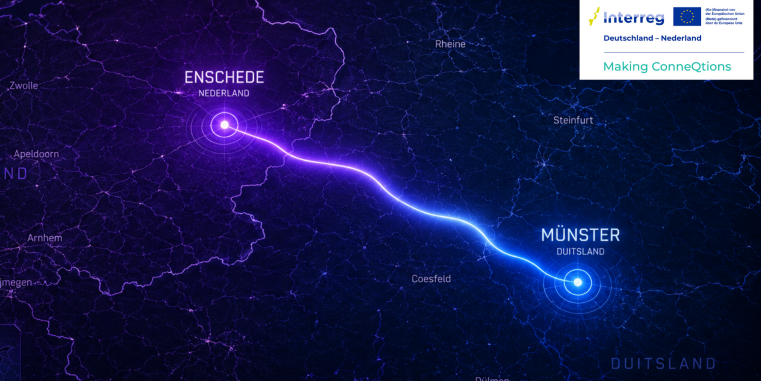
He is testing these future technologies in laboratory experiments and field trials; his team is currently working on a quantum communication test track between Jena and Erfurt, among other things. For Münster, he is planning a quantum network together with other working groups, which will extend from the Center for Nanotechnology (CeNTech) to the Center for Soft Nanoscience (SoN) and the future IG 1 physics building, in order to test the basic functions of a future quantum internet in a realistic test environment.
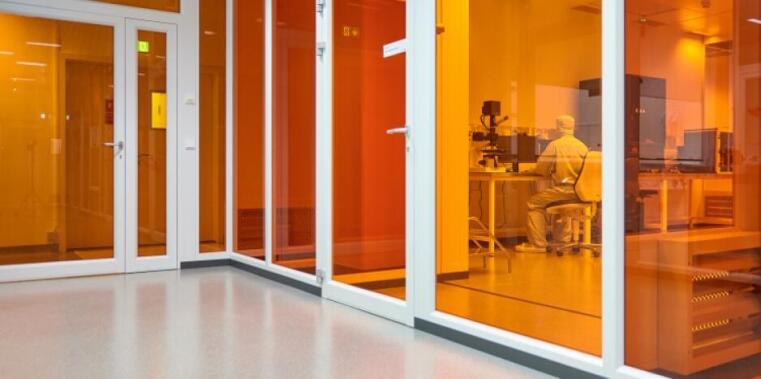
With this focus, Tobias Heindel is directly linking up with the orientation of the Department for Quantumtechnology, founded in 2021, whose research, teaching, and transfer activities address topics of quantum information processing, quantum communication, and quantum sensor technology, drawing on modern laboratory infrastructures (including CeNTech and SoN) as well as nanostructuring and characterization capabilities at the Münster Nanofabrication Facility.

Prof. Tobias Heindel, recently appointed professor at the Department for Quantum Technology at the University of Münster, was awarded the 2025 Institute of Physics Lise Meitner Medal and Prize for the science communication project QuanTour.
According to the jury, the QuanTour project, which Heindel organizes together with his colleague Prof. Dr. Doris Reiter (TU Dortmund), “has made a transformative contribution to the public understanding of quantum science, particularly in the UK and Ireland.”.
In the outreach and OpenScience project QuanTour, a single-photon source travels like an Olympic torch from country to country and is accompanied by new experiments and outreach activities at each site. The journey started in April 2024 and, after its European tour, also made stops in Turkey and Canada. Heindel initiated and organized QuanTour together with his colleague Prof. Dr. Doris Reiter from TU Dortmund with the support of the German Physical Society.
For all those who want to know more: On 15.11.2025, QuanTour and the quantum emitter itself will come to Münster for the first time for the event Quantum100 - the closing event of the quantum year 2025.
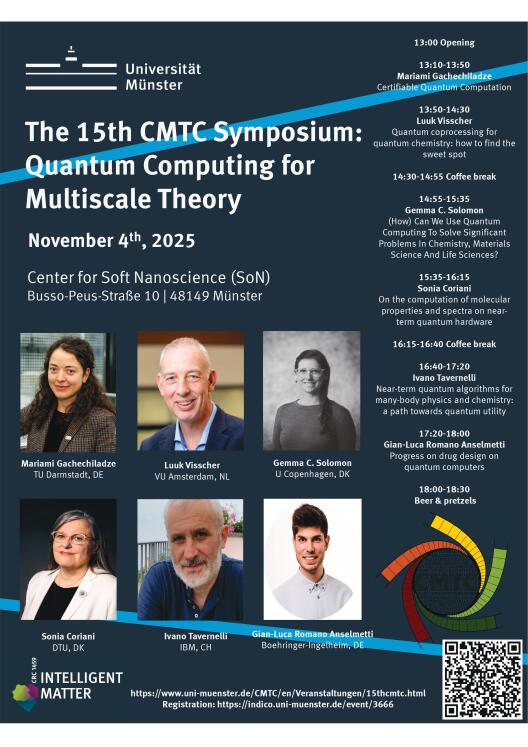
On Tuesday, November 4th, 2025, the 15th CMTC Symposium will take place at the Center for Soft Nanoscience (SoN) in Münster. Under the theme Quantum Computing for Multiscale Theory, the event will bring together international experts from academia and industry to discuss current developments in quantum computing and its applications in chemistry, materials science, and drug discovery. The symposium is supported by CRC 1459 Intelligent Matter and includes talks from researchers at TU Darmstadt, VU Amsterdam, University of Copenhagen, DTU, IBM, and Boehringer-Ingelheim. Registration and full programme here!


Congratulations to Prof. Dr. Carsten Schuck, David Lemli, Tim Buskasper and Lukas Schulte for breaking the Guinness World Record (GWR) for the Smallest QR Code! The tiny QR code, spanning only 5.38 square micrometres, is seven times smaller than a human red blood cell and about 20 times smaller than the previous world record. It was fabricated to promote the cleanroom lab course Foundations of Nanofabrication, part of our teaching program, and aims to inspire interest in nanofabrication among physics students.
This impressive achievement was made possible through the efforts of our research group, in partnership with the Münster Nanofabrication Facility (MNF), which, as part of the University of Münster, provides students with access to cutting-edge nanotechnology.
We would like to thank Hitachi High-Tech Europe GmbH in Krefeld, for serving as an independent surveyor to ensure unbiased measurement of the QR code following GWR guidelines.
The media coverage of the Guinness World Record for the smallest QR code has been extraordinary, with widespread attention from various outlets. Highlights include articles and features by Tagesschau, ARD Mediathek - Lokalzeit Münsterland, BILD, Computer Bild, Antenne Münster, Stern, Westfälische Nachrichten, Münstersche Zeitung, and the University of Münster Press Office.


Representing the Schuck group, David showcased his advancements in integrating SNSPDs on Al2O3 waveguides at the Qu-PIC consortium meeting in Berlin, held on 11-12 September 2024. This two-day event at Technische Universität Berlin brought together key academic and industry partners to advance photonic integrated circuits for quantum technologies in Europe. The consortium aims to establish a robust European supply chain for future quantum systems.
Academic partners:
University of Twente, Ghent University, University of Münster, Chalmers University of Technology, Technische Universität Berlin, Physikalisch-Technische Bundesanstalt (PTB)
Industry partners:
QuiX Quantum, Tematys, TOPTICA Photonics, TOPTICA EAGLEYARD, ALUVIA, VLC Photonics (Hitachi Group)