

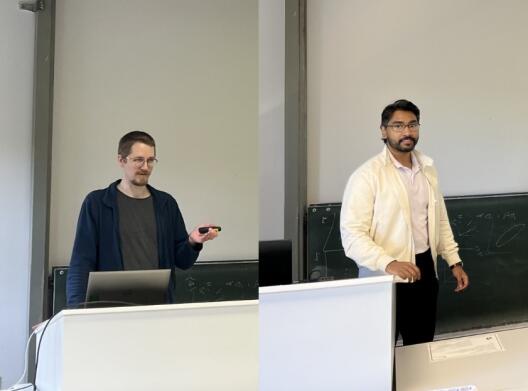
How can research findings from different studies be meaningfully synthesized? This question was the focus of the most recent Methodical Sprint, which took place on October 6 and 7 and centered on meta-analyses. Participants learned from Dr. Lukas Röseler and Dr. Shaheed Azaad, through hands-on exercises, how to conduct literature searches, calculate effect sizes, and evaluate and present meta-analytic results. The Sprint was held in cooperation with the Münster Center for Open Science (MüCOS).
Many thanks to Lukas and Shaheed for organizing and leading the Sprint and for providing exciting insights into the world of meta-analyses!
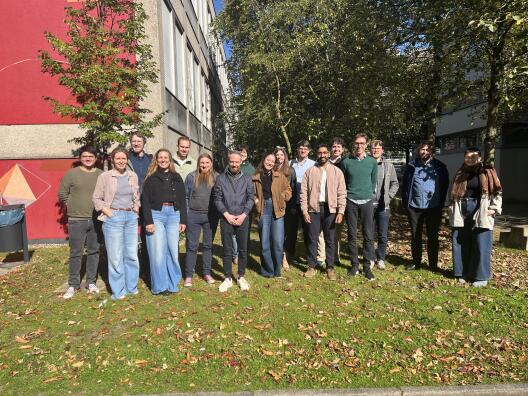
The Reproduction Games Münster took place on September 25. Researchers from various disciplines and at different stages of their careers came together to engage in a hands-on exploration of the reproducibility of scientific research and to put published studies to the test.
Working in teams, the participants examined selected studies and attempted to replicate their results using the available data and analysis codes. The event not only offered the opportunity to test reproducibility in practice but also provided a space for interdisciplinary exchange on open science, transparent research processes, and the responsible handling of scientific data. As Dr. Lukas Röseler, Executive Director of the Münster Center for Open Science (MüCOS), explained in an interview leading up to the event, a shift toward greater transparency and higher quality is already evident in the scientific community. Shared and well-documented data are increasingly becoming a fundamental component of scientific work in some research fields.
The Reproduction Games Münster were jointly organized by the Münster Center for Open Science (MüCOS), the Center for Data Science and Complexity (CDSC), the Service Center for Digital Humanities, and the Institute for Political Science at the University of Münster.
We would like to thank the organizing team and all participants for the successful event, the open exchange of ideas, and the collaborative exploration of an important topic for the quality and transparency of scientific research.
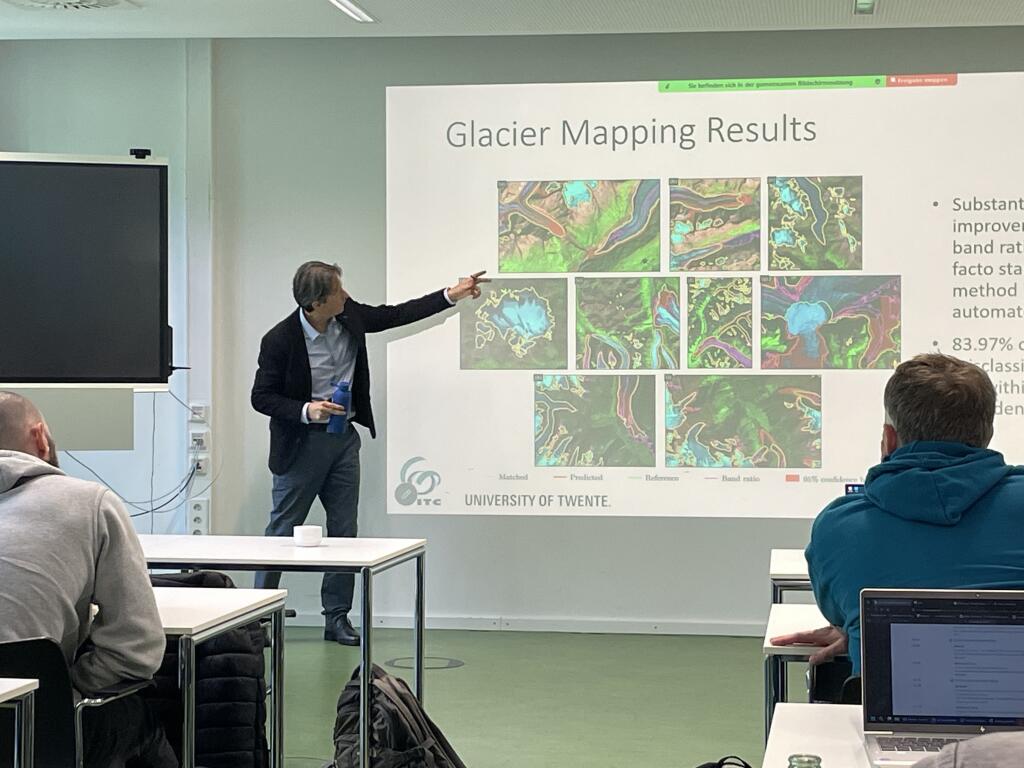
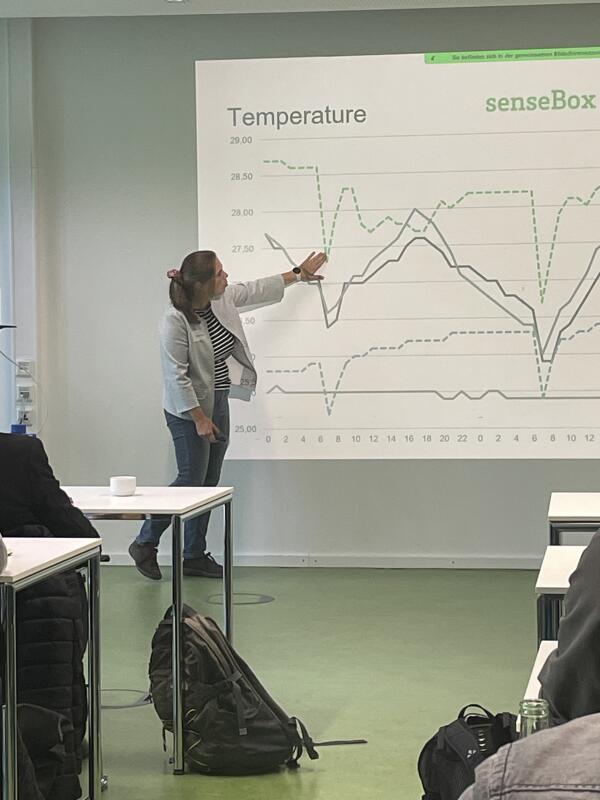
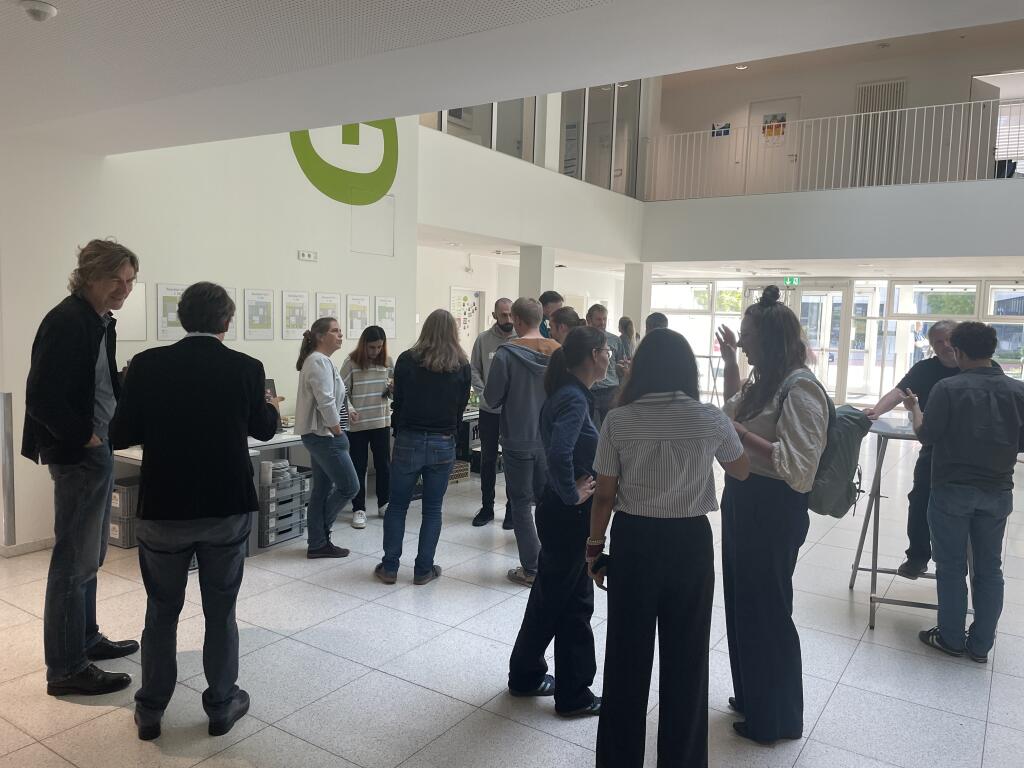
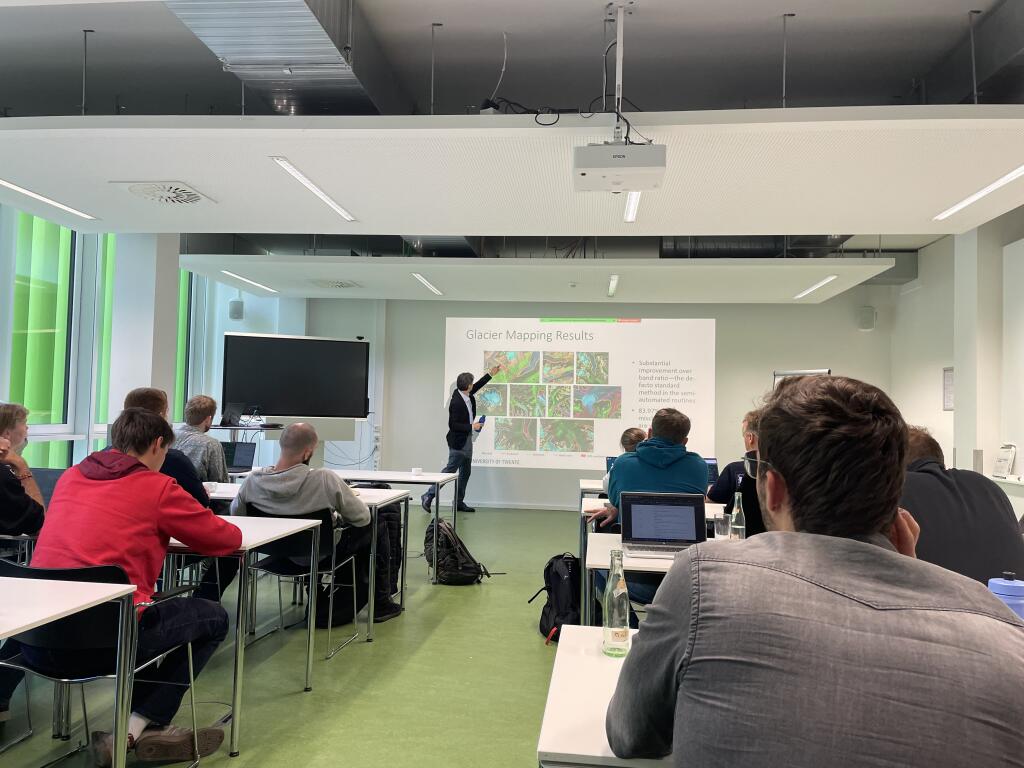
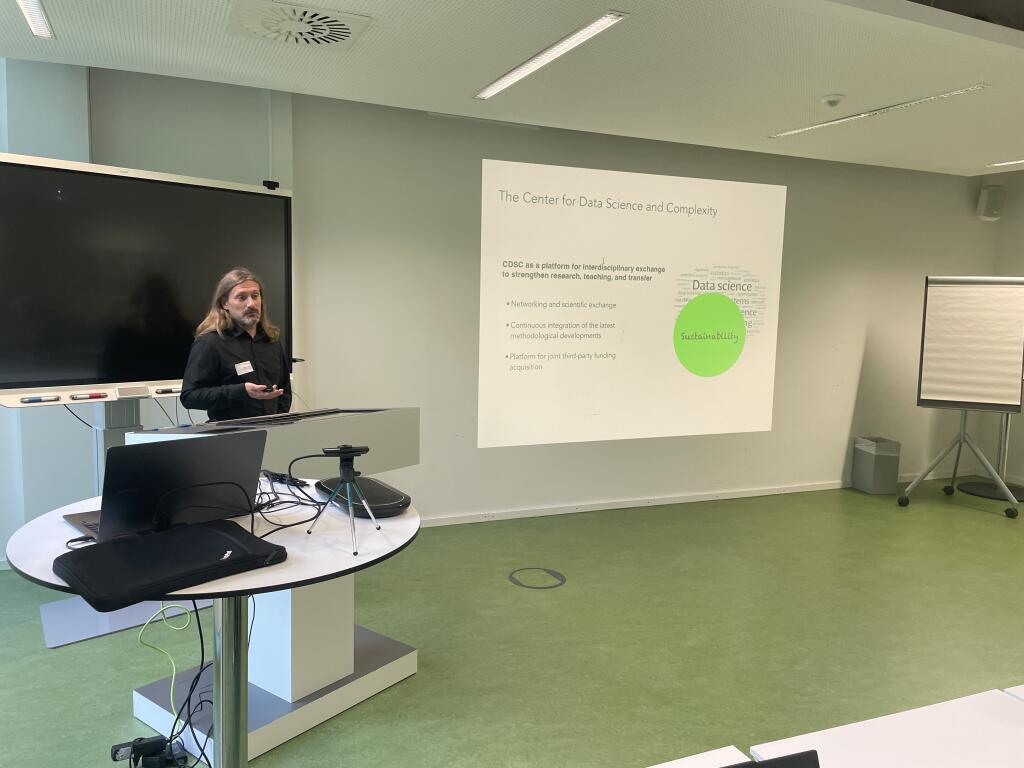
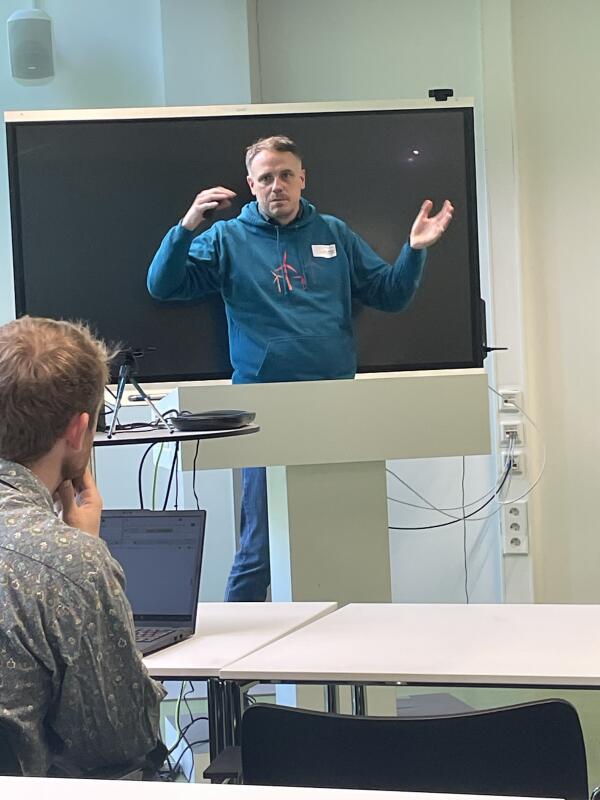
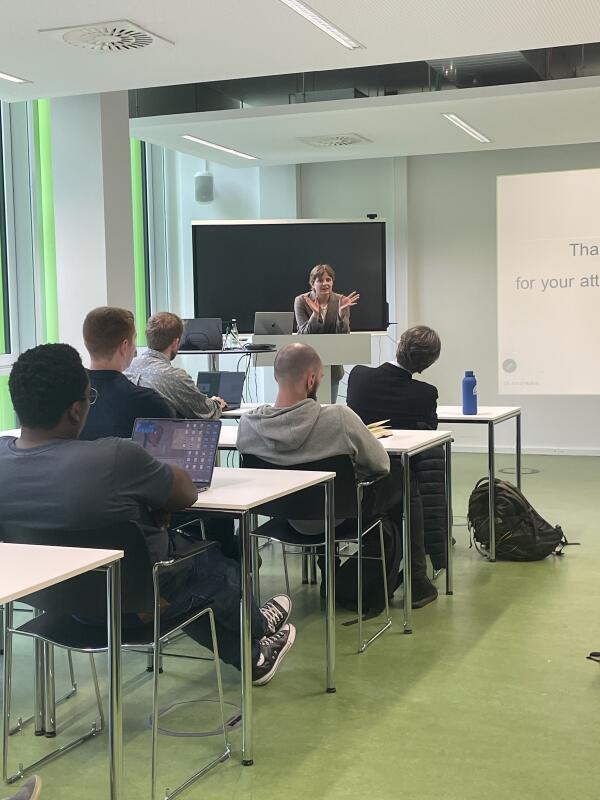
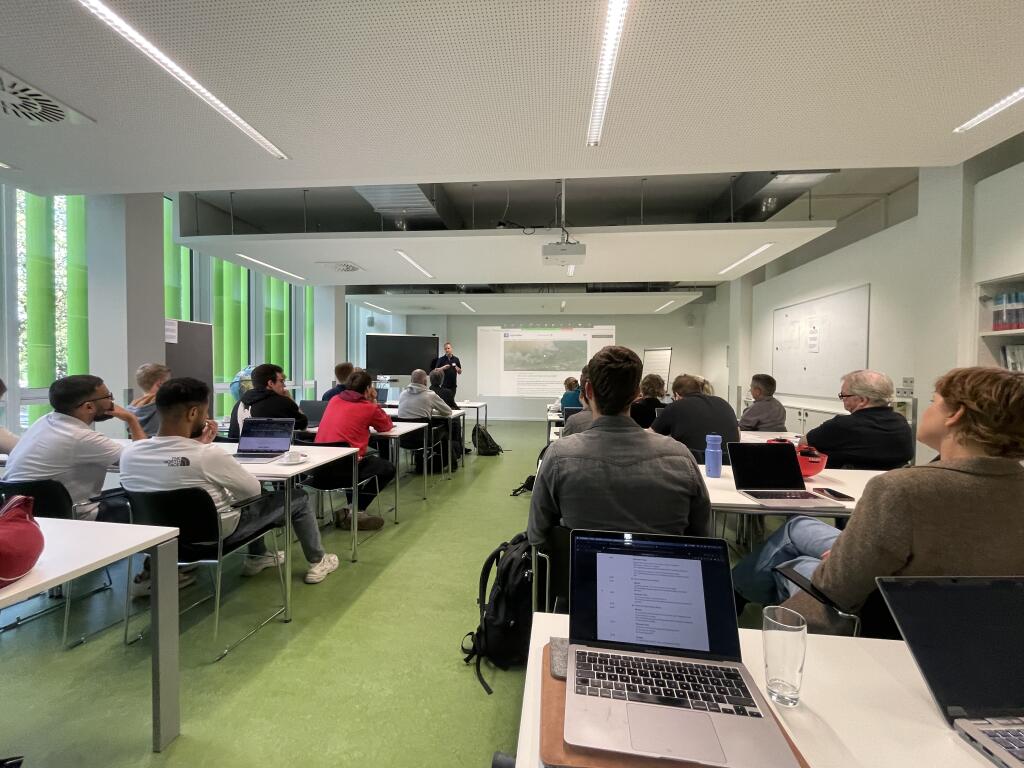
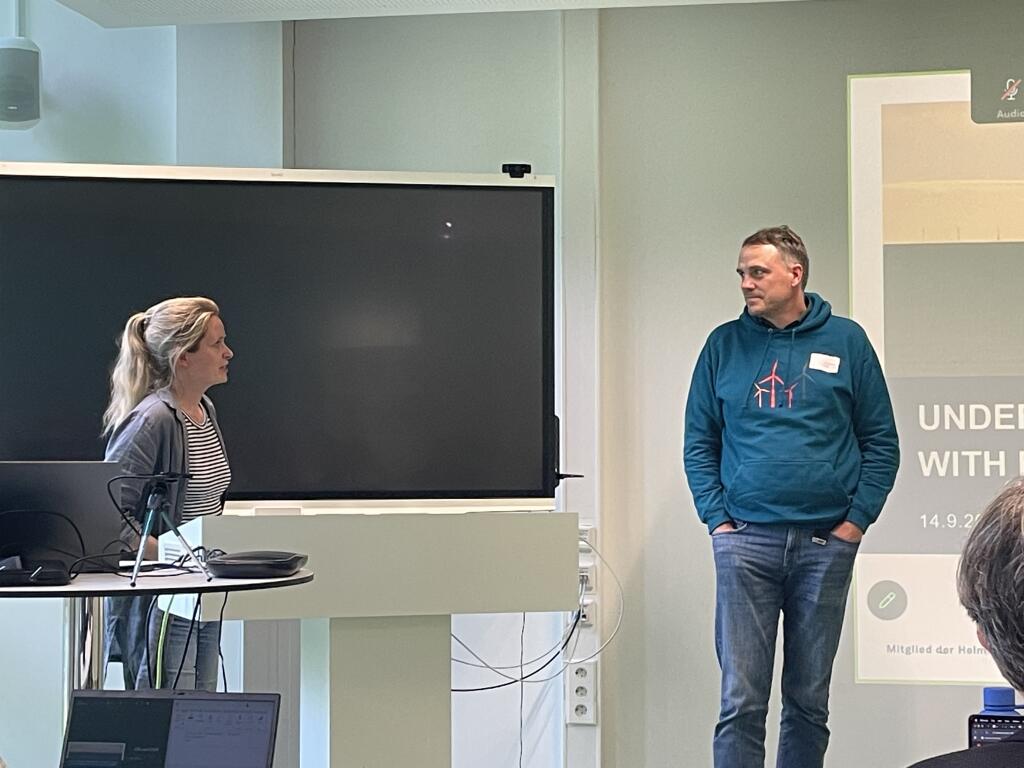
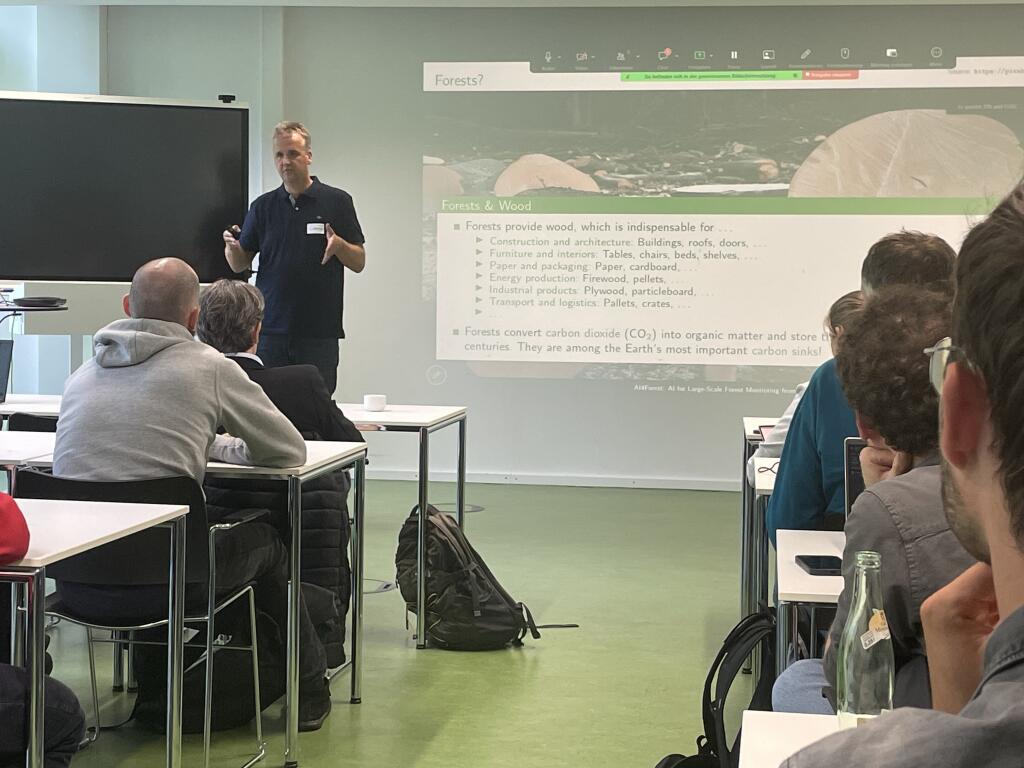
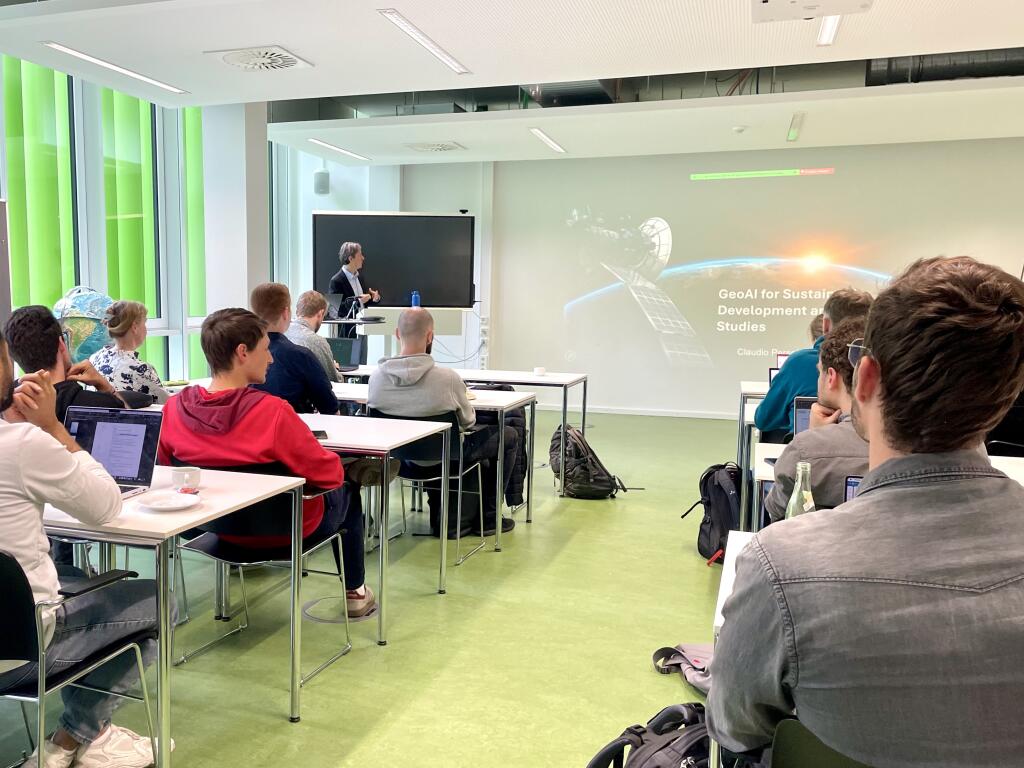
On 14 September, researchers from a wide range of disciplines came together for AIM for Sustainability, a workshop exploring the potential and challenges of artificial intelligence in sustainability research.
Two keynote talks provided perspectives from GeoAI and energy systems: Claudio Persello (University of Twente) presented recent advances in GeoAI for sustainable development and climate studies, while Dirk Witthaut (University of Cologne & Forschungszentrum Jülich) discussed how explainable and causal machine learning can help understand interdependent energy systems. Spotlight talks by Angela Schwering, Fabian Gieseke, and Oliver Kamps offered insights into current research at the University of Münster, from digital twins, environmental sensor data and large-scale forest monitoring to data-driven energy management. In a dialogue session, Anne Mollen added a critical perspective on dominant narratives surrounding AI for sustainability.
Alongside the scientific programme, the workshop offered plenty of opportunities for discussion, networking, and exchange across disciplines. Thanks to the Ulysseus European University Alliance, participants from across Europe were also able to join the workshop online via Zoom.
Many thanks to our co-organizers Carolin Bohn and the Center for Interdisciplinary Sustainability Research (ZIN), as well as Fynn Schmidt and Ulysseus European University, for the excellent collaboration – and to all speakers and participants for making the workshop such a lively and inspiring afternoon.
Together with the Institute for Applied Informatics (IAI), the CDSC will present the Digital Excellence Award for the first time in 2026. The award recognizes projects that not only demonstrate innovative thinking and technical excellence, but also contribute to sustainability or create value for society. It also aims to strengthen connections within the IT community and highlight the Münsterland region as an attractive location for emerging talent and graduates. All member companies of the Association of Sponsors of Applied Informatics at the University of Münster are eligible to participate.
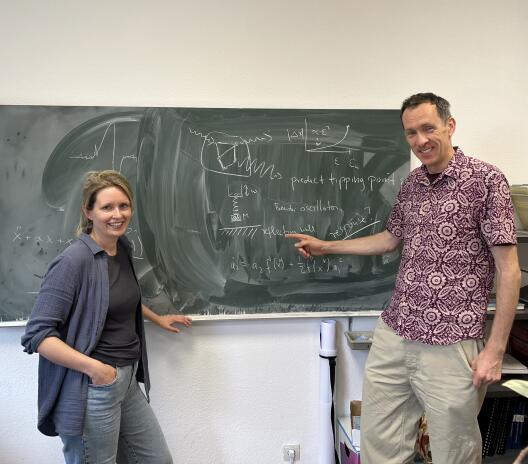
On July 7 and 8, the CDSC welcomed Prof. Marc Timme from the TU Dresden for a research visit to Münster. His research combines the dynamics of complex networks with questions from mathematics, physics, and computer science and encompasses, among other topics, nonlinear dynamics, tipping points in complex systems, and methods for analyzing and predicting collective network dynamics.
As part of the CDSC colloquium, he gave a presentation titled “Predicting Fluctuation-Induced Tipping in Nonlinear Networks.” In it, he presented current research on fluctuation-induced tipping points in nonlinear networks and discussed approaches for predicting critical system transitions at an early stage.
Beyond the colloquium, the visit offered valuable opportunities for discussions on current research with researchers at the CDSC. The discussions focused on current developments and shared research interests in the field of complex systems and networks.
We thank Marc for his visit and the stimulating discussions, and we look forward to continuing our scientific exchange in the future.
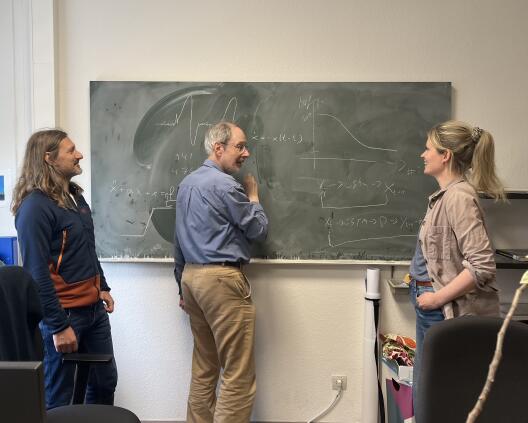
On June 2 and 3, Prof. Dr. Dr. h.c. Eckehard Schöll visited the CDSC. He is one of the world’s leading experts in nonlinear dynamics and complex networks, particularly in the fields of structure formation, chaos, time-delayed feedback and network physiology. During his visit, he discussed current research questions in the field of complex dynamic systems with the CDSC coordination team and members of the participating research groups, as well as possible approaches for future joint projects.
Thank you very much, Eckehard, for the intensive scientific exchange and the inspiration for interdisciplinary research at the CDSC!
On May 13, Prof. Mario Krenn from the Cluster of Excellence “Machine Learning for Science” at the University of Tübingen visited the CDSC.
As part of a CDSC Special Colloquium, he presented his talk “Towards an Artificial Muse for New Ideas in Physics”, offering insights into his current research. He demonstrated how methods from artificial intelligence can generate novel and sometimes beyond human intuition impulses for scientific discoveries in physics, particularly in the field of quantum physics. After the talk, a “Caffeine and Connect” session provided an opportunity for scientific exchange in an informal atmosphere.
We sincerely thank Mario Krenn for the inspiring lecture and the stimulating discussions.
Here you can find the University of Münster news article, along with an engaging commentary from the science and philosophy blog "philosophies".
Prof. Tim Hahn, a member of the CDSC board and director of the new Institute for Machine Learning in Medicine with a focus on psychiatry at the University of Münster, discusses the opportunities and risks of artificial intelligence in medicine in an interview with the Westfälische Nachrichten. He explains how AI could help detect diseases early on and support personalized treatments in the future.

An overview article introducing the Topical Programme "Artificial Intelligence and Complexity" has been published in the latest issue of the University's Newspaper wissen/leben. The article provides insight into the project and its key objectives.
An interdisciplinary team consisting of Uwe Thiele, Svetlana Gurevich, Benjamin Risse, Christian Engwer, Andreas Heuer, Heiko Wagner, Tim Hahn, Oliver Kamps, and Katrin Schmietendorf was successful in securing a Topical Programme in the thematic field of Artificial Intelligence and Complexity.
Topical Programmes at the University of Münster aim to identify strategically relevant research areas for future research priorities and to explore opportunities for large-scale collaborative research projects. The Topical Programme “Artificial Intelligence and Complexity” addresses a highly topical research area, bringing together machine learning with the theory of complex systems. Its goal is the systematic integration of data-driven methods into experimental, computational, and theoretical research.
The Topical Programme will be coordinated by the CDSC.
We would like to sincerely thank the Zukunftslabor as well as the University of Münster’s Research Advisory Board for their funding and valuable guidance.

Teams from the CDSC have once again been successful in calls for QV funding, securing support for two innovative teaching projects.
The team consisting of Katrin Schmietendorf, Oliver Kamps, and Svetlana Gurevich received funding from central QV resources for the development of a new teaching format entitled “Methodical Sprints – Embedding Interdisciplinary Core Methods and Key Concepts in Teaching in a Compact and Sustainable Way.” The project comprises four courses addressing the interdisciplinary key topics of causal inference, critical transitions, and synchronization, as well as an additional course on the modelling of bicycle networks.
In addition, an expanded team including Oliver Kamps, Svetlana Gurevich, Uwe Thiele and Katrin Schmietendorf was granted funding by the Department of Physics for the new lecture course “Physics-Informed Machine Learning.”
The funding enables the CDSC to develop new interdisciplinary teaching formats and to strategically further advance its existing teaching portfolio. We would like to sincerely thank the QV committees,as well as the student representations of Physics, Mathematics & Computer Science, and Biology for their support of our application for the Methodical Sprints project!
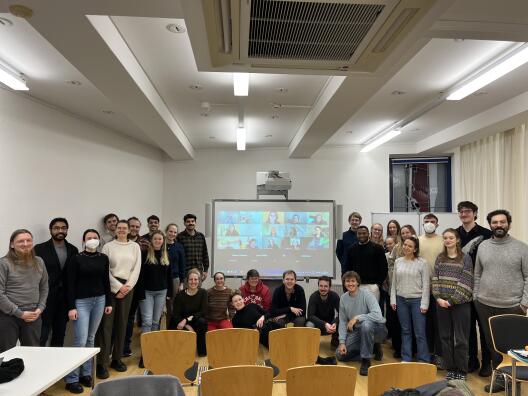
On November 28, 2025, the Münster Replication Games took place for the first time, a one-day event organized jointly by the Institute for Replication (I4R), the Münster Center for Open Science (MüCOS), the Institute of Political Science, and the CDSC.
A total of 66 participants (both in person and online) worked in 15 teams to reproduce or replicate findings from papers published in top-tier journals. The teams consisted of students and researchers from a variety of disciplines, ranging from political and economic sciences to psychology, sports science, and physics. The goal of the Replication Games is to test the robustness of scientific findings while simultaneously promoting research integrity.
After the event, participants have the opportunity to publish their results on the I4R website and to contribute as co-authors to a meta-paper compiling multiple replications.
We warmly thank our co-organizers Lenka Fiala, Lukas Röseler, Bernd Schlipphak, and Paul Decker, as well as all participants, for their great commitment and for making the premiere of the Münster Replication Games a success!

The building sector in Germany consumes around 25% of the nation’s energy and is responsible for roughly 16% of CO₂ emissions—representing significant potential for progress toward greater sustainability.
Against this backdrop, a new project on building energy management has recently been launched. As part of a master’s thesis by George Nana Harris, the project will explore how machine learning methods can be used to analyze and optimize energy consumption. The project was initiated by Oliver Kamps, Benjamin Risse, and Katrin Schmietendorf (all CDSC members), in close collaboration with Department 4.3 – Technical Building Services, represented by Julia Strietholt, Heiko Maschke, and Ralf Dressler.
Many thanks to the organizers for the opportunity to present this project as part of CAMPUS EARTH Sustainability Day 2025!

At the Tag der Lehre 2025, the CDSD was on display with two posters presenting the latest progress of ongoing projects funded through central QV resources.
These included the MoDaNa practical course (“Model- and Data-Based Methods in the Natural Sciences”), supervised by Svetlana Gurevich, Andreas Heuer, Christian Engwer, and Mario Ohlberger, as well as the development of the course “Interdisciplinary Introduction to Complex Networks” by Katrin Schmietendorf and Oliver Kamps, which will be part of the CDSC teaching program starting in the summer semester 2026.
We are delighted to have had the opportunity to showcase our work and would like to thank the organizers for the invitation to showcase our posters. A big thanks also goes to the SHB staff, PhDs and Postdocs involved in the projects: Gunnar Birke, Christoph Dumstorf, Lennart Halstenberg, Lukas Haroska, Elias Koch, Annemarie Quas und Dr. Julia Schleuß.

We are continuing our activities in the field of science communication in the winter semester 2025/26 – once again in cooperation with the Center for Philosophy of Science (ZfW).
Katrin Schmietendorf and Oliver Kamps have put together the program for this semester’s ZfW lecture series
"Hach, alles ist komplex! Zur Vielgestaltigkeit von Komplexität in Wissenschaft, Gesellschaft und Kultur". The event is open to the public and takes place on Thursdays from 6:15 to 7:45 p.m. in lecture hall F2 at the Fürstenberghaus. Alternatively, the lectures can also be attended via Zoom.
The full program and further information are available here.
We would like to sincerely thank our colleagues at the ZfW for the opportunity to shape this series and for the excellent collaboration!
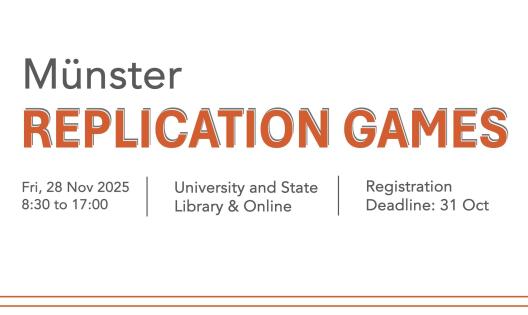
The CDSC is pleased to host the first Münster Replication Games together with Lukas Röseler from the Münster Center for Open Science (MüCOS), Bernd Schlipphak and Paul Drecker (Institute of Political Science), and Lenka Fiala from the Institute for Replication (I4R). During the one-day event, teams of three to five participants will work to replicate the findings of a scientific article. Participants will have the opportunity to publish their replications on the I4R website and contribute as co-authors to a combined meta-paper. You can find further information and register here.
Many thanks to all co-organizers for their great commitment and collaboration!
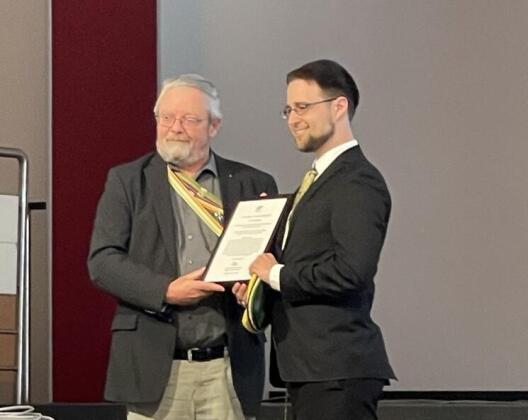
Tobias Wand was awarded the CV Academy Science Prize for his doctoral thesis titled “Understanding Complexity in Socio-Economic Systems at Various Time Scales: Data-Driven and Modeling Approaches”. The prize is awarded by Germany's largest Catholic academic association, the Cartellverband.
For his doctoral studies, Tobias conducted research as part of the InterKI project under the supervision of Prof. Uwe Thiele and Dr. Oliver Kamps. His work focuses on applying mathematical methods from physics to financial time series and socio-economic data related to the development of historical societies. The prize, which is endowed with 3,000 euros, is awarded annually for outstanding scientific work and is sponsored by the Felix-Porsch-Johannes-Denk-Stiftung.
Künstliche Intelligenz in der Welt von heute und Morgen - Cartellverband (CV)
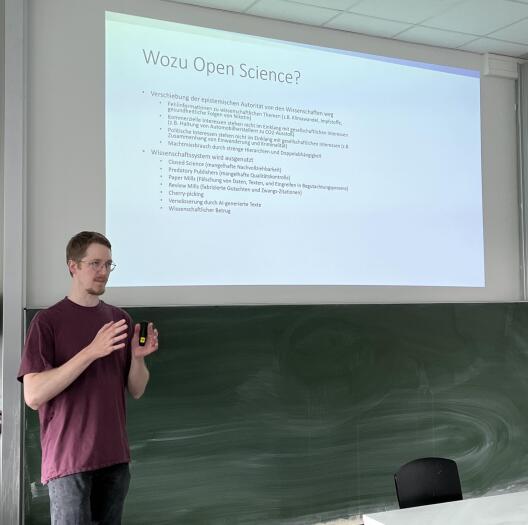
On 20 May 2025, Dr Lukas Röseler, postdoctoral researcher in the lab of Prof. Mitja Back and managing director of the Münster Center for Open Science (MüCOS), was guest at the CeNoS Colloquium. In his talk, he provided fascinating insights into the principles and current developments surrounding Open Science, as well as the various activities of the MüCOS.
During the following "Caffeine & Connect" event, attendees had the opportunity to discuss the topic in more depth and to share their experiences and perspectives.
Many thanks to Lukas for his informative presentation on a topic of central importance to the future of science!

The University of Münster's central quality improvement committee has selected ten outstanding projects that promote innovation and creativity in university teaching. Two of these are associated with the CeNoS.
The first project, submitted by Katrin Schmietendorf and Oliver Kamps, aims to develop an application-oriented introductory lecture on complex networks — an exceptionally diverse and highly interdisciplinary field of research. The lecture will be offered for the first time in the summer term 2026 and then be permanently included in the CeNoS teaching program. It is also intended to foster interdisciplinary exchange and cooperation at the University of Münster.
The second project is the practical course "Model- and Data-Based Methods in the Natural Sciences" (MoDaNa). Here, STEM students work on practical research topics using numerical modelling, machine learning and Python. The project involves Svetlana Gurevich, Andreas Heuer, Christian Engwer and Mario Ohlberger.
We would like to thank the university and the QV Commission for the funding, as well as the student representations of Physics, Mathematics & Computer Science, Psychology, Biology and Chemistry for supporting our application for the network project!
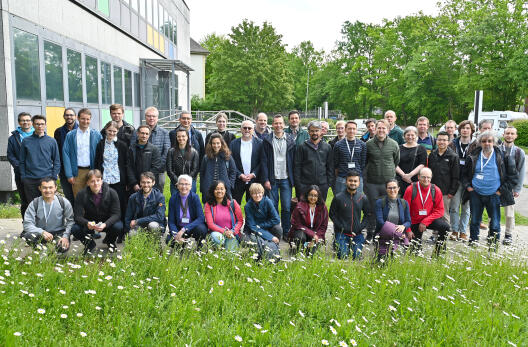
From May 5 to 8 2025, the workshop “Conservations laws and non-reciprocity” took place in Münster. Experts from physics and mathematics discussed challenges and recent progress in the analysis of non-equilibrium systems, with a focus on non-reciprocity and conserved quantities.
The conference was supported by the Cluster of Excellence Mathematics Münster and the CDSC and organized by Markus Bär (PTB Berlin & TU Berlin), André Schlichting (University of Ulm), and our CDSC members Angela Stevens (University of Münster) and Uwe Thiele (University of Münster).
Further information and the Book of Abstracts can be found here.

At the beginning of the year, the Center for Emerging Researchers (CERes) launched the first 'GenAI Labs' workshop series, in which PhD students and postdocs can learn how to make their research activities more efficient, effective and innovative with the help of GenAI tools. Several members of CeNoS and the InterKI project were involved in organising and coaching the workshops: Dr Stefan Roski (formerly ZfW), Friedrich Bach and Jonathan Wandscheer (both REACH), Dr Martin Korth (CIT NWZ and CMTC) as well as Dr Oliver Kamps and Dr Katrin Schmietendorf.
We would like to thank Iva Ognjanovic and the CERes team for the great organisation and the opportunity to participate in this event!