
Encyclopedia of Arabic Stylistic Devices (EASD)
Zeitraum: 2026–2029
Beteiligte Personen: Prof. Dr. Syrinx von Hees; Andreas Knöll, M.A.
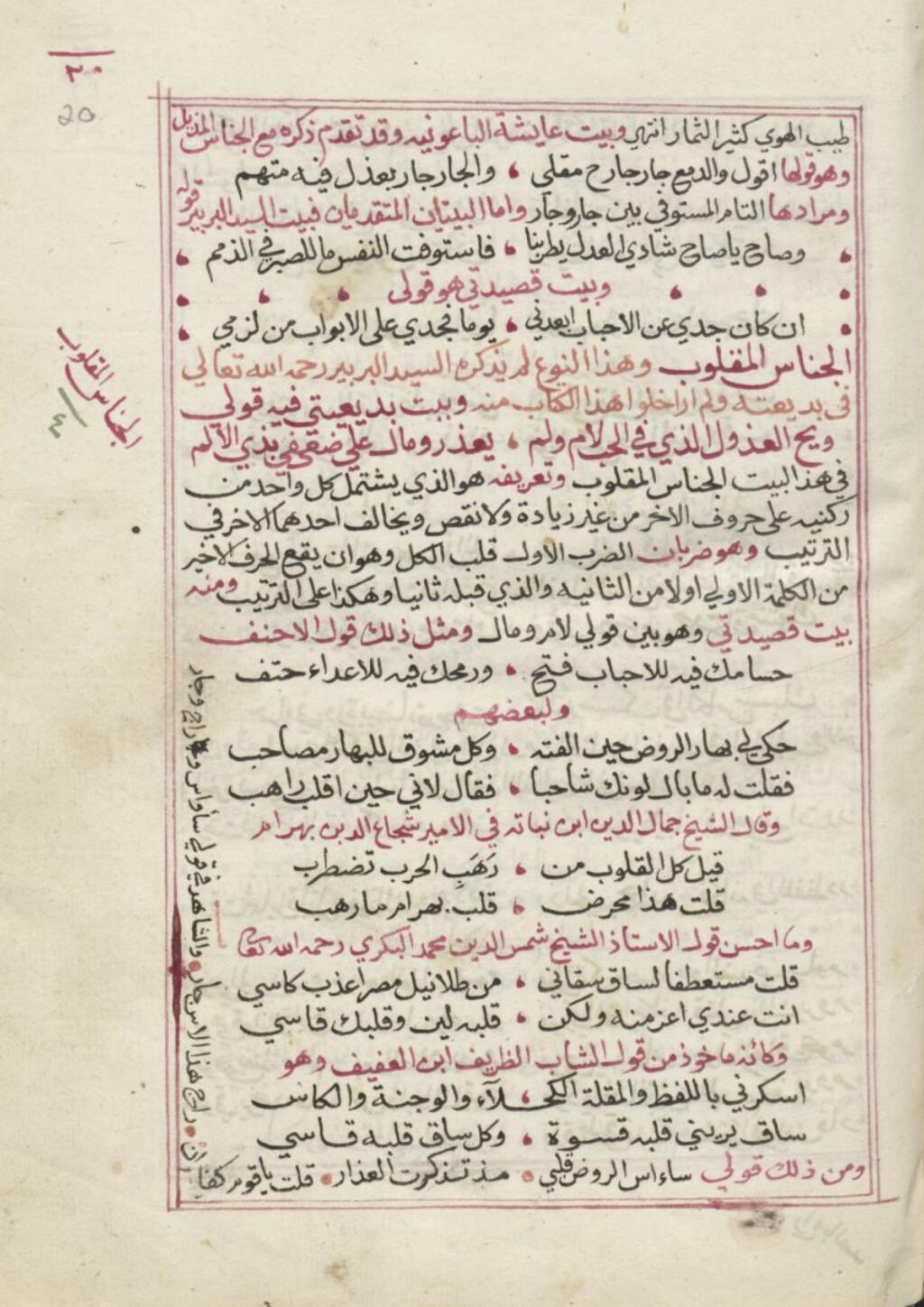
Arabic-Islamic culture has long held a deep appreciation for language. Poetry already carried high social significance in pre-Islamic times, and many Islamic sciences – such as Qurʾān exegesis, ḥadīth studies, and legal hermeneutics – rely heavily on the interpretation of Arabic texts. Over the centuries, scholars developed a wide range of reflections on language, its functions, and its effects, initially within grammar, lexicography, literary criticism, exegesis, legal methodology, chancery culture, and logic.
In the 13th and 14th centuries, these approaches were synthesized into a systematic theory of rhetoric, ʿilm al-balāgha, which became the standard framework in Madrasa education. Yet research on Arabic rhetoric remains incomplete. In particular, the field of stylistics (ʿilm al-badīʿ) is still underexplored: later developments, especially after 1400, have often received only partial attention, even though they gave rise to new genres such as commentaries, supercommentaries, specialized treatises, and Badīʿiyyāt works discussing stylistic devices.
This project aims to present Arabic stylistic devices comprehensively and accessibly in an English-language online encyclopedia. Each entry will offer definitions, trace historical developments from the earliest sources to the 20th century, provide examples from poetry, prose, and the Qurʾān, and highlight connections to related figures and disciplines. In this way, the encyclopedia goes beyond brief definitions to showcase the historical richness and scholarly depth of Arabic stylistics.