

Welcome!

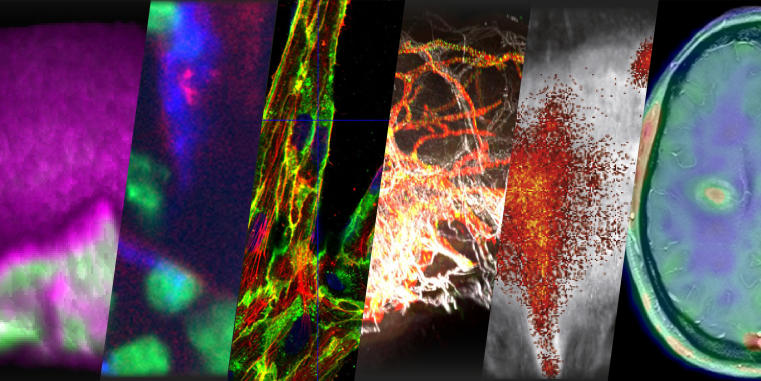
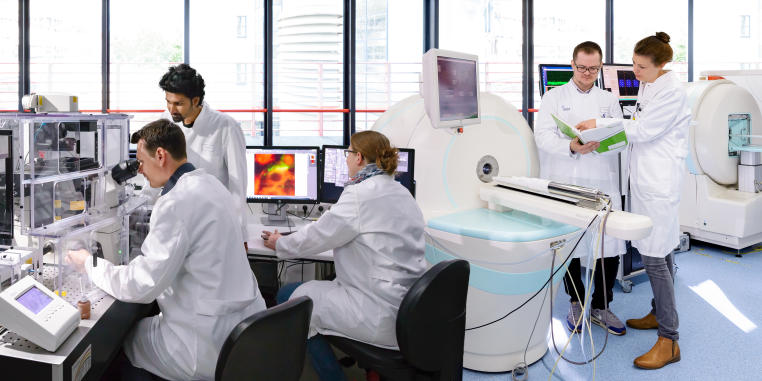
The Cells in Motion (CiM) Interfaculty Centre brings together and supports researchers from medicine, biology, chemistry, pharmacy, mathematics, computer science and physics who join forces to work on a big topic: They investigate how cells behave in organisms. To this end, they employ and develop innovative imaging methods. Our interfaculty network is the centrepiece of the University of Münster’s research focus in “cell dynamics, inflammation and imaging”.
upm
|
© George Broutzakis

Cellular transporter: New approaches against fungal infections discovered

A research team led by structural biologist Prof. Christos Gatsogiannis has gained new insights into the workings of a cellular transporter — a protein essential for pathogenic fungi to absorb vital nutrients. These findings could contribute to the development of new therapeutic strategies against fungal infections in the long term.

CiM
|
© Uni Münster - Victoria Liesche

Picture gallery: Our research on board the ‘MS Wissenschaft’

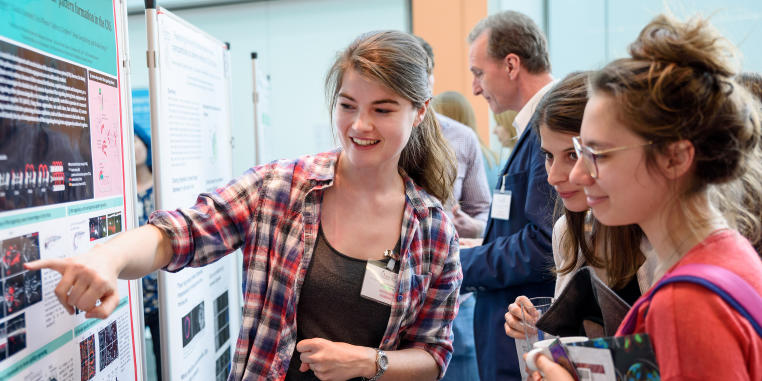
The team from the University of Münster’s Multiscale Imaging Centre (MIC) provided insight into research on bodily processes on board the ‘MS Wissenschaft’ on 4 July 2026. Through images of cells, tissues and organisms, visitors joined the team to explore the world of science. Children slipped into lab coats and playfully mimicked lab work.

upm
|
© Mathis Richter

Immature immune cells predict chances of survival following a heart attack

In the event of a severe heart attack, immature immune cells are released into the bloodstream from the bone marrow. A research team led by Professor Oliver Söhnlein has demonstrated that the maturity level of neutrophils can be used to determine the short-term risk of death, and this can be assessed through a simple blood test.

mfm
|
© UKM Hautklinik Fotoabteilung - Tina Krzeminski

Study reveals: immune cells communicate via neurotransmitters

Dermatologist Professor Luise Erpenbeck and her research partners have demonstrated for the first time in real time that the body’s own defence cells use catecholamines – neurotransmitters such as dopamine and adrenaline – to communicate via the same chemical signals as nerve cells. This discovery opens up a new understanding of how the immune system is regulated.