
Welcome!

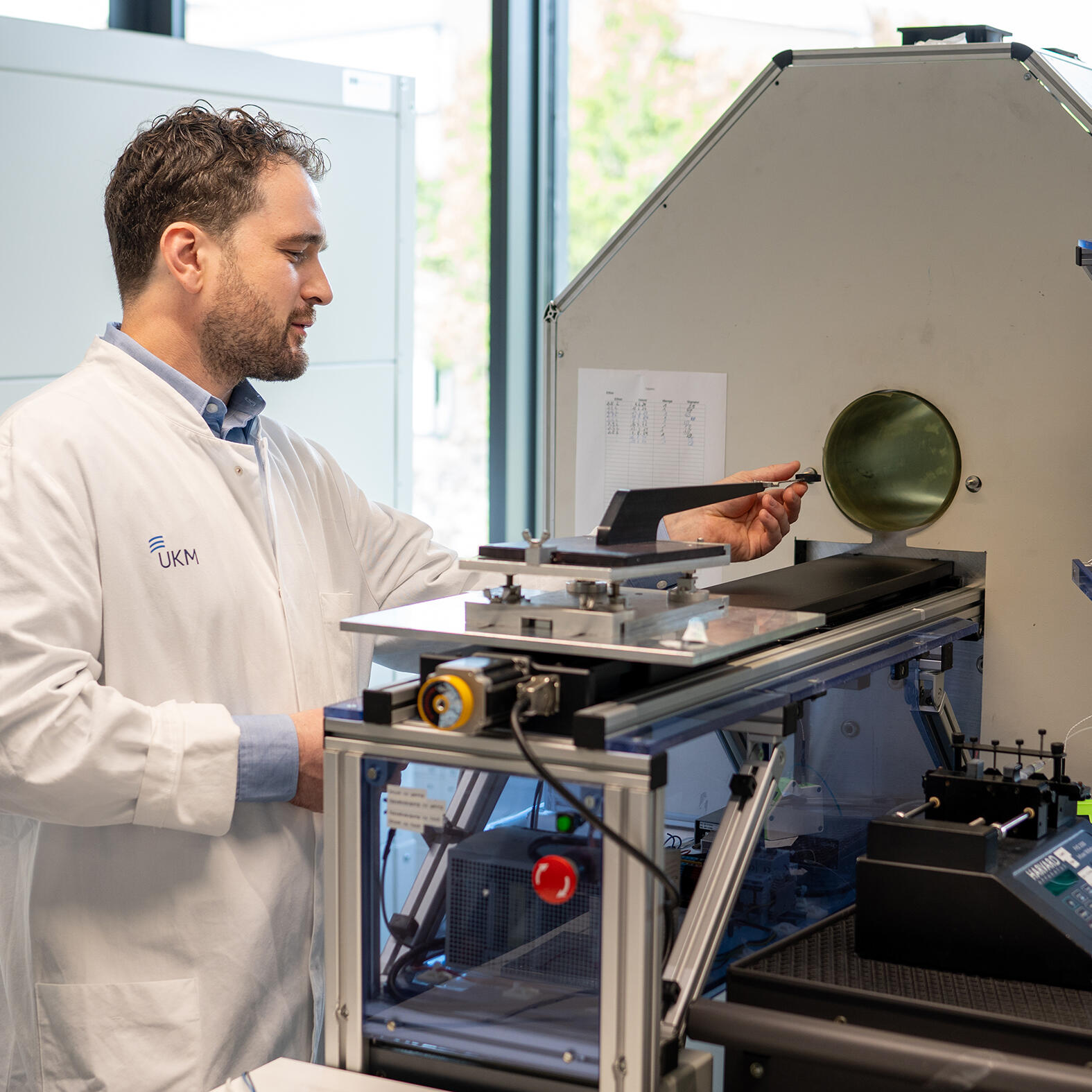
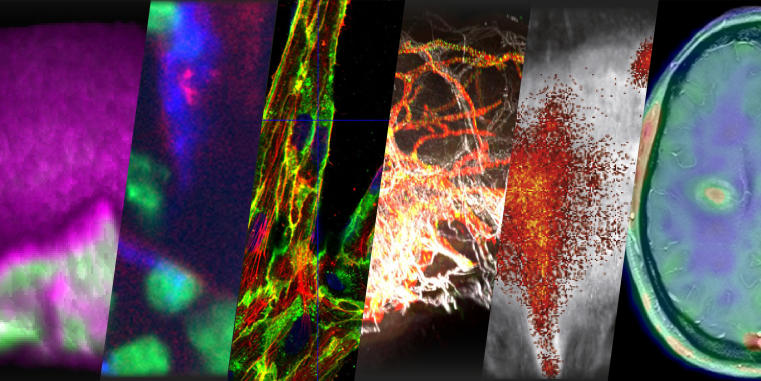
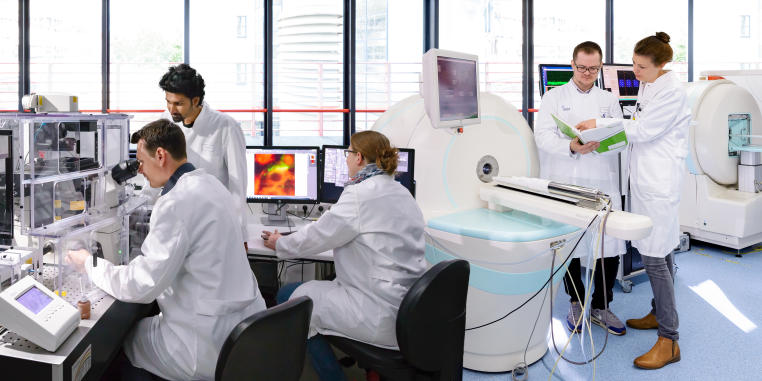
The Cells in Motion (CiM) Interfaculty Centre brings together and supports researchers from medicine, biology, chemistry, pharmacy, mathematics, computer science and physics who join forces to work on a big topic: They investigate how cells behave in organisms. To this end, they employ and develop innovative imaging methods. Our interfaculty network is the centrepiece of the University of Münster’s research focus in “cell dynamics, inflammation and imaging”.

upm/CiM
|
© Uni Münster - Michael Ibrahim

Renewed funding to support physicians engaged in research

The University of Münster’s Clinician Scientist CareerS programme supports medical professionals who are engaged in patient care while actively pursuing research at the same time. In this dual role, they can make a key contribution to ensuring that research translates into new treatment options. The DFG is once again providing more than a million euros to fund the programme.

upm
|
© AG Grashoff

Biologists reveal ancient form of cell adhesion

Cells are characterized by their ability to adhere particularly well to surfaces in their environment, which enables the development of complex tissues and organs. A team led by cell biologist Prof Carsten Grashoff has now shown that the talin protein plays a central and evolutionarily conserved role in cell adhesion. The study was published in “Nature Communications”.

mfm
|
© Uni Münster - Erk Wibberg

Funding extended for Medical Scientist Programme InFlame

InFlame is to receive 1.1 million euros from the Else Kröner-Fresenius Foundation for a second funding period of four years. The programme is aimed at postdocs in the natural sciences working in the interdisciplinary field of inflammation research. It helps create synergies between research and clinical practice and supports candidates in setting the course for their careers.

upm
|
© privat

Prevention reduces the incidence of severe acute kidney injury after major surgery

An international research led by Dr Thilo von Groote and Prof Alexander Zarbock from the University of Münster has demonstrated that a targeted preventive treatment strategy after major surgery significantly reduces the incidence of severe acute kidney injury. The study was published in the journal “The Lancet”.