
Researchinterviews 2025-2026
In the series "Researchinterviews 2025-26" researchers discuss their work at the Cluster of Excellence "Religion and Politics".
“Religion has never disappeared from the public arena of politics”

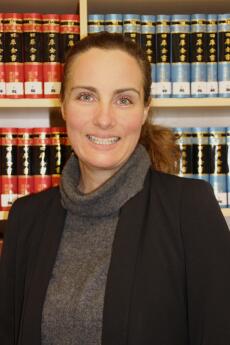
© privat Disputes over symbols such as the cross or the headscarf, the protection of religious minorities, or sexual and reproductive autonomy – conflicts over religion often end up in court, and not just in Germany. At the Cluster of Excellence “Religion and Politics”, political scientists Svenja Ahlhaus and Iman Al Nassre are investigating so-called strategic litigation – legal proceedings intended to bring about political or societal changes beyond the individual case. In this interview, project leader Ahlhaus and PhD student Al Nassre explain whether, from the perspective of political theory, religious strategic litigation is democratically legitimate. Read more
‘We are entering what is in some respects completely new territory’
© Nadia Stichweh The research project ‘News from China? – Knowledge-ressources, Knowledge-acquisition and Knowledge-transfer of Missionaries in China in the 19./20. Century’ at the Cluster of Excellence ‘Religion and Politics’ addresses the key question of for what purpose and in what context Christian missionaries acquired so-called ‘knowledge of China’ during the period in question. Sinologist and project leader Kerstin Storm and doctoral candidate Lisa Kerl report on their work with the sources and their findings on how knowledge was transferred to individuals, groups and institutions across nations. Read more
“The lion-headed Apedemak may not be a god in the Egyptian sense at all”

© EXC/Richard Sliwka Egyptologist Angelika Lohwasser from the Cluster of Excellence “Religion and Politics” is studying the relationship between cult and kingship in the ancient kingdom of Kush, Egypt’s southern neighbour. Since Kush was annexed to Pharaonic Egypt as a colony in the 2nd millennium BCE, later periods also show many Egyptian influences there. As a result, researchers have a strongly Egyptian or Egyptological perspective on Kushite culture and religion. In this interview, Lohwasser talks about how she takes a new, non-Egyptian perspective on the kingdom of Kush, and in particular the relationship between the Egyptian god Amun and the Kushite god Apedemak. Read more
“Those commissioning the work, as well as scribes, owners and readers – these all shaped the translations and turned the transcripts into a ‘living’ work”
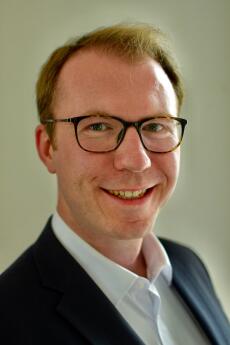
© privat The research project led by Islamic studies scholar Philip Bockholt at the Cluster of Excellence ‘Religion and Politics’ focuses on Arabic-Ottoman translations of works of Quranic exegesis (Arabic: tafsīr). In this interview, he discusses why translations from Arabic into Turkish were so significant, what adaptations can be observed in the texts during the process of translation, and what role these translations played in disseminating religious knowledge. Read more
"There is a high level of religious literacy in Indonesia"
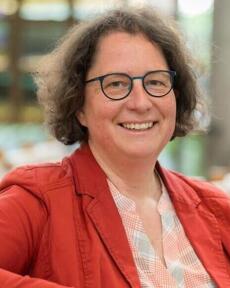
© Albin Hillert, WCC Indonesia is one of the most diverse countries in the world – geographically, socially and religiously. With over 17,000 islands and more than 270 million inhabitants, the archipelago faces particular challenges, while at the same time playing an increasingly important role in regional and global contexts. In an interview about her research on Indonesia, religious studies scholar and Protestant theologian Simone Sinn from the Cluster of Excellence talks about past and present conflicts, the country’s long colonial history, and the role of religion in the Indonesian constitution. Read more
“Research into Laconia is really taking off at the moment“
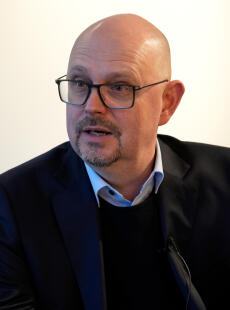
© exc How did forms of belonging develop in ancient Greece, and which role did Amyklaion play as a central hub in Laconia? Historian Hans Beck's Research project, “Belonging in/to Laconia. An archaeohistorical study on the Sanctuary of Apollo at Amyklai and its surroundings”, at the Cluster of Excellence “Religion and Politics” explores this question. The subject of the study is the hill of Agia Kyriaki, 5 km south of Sparta, which has long been associated with the ancient cult center of Apollo Amyklaios. The research complements excavations that have been taking place on site for more than 20 years. Read more
Abraham in everyday life

© privat In this interview, Coptic scholar Gesa Schenke discusses her research at the Cluster of Excellence on two Egyptian manuscripts from the 4th and 10th centuries AD. Written in Coptic, the last stage of the Egyptian language, these manuscripts contain the earliest known Jewish-Christian record of the so-called Testament of Abraham. Gesa Schenke uses this narrative in the “Abraham in Everyday Life” project to explore the extent to which the thought of death and the impending Judgment of the Dead shapes religious, political and social behaviour in everyday life. Read more
Between fluid identities and the potential for political learning
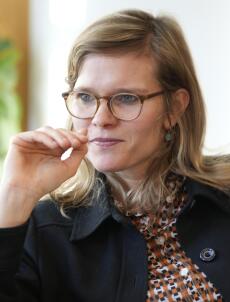
© exc/Richard Sliwka In her research at the Cluster of Excellence, political philosopher Franziska Dübgen, head of the project “Articulations of the ‘political’ in contemporary postcolonial contexts of north and sub-Saharan Africa”, deals with innovative concepts of the political, her focus here being primarily on concepts that political philosophy and political theory have developed in recent decades in and with regard to Africa. Read more
“Ideas about Vikings today can often not be verified scientifically”
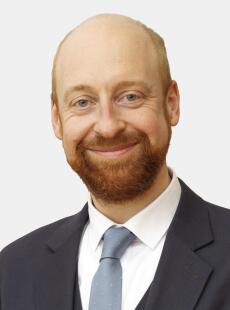
© Institut für Skandinavistik According to scholars of Scandinavian studies, ideas about Vikings and pagan Norse mythology today can often not be verified scientifically. “They are based essentially on reports written by Christian scholars in the High Middle Ages well over a century later, since, besides brief runic inscriptions, no written texts from the original period have been preserved”, says Scandinavian scholar Roland Scheel from the Cluster of Excellence. Read more
New perspectives on Iron Age tribal kingdom
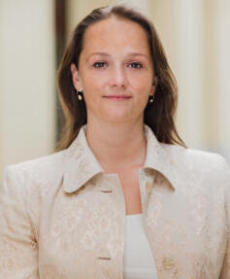
© privat In an Interview, Archaeologist Katharina Schmidt talks about her project at the Cluster of Excellence on the mountain settlements in the Kingdom of Edom (700–500 BC) in what is now southern Jordan. Recent investigations of these mountain settlements suggest that they were not, as has often been assumed, inaccessible, temporary refuges. Rather, they were permanent, agriculturally self-sufficient settlements that were sustainably farmed over generations. This paints a completely new picture of Edom, which was composed of very different realities of life. Read more
Icons – a symbol of Russian identity between tradition, religion and politics

© Uni Münster Between religious tradition and aesthetic innovation: Russian art and literature of the 19th and 20th centuries contain numerous references to icon painting – for example, in Sergei Eisenstein's film ‘Bežin lug ’ or Kazimir Malevich's ‘Black Square’. “References to icons reveal a worldview, one that is certainly also political in nature,” says Slavic scholar Irina Wutsdorff from the University of Münster, whose research at the Cluster of Excellence “Religion and Politics” focuses on the significance of icons in Russian art and literature, in an interview together with Daniela Amodio. Read more