
„There is impressive religious literacy in Indonesia“
Interview with religious studies scholar Simone Sinn
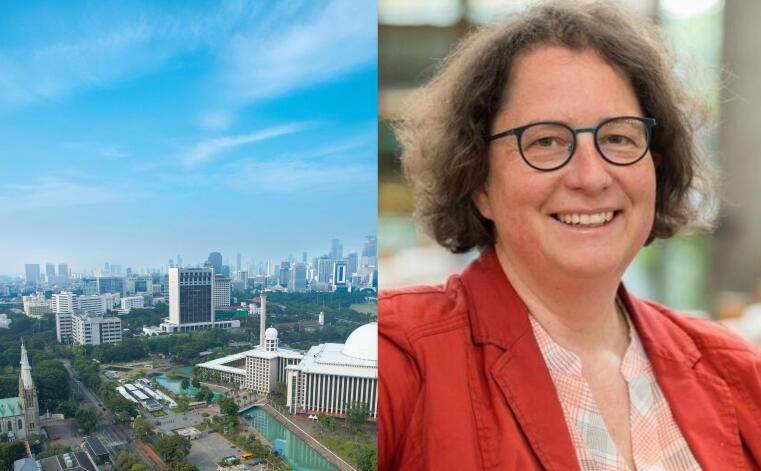
Indonesia is one of the most diverse countries in the world – geographically, socially and religiously. With over 17,000 islands and more than 270 million inhabitants, the archipelago faces particular challenges, while at the same time playing an increasingly important role in regional and global contexts. In an interview about her research on Indonesia, religious studies scholar and Protestant theologian Simone Sinn from the Cluster of Excellence talks about past and present conflicts, the country’s long colonial history, and the role of religion in the Indonesian constitution.
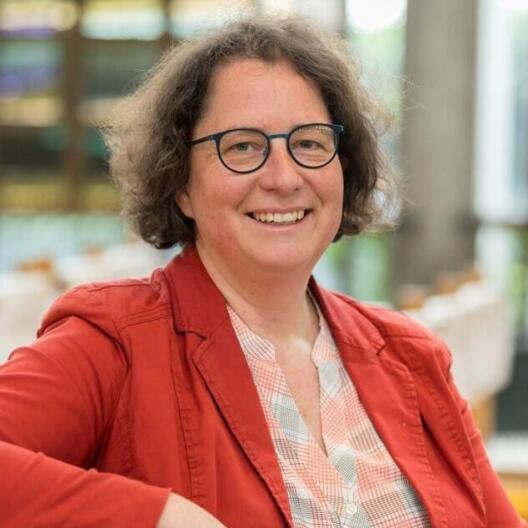
You are professor of religious studies and intercultural theology – your research focuses on pluralism, intercultural theology and socio-ecological transformation, and on a very specific region in Southeast Asia, Indonesia. What research questions do you pursue with regard to Indonesia and why this country in particular?
Indonesia is a diverse country both culturally and religiously, an archipelago with a colonial past and a remarkable history of striving for independence and fighting for participation, equality, recognition and democracy. The largest Muslim-majority country in the world, Indonesia has seen very different Islamic traditions develop and take shape. Also worth mentioning are the large Muslim organisations in civil society such as Nahdlatul Ulama and Muhammadiyah, which have many millions of members. At the same time, though, the state also plays a strong role in regulating religious life, primarily at the national level through the Ministry of Religion, down to religious officials in the smallest municipalities. In general, ‘religion’ in Indonesia seems to be tangible in every facet of life, while at the same time being a relatively inaccessible subject of research, since religion in Indonesia is not limited to a specific social field, but shapes the entire public life of the country in a multitude of ways.
My research on Indonesia currently focuses on three main areas. First, the tension between ‘lived religion’, i.e. the religion actually practised and lived by people in their everyday lives, and ‘governed religion’, i.e. the regulated religion as legally standardised and prescribed by the Indonesian state. Second, the role that academic education plays for religious communities, especially the significance of Islamic and Christian universities in Indonesia. Third, the conflicts and discourses of demarcation around indigenous traditions and non-religion. One example of an indigenous tradition is the Ugamo Malim (Malim religion) in North Sumatra, but there are also various indigenous traditions on Sulawesi and Java.
What I find exciting about Indonesia are the complex processes of negotiation not only between state and religious communities, or between different religious communities, but also between people themselves. There is also a high level of ‘religious competence’ in Indonesia, both among the population and among religious leaders and scholars. This includes not only a virtuosity in dealing with religiosity and theological perspectives, but above all a very astute perception of power dimensions and dynamics in the religious field. Anyone who works as a researcher in the religious field in Indonesia will sooner or later be confronted with critique of ideology, and will have to reflect critically not only on research methods, but also on theories and research approaches. In doing so, it is important as a researcher to be able to read between the lines and listen between the sentences, and to reflect critically on who has the power to act in the research process.
What methods do you use in your research on Indonesia?
Since my focus is on current social, religious-political and theological debates, I draw a lot on qualitative empirical methods in my research. Field research covers a wide range of methods, from participant observation to qualitative interviews, with materiality, i.e. the concrete spaces and objects that play a role in people’s religious lives, gaining in importance. As for theoretical background, what is particularly important for my research approach is critical discourse theory, as developed from the work of Michel Foucault. During my studies, I was influenced by the hermeneutic tradition, which deals with the interpretation and understanding of texts. This is important to me both as a research perspective and in terms of actual interpretive work on texts from very different genres.
Since the time I spent in Geneva in an international environment, I have also been preoccupied with questions of decolonisation in how research is practised. How can we prevent research from becoming an ‘extractive industry’ that collects and analyses data and generates insights that are valued in scientific discourse but no longer have any connection to the people who were part of the research process? This can lead to the structural exploitation of local knowledge traditions. There is currently a lively debate in cultural studies about whose interests scientific knowledge really serves.
Indonesia is sometimes cited as an example of how different religions can coexist peacefully and democratically – the country is the third largest democracy in the world. However, conflicts with religious overtones also arise time and again. What specific religious conflicts and tensions are there?
There is a peculiar paradox in Indonesia. On the one hand, there is a strong narrative that Indonesia has valued diversity as a gift from God ‘since time immemorial’, and that it lives as a nation of ‘unity in diversity’. In this narrative, being religious means being deeply human and recognising others with their respective ethnic, religious and cultural affiliations. This is Indonesia’s grand social narrative about itself: diversity in unity. On the other, there are many explicit and implicit mechanisms of exclusion. This is true not only today, but also in the past: since 1965, i.e. since the Cold War and the East-West conflict, there has been a history of excluding ‘atheist communists’, a history linked to massacres of alleged communists in the country that society has not yet come to terms with. Other historical traumas are also rarely dealt with.
And what conflicts are there today?
Identity-based majority politics are increasingly confronting people with discrimination and exclusion. In addition, violent groups repeatedly draw attention to themselves and threaten minorities. The fundamental question remains to this day: are the principles of freedom and equality for all that are enshrined in the country’s constitution also reflected in the ethos and attitudes of the population? Incidentally, a conflict of a completely different nature has been the subject of discussion since 2024: the state has offered religious communities the opportunity to enter the mining business and operate coal mines. The two large Muslim organisations have accepted this offer, while other religious communities have rejected it and criticised the state’s approach. The fear is that, by enabling new sources of financial income, the state will demand a certain loyalty from the religious communities and thus undermine their independent role in civil society.
There is often talk in connection with Indonesia of the state doctrine of ‘Pancasila’, which also has religious elements. What is this and what role does this state doctrine play in the country’s religious landscape? Is there a Western or European equivalent?
Pancasila was proclaimed in 1945 by Sukarno, Indonesia’s first president, during the declaration of independence. The term can be translated as ‘five pillars’. These five pillars are mentioned in the preamble to the constitution and are therefore sometimes referred to as the ‘state philosophy’. They are five principles that are intended to shape coexistence in Indonesia: 1) recognition of divine sovereignty as a common frame of reference, 2) universal humanity, 3) national unity, 4) representative democracy, and 5) social justice. The first principle is deliberately formulated in general terms, without mention of a specific god, in order to accommodate different religions. This was the subject of heated debate in the run-up to independence, with some Muslim circles calling for an Islamic state, not least in opposition to the Christian colonial power, the Netherlands, which had dominated the country for so long. However, this proposal did not prevail. Indonesia had always been religiously pluralistic, and this could not simply be ignored. At the same time, however, there was also a consensus that a completely secular constitution would also go against the country’s image of itself. One problem that independent Indonesia inherited with Pancasila, as it were, is that religion was made an unavoidable foundation of social coexistence, and secularism was thus perceived as negative.
In my view, reference to God in the constitutions of some European countries is not really comparable to Pancasila. This is because these European countries are fundamentally secular in their state institutions, whereas in Indonesia the Ministry of Religion is in fact one of the most powerful ministries.
You also conduct research on decolonisation. Indonesia was a Dutch colony for centuries. Independence was declared in 1945, but was only recognised by the Netherlands in 1949 – after a bloody war of independence. What role does this colonial history play in Indonesia’s religious landscape today?
Founded in the early 17th century, the Dutch East India Company exploited the archipelago’s natural and human ‘resources’ for over two centuries, for example forcing farmers to grow commodities for export, such as sugar and coffee, instead of staple foods such as rice. When the company was dissolved in 1799, the Dutch state took over the colony. The exploitation was clearly denounced in the satirical novella Max Havelaar, or the Coffee Auctions of the Dutch Trading Company, published in 1860 under the pseudonym Multatuli (Latin for ‘I have endured much’). The involvement and momentum of European missionary societies during the colonial era is now being critically examined in missionary studies and is the subject of lively debate among Christians in Indonesia. Christianity in Indonesia is still commonly referred to as ‘agama Belanda’, or ‘Dutch religion’, and is thus associated with the colonial past. However, Indonesian Christians argue that the struggle for national independence and decolonisation from the beginning of the 20th century was not only a ‘Muslim’ anti-colonial movement, but also the concern of Christian and non-religious groups.
The question of the power and influence of religion in the public sphere remains contested to this day. The state seeks strict regulation of this field. In my view, though, initiatives for interreligious understanding have developed a very interesting dynamic, both at the grassroots level and among leaders, and not least in the education sector, especially in universities. These initiatives not only explore which values and concerns enable joint engagement across religious boundaries, such as against corruption and for greater social justice, but also debate what role religious actors have in the public sphere.

The religious landscape is currently changing in many parts of the world: traditional forms of religiosity are rapidly losing importance, while evangelical and charismatic forms of religious affiliation are growing. Are there similar trends in Indonesia?
Alongside the established churches, Indonesia does indeed also have evangelical Christianity, charismatic movements within established churches, and a vibrant Pentecostal movement. Missionaries from abroad, such as South Korea, play a role in this, but to a large extent it is Indonesians themselves who are driving this movement forward. There are a number of Bible schools and evangelical training institutions. As elsewhere, these movements are tech-savvy and appeal primarily to young people with their style of worship and songs. In terms of theology, there are certainly tensions between progressive, traditional, evangelical and Pentecostal groups. At the level of church leadership, however, there is also pragmatic cooperation to defend religious freedom. Anyone looking for confirmation of the cliché that evangelicals and Pentecostals are insensitive to context and tend to be aggressive will be disappointed. There are small, inconspicuous evangelical communities that live their faith locally without much fuss, as well as megachurches with charismatic preachers who meet in shopping malls. There are also still traditional forms of worship with traditional liturgies.
You recently co-organised the conference ‘The Role of Islam and Christianity in Public Space: Perspectives from Indonesia and Germany’. One of the aims of the conference was to strengthen academic exchange between Germany and Indonesia. What do you hope to gain from this exchange and to what extent can German scholars benefit from Indonesian perspectives – and vice versa?
We were delighted to welcome 15 academics from various universities and disciplines to this conference in Münster. It was a very stimulating, and at times heated, exchange on current religious and socio-political issues. In addition, the focus was on consolidating actual cooperation in research and teaching. We wanted to highlight this and ensure further links. Since the University of Münster offers both Christian and Muslim theology and religious studies, we are very attractive partners for various universities in Indonesia. The fact that research on religious plurality in the past and the present has a long tradition here is well recognised, and interdisciplinarity across faculty boundaries is particularly valued.
Conversely, we are very interested in the expertise in theological and religious studies that our Indonesian colleagues have. There is outstanding Islamic scholarship there, which is far too little recognised in Germany due to the language barrier. Similarly, there are exciting perspectives within Christian theology that reflect critically on the relationship between contextuality and universality. Even though the historical developments of our two countries are very different, there are similar challenges today in the field of democracy education and plurality. (tec/pie)