The International Congress of Mathematicians (ICM) is coming to an end. Since 23 July, more than 2,800 mathematicians from around the world have gathered in Philadelphia to present leading research, participate in plenary and sectional lectures (more than 200 scientific events!), and foster international collaboration.
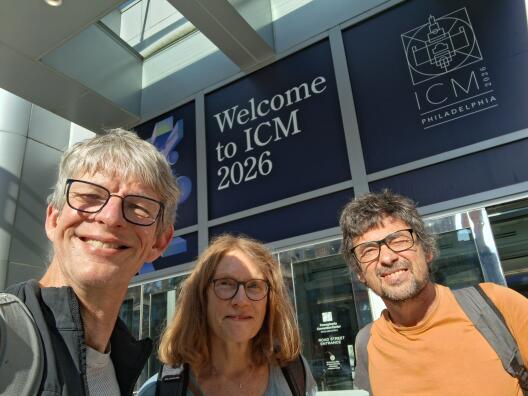
This page features some impressions from the past few days of the congress, particularly from the invited lectures given by Mathematics Münster's investigators Katrin Tent and Ralf Schindler.
Thursday, 23 July 2026
ICM Opening Ceremony
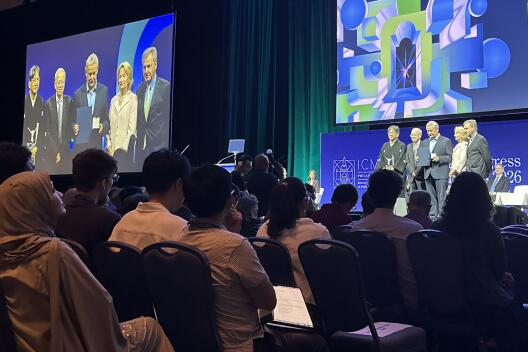
The congress began with an impressive opening ceremony. In his opening address, Jalal Shatah, member of the local organising committee, emphasized that "mathematics may require long periods of solitary thought, but it is also profoundly human and collaborative". The ICM represents openness, solidarity, and the shared intellectual purpose.
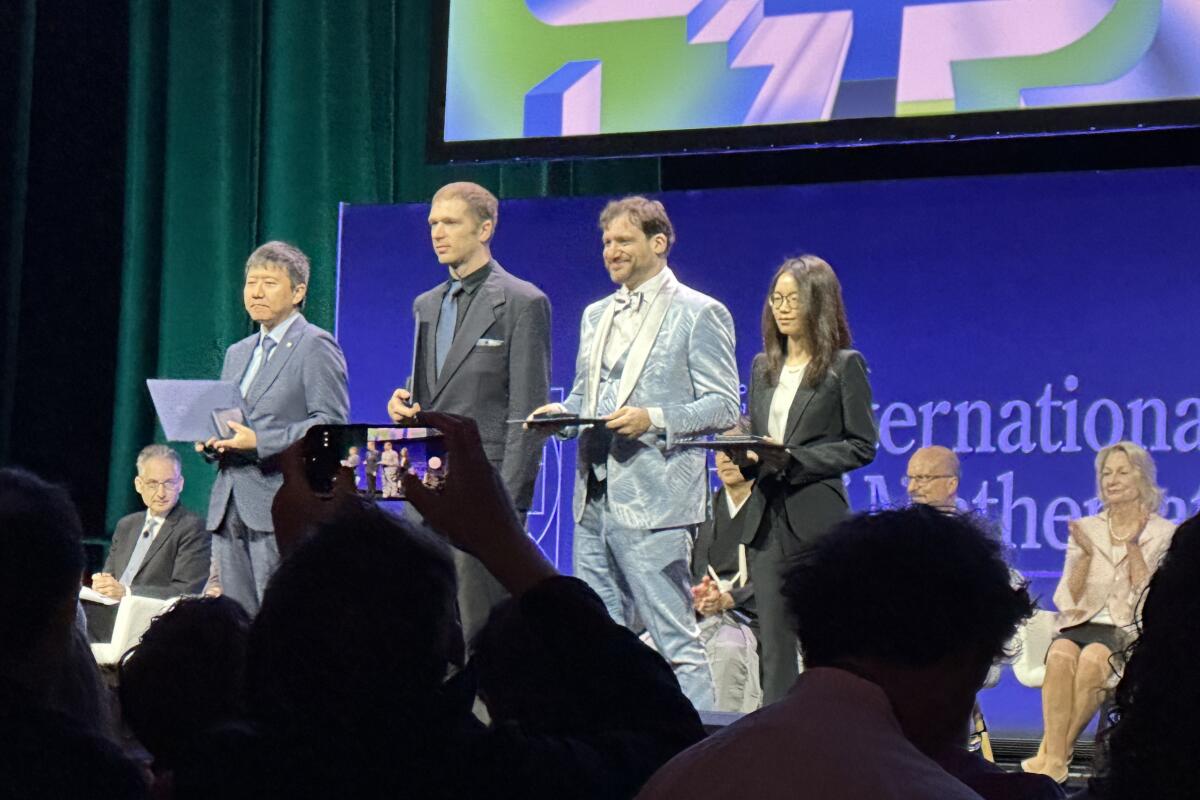
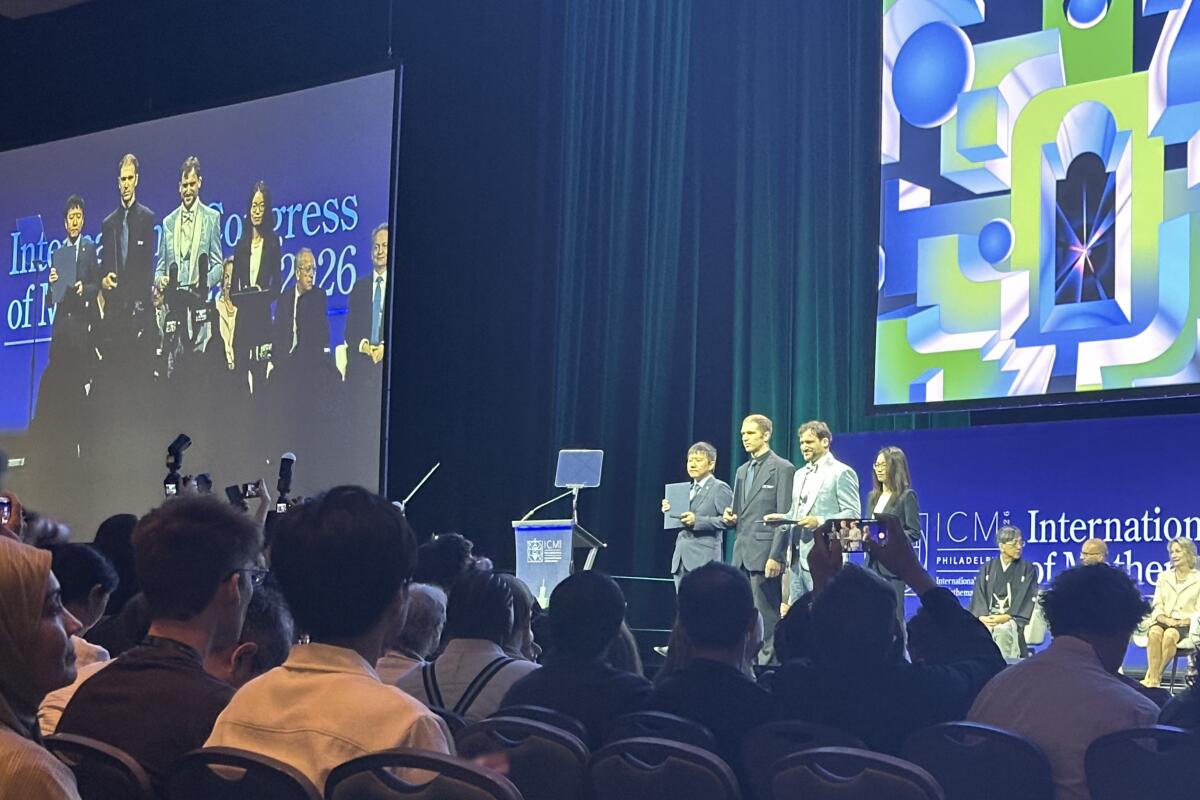
The award ceremony that followed was eagerly awaited by the participants. It began with the presentation of the Fields Medals. The award, nicknamed the Nobel Prize of mathematics, is awarded every four years and recognises outstanding achievement and the promise of future achievement by mathematicians under 40.
The 2026 Fields Medals were awarded to:
Yu Deng (University of Chicago) for his work on partial differential equations, including the rigorous derivation of the Boltzmann equation from hard-sphere dynamics, the derivation of wave kinetic equations from nonlinear dispersive systems, and probabilistic approaches to nonlinear Schrödinger dynamics.
John Pardon (Stony Brook University), for his achievements in symplectic geometry, including new approaches to virtual fundamental cycles, Fukaya categories and the counting of holomorphic curves, as well as contributions to geometry and topology, including group actions on three-dimensional manifolds and knot theory.
Jacob Tsimerman (University of Toronto), for establishing o-minimality as a fundamental method in arithmetic and complex algebraic geometry, and for his central role in resolving major conjectures, including the André–Oort conjecture for Siegel modular varieties and Griffiths’ conjecture on the algebraicity of images of period mappings.
Hong Wang (New York University and Institut des Hautes Études Scientifiques), for her work in harmonic analysis and geometric measure theory, including major advances concerning Fourier restriction, local smoothing, Falconer distance sets, Furstenberg sets and the Kakeya problem in three dimensions.
Other major prizes of the International Mathematical Union were also awarded at the opening ceremony.
The 2026 IMU Abacus Medal was awarded to Shayan Oveis Gharan (University of Washington) for his landmark contributions to the theory and analysis of algorithms. This prize recognises distinguished achievements in the mathematical aspects of information science.
The 2026 Carl Friedrich Gauss Prize was awarded to Yurii Nesterov (Université Catholique de Louvain, Belgium) for his groundbreaking work in mathematical optimisation, which has provided theoretical and algorithmic foundations for modern computational optimisation. The Gauss Prize recognises outstanding mathematical contributions that have found significant applications outside mathematics.
The 2026 Chern Medal Award was presented to Graeme Segal (All Souls College, Oxford) for his visionary mathematical insights and their enduring influence across topology, mathematical physics, representation theory and category theory. The Chern Medal Award honours an individual whose accomplishments merit the highest level of recognition for outstanding achievements in mathematics. Our Mathematics Münster researcher Eva Viehmann was a member of the committee that selected the recipient of the Chern Medal.
The 2026 Leelavati Prize was awarded to Hannah Fry (University of Cambridge), one of the foremost international ambassadors for mathematical thinking, in recognition of her outstanding work communicating mathematics to audiences around the world. The Leelavati Prize recognises outstanding contributions to increasing public awareness of mathematics as an intellectual discipline and of its role in society.
The event concluded with the announcement that the next ICM will take place in Glasgow in 2030.
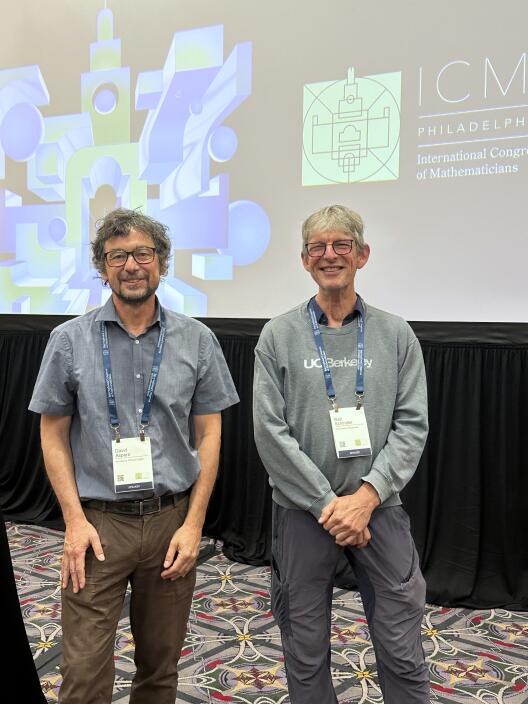
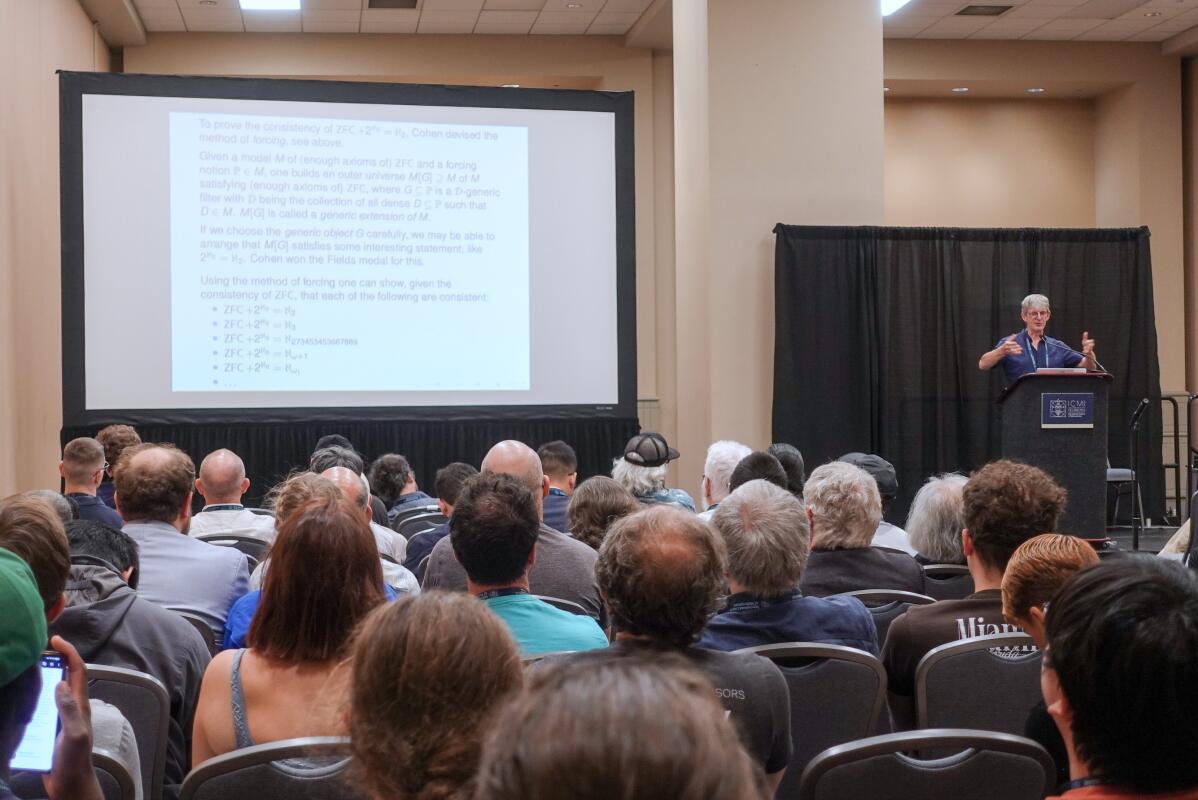
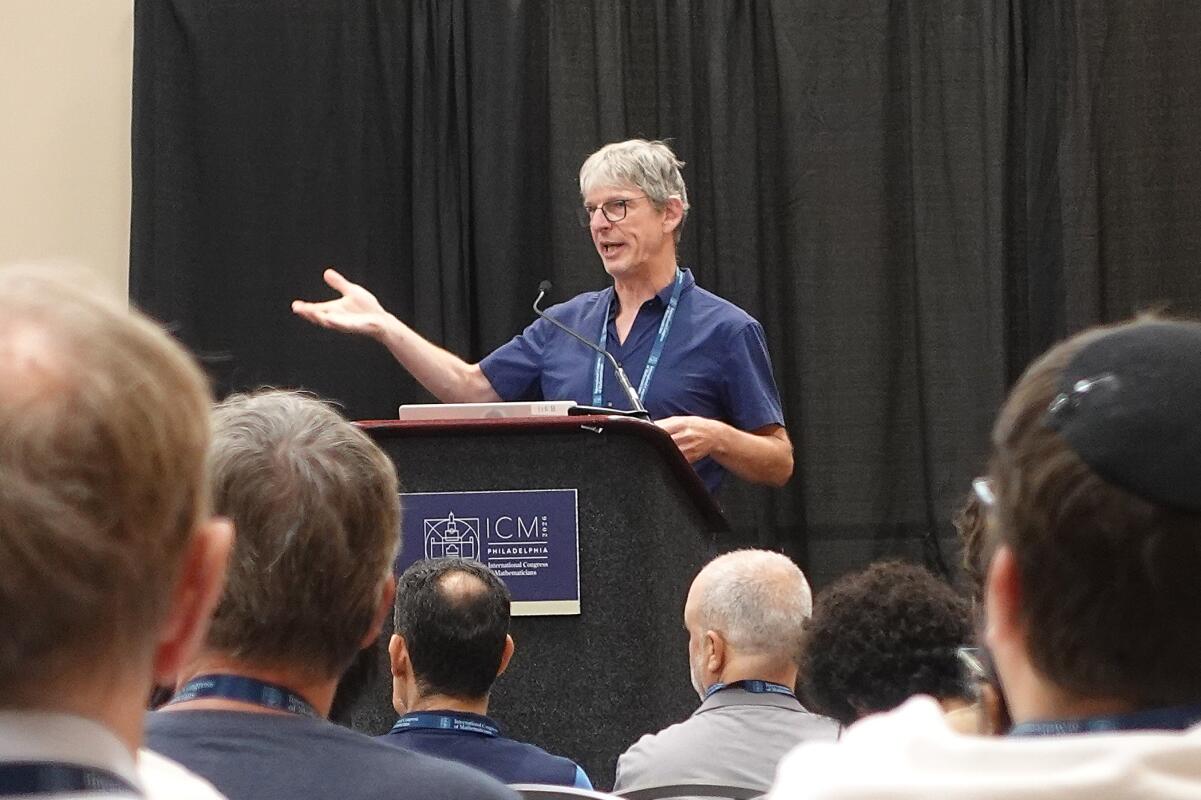
Our investigator Ralf Schindler and David Asperó (University of East Anglia) were invited to give a lecture in the Logic Section on Friday.
Forcing Axioms and The Continuum Problem: Hilbert's First Problem Revisited
Georg Cantor famously proved in the 1870’s that there are more real numbers than natural numbers. A question is then "Exactly how many real numbers are there? ℵ1? ℵ2? Maybe more?" This is known as the Continuum Problem. It has been one of the most important guiding problems throughout the history of set theory. By work of Kurt Gödel in the 1930’s and of Paul Cohen in the 1960’s we know that the standard axiomatic system for set theory, namely ZFC, does not solve this problem. On the other hand, and notwithstanding the independence results of Godel and Cohen, there are good reasons not to take the Continuum Problem as a pseudo-problem. In our talk we will start by hinting at some of the reasons not to take the independence results as the last word in this story. We will then introduce and motivate forcing axioms and will present some older and also some quite recent results using these axioms in order to argue that the Continuum Problem may have a solution after all. We will also mention some competing views and open questions in the area.
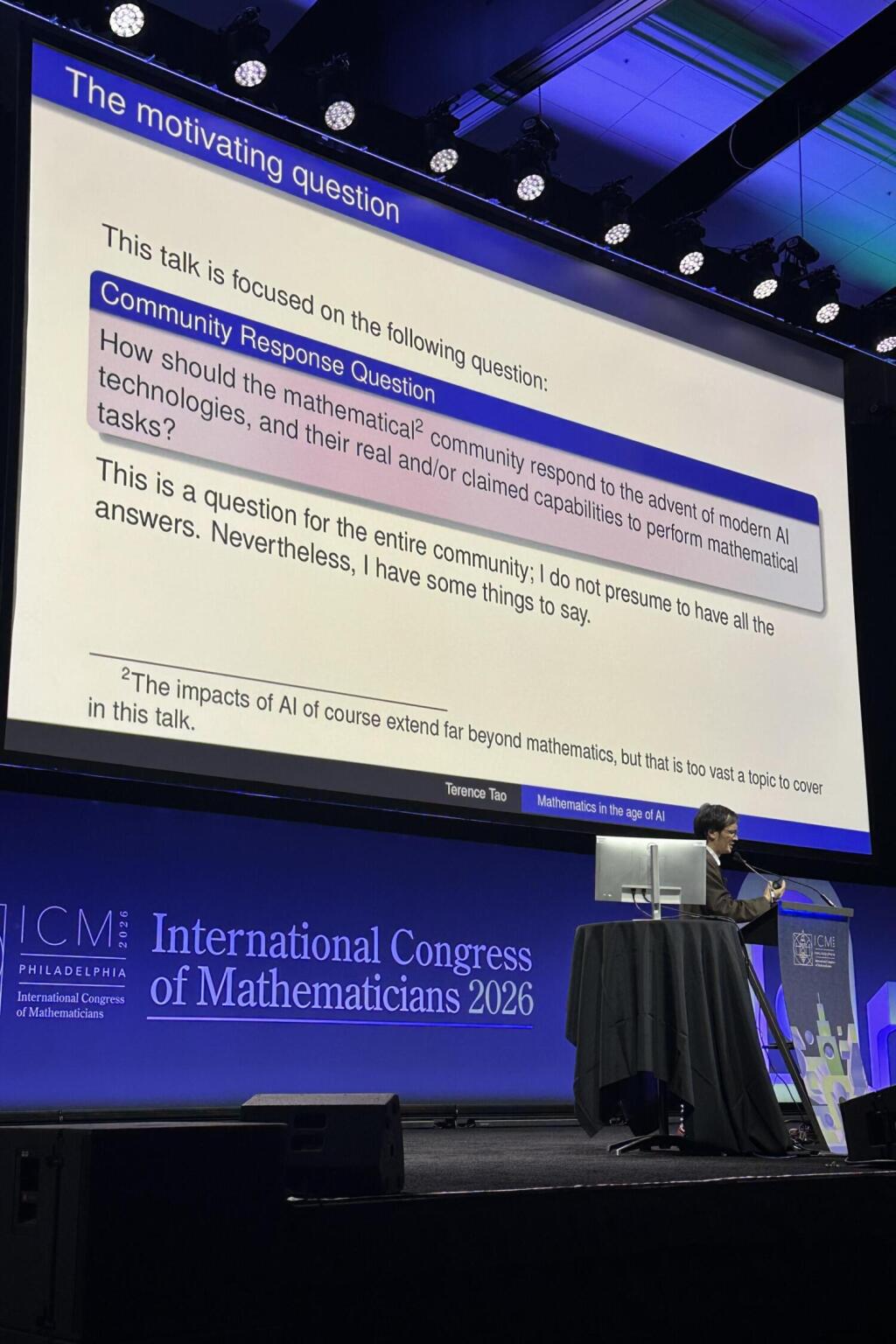
Artificial intelligence is rapidly reshaping the landscape of mathematics. At this year’s ICM, AI was a special topic, discussed in public lectures, special lectures, and research talks. Much of the discussion focused on projects that enable mathematicians to write and formalize proofs using machine-verifiable code. Other conversations explored how AI is changing mathematics education and how it can help preserve and encourage the beautiful, creative human efforts that are at the heart of mathematics.
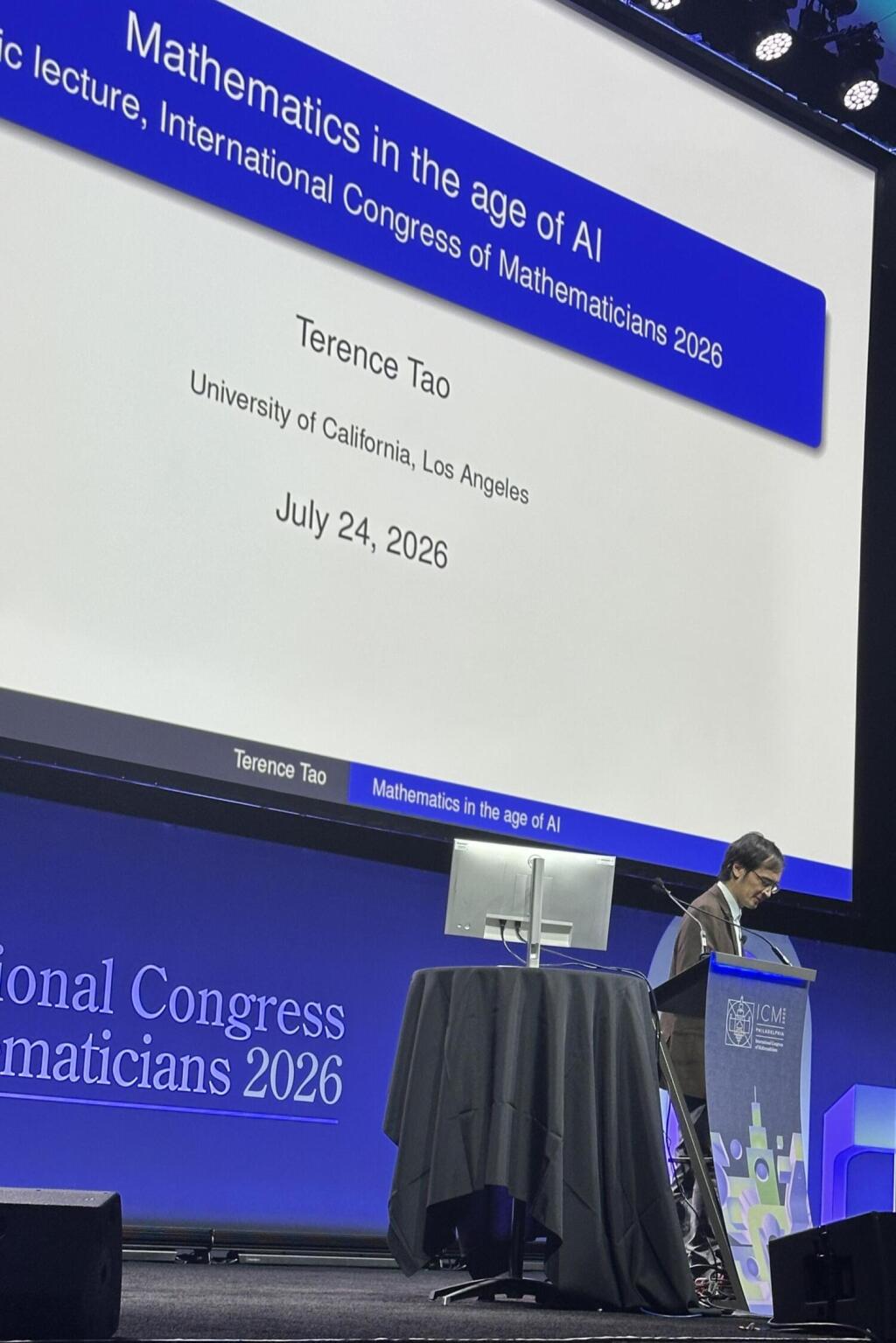
A public lecture on this topic was given on Friday by Terence Tao (UCLA), Fields Medallist 2006. In his talk "Mathematics in the Age of AI" he explained how AI and formalisation will change mathematical research and education while focusing on what makes mathematics a human endeavor. Slides of Tao's talk https://leidendeclaration.ai/
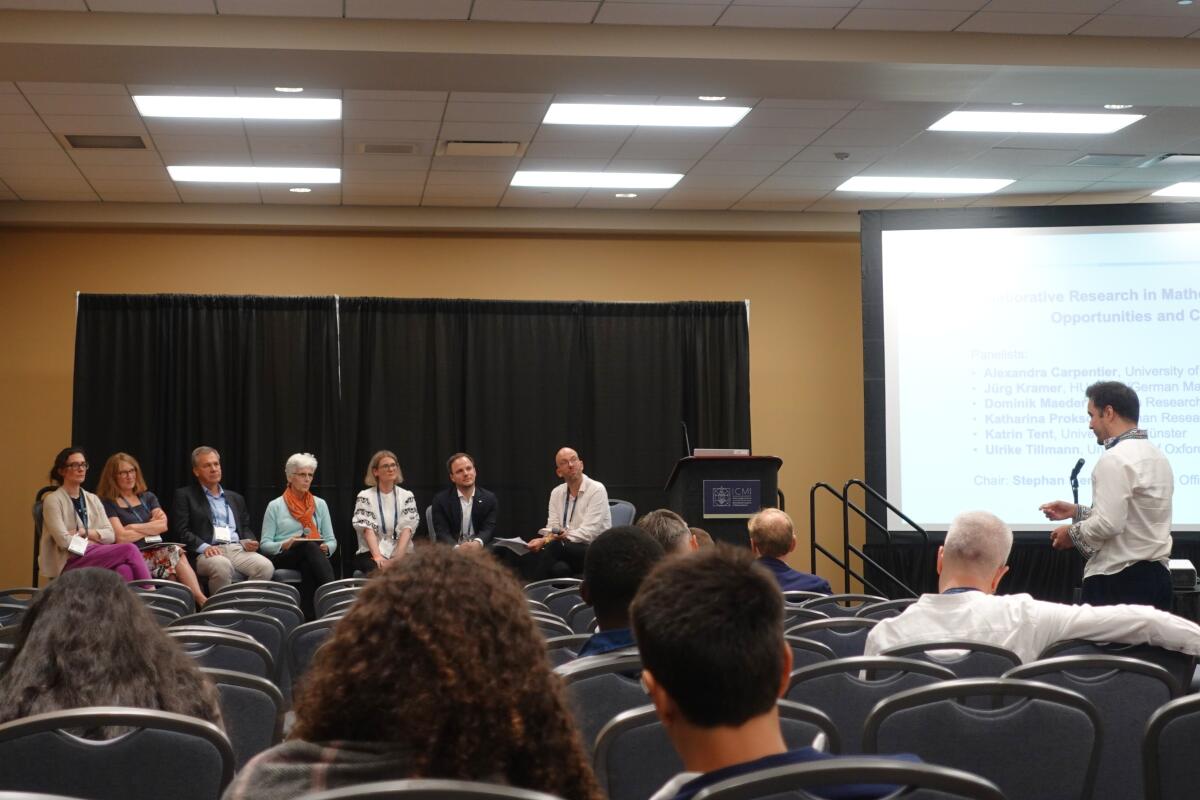
Panel on Collaborative Research in Mathematics in Germany
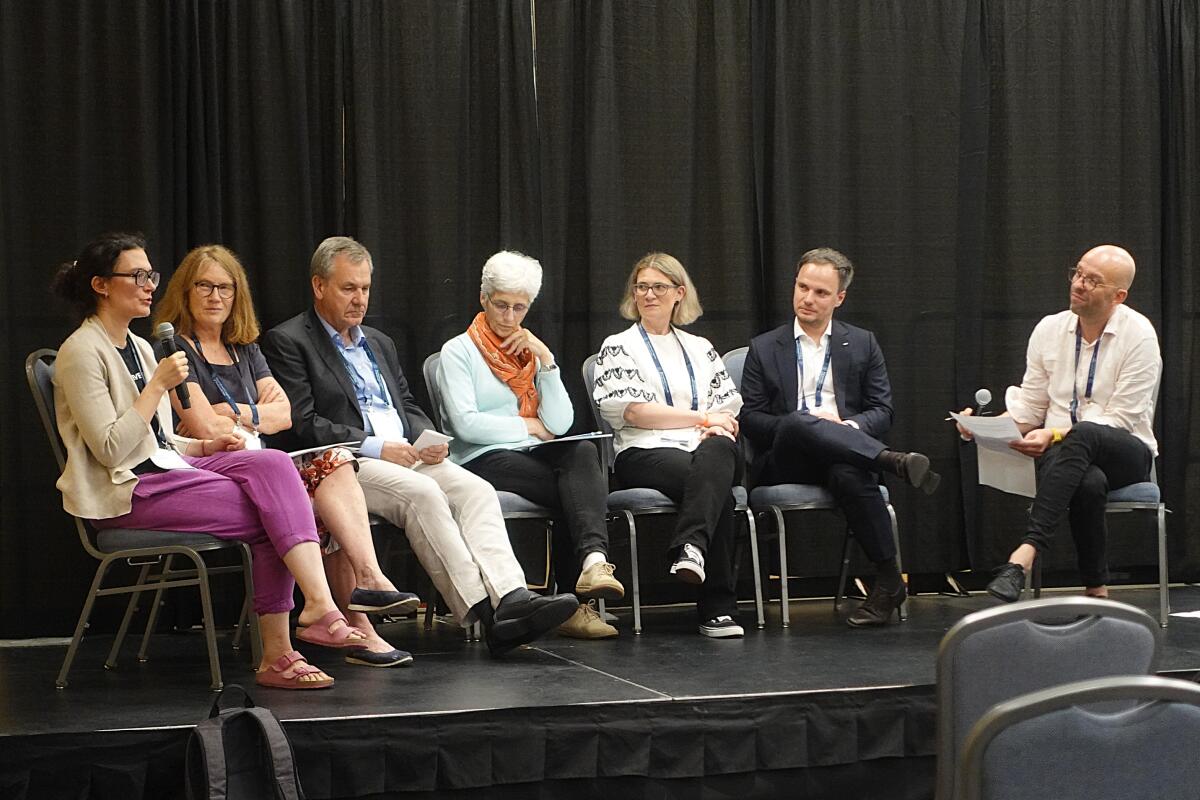
On Saturday, the DFG organised the Panel "Collaborative Research in Mathematics in Germany: Opportunities and Challenges". The session took a closer look at the transformative potential and the structural challenges of large-scale collaboration in mathematics. Panelists were our investigator Katrin Tent, Alexandra Carpentier (Universität Potsdam), Ulrike Tillmann (University of Oxford), Jürg Kramer (Humboldt Universität Berlin and DMV), Dominik Maeder (DFG) and Katharina Proksch (DFG), Moderation by Stephan Isernhagen (DFG).
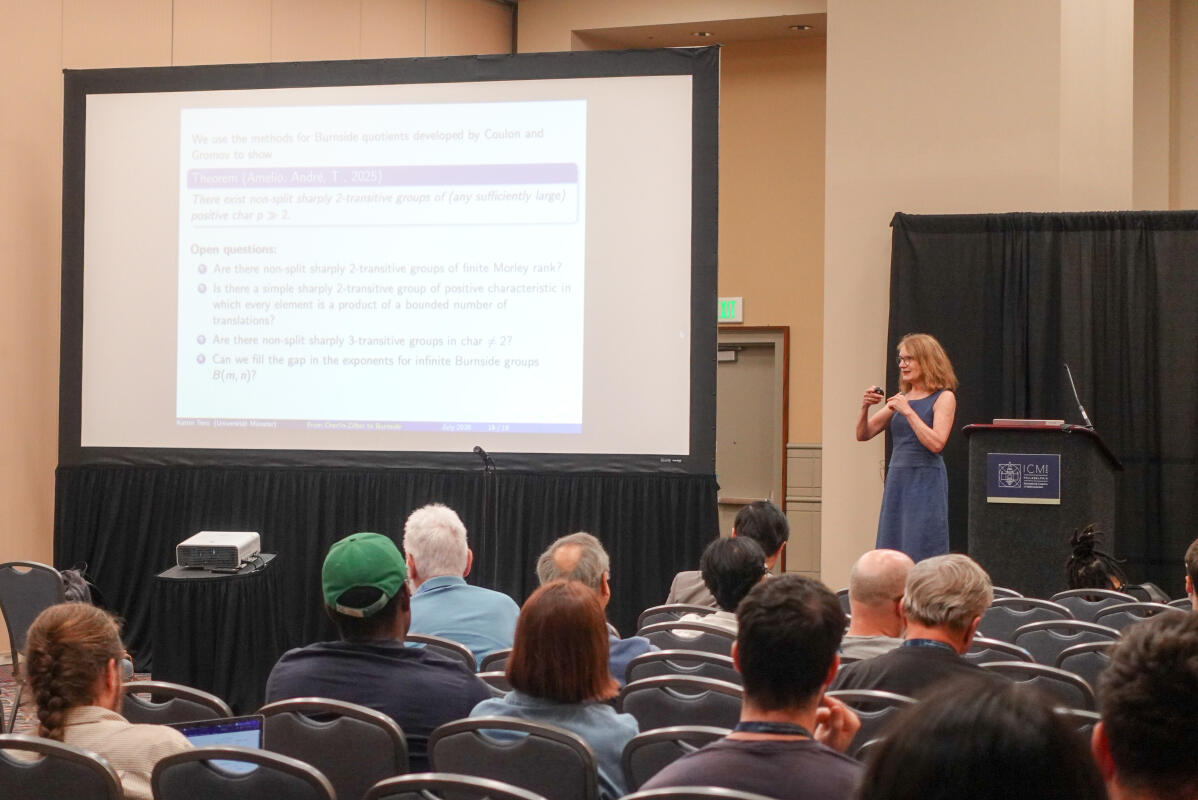
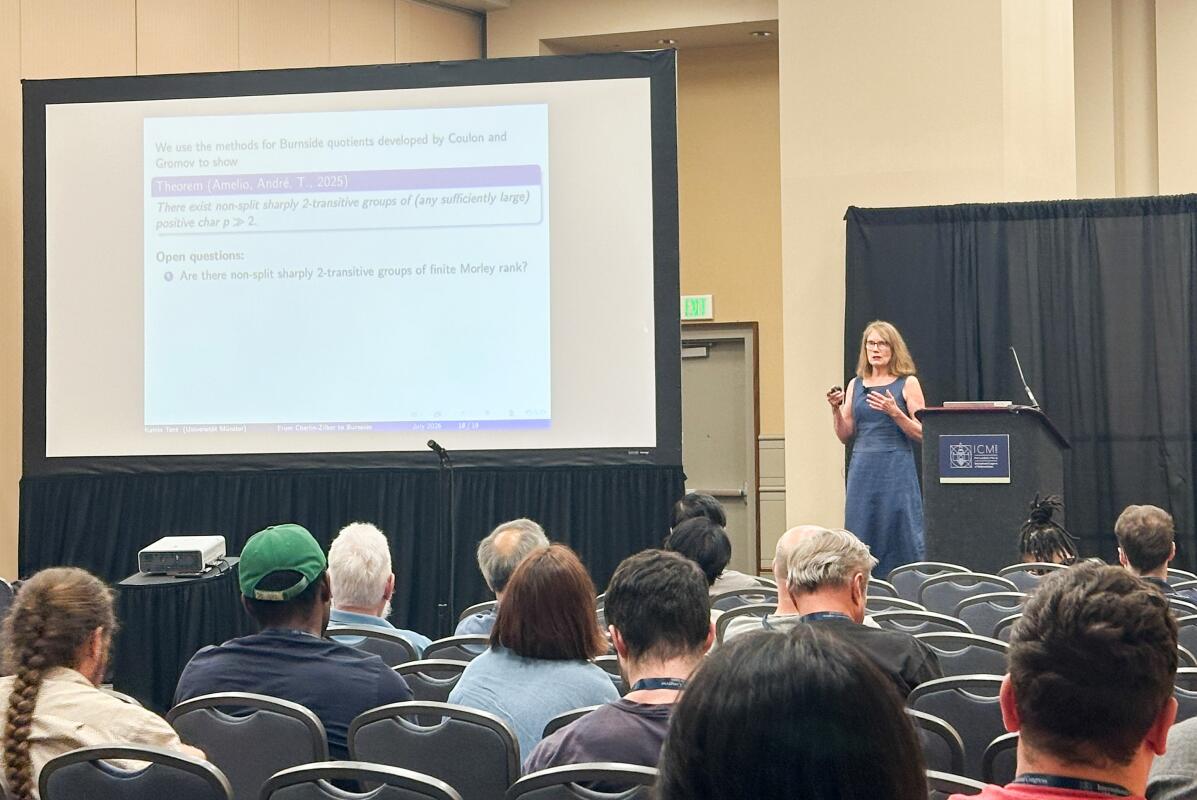
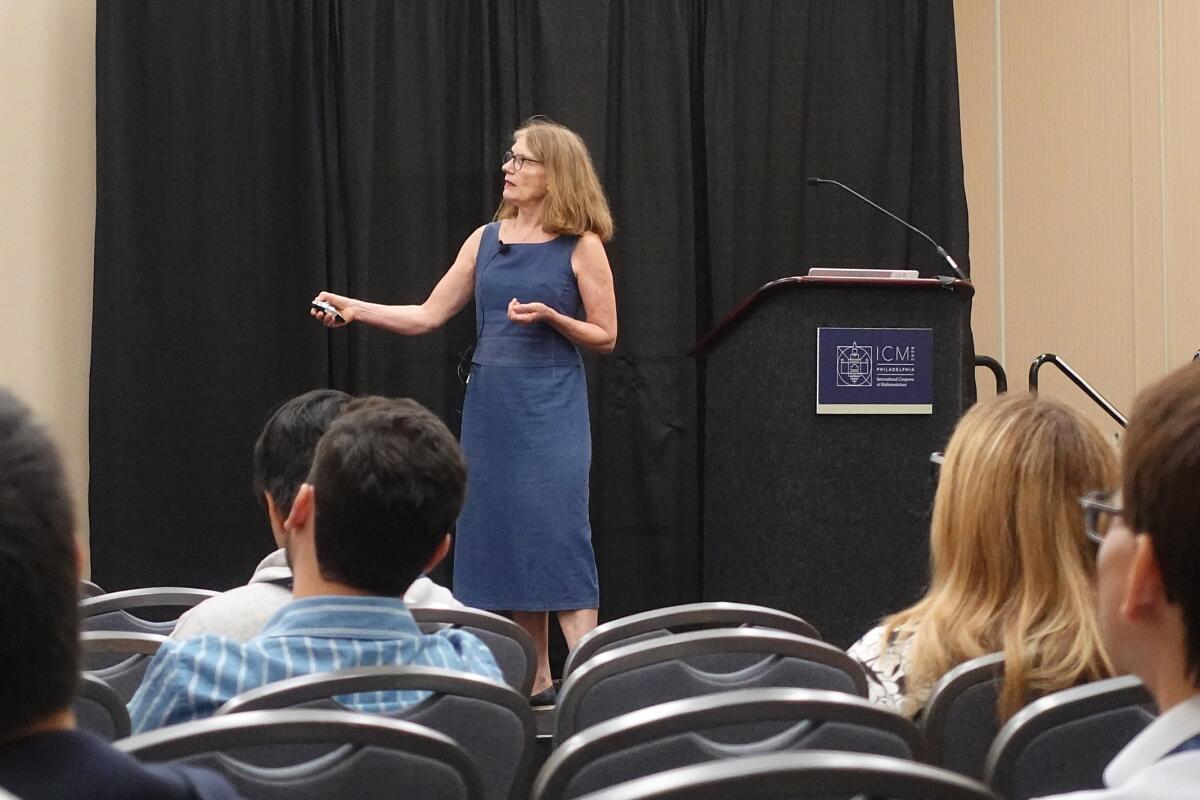
Our investigator Katrin Tent was invited to give a lecture in the Logic Section on Sunday.
From the Cherlin-Zilber Conjecture via Sharply 2-Transitive Groups to the Burnside Problem
We review the current state of the Cherlin-Zilber Algebraicity Conjecture on simple groups of finite Morley rank, which states that every such group is the group of K-rational points of an algebraic group for some algebraically closed field K. We will explain the relevance of sharply 2-transitive groups as a potential source of counterexamples and how the Burnside problem necessarily comes into the picture.
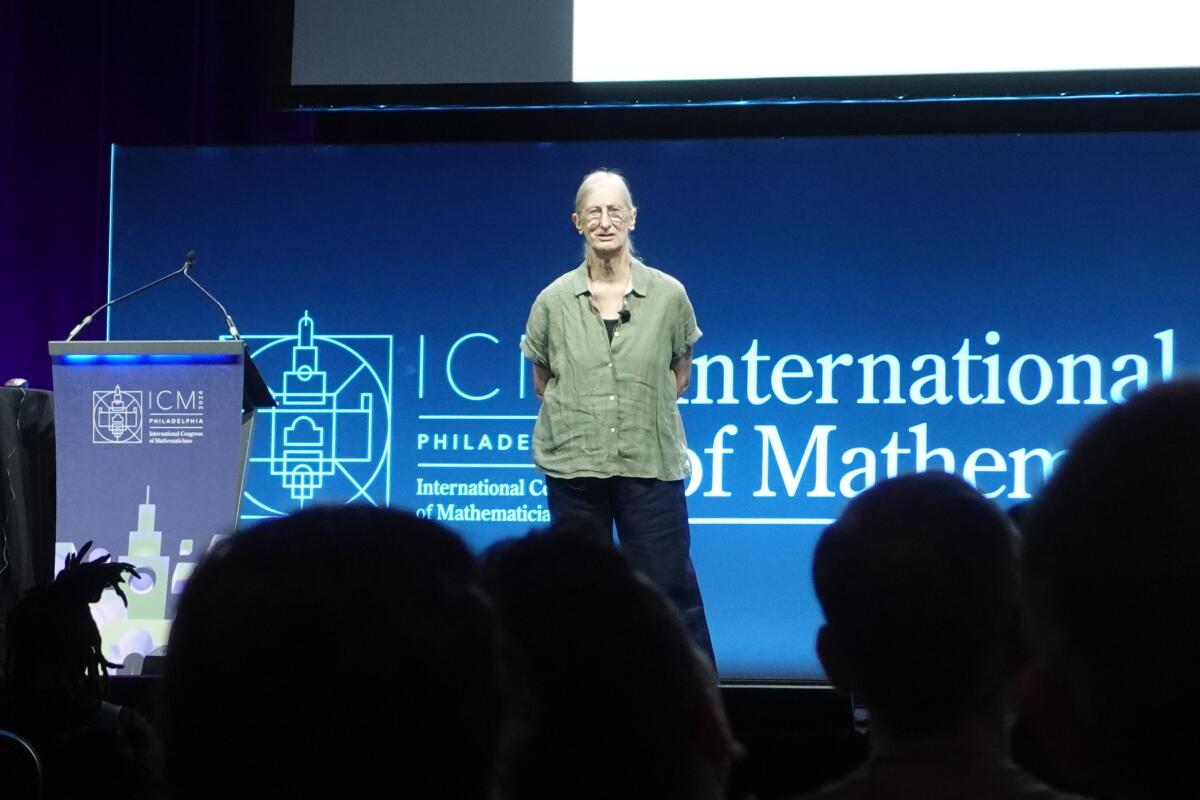
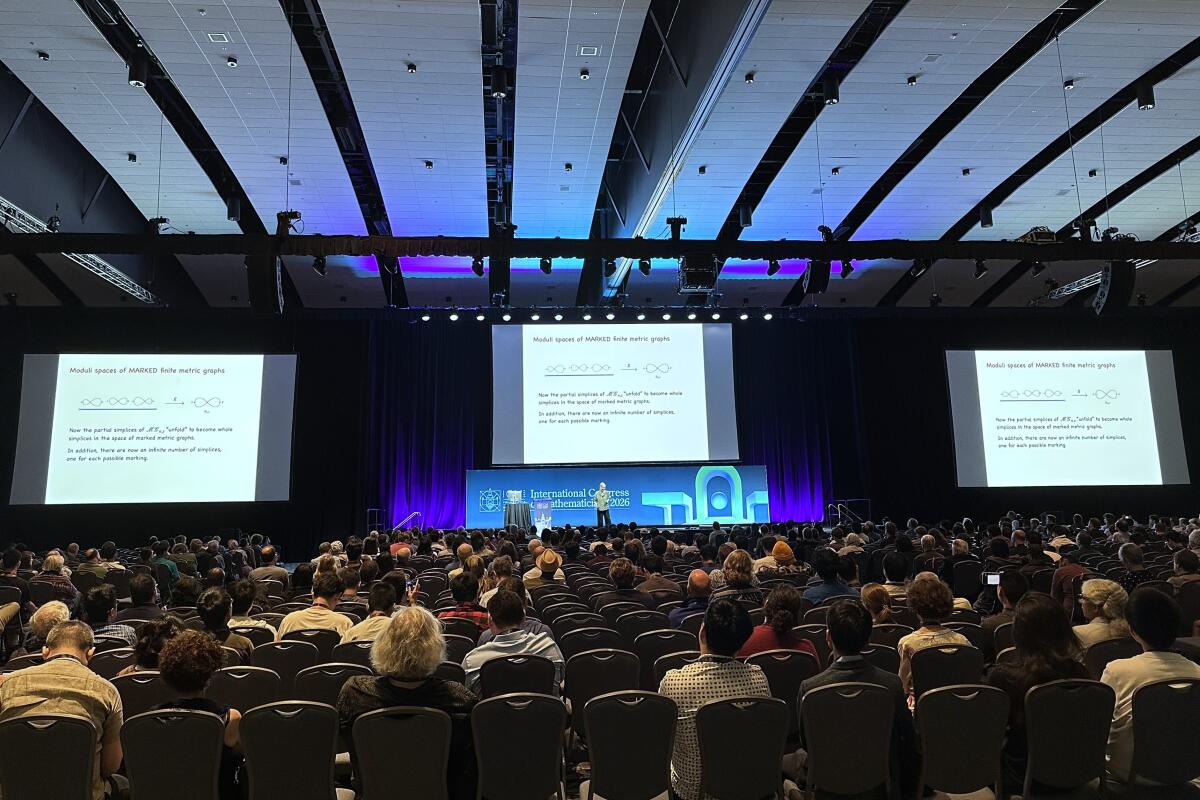
A special honor for Karen Vogtmann (University of Warwick), member of Mathematics Münster's advisory board: She was selected as Emmy Noether Lecturer 2026 for her fundamental contributions to Geometric Group Theory and Low Dimensional Topology. She gave a talk on "Moduli Spaces of Graphs".
The ICM Emmy Noether Lecture honors women who have made fundamental and sustained contributions to the mathematical sciences. Since 2006, this lecture is a permanent ICM tradition, since 2014, a special commemorative plaquette is given to each ICM Emmy Noether Lecturer.
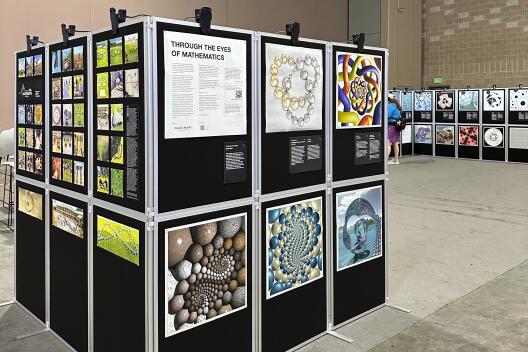
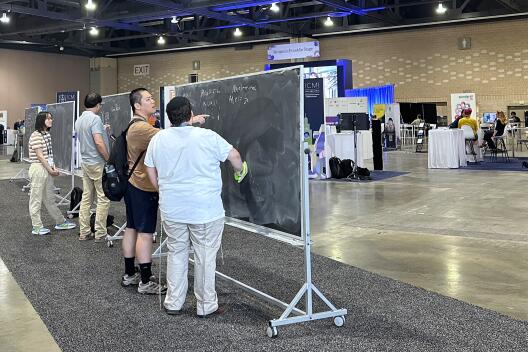
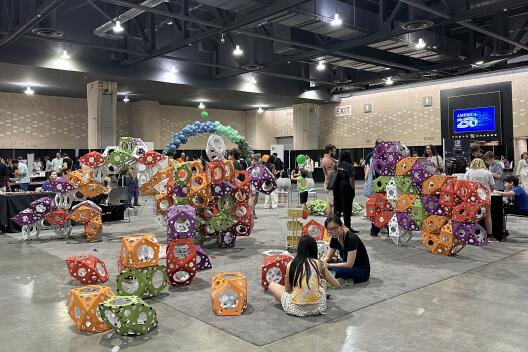
In addition to the scientific lectures, the ICM featured a large exhibition hall. Visitors could use blackboards for spontaneous mathematical discussions, explore exhibitions of mathematics-inspired art, and visit booths hosted by universities, research institutes, publishers, and other mathematical organisations. On Friday and Saturday, the exhibition hall also hosted a family-friendly Math Festival with hands-on activities and puzzles.
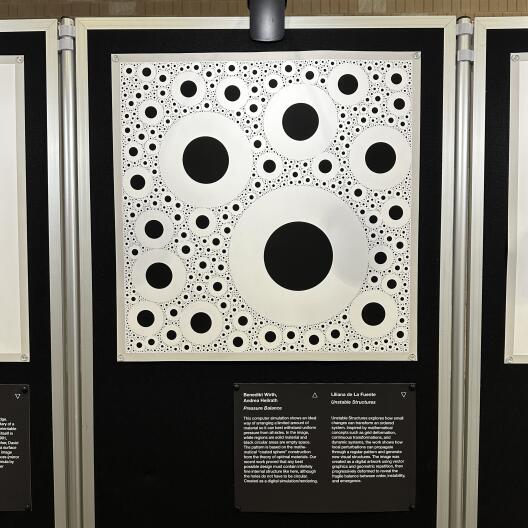
The art exhibition "Through the eyes of mathematics", curated by Imaginary, featured an artwork based on the research of our investigator Benedikt Wirth.
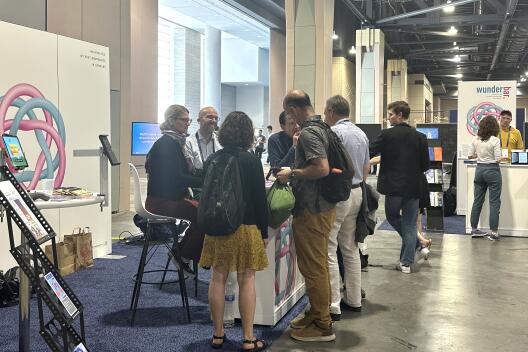
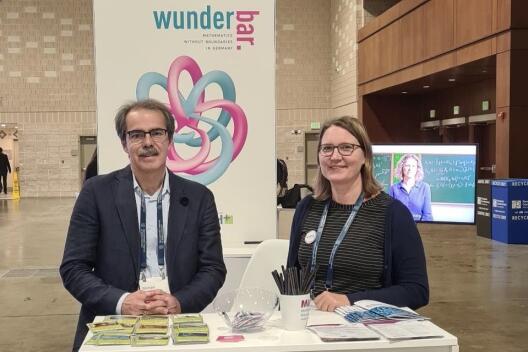
Our Cluster of Excellence Mathematics Münster was part of the booth "Wunderbar. Mathematics without Boundaries in Germany". Representatives of several German mathematical research and funding institutions provided information about research and career opportunities for mathematicians.