
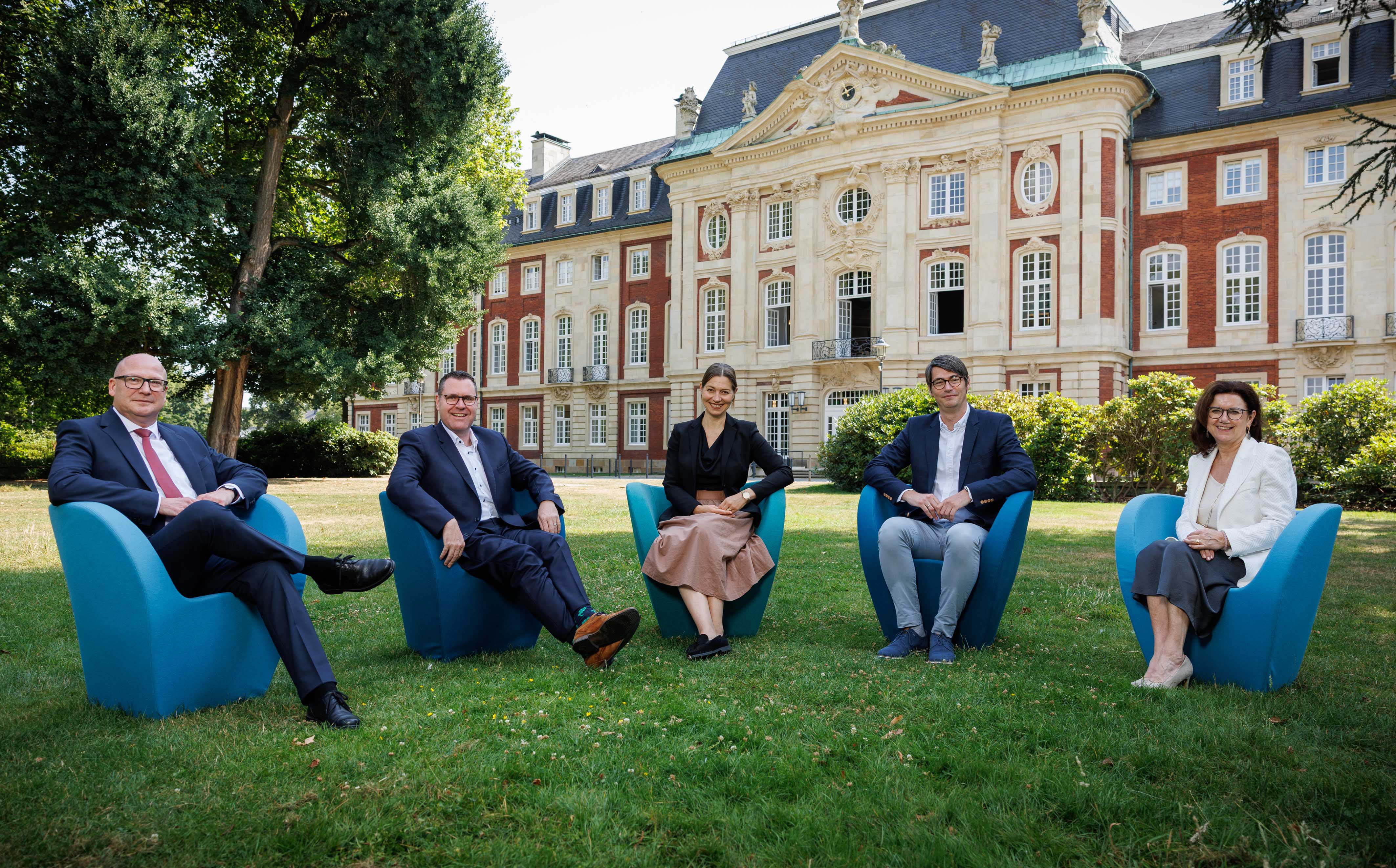
A new team with fresh ideas
If it’s true what the American management expert and university professor Stephen Covey once postulated, namely that “strength lies in differences, not in similarities”, then we can look forward to a dynamic Rectorate at the University of Münster in the coming years. Even the composition of the future team was the result of different ideas, remarks the designated Rector Prof Dr Susanne Menzel-Riedl. For instance, the new team represents a highly diverse range of subjects and possesses expertise in university self-administration. And while some members bring valuable experience from other universities, having members who are deeply familiar with the University of Münster is a big advantage. ‘I am very confident that our team can bring fresh ideas to the areas of research, teaching and digitalisation, as well as the important cross-sectional topics, such as knowledge transfer into society and career development,’ says Susanne Menzel-Riedl, whose five-member Rectorate team will commence its work on 1 October.
The Vice-Rectorate for Research will be headed by neurologist Prof Dr Sven G. Meuth. He plans on focusing on three aspects – adopting a clearly defined profile, prioritising the strongest fields and strategically strengthening the University’s research activities. The guiding principle is to bundle the strong achievements of the collaborative research centres and individual researchers in such a way that the University could submit two to three Cluster of Excellence applications in the next round of the Excellence Competition. ‘We plan to consistently align our efforts in early-career research promotion, appointments, infrastructural improvement and international visibility with this goal,’ explains Professor Meuth.
The computer scientist Prof Dr Benjamin Risse will assume responsibility for the newly created Vice-Rectorate for Digitalisation. In this role, he will oversee the digital transformation in research, teaching and administration by posing “future-oriented questions” and tapping numerous experts from around the University to answer them, e.g. regarding the role of artificial intelligence and the management of rapidly growing masses of data. He also plans on bundling expertise on these topics from all corners of the University and forging new partnerships with innovative companies. ‘Using our wealth of data and top position in data science, and combining technology, law, business, the humanities and teacher education, our plan is to create a digitalisation strategy like no other,’ explains Benjamin Risse, laying out the goal.
Susanne Menzel-Riedl plans to establish an additional vice-rectorate dedicated to internationalisation, equity and diversity at the beginning of the new year. This will allow the new Rectorate team to jointly decide on how the department should be set up and to nominate a candidate for the position.
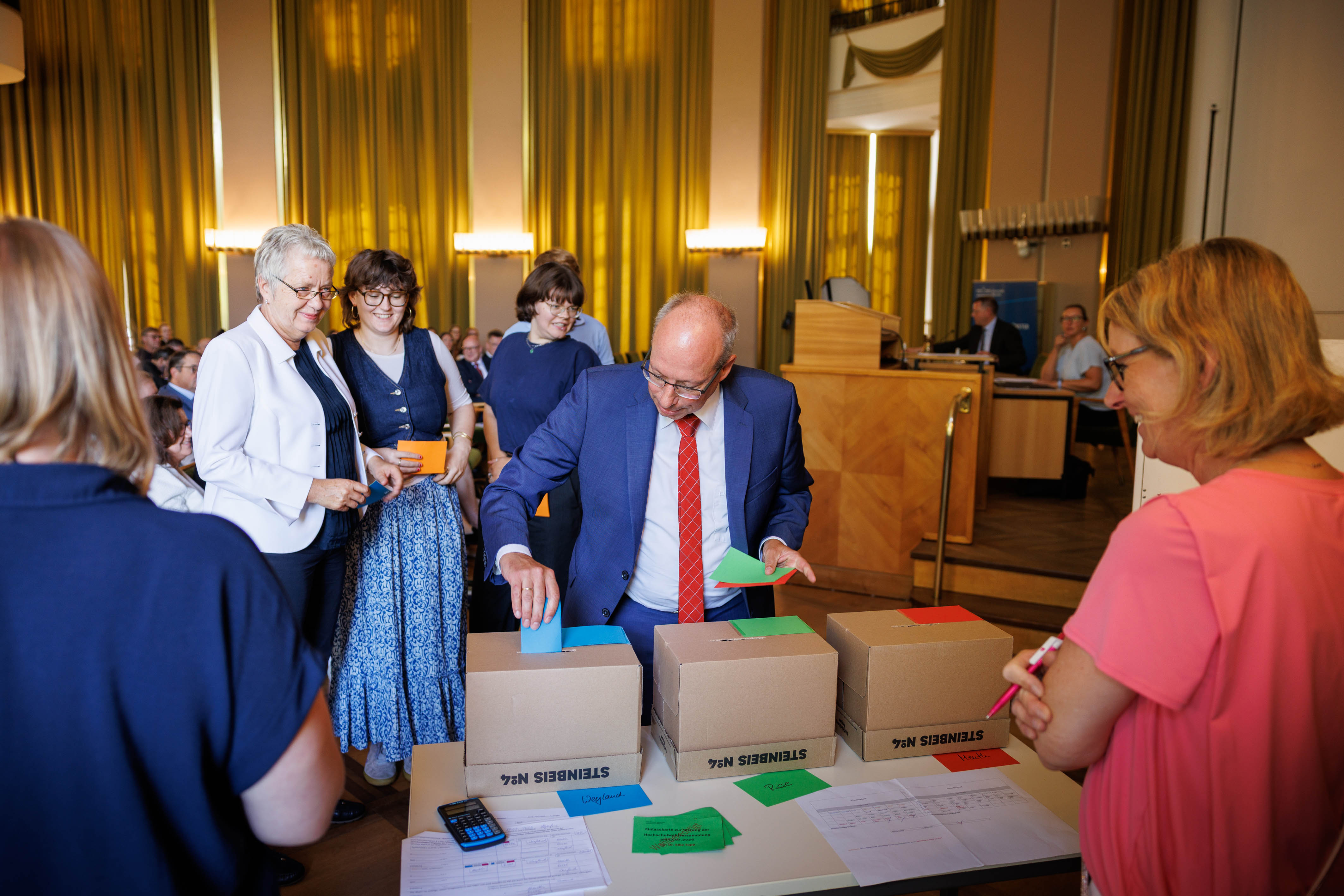
The Rectorate also includes Matthias Schwarte, who has served as full-time Head of Administration since 2012. The Vice-Rectors’ term of office corresponds to that of Susanne Menzel-Riedl’s, i.e. six years with possible re-election. The duration of the Vice-Rectorate election on 17 July reflects the enormous trust the University Electoral Committee has placed in the new team: in just 22 minutes all votes were cast and counted.
Author: Norbert Robers
This article is from the University newspaper wissen|leben No. 5, 22 July 2026.