

Über das Projekt
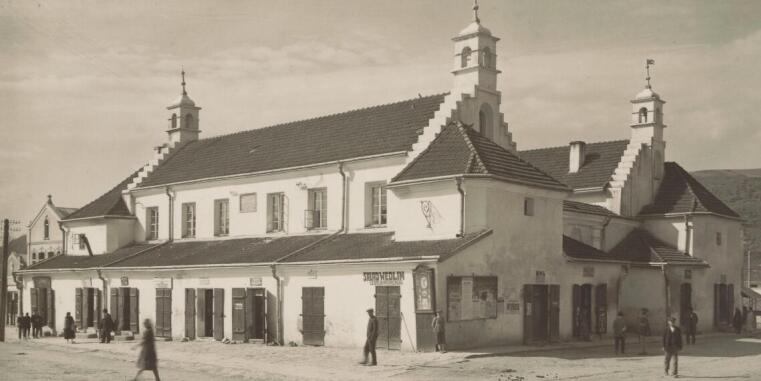
The project is focused on the emergence of town halls, their functions and architecture in towns founded by noble landowners (termed as ‘private towns’ in Polish and Ukrainian historiography) in the historical region of Podolia (presently south-western part of Ukraine). This type of urban foundations dominated in the Early Modern Polish-Lithuanian Commonwealth (especially Ukrainian lands) often being characterized by their small size, rudimentary urban institutions, limited civic rights and a stronger control from the side of the founder as compared with royal towns. In addition, the topography and urban fabric as well as population of these towns might resemble that of a village.
A town hall has been usually understood as an architectural and visual expression of civic pride, a “crystallization nucleus of civic identity”, a symbol of autonomy, and a multi-functional public space. Yet, how many of these features can be seen in Podolian towns and town halls? What is more, how did the emergence of a town hall come about in a settlement with underdeveloped urban institutions and considerable dependence on a land lord? What or whom were they meant to represent, and how did they function? Who initiated and financed the building process and what were the architectural models? Can a town hall in a ‘private town’ be regarded a ‘public place’, i.e. a space controlled by public actors, acting on behalf of a community? These are some of the research questions to be answered by the project.
Projektlaufzeit
2025 – 2027
Projektteam
Dr. Olga Kozubska