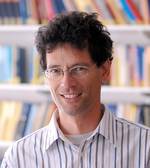
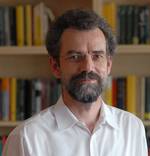
The Karl Georg Christian von Staudt Prize is awarded every three to six years by the Otto and Edith Haupt Foundation. It honours scientists who work at a university or research institution in Germany on a permanent basis. The prize recognises both individual discoveries of exceptional importance and the overall body of work of particularly distinguished researchers in the field of theoretical mathematics.
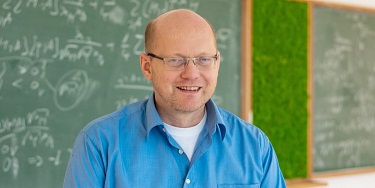
2022: Prof. Dr. Burkhard Wilking
The Otto and Edith Haupt Foundation at the University of Erlangen-Nuremberg awarded Prof. Dr. Burkhard Wilking of the Mathematical Institute at the University of Münster the 2022 Karl Georg Christian von Staudt Prize. With this award, presented for the eighth time, the foundation recognised his outstanding achievements in theoretical mathematics. Endowed with €25,000, the Staudt Prize is one of the most highly funded mathematics prizes in Germany. The award ceremony took place in Erlangen on 22 April.
Burkhard Wilking conducts research in differential geometry, which is applied, for example, in general relativity and satellite navigation. In its citation, the Scientific Commission of the German Mathematical Society, which nominated the prize-winner, highlighted Wilking’s contributions to the construction of metrics of non-negative sectional curvature and to rigidity theorems for manifolds of positive curvature, in particular his creative application of the so-called Ricci flow.
Burkhard Wilking was born in Vechta in 1970. He studied in Münster, where he completed his doctorate in 1998. From 1999 to 2001 he worked at the University of Pennsylvania in the USA before being appointed professor of differential geometry at the University of Münster in 2002. He has played and continues to play a major role in several large research projects, including the Cluster of Excellence Mathematics Münster, the Collaborative Research Centre “Geometry: Deformations and Rigidity” and the Priority Programme “Geometry at Infinity”. He received the Gottfried Wilhelm Leibniz Prize in 2009. He has been a member of the Leopoldina since 2016, a member of the North Rhine-Westphalian Academy of Sciences and Arts since 2018 and a member of the Academia Europaea since 2019.
ERC Grants
The European Research Council (ERC) supports leading researchers in order to advance basic research and visionary projects and to open up new interdisciplinary fields of knowledge. The “Advanced Grants” scheme is aimed at established researchers with an outstanding scientific track record over the past ten years. The “Consolidator Grants” scheme supports excellent and promising researchers whose own independent research group is in its consolidation phase. At the beginning of an independent career, the “Starting Grants” scheme supports excellent early-career researchers. “Synergy Grants” are intended for teams of two to four promising researchers. The projects are intended to lead to discoveries at the interfaces between established disciplines and to substantial advances at the frontiers of knowledge. Around 20 researchers at the University of Münster have received a grant from the European Commission during their careers.
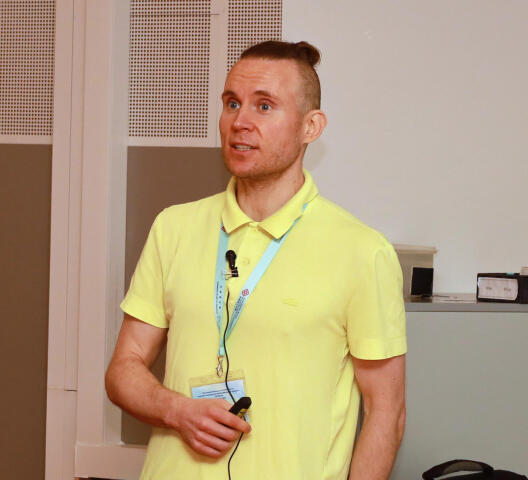
The European Research Council awarded Prof. Dr. Arnulf Jentzen an “ERC Consolidator Grant”. The scientist, who conducts research at the Cluster of Excellence Mathematics Münster at the University of Münster, works on the mathematical foundations of so-called deep learning. This field of machine learning in turn provides the basis for developing applications of artificial intelligence. For the project “Overcoming the curse of dimensionality through nonlinear stochastic algorithms” (MONTECARLO), which starts in July 2023, the mathematician will receive approximately €1.4 million over the next five years.
Arnulf Jentzen, born in 1983, studied and completed his doctorate at Goethe University Frankfurt. After working as an academic adviser at Bielefeld University, he conducted research at Princeton University in the USA. From 2012 to 2019 he was an assistant professor at ETH Zurich. Since 2019 he has been Professor of Applied Mathematics at the University of Münster and a member of the Cluster of Excellence Mathematics Münster. Since 2021 he has also held a chair at the School of Data Science of the Chinese University of Hong Kong, Shenzhen.
2023: Dr. Rudolf Zeidler
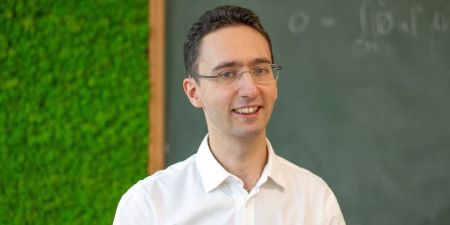
The European Research Council awarded Dr. Rudolf Zeidler an “ERC Starting Grant”. The EU funding of €1.4 million enables the scientist from the Mathematical Institute at the University of Münster to carry out the research project “Comparison and rigidity for scalar curvature” over the next five years. The project combines the fields of geometry, topology and analysis. Its results will contribute to basic research and are relevant to the mathematical description of general relativity. His research focuses on scalar curvature, a concept from Riemannian geometry that describes subtle geometric phenomena in higher-dimensional spaces. Together with his team, he plans to develop fundamentally new tools for investigating scalar curvature.
Born in Vienna in 1988, Rudolf Zeidler has been a postdoctoral researcher at the University of Münster since 2016. He is involved as a researcher in the Cluster of Excellence Mathematics Münster and in the Collaborative Research Centre “Geometry: Deformations and Rigidity”. He studied at the University of Vienna and completed his doctorate at the University of Göttingen, where he also held a temporary professorship for one semester in 2020. He completed his habilitation in 2022.
Prof. Dr. Hendrik Weber is an expert in stochastic analysis and moved from the University of Bath to the Institute of Analysis and Numerics in Münster in September 2022. He brought with him a recently approved ERC Consolidator Grant.
Hendrik Weber works on high-dimensional systems with random influences, known as stochastic partial differential equations (SPDEs). “Such equations are important in many fields of application, for example in modelling the evolution of species, fluid mechanics and the analysis of statistical methods,” explains the mathematician. He mainly works on equations from mathematical physics. With his group, he investigates fundamental properties of these equations, such as the existence of solutions and their regularity.
Growing up in Leverkusen, Hendrik Weber was fascinated at school by the mathematics underlying natural sciences such as chemistry and physics. A book about integrals and differential equations reinforced this interest. He began studying mathematics at Heidelberg University, spent a year on a study programme at the École normale supérieure de Paris and then completed his diploma at the University of Bonn. He remained there for his doctorate, supervised by Karl-Theodor Sturm, which he completed in 2010.
The research project Wilhelm Winter plans to carry out over the next five years with the help of approximately €1.6 million in EU funding is in the field of theoretical mathematics. Its aim is to improve our understanding of the structure of so-called operator algebras using approximation properties. Operator algebras were originally introduced to formulate quantum mechanics mathematically; they have since developed into an independent field of research. The new project focuses in particular on so-called nuclear C*-algebras and their connections with actions of amenable groups.
Wilhelm Winter, born in 1968, studied mathematics and physics at Heidelberg University and the University of Münster. After completing his doctorate and habilitation in Münster, he spent several years at the University of Nottingham in England. In 2011 he was appointed professor at the University of Münster.
Alfried Krupp Prize for Young University Teachers
Since 1986, the Alfried Krupp von Bohlen und Halbach Foundation has awarded the Alfried Krupp Prize for Young University Teachers annually to early-career researchers who hold a first professorship at a German university in the natural sciences or engineering. With €1 million, it is one of the most highly endowed prizes for early-career researchers. The award is intended to enable the recipients, over a period of five years, to create an improved working environment independently of public funding and thereby advance their research and teaching.
Benedikt Wirth studied engineering at RWTH Aachen University and applied mathematics at the University of Oxford. He completed his doctorate in mathematics at the University of Bonn in 2010. From 2011 he worked as a Courant Instructor at New York University. In 2013 he was appointed W2 Professor at the University of Münster.
He works on numerical optimisation and variational methods, which he applies to questions in the natural sciences and engineering. Among other things, he investigates how the shapes of objects and biological organs can be described and analysed mathematically.
Alexander von Humboldt Professorship
The Alexander von Humboldt Professorship is funded by the Federal Ministry of Education and Research as part of the International Research Fund for Germany. It enables long-term, forward-looking research at universities and research institutions in Germany. The prize money, generally €3.5 million, is made available over a period of five years.
Gustav Holzegel, born in 1980, studied physics at the University of Kaiserslautern. He completed his doctorate in 2008 at the Department of Applied Mathematics and Theoretical Physics (DAMTP) of the University of Cambridge and subsequently conducted research at Princeton University in the USA. From 2012 he worked at Imperial College London, where he was appointed professor in 2018. Since November 2020 he has held a “Bridging the Gaps” professorship at the University of Münster. For his pioneering contributions to the mathematical understanding of black holes, Gustav Holzegel received the Whitehead Prize of the London Mathematical Society (2016), the Adams Prize of the University of Cambridge (2018) and the Blavatnik Award (2019).
Michael Weiss studied in Tübingen and Warwick, where he completed his doctorate in 1982. He conducted research at various European and US universities and research institutes. From 1999 he worked at the University of Aberdeen, where he was a professor from 2003. He is the recipient of the Fröhlich Prize, awarded by the London Mathematical Society for exceptionally innovative research. In 2012 he was appointed to an Alexander von Humboldt Professorship at the University of Münster.
He works in algebraic topology and differential topology, particularly surgery, algebraic K-theory and algebraic L-theory. Together with his Danish colleague Ib Madsen, he is renowned for proving the so-called Mumford conjecture, a mathematical problem that had remained unsolved for 20 years.
Leibniz Prize Winners
The Gottfried Wilhelm Leibniz Prizes, awarded each year by the German Research Foundation (DFG) to around ten outstanding German scientists, are sometimes referred to as the “German Nobel Prizes”. No other scientific award in Germany is endowed with such large sums: the prize-winners can receive up to €2.5 million.
For her excellent research, mathematician Prof. Dr. Eva Viehmann of the University of Münster received the 2024 Gottfried Wilhelm Leibniz Prize from the German Research Foundation (DFG).
In its citation, the DFG particularly highlighted Eva Viehmann’s influential work in arithmetic algebraic geometry within the framework of the Langlands programme.
Born in 1980, Eva Viehmann studied mathematics at the University of Bonn. After completing her doctorate in 2005, she worked as a postdoctoral researcher at Université Paris-Sud. From 2006 to 2012 she was a research associate at the University of Bonn, during which time she conducted research as a visiting scholar at the University of Chicago. She completed her habilitation in Bonn in 2010. In 2012 she was appointed Professor of Algebra at the Technical University of Munich (TUM). In February 2022 she moved to the University of Münster, where she holds a professorship in theoretical mathematics. She is a member of the Cluster of Excellence Mathematics Münster and the Collaborative Research Centres “Geometry and Arithmetic of Uniformized Structures” and “Geometry: Deformations and Rigidity”.
Eva Viehmann has received several awards for her scientific achievements. In 2021 she was elected a member of the National Academy of Sciences Leopoldina. She was an invited speaker at the International Congress of Mathematicians in Rio de Janeiro in 2018. She received an ERC Starting Grant in 2011 and an ERC Consolidator Grant in 2017. She is the recipient of the von Kaven Prize (2017) and the Felix Hausdorff Memorial Prize of the University of Bonn (2005).
2009: Prof. Dr. Burkhard Wilking
Prof. Dr. Burkhard Wilking of the Mathematical Institute at the University of Münster received the €2.5 million Gottfried Wilhelm Leibniz Prize 2009 in Berlin on 30 March 2009.
He is regarded as a leading scientist in differential geometry. His work has had a particular influence on Riemannian geometry. In addition to his repeatedly honoured work as a researcher, he has also made a name for himself as an academic teacher. In 2006, the University of Münster had already awarded him its €30,000 research prize.
1999: Prof. Dr. Dr. h.c. Joachim Cuntz
Prof. Dr. Joachim Cuntz studied mathematics and physics in Heidelberg and Paris. He completed his doctorate in Bielefeld in 1975 and his habilitation at Technische Universität Berlin in 1977.
Before coming to Münster in 1997, he worked at the universities of Aix-Marseille and Heidelberg. He received the Max Planck Research Award (1993), the Médaille du Collège de France (1997), the Leibniz Prize of the German Research Foundation (1999) and an ERC Advanced Investigators Grant (2010).
1992: Prof. Dr. Christopher Deninger
Prof. Dr. Christopher Deninger studied mathematics in Cologne and completed his doctorate there in 1982. He completed his habilitation in Regensburg in 1988 and took up a professorship in Münster in 1989. He received the Leibniz Prize of the German Research Foundation in 1992 and has been a member of the learned society Leopoldina since 2003.
1992: Prof. Dr. Peter Schneider
Prof. Dr. Peter Schneider studied mathematics in Erlangen and Karlsruhe. He completed his doctorate in Regensburg in 1980 and his habilitation there two years later. He subsequently worked at the universities of Regensburg, Heidelberg and Cologne before accepting a professorship in Münster in 1994.
For his work in arithmetic algebraic geometry on the solution of Diophantine equations, he received the Leibniz Prize of the German Research Foundation in 1992. In 1995 he was awarded the Gay-Lussac Humboldt Prize.