

Highly appreciated but overburdened – The postdoc dilemma
Postdocs occupy a central yet ambivalent role within the German academic system. They are unarguably a driving force in research, teaching and student supervision, and occasionally doctoral supervision as well. At the same time, despite high qualifications and responsibility, their employment situation is often precarious, insecure and unpredictable. But what expectations, needs and perceptions do researchers holding a doctorate without a habilitation or professorship have regarding their work situation and future career? Overall, little is known about this – the Münster Centre for Emerging Researchers (CERes) therefore invited postdocs at the University of Münster to participate in a survey on their work situation, job satisfaction and career development.
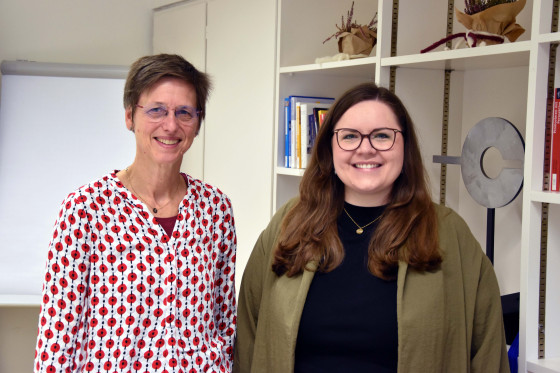
According to the recently published report, around 57% of the 214 surveyed participants were generally satisfied with their working situation, with social aspects, such as teamwork, being rated more positively than satisfaction with professional framework conditions. As expected, professional satisfaction was significantly higher among staff with permanent contracts than those in fixed-term employment. "The dissatisfaction with structural conditions seems to be partially compensated by positive factors such as good social relationships, the experience of meaningful work, appreciation or the opportunity to freely determine the focus of their research and teaching activities," explains Professor Stefanie van Ophuysen, head of CERes.
Slightly more than a third of the postdocs surveyed stated that they felt an excessive workload at least once a week. It was striking that fixed-term employees with full-time contracts felt the most burdened. Many of the respondents could not name any of the existing university offers or points of contact for coping with these burdens. Instead, many postdocs sought support in their private environment and among colleagues. Only a third of the respondents affirmed that they spoke to their supervisors about these burdens. Consequently, as Stefanie van Ophuysen points out, it is important to also sensitise supervisors to the concerns of postdoctoral staff.
According to the latest "Federal Report on Researchers in an Early Career Phase", permanent positions comprise less than 10% of new employment contracts offered to doctorate-holding candidates in the academic sector. In contrast, this number jumps to over 70% for job offers in the private sector, which is why the majority of postdocs consider leaving the academic system. At the University of Münster, many also rate professional perspectives outside of academia slightly more positively, although the location of Münster proves to be attractive. For instance, 40% of the respondents had earned their doctorate at the University of Münster and 29% also studied there.
The respondents see a need for further training primarily in research management, teaching and didactics, as well as in matters of social responsibility and transfer. They find offers on the acquisition of external funding, individual career counselling, project management and leadership training particularly helpful. "Our report is intended to help create more transparency regarding the situation and needs of postdocs and to remain in dialogue with them, the faculties and the many supporting facilities", says Rebecca Meier.
Author: Julia Harth
Reference:
Rebecca Meier & Stefanie van Ophuysen (2026). Postdocs at the University of Münster. Work Situation, Job Satisfaction and Career Development. Münster Centre for Emerging Researchers, University of Münster.
DOI: 10.5281/zenodo.20396062
This article is from the university newspaper wissen|leben No 6, 7 October 2026.