
|
Münster (upm/kk).
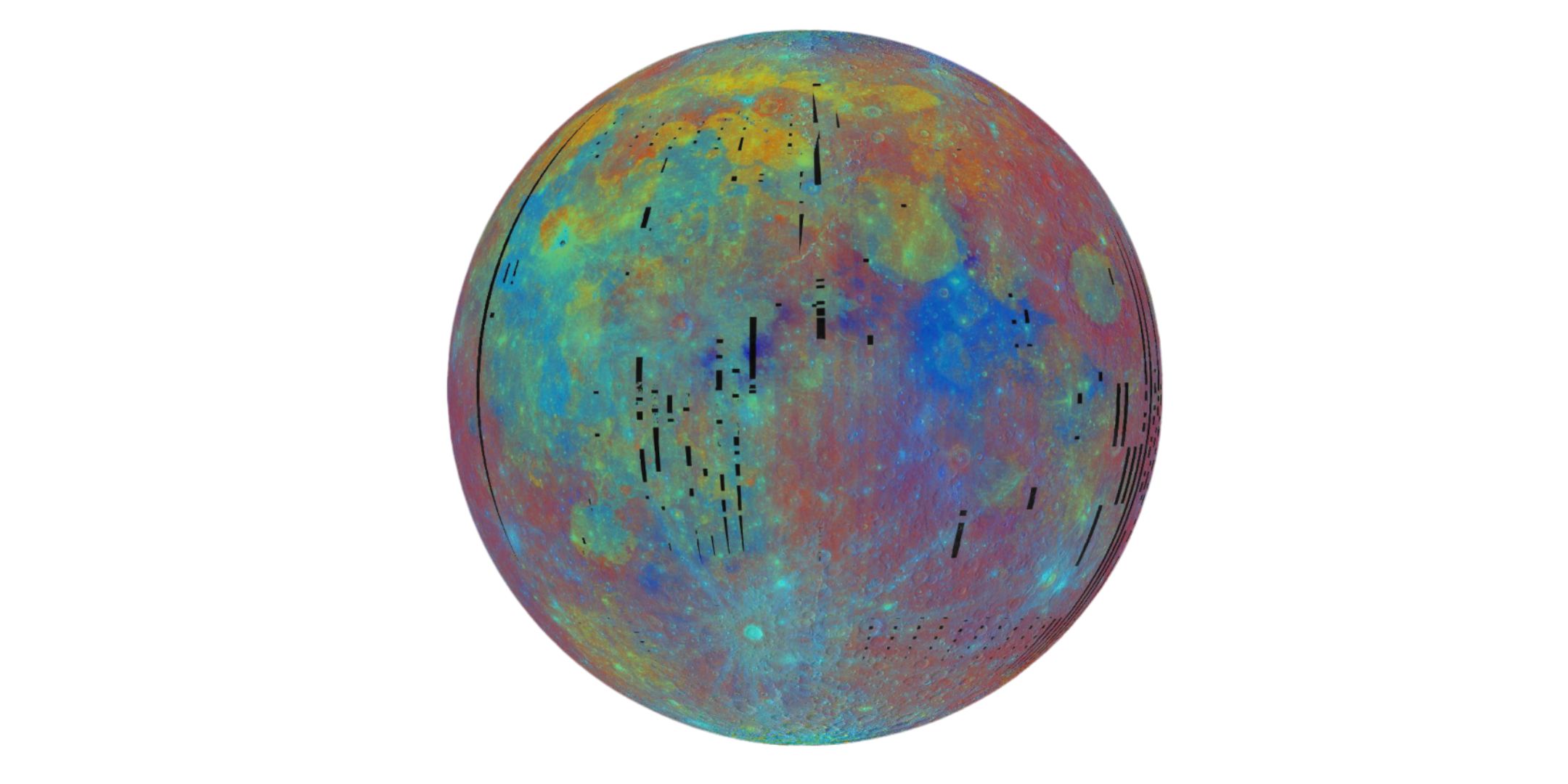
False-colour image composite of the moon taken through three colour filters by the NASA Clementine mission.<address>© NASA</address>
This false-colour composite image of the Moon was taken by the NASA Clementine mission. It combines light reflected at three wavelengths to highlight differences in surface composition. The red areas, for example, are older lunar highlands, while the blue, yellow and orange areas are younger mare basalts with different iron and titanium content.
© NASA

University of Münster participates on new European lunar orbiter

Cooperation agreement now signed / Mission is scheduled to launch in 2029

The last European lunar mission took place over 20 years ago. Now, the University of Münster is part of an international consortium preparing a new lunar orbiter for the European Space Agency (ESA). Scientists from the University of Münster's Institute of Planetology are collaborating with the Polish space company Creotech Instruments, the Space Research Centre of the Polish Academy of Sciences, SATLANTIS, and GMV Innovating Solutions on the project. The cooperation agreement for the project has now been signed.
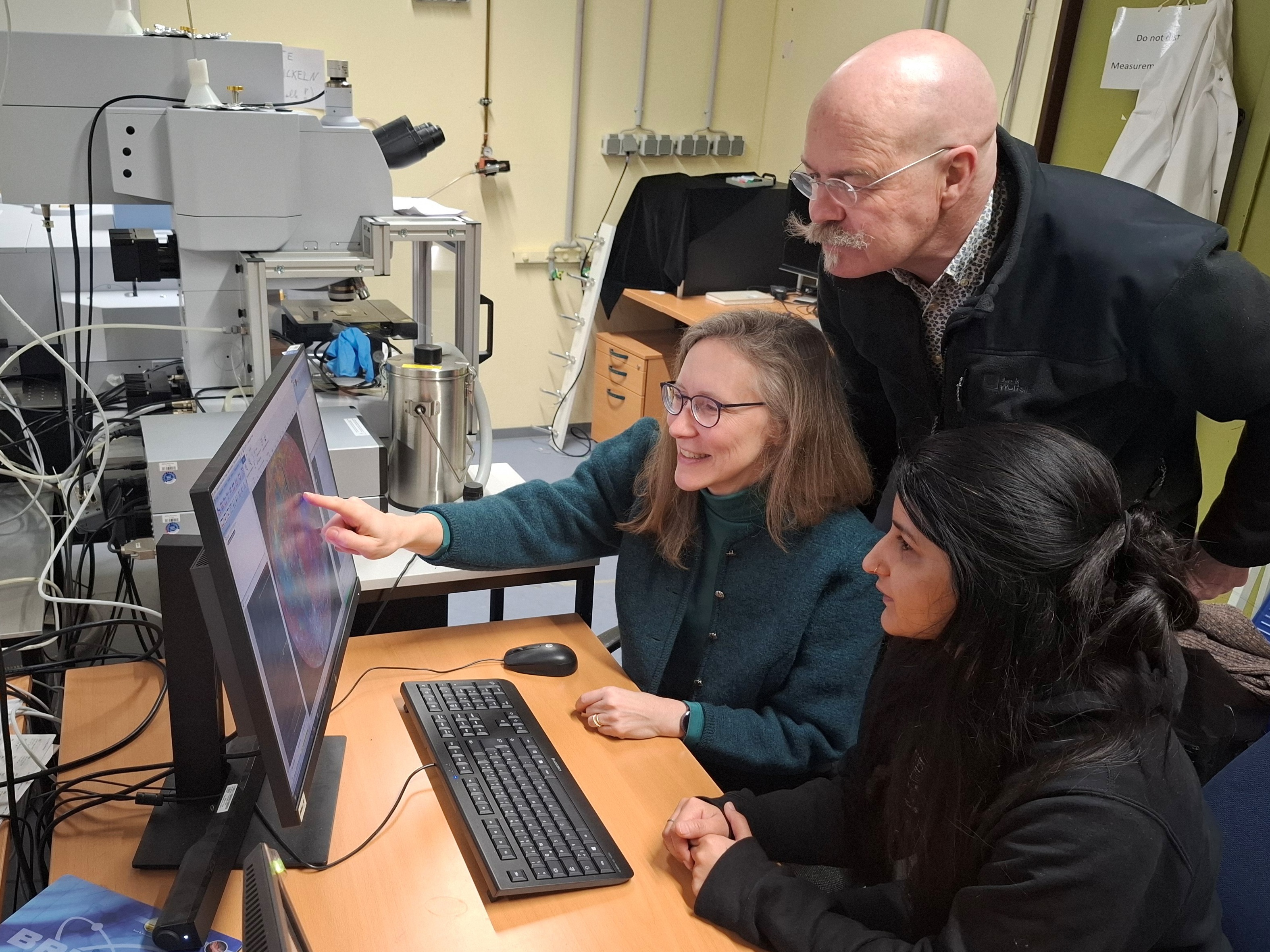
Prof Harald Hiesinger, Dr Carolyn van der Bogert (left) and Dr Wajiha Iqbal in the spectroscopy lab at the Institute of Planetology.<address>© Institute for Planetology</address>
Prof Harald Hiesinger, Dr Carolyn van der Bogert (left) and Dr Wajiha Iqbal in the spectroscopy lab at the Institute of Planetology.
© Institute for Planetology
As the prime contractor for the project with ESA, Creotech Instruments is coordinating a European consortium that is further developing a mission concept from an earlier phase. The aim is to prepare the Twardowski mission: a lunar orbiter that will detect, map and analyse lunar resources, such as certain types of rock and ice, with high spatial and spectral resolution. The mission is scheduled to launch in 2029. This would be the first fully European lunar mission since the SMART-1 mission, which was operated by ESA from 2003 to 2006, and it forms part of ESA's long-term lunar exploration strategy. The mission is named after the famous Polish literary character Pan Twardowski. This nobleman sold his soul to the devil in exchange for fame and power.

Prof Harald Hiesinger, Dr Carolyn van der Bogert and Dr Wajiha Iqbal are experts in scientific mission management and mission operations. The team is supporting the development of parameters for the payload in the visible to mid-infrared range, as well as the associated datasets. The aim is to optimise the observation of resource-relevant rocks and minerals on the lunar surface. “The data collected will significantly expand our understanding of the moon and provide important information about potential landing sites for manned and unmanned missions, as well as for the exploration of lunar resources,” explains Carolyn van der Bogert. For the scientists involved, preparing the Twardowski mission is an important milestone for future European lunar research. Harald Hiesinger emphasises, “The mission concept showcases Europe's scientific and technological capabilities, and will deliver a completely new dataset with unprecedented spectral information about the lunar surface and its resources.”

Further information