

An island in the limelight
At the beginning of 2026, Cyprus will be taking over the Presidency of the Council of the European Union – a role which the 27 member states each take on, in turn, every half-year. This means that the island state, with only about 1.3 million inhabitants, will be granted something which happens only seldom: it will be in the limelight. “In spite of – or perhaps actually because of – its own conflict-ridden history, it is particularly well suited for this role in times of crisis,” says Byzantinist Prof. Michael Grünbart, who heads the University of Münster’s Institute of Interdisciplinary Cyprus Studies as its Executive Director. Münster is a good place, says Grünbart, to inform oneself about the underestimated team-player Cyprus. In the whole of Germany, there is only one university with an Institute for Cyprus studies – and it has been in existence since as long ago as 1996. A delegation from Münster will also be attending the handover of the Council Presidency from Denmark to Cyprus, which will be taking place in Berlin on December 18.
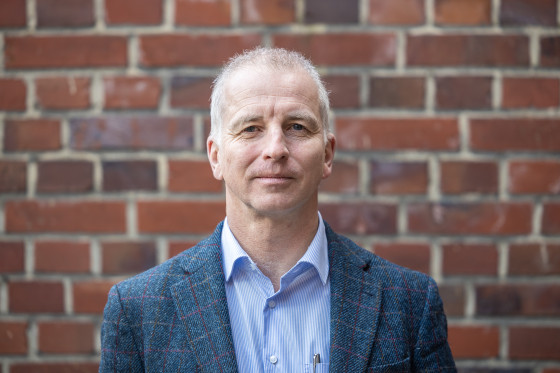
It is worth taking a look at the island – also from an academic viewpoint. “Our scene is broadly diversified and is well-networked,” says Grünbart, “and that is a characteristic feature of the ‘small’ subjects: we collaborate intensively.” He knows many of the researchers from his university days – for example, those working at King’s College in London, in the Netherlands or in Cyprus. In any case, the Institute in Münster works in an interdisciplinary way: with the Archaeology Department for the documentation of excavations; and with the Music Conservatory for processing the large musical-ethnological heritage. Currently, a database is being built up to cover the religious and cultural heritage of the island. “Our new Managing Director, Dr. Thorsten Kruse, travels to Cyprus regularly and busies himself with Christian, Muslim and Jewish places of worship and cemeteries all over the island,” says Grünbart. He documents the current condition of the historical sites, consulting, among other things, old British maps. There is a lot of discussion at the moment, Grünbart reports, about how to handle memorial services in cemeteries. “The background for this is the experience of the war in Bosnia,” he explains. “Looking at the war in Ukraine – as well as the conflict between Armenia and Azerbaijan – the issue is sadly as relevant as ever.”
One ray of hope in these times of conflict may be provided by discussion and understanding: the Modern Greek courses for students from all disciplines are well-attended,” says Grünbart. The Institute is planning a service office for Erasmus students from Cyprus, and it would be the first in Europe. In the summer semester there will be a series of lectures entitled “The sweet land of Cyprus”, to which anyone is invited who is interested in getting to know this multifaceted island.
Background – the Institute:
Since the mid-1990s, the Institute of Interdisciplinary Cyprus Studies at the University of Münster has been studying Cyprus as a region – from antiquity to the present day. After a vacancy in the Institute’s management, it was ceremoniously re-opened this year. It promotes not only relations between the University of Cyprus and research institutions in the European Union, but also economic and cultural contacts between Cyprus and other EU countries – for example, between the Chambers of Industry and Commerce in the respective countries. The Cypriot state provides financial support for the Institute, which itself provides cross-disciplinary support for research work relating to Cyprus, as well as building up a network of people with an interest in Cyprus studies; it also makes information material available. In addition to academic formats, the Institute’s work is aimed specifically at the general public – for example, in the form of exhibitions, concerts and theatre performances.
The EU Council Presidency:
The EU Council Presidency changes every six months among the member states of the European Union. During the term of the Presidency, the respective country leads the Council’s meetings, organises the work and represents the Council vis-à-vis other institutions. On 1 January 2026, Cyprus will take over from Denmark, which has held the Presidency since 1 July 2025.
Author: Brigitte Heeke