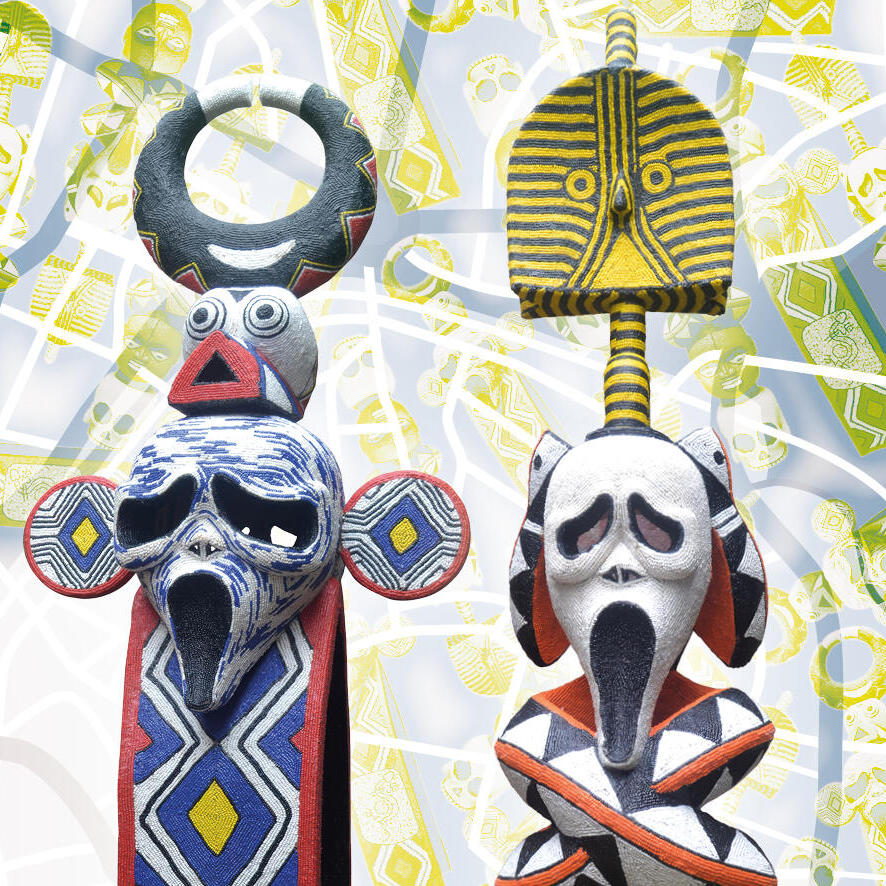
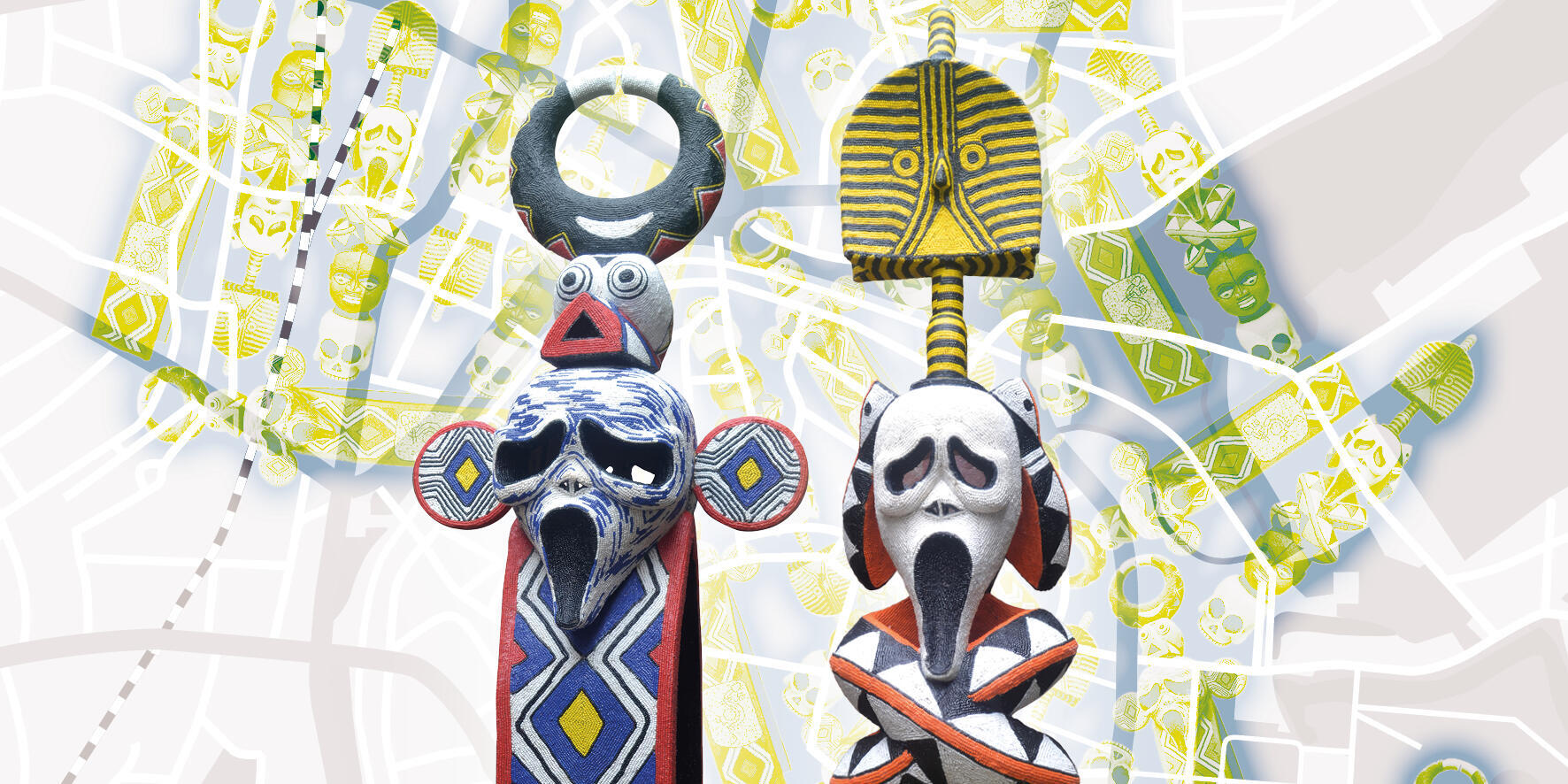
On 10 November 2026, the one-day symposium “TRANCEcolonial. Performing Provenance – Art, Memory and Colonial Resonances” will take place. It is organised jointly by the Centre for Advanced Study “Access to Cultural Goods in Digital Change” and the LWL-Museum für Kunst und Kultur, Münster, as part of the international research project “Performing Provenance: Contemporary Art, Digital Spaces, and Things from the Cameroon Grasslands” (PERFORM). The one-day symposium explores colonial provenance, historical experiences of violence and museums’ responsibilities today from artistic, scholarly and museological perspectives. On the occasion of the symposium, the LWL-Museum für Kunst und Kultur in Münster will bring a work by Hervé Youmbi, an artist from Cameroon and Artist-in-Residence of the Centre for Advanced Study, into dialogue with objects from its collection. The event in Münster opens a series of events initiated as part of the international research project PERFORM. Further events will take place as part of the exhibition return at the Rautenstrauch-Joest-Museum in Cologne on 12–13 November 2026.
The creation of 3D models of artworks is an increasingly common practice in art education, opening up new ways of engaging with objects. As part of the master’s seminar in the winter semester 2025/26 “Einführung in die Konzeption von 3D-Objekten und Ausstellungen”, students captured 3D scans of selected objects from the Meissen Porcelain Museum. The seminar was held by PD Dr Angela Dreßen, Senior Fellow at the Centre for Advanced Study. Presented thematically, the objects can now be experienced by visitors from all over the world in the immersive exhibition “Meissener Porzellan im virtuellen Fokus”.
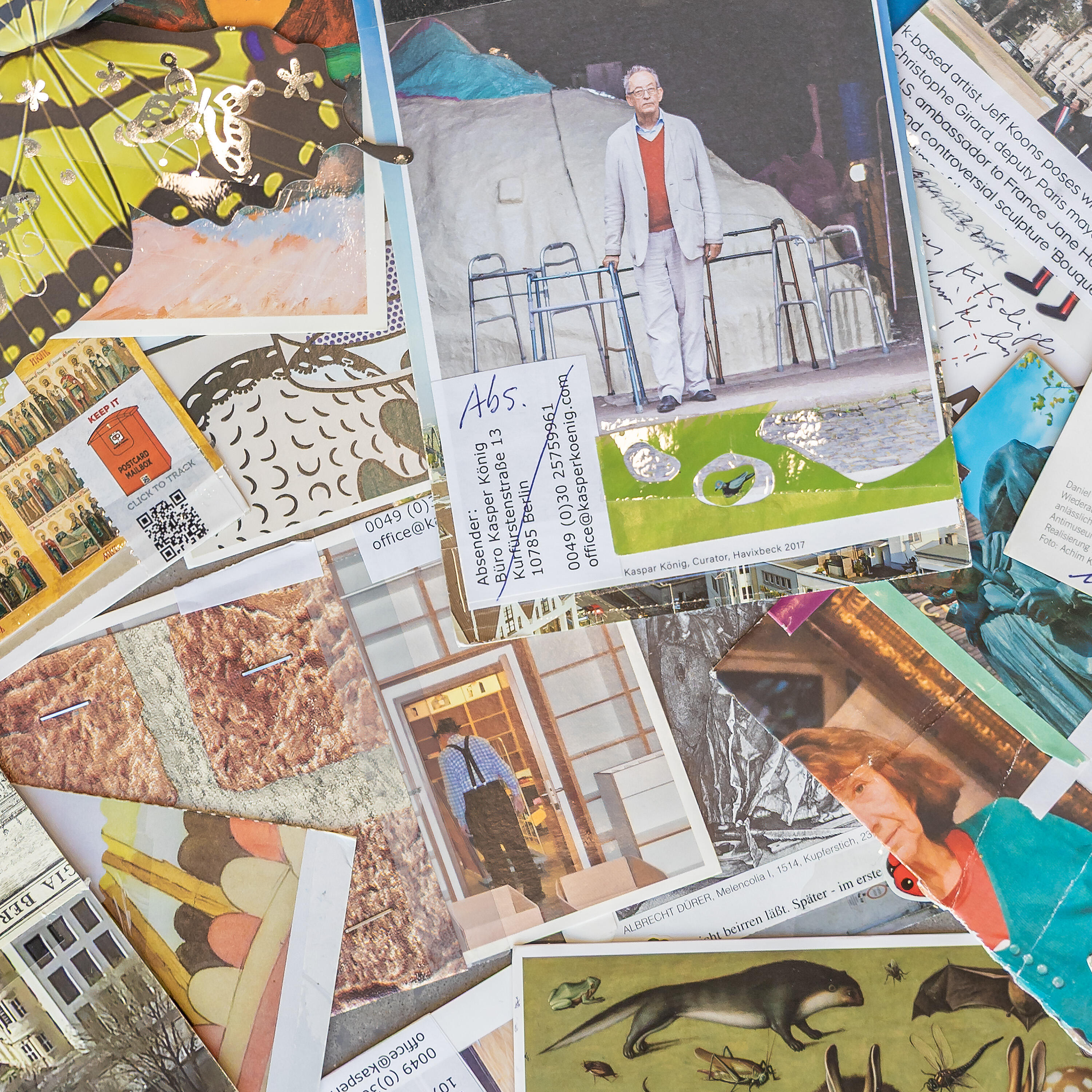
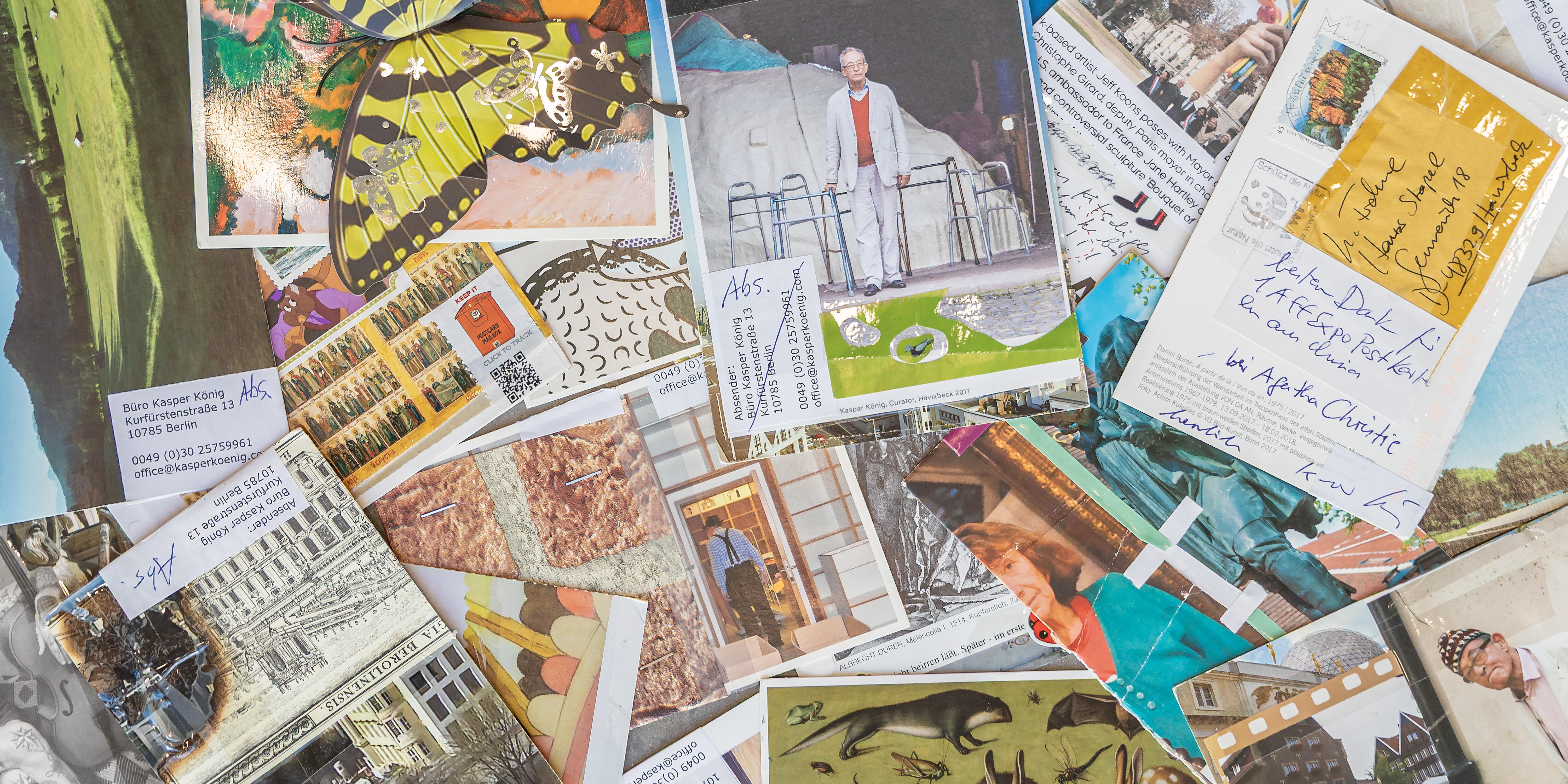
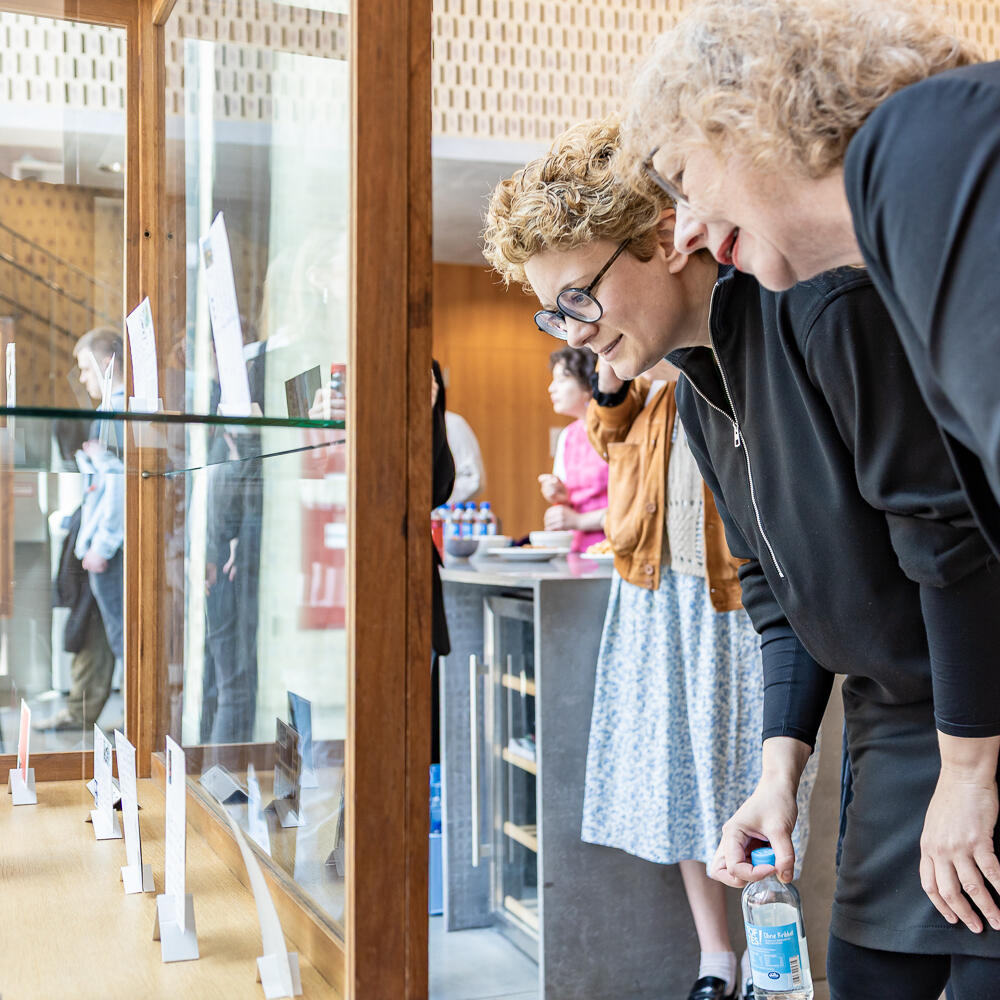
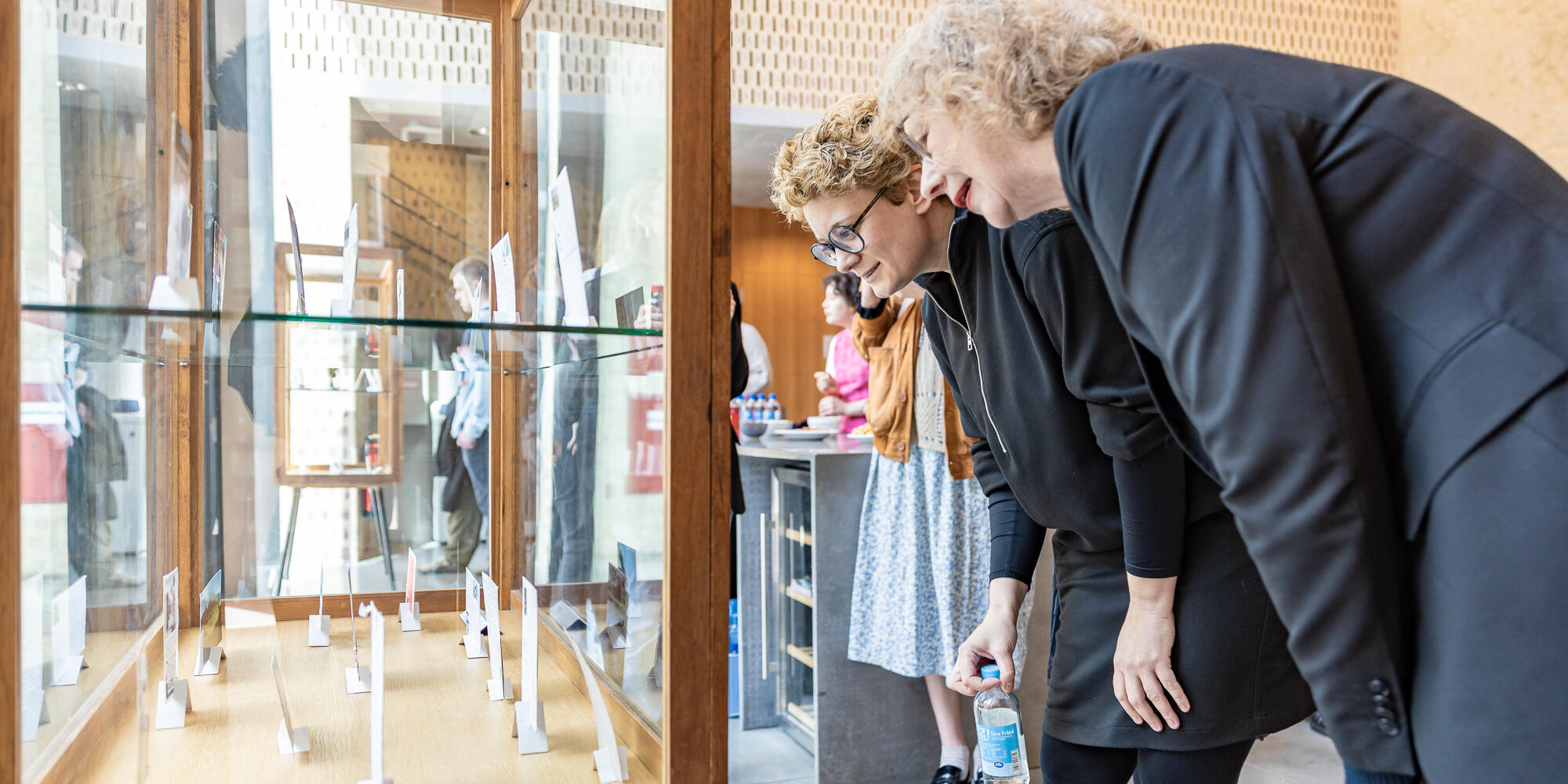
The Centre for Advanced Study “Access to Cultural Goods in Digital Change” is one of the twelve winners of the DFG photo competition and features in the German Research Foundation’s 2026 photo calendar with the March image. On display are postcards by Kasper König. Kasper König was co-founder of Skulptur Projekte Münster and director of the Museum Ludwig in Cologne. Over the decades, he sent numerous collaged postcards, full of wit and with a clearly recognisable style, to artists, colleagues and companions. As testimonies to the networks on which curatorial practices are based, the cards point to biographical traces, hinting at relationships and personal as well as professional constellations. For the exhibition “Access to Curatorial Networks” organised by the Centre for Advanced Study, students have, for the first time, compiled postcard collections from several of König’s contacts, thereby revealing this informal communication system.
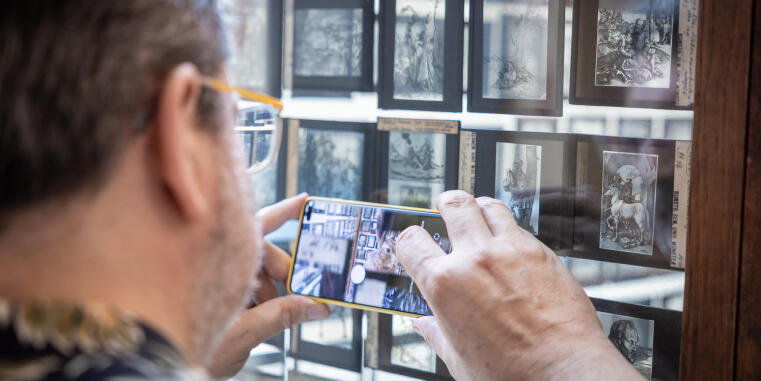
From 3 July to 5 September 2025, the Centre for Advanced Study presented the exhibition “case study #2: Re:Set: From Slide to Database – Media Change in Art History” – an exhibition by students of the Institute of Art History. It took media change in art history as its starting point to illuminate the historical, aesthetic, and epistemological dimensions of art-historical image practices. Among other things, poster presentations and an installation by artist Dr. Philipp Goldbach featuring historical glass slides were on display. On 27 August 2025, Georg Imdahl reported on the exhibition in the arts section of the Frankfurter Allgemeine Zeitung under the headline “Glass behind glass – students in Münster exhibit the tools that art historians used to learn to see”.
The digital exhibition “Access to curatorial networks – Postcards by Kasper König” makes a selection of collaged cards – which were exhibited as part of ‘case study #1’ from 26 May to 22 June 2025 in the library foyer of the Philosophikum – now also digital accessible. These cards were sent by Kasper König (1943–2024), curator, co-founder and long-time artistic director of Skulptur Projekte Münster and director of the Museum Ludwig, over the course of decades to artists, colleagues and companions. In the digital exhibition view, you can not only flip the cards by simply clicking on them; transcriptions and a full-screen mode—which allows you to circle through and view each card in detail from different angles—are also accessible via the buttons superimposed on each card.
From26 May to 22 June 2025 the exhibition “case study #1: Access to Curatorial Networks – Postcards from Kasper König” was presented by the Centre for Advanced Study. The exhibition was designed by students of the colloquium course taught by Ursula Frohne and Berit Hummel. It featured collaged cards that Kasper König (1943–2024), co-founder and long-time artistic director of Skulptur Projekte Münster and director of the Museum Ludwig, sent to artists, colleagues and companions. The personal messages are a unique testimony to his curatorial practice.
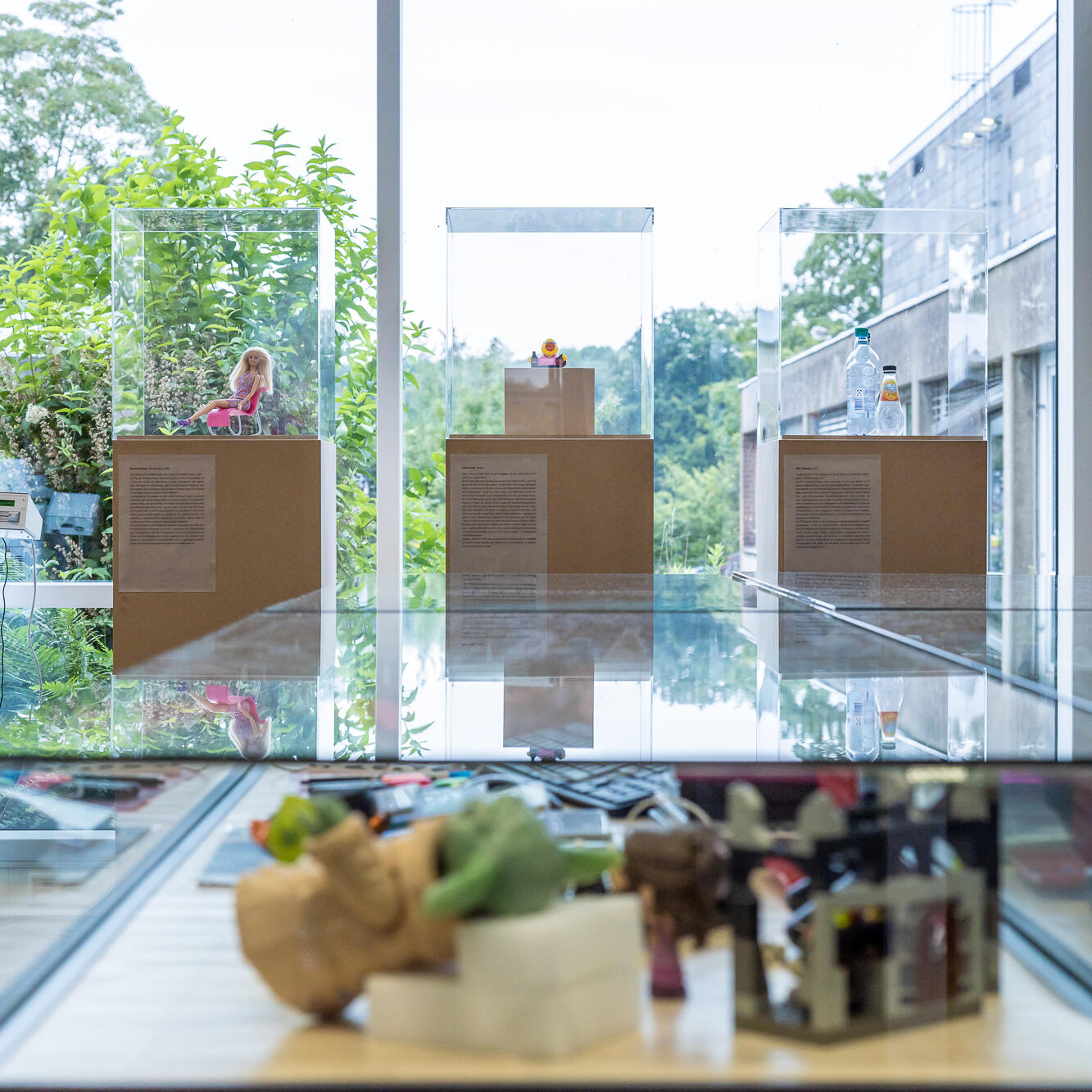
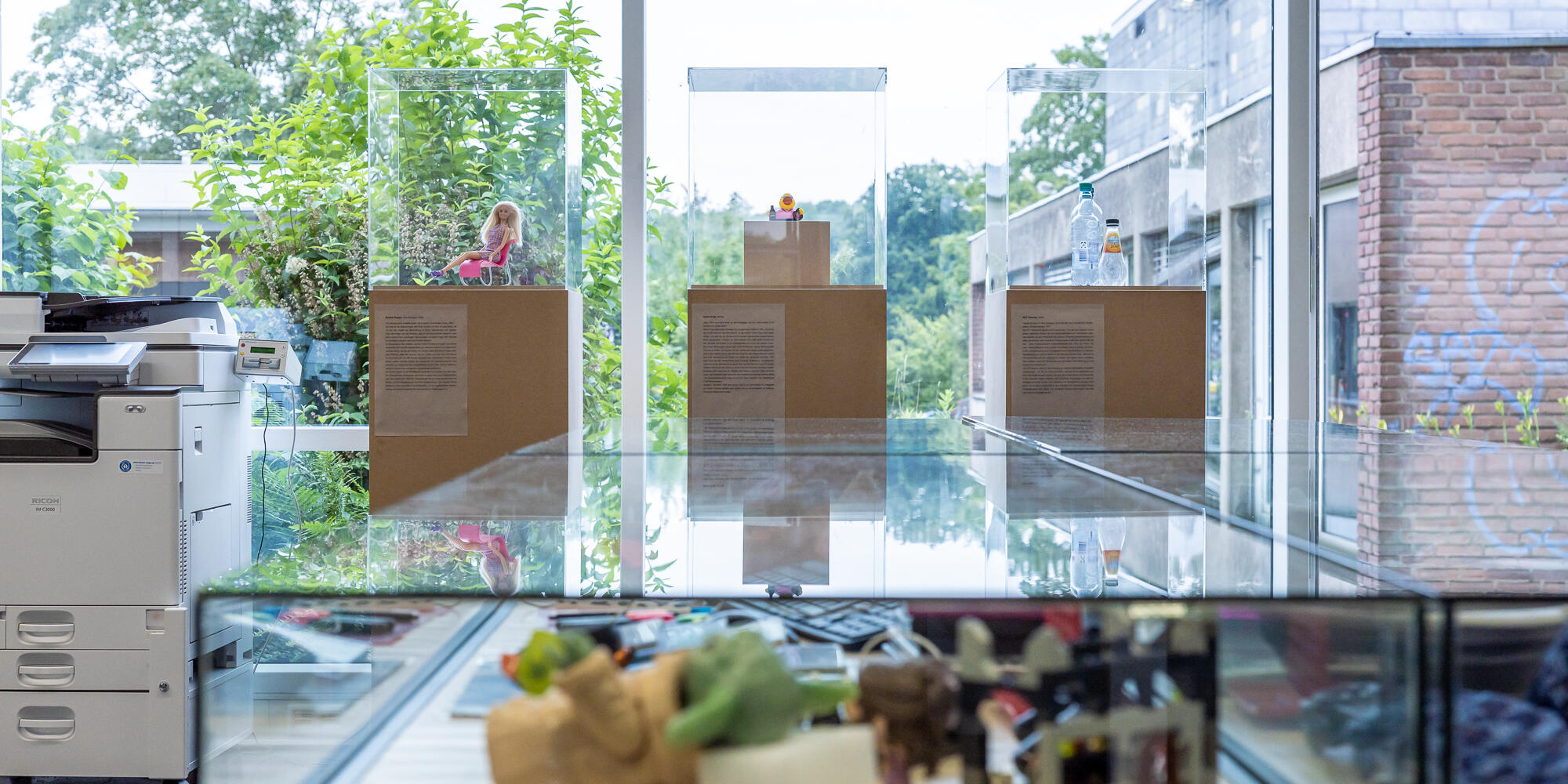
In the winter semester 2023/24 the study project “Kunststoffalltage” of the Institute of Cultural Anthropology/European Ethnology presented its results with an exhibition. Plastic artefacts were presented as “roommates” of student daily life: Objects such as remote controls and toothbrush mugs were used to interpret the everyday dimensions of plastic use. The project was directed by Prof. Dr. Lioba Keller-Drescher, Professor for European Ethnology and in-house fellow of the Centre for Advanced Study. This video provides an insight into the exhibition.
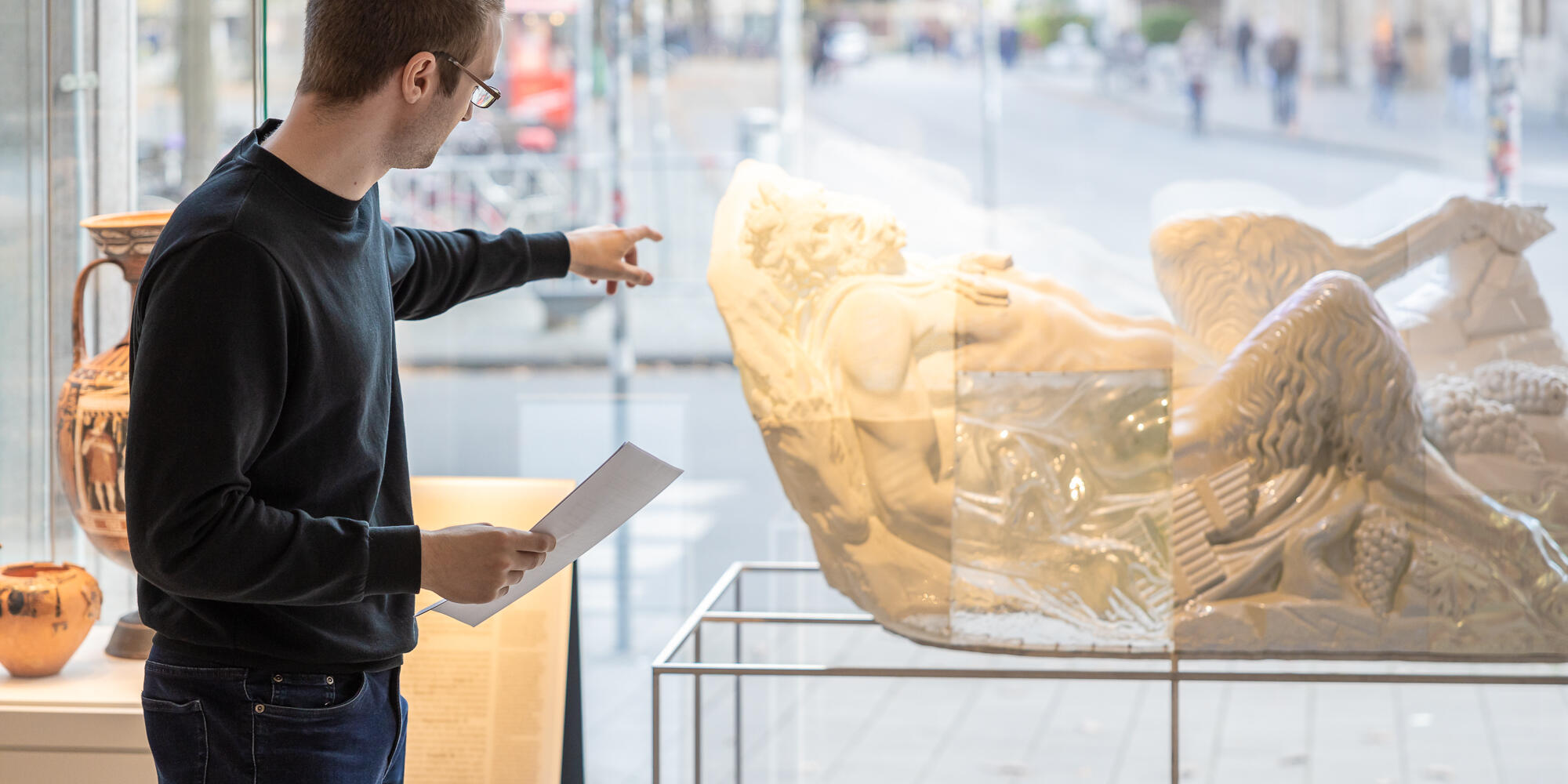
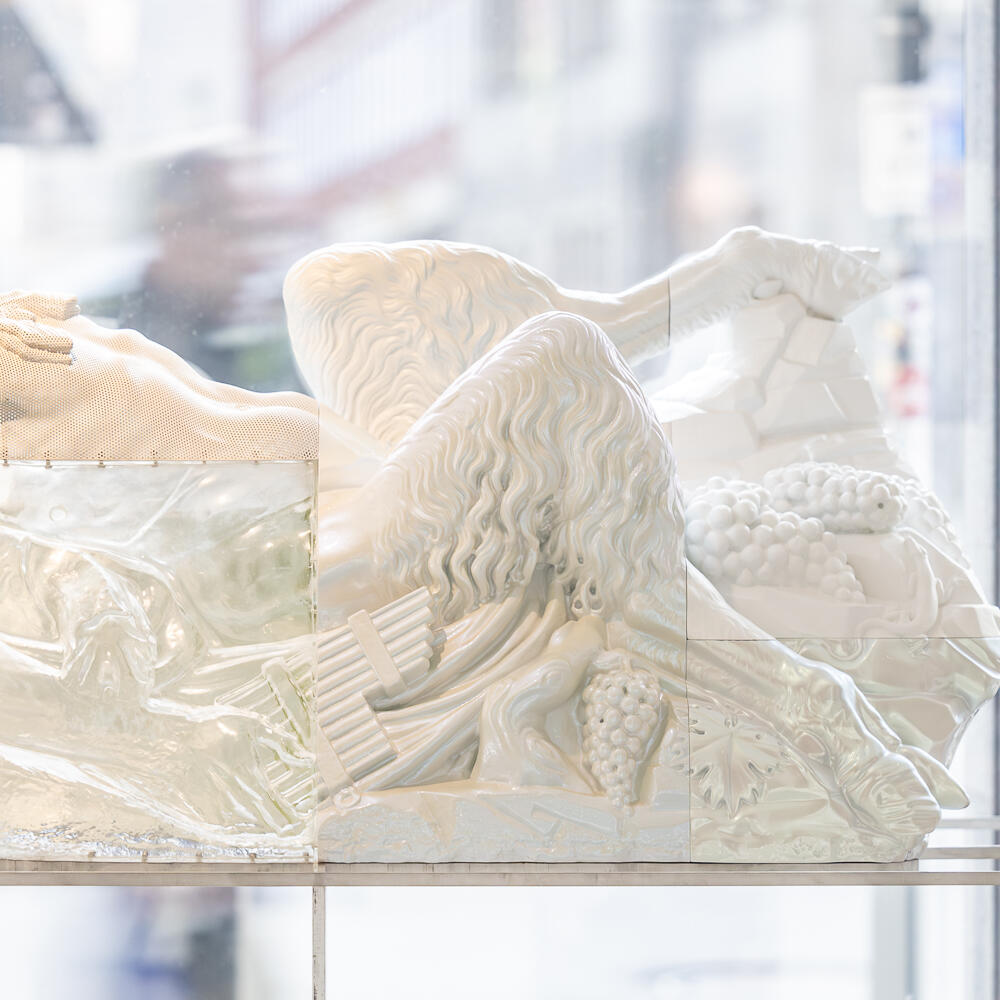
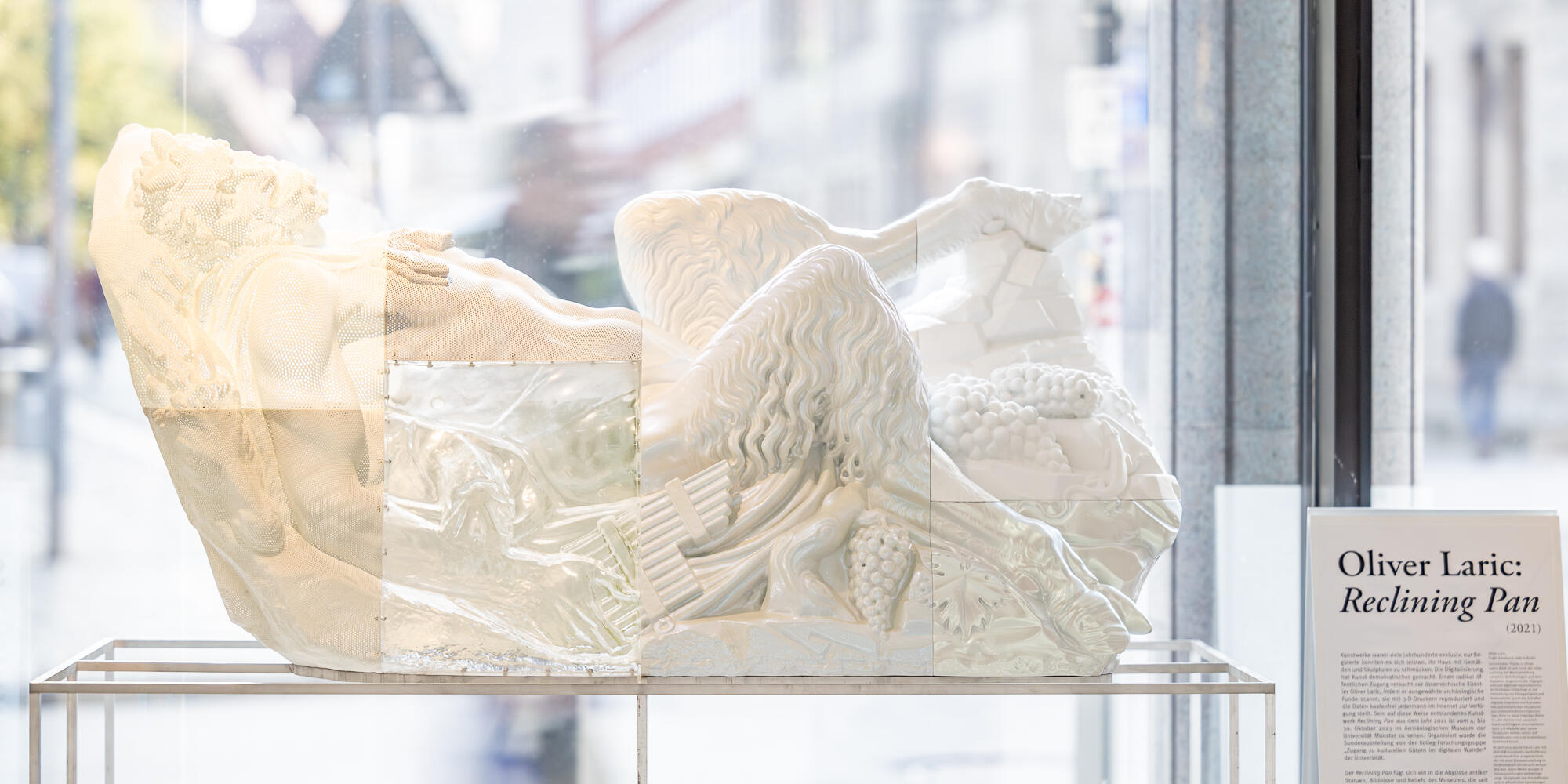
Jon Wiggermann, student of art history and philosophy, explains the special features of Oliver Laric’s “Reclining Pan” in the video – and what questions the artwork raises. From 4 to 30 October 2023, Oliver Laric’s sculpture “Reclining Pan” was on display at the Archaeological Museum of Münster University. The exhibition was a cooperation between the Centre for Advanced Study and the museum on the occasion of the conference „Zugang gestalten! Hindernisse überwinden“.
From 4 to 30 October 2023, Oliver Laric’s sculpture “Reclining Pan” was on display at the Archaeological Museum of Münster University. The exhibition was a cooperation between the Centre for Advanced Study and the museum on the occasion of the conference „Zugang gestalten! Hindernisse überwinden“. Based on the idea of scanning and digitisation, Oliver Laric measures archaeological finds such as sculptures and reliefs and transfers the 3D data into a digital archive, thus providing the opportunity to participate in the production, dissemination and interpretation of his works.