Why no individual is like another

 Why no individual is like another
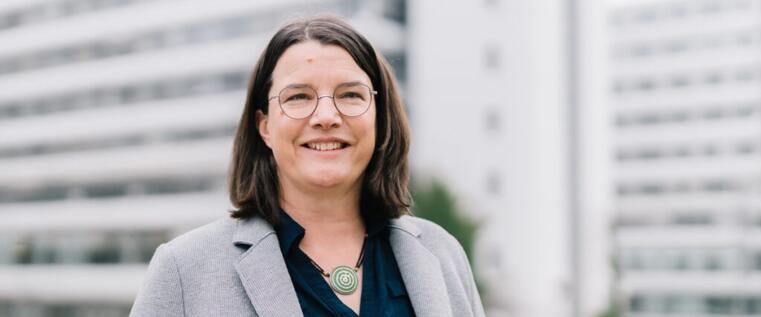
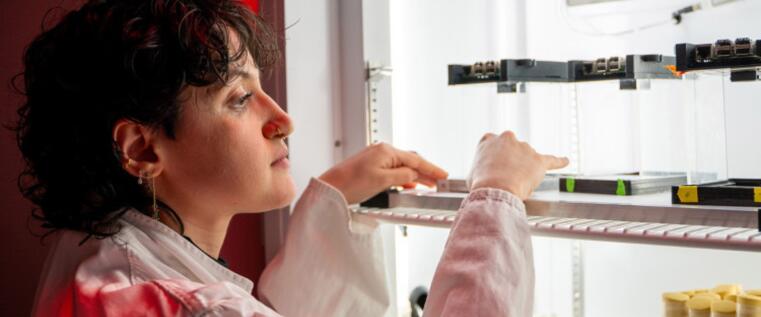
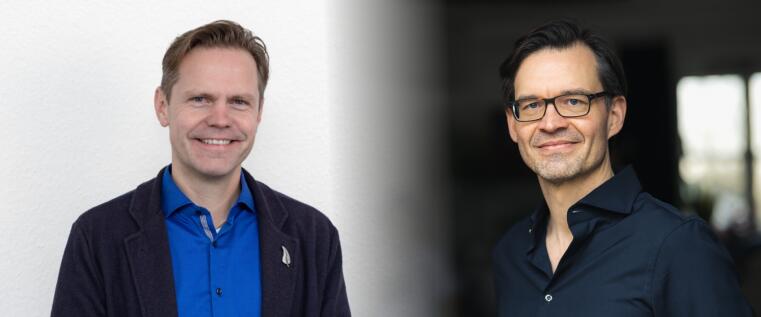
Evolutionary biologist Dr Denis Meuthen is one of the lead authors of the study, which has now been published in the journal Trends in Ecology and Evolution.
© Universität Bielefeld - Sarah Jonek

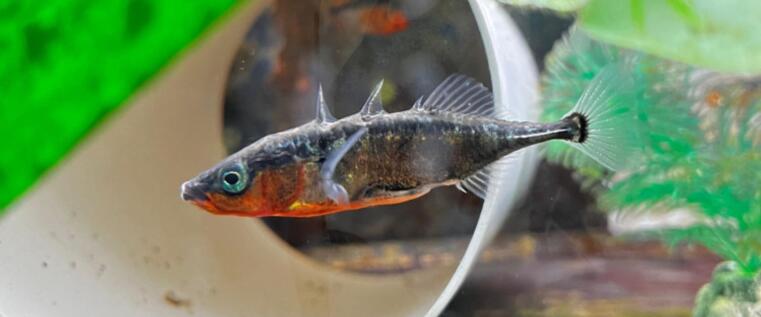
Why do animals behave differently, and what are the consequences of this? A research team from the Collaborative Research Centre NC³ at Bielefeld University and the University of Münster now provides a new explanation: epigenetic processes – chemical markings on DNA – may play a key role. The study links individuality, environmental adaptation, genetics, ecology, and evolution in a novel way.

Meuthen D, Hoffman JI, Kurtz J, Berthelsen AL, Chakarov N, Chen RS, Coculla A, Gadau JR, Gossmann TI, Mühlenhaupt M, Chavarria-Pizarro T, Rapp TM, Sepers B, Vellnow N, Xu S, Vendrami D (2026): Exploring the interplay of epigenetics and individualization. Trends in Ecology and Evolution. https://doi.org/10.1016/j.tree.2025.12.010

Publication in Trends in Ecology and Evolution
Press release by Bielefeld University

The power of the individual

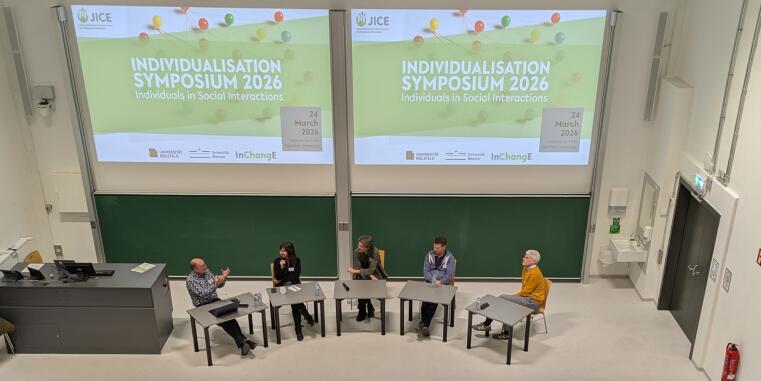
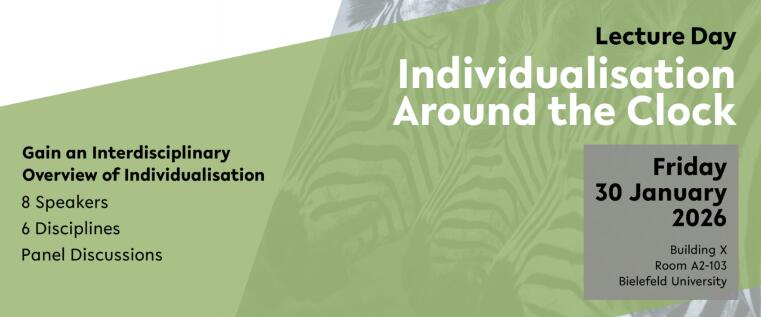
Individualisation Symposium 2026 in Bielefeld
The power of the individual
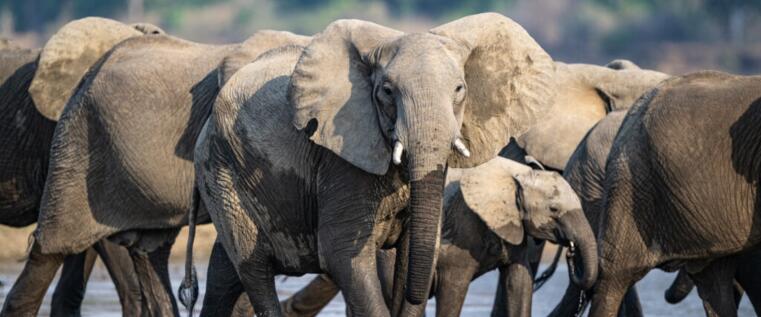
In animal groups, just as in human societies, individuals display consistent differences in behaviour – for example, in terms of cooperation or competition.
© Oliver Krüger

Why do some individuals cooperate more, while others compete more strongly—and what does this mean for our society? At the Individualisation Symposium 2026, leading international researchers will gather at Bielefeld University to explore how individual differences shape social relationships in humans and animals.

Article by Bielefeld University
Individualisation Symposium 2026

Wissenschaftlich belegt: What makes us unique?

Bielefeld's smart dinner
Wissenschaftlich belegt: What makes us unique?
This time, the Wissenswerkstatt Bielefeld has a special combination on the menu: biology meets philosophy.
© Wissenswerkstadt Bielefeld

What's on the menu for 'Wissenschaftlich belegt: Bielefeld's Smart Dinner' by the Wissenswerkstatt Bielefeld? Ideas and perspectives from the world of science to whet your appetite. And a topic with real bite. This time: What makes us unique?

Our guests are Marie Kaiser and Oliver Krüger. Adopting an interdisciplinary approach, they explore what makes individuals unique. Do animals, as well as humans, have individual 'personalities'? How does each individual find its niche in the environment? What role do decisions, behaviour and adaptation play in this?

Wissenswerkstatt Bielefeld: More details and registration [de]

‘We need laws to protect animals’

New release: Norbert Sachser and Niklas Kästner on the adaptability of animals
‘We need laws to protect animals’
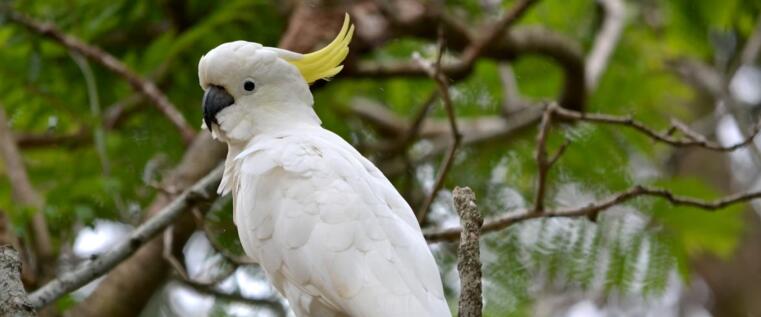
Clever birds: In the Sydney metropolitan area, cockatoos have learnt how to open bin lids to access the food waste inside.
© Terra Raponi - Unsplash.com

Both wild and domestic animals, including farm animals, are capable of adapting to changing environmental conditions. However, the scale of human-induced change is so great that their ability to adapt is insufficient, despite the remarkable resilience and clever strategies of some species. In an interview with Christina Hoppenbrock, behavioural biologists and authors Prof Dr Norbert Sachser and Dr Niklas Kästner provide insights into the capabilities of animals and their limitations.

Interview by the University of Münster with Norbert Sachser and Niklas Kästner [de]

Are we heading towards a mass extinction event?

Podcast on the occasion of Darwin Day: How biologist Joachim Kurtz assesses the significance and changing nature of evolution
Are we heading towards a mass extinction event?
Evolutionary biologist and JICE member Prof. Dr Joachim Kurtz discusses today's significance of evolution in the “Umdenken” podcast.
© Uni Münster - Linus Peikenkamp

In the face of climate change and the drastic loss of biodiversity, evolutionary biologist Prof Dr Joachim Kurtz is calling for a swift and decisive response from society. 'We know from history that there have been several mass extinction events. If we continue as we are, we are heading towards a human-made event that will be more drastic than any that have come before. We must therefore do everything in our power to prevent this,' he emphasised in the latest episode of the University of Münster's 'Umdenken' podcast, released to mark 'Darwin Day' on 12 February.

'Umdenken' podcast with Joachim Kurtz [de]

New BI.research: Growing together

Latest issue of magazine presents the 13 Focus Areas of Bielefeld University
New BI.research: Growing together
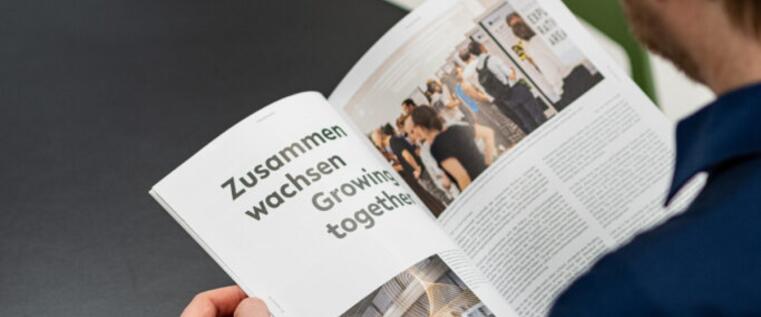
The latest issue of BI.research magazine on Bielefeld University’s key Foucs Areas.
© deteringdesign

13 Focus Areas are bringing together academics from different disciplines to advance outstanding topics. These new research networks demonstrate how the university is growing together. The new edition of BI.research magazine presents them all – including the Focus Area 'Individualisation in Changing Environments (InChangE)'.

The Focus Areas emerged from university-wide dialogue as part of participatory profile building. They form a strong basis on which the university’s new strategic Profile Areas will be built in the near future. Their topics range from technological developments and social challenges to fundamental scientific research questions.

'What connects the Focus Areas is the researchers’ enthusiasm for their topics, an ideal prerequisite for insights whose influence extends far beyond the university', writes Professor Dr Angelika Epple, Rector of the university, in the editorial.

Current issue of the BI.research magazine by Bielefeld University
BI.research magazine by Bielefeld University
Focus Area Individualisation in Changing Environments (InChangE) of Bielefeld University

How cities are changing social behaviour in urban animals

Sealed surfaces in urban areas pose challenges for animals.
© Avery Maune

Cities profoundly shape how animals interact with one another. A new comprehensive review by researchers at Bielefeld University shows that urbanisation alters animal social behaviour – from mate choice to group living. The findings are striking and highly relevant for conservation and urban planning.

Maune AL, Caspers BA, Damas-Moreira I (2026): The impact of urbanisation on social behaviour: a comprehensive review. Biological Reviews. https://doi.org/10.1002/brv.70113

Publication in Biological Reviews
Press release by Bielefeld University