

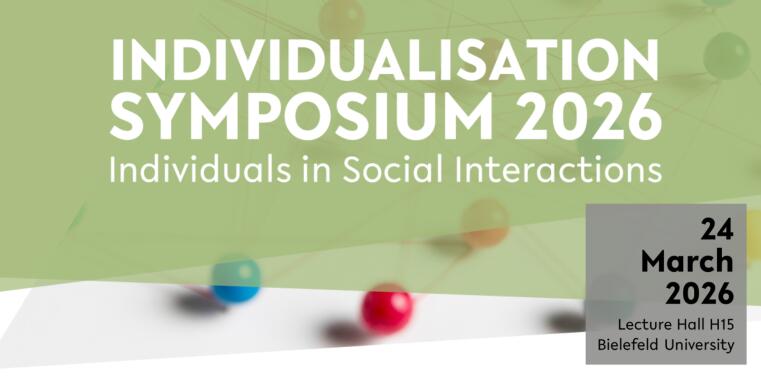
Individualisation Symposium 2026
24 March 2026
Across species, individuals consistently differ in how they cooperate, compete and learn from one another. These behavioural signatures are intimately linked to the lives of other individuals: They shape which social relations individuals form, how these relations unfold, and how both partners develop throughout their lifetime.
The Individualisation Symposium 2026 focused on this intricate interplay between social relations and individual differences. The Joint Institute for Individualisation in a Changing Environment (JICE) cordially invited all interested individuals to the fifth edition of this interdisciplinary meeting, which took place on Tuesday, 24 March 2026 at Bielefeld University.
The yearly symposium brings together scholars from natural sciences, social sciences and the humanities to promote exchange of current findings and new perspectives in individualisation research across disciplinary boundaries – thereby advancing our collective understanding of individuality in a changing world.
Photos

© JICE 
© JICE 
© JICE 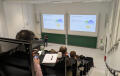
© JICE 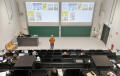
© JICE 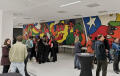
© JICE


Download
Individualisation Symposium 2026 – Programme
Individualisation Symposium 2026 – Poster
Links
Article by Bielefeld University
Recorded talks
Speaker
Athena Aktipis
Cooperation Across Systems | Arizona State University»Organisms, algorithms, and alignment: old problems in new systems«
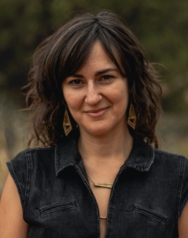
© Athena Aktipis Athena Aktipis is an Associate Professor in the Department of Psychology at Arizona State University (ASU) and Director of the Cooperative Futures Institute and the ASU Interdisciplinary Cooperation Initiative. As a cooperation theorist, evolutionary psychologist and cancer biologist, she provides unique insights into cooperation across diverse systems – ranging from human sharing practices to cancer – by integrating these fields of research. Beyond her academic work, she is deeply committed to making the science of cooperation accessible to a wider audience: She is the author of the popular science books 'The Cheating Cell: How Evolution Helps Us Understand and Treat Cancer' and 'A Field Guide to the Apocalypse: A Mostly Serious Guide to Surviving Our Wild Times', creator of 'The Apocalypse Roadshow' and host of the 'Zombified Podcast'. Through the Cooperative Futures Institute, she leads efforts to translate cooperation science into practical tools, institutions and technologies aimed at building more resilient, aligned and cooperative futures.
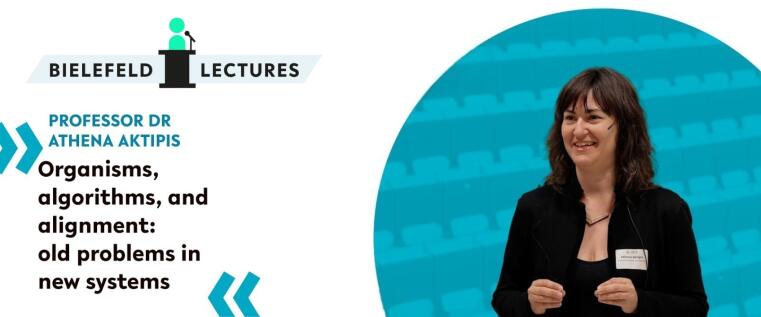
Athena Aktipis explains how evolutionary theory helps us make sense of the new power of algorithms.© Universität Bielefeld Michael Cant
Evolutionary Biology | University of Exeter»The evolution of social identity: insights from animal societies«

© Michael Cant Michael Cant is a Professor of Evolutionary Biology at the Centre for Ecology and Conservation at the University of Exeter. He explores cooperative societies ranging from insects to humans, offering profound insights into why individuals vary in their social behaviour and on how cooperation and conflict evolve. Drawing on his extensive expertise, he co-authored the book ‘The Evolution of Social Behaviour: Conflict and Cooperation’. In his research, he uses evolutionary models to predict how individuals respond to each other's behaviour and to their environment, and tests these predictions through field-based research on a range of social species. This integrated approach enables him to identify fundamental principles that explain the variety of society types found in the animal kingdom and shape the ways in which individuals form teams, cooperate and resolve conflicts.
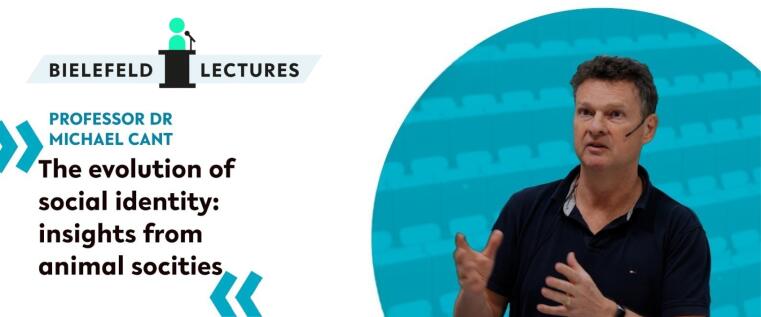
Michael Cant uses the example of banded mongooses to explain how cooperation and social identity arise in evolution.© Universität Bielefeld Gerd Kempermann
Genomics of Regeneration | Dresden University of Technology»Individuality matters: adult neurogenesis, social behavior, and the emergence of individuality«

© CRTD The physician and neuroscientist Gerd Kempermann is a Professor for Genomics of Regeneration at the Center for Regenerative Therapies Dresden (CRTD) at Dresden University of Technology as well as a research group leader and site speaker at the German Center for Neurodegenerative Diseases in Dresden. He is also a member of the German National Academy of Sciences Leopoldina and author of several widely acclaimed academic and popular science books, including 'Die Revolution im Kopf: Wie neue Nervenzellen unser Gehirn ein Leben lang jung halten' and 'Adult Neurogenesis: Stem Cells and Neuronal Development in the Adult Brain'. His research reveals how physical and mental activity regulate the formation of new neurons in the adult brain at the molecular level, thereby counteracting ageing processes and neurodegenerative diseases. He focuses particularly on how individual experiences and decisions contribute to the development of unique brain structures and neural networks. In this way, he makes pioneering contributions to our understanding of the human brain's capacity for adaptation and regeneration throughout the entire lifespan.
Jens Krause
Mechanisms and Functions of Group-Living | Leibniz Institute of Freshwater Ecology and Inland Fisheries»Individuality in fish«

© IGB Berlin Behavioural biologist Jens Krause is a Professor for Biology and Ecology of Fishes at Humboldt University of Berlin and head of the Department of Fish Biology, Fisheries and Aquaculture at the Leibniz Institute of Freshwater Ecology and Inland Fisheries (IGB). He is also a member of the Cluster of Excellence 'Science of Intelligence' and of the Berlin-Brandenburg Academy of Sciences and Humanities, and co-author of the book 'Animal Social Networks'. His research focuses on the mechanisms and functions of group living in animals, with a particular emphasis on social networks, collective behaviour and swarm intelligence. His work on decision-making in animal groups has generated numerous insights and applications relevant to society, including improved diagnostic approaches for diseases (e.g., breast and skin cancer) and solutions for human crowd management.
Susanne Meinert
Transition Research in Affective Disorders | University of Münster»Neurobiology of depression across transition periods: risk, prediction, and prevention«

© Susanne Meinert Susanne Meinert is a psychologist, psychotherapist and head of the research group ‘Transition Research in Affective Disorders’ at the Institute for Translational Psychiatry at the University of Münster. In recognition of her outstanding scientific work, she has recently received the Rising Star Award from the European College of Neuropsychopharmacology (ECNP) as well as the Early Career Research Award from the University Society of Münster. Her research examines how psychological, neurobiological and social processes shape development during life transitions and contribute to the onset of affective disorders – with the aim of improving prevention and treatment in this field.
Sina Mews
Computational Statistics | University of Göttingen»Hidden patterns: Modelling individuals' latent behaviours using hidden Markov models«
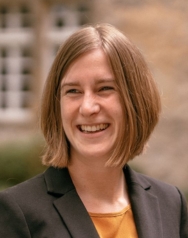
© Sina Mews Sina Mews is a Junior Professor of Computational Statistics at the University of Göttingen. Her research involves developing and applying statistical models to analyse temporal processes in a variety of empirical contexts, ranging from foraging strategies of fur seals to shooting streaks in basketball. She particularly focuses on latent Markov models and related methods to reveal hidden state changes over time that are not directly observable – for example in longitudinal studies or repeated measurements.