


The European Palaeobotany and Palynology Conference (EPCC) took place in Münster from September 20 to 25 and was hosted by the Paleobotany Working Group—a look back at the numbers:
We would like to extend our heartfelt thanks to the organizers Prof. Dr. Benjamin Bomfleur, Dr. Haytham El-Atfy, Dr. Phillip Jardine, and Dr. Steffen Trümper (all from the Institute of Geology and Palaeontology) as well as our collaborating partner Dr. Christian Pott (LWL Museum of Natural History)!
Over the summer, there have been a number of staff changes at our Institute:
Prof. Harald Strauß retired on 31 July 2026. He was a member of our Institute for 27 years and, as head of the Historical Geology research group, established, amongst other things, the isotope geochemistry laboratory. We would like to thank him in particular for his many years of dedicated leadership of the Geomuseum and will greatly miss his anecdotes about academic life at our institute and department. We wish him all the best for his well-deserved retirement.
On 31 August 2026, Prof. Thomas Becker also retired after 25 years as Professor of Palaeontology. We are delighted, however, that he will remain associated with us for a few more years as a senior professor and, in this role, will continue his research into Devonian and Carboniferous biostratigraphy, ammonites and conodonts.
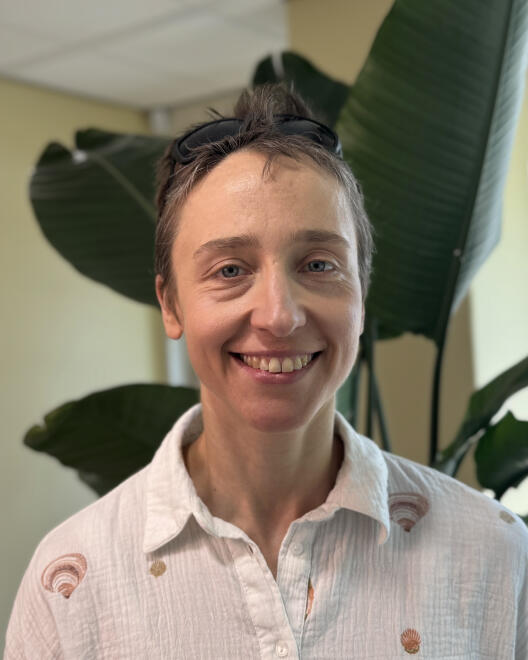
The retirement of these two colleagues brings with it changes at the Institute. We are therefore all the more delighted to have achieved a seamless transition and to welcome our new colleague, Prof. Emilia Jarochowska (see picture). She joined us in Münster from Utrecht University on 1 September 2026; she succeeds Prof. Thomas Becker as Professor of Palaeontology. Emilia and her research group are investigating how evolution is reflected in the fossil record – a very old question, but one that has traditionally been studied separately from biological and stratigraphic perspectives. Emilia’s research programme combines stratigraphic modelling with evolutionary biology and seeks to bring these two approaches together. Further information on her research and the software developed by her group can be found at https://mindthegap-erc.github.io. Emilia’s evolutionary biology studies are based primarily on microfossils, particularly conodonts – a field of research for which the Institute is recognised worldwide and whose tradition she intends to continue. In addition, Emilia is taking over as director of the Geomuseum, succeeding Prof. Harald Strauß. Her aim is to continue promoting the geosciences at a regional level and to further strengthen the museum’s successful role in fostering dialogue between the general public – including its youngest visitors – and the academic world.
In addition, as of 1 August 2026, Lina Leschner has taken over as stand-in head of the Geological Preparation Department whilst the usual head is on sick leave. We look forward to benefiting from her experience in the preparation of fossils, rocks and thin sections.

From Fossil to Museum Exhibit: On October 11, 2026, the Geomuseum at the University of Münster will host a lecture at 11:00 a.m. to demonstrate the work of the geoscience preparation department. During the event, the preparation team from the University of Münster will demonstrate how they work on plesiosaur fossils and how it’s even possible to create a model with muscles and skin from the stony bones.
The Westphalian plesiosaurs, which were awarded the title “Fossil of the Year” in 2026 by the Westphalian Museum Network—comprising the LWL Museum of Natural History in Münster, the Geomuseum at the University of Münster, and the Bielefeld Museum of Natural History— in 2026, represent a globally unique cross-section of a distinctive evolutionary path among vertebrates spanning approximately 135 million years and bring the evolution of marine reptiles to life.
Attendance at the lecture is free of charge; registration is requested.
The “Fossil of the Year” award honors fossils throughout Germany that are both scientifically significant and of museum value, and aims to bring paleontology closer to the public.
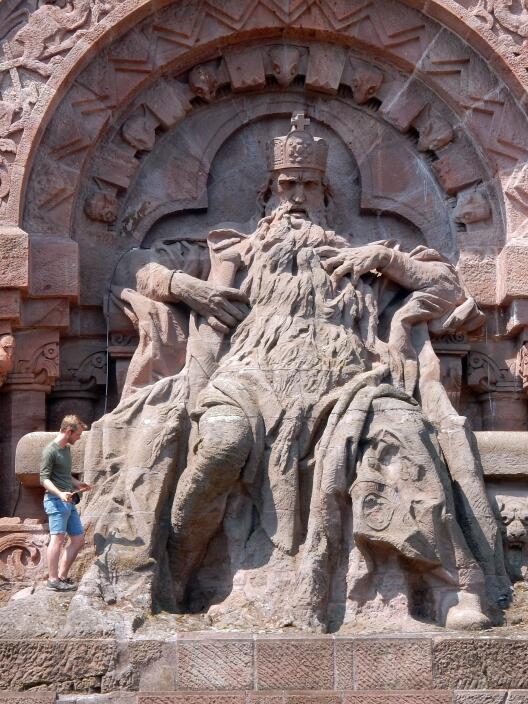
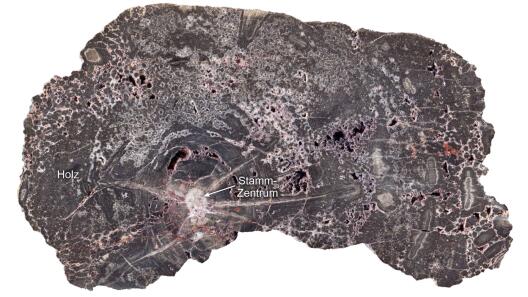
The evolution of the Saale Basin can be traced using quartz from silicified tree trunks in the Kyffhäuser Mountains, as researchers led by Dr. Steffen Trümper have discovered. The trunks of these anatomically preserved fossil plants (gymnosperms) provide insights into 300 million years of tectonic developments within the Central European Basin System.
The collaborative effort involving the Georg-August University of Göttingen, the Karlsruhe Institute of Technology, the Chemnitz Museum of Natural History, the TU Bergakademie Freiberg, and the University of Münster is explained in more detail in the University of Münster’s press release.
The study was published in Scientific Reports.
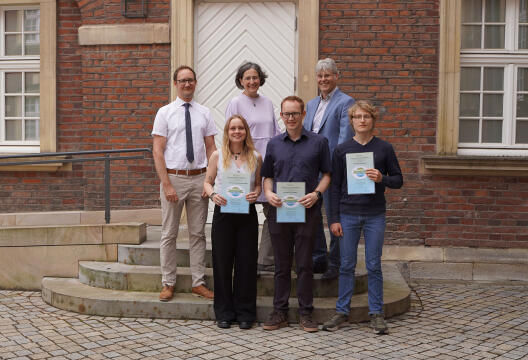
Three Heitfeld Prizes, each worth €2,000, were awarded on 6 July during a ceremony at the Geomuseum of the University of Münster. The prize-winners are Luca-Luisa Johannemann, Johannes Lier and Jannes Nauert. Congratulations!
Click here for the official press release
Click here for information about the Heitfeld Foundation
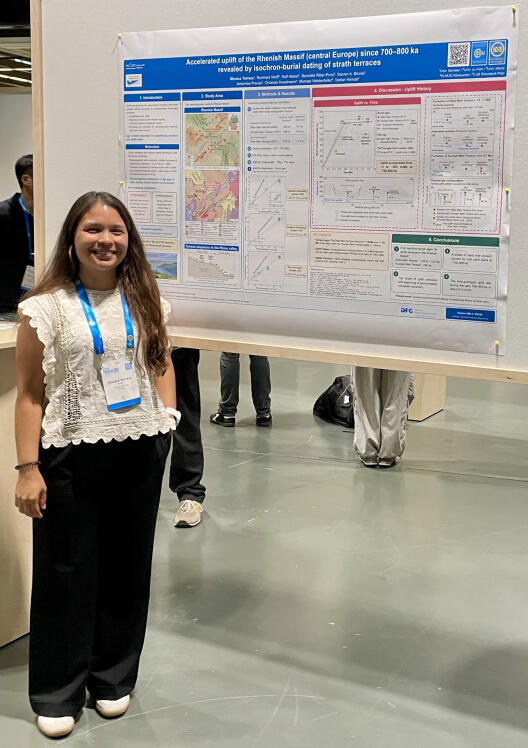
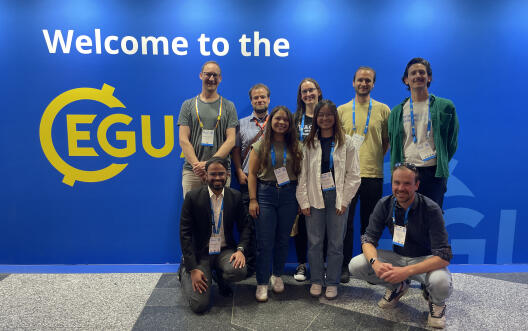
Researchers from the Institute of Geology and Palaeontology (see photos) attended the General Assembly of the European Geosciences Union (EGU), held in Vienna from 3 to 8 May 2026. 58 per cent of the abstracts presented there were by early-career researchers. This included Monica Terraza’s contribution: Accelerated uplift of the Rhenish Massif (central Europe) since 700–800 ka revealed by isochron-burial dating of strath terraces. For this work, she was awarded the ‘Outstanding Student and PhD Candidate Presentation (OSPP)’ Award in the geomorphology division. The poster presented was based on the content of the recent publication of the same-titled article in the journal Geomorphology.
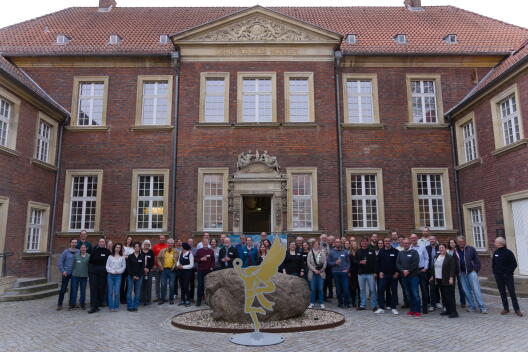
On the 17th April 2026, an alumni reunion was held for the second time by the Institute of Geology and Paleontology’s alumni network at the Geomuseum of the University of Münster. Approximately 60 members attended. The history of the Geosciences program in Münster goes back a long way, and accordingly, a diverse mix of age groups was represented.
PD Dr. Patricia Göbel, team of the alumni network, Prof. Dr. Harald Strauß, Director of the Geomuseum, and Prof. Dr. Benjamin Bomfleur, Executive Director of the IGP, welcomed all the members who had traveled to the event and were delighted by the lively turnout. In addition to food and drinks, an “industry speed dating” session contributed to the entertainment and networking.
Alumni from various professional fields were also interviewed. These interviews were published on the Instagram profile GeoMünster.
Haven’t heard of the alumni network yet and want to join? Become part of the current group of 270 registered alumni: you can sign up for free here!
Are you interested in studying geosciences at the University of Münster? Are you just starting your studies and want to find out everything about the Bachelor's programme or are looking for a Master's programme?
Here you will find up-to-date information on the Bachelor's and Master's degree programmes in Geosciences.

The Water Sciences degree programme is a cooperative Master's degree programme between various departments at Münster University and Münster University of Applied Sciences, in which the Institute of Geology and Palaeontology is also a involved partner.
Further information on the Water Sciences degree programme can be found here.
It is an important concern of the Institute of Geology and Palaeontology to establish a close and long-lasting relationship with its alumni*ae. The common ground of all alumni*ae is to have studied in Münster and to have written a thesis at the Institute of Geology and Palaeontology or to have worked at the institute.
If you are interested, you can register here free of charge:
Alumni*ae network of the Institute of Geology and Palaeontology