


European forests play an important role as carbon sinks and therefore contribute significantly to climate protection. At the same time, they are increasingly affected by global change. An international research team led by Prof. Dr. Mana Gharun (Institute of Landscape Ecology, Biosphere-Atmosphere Interaction) has now investigated how different environmental and climatic factors jointly influence carbon uptake and the resilience of forests.
The review study shows that the effects of individual drivers such as rising CO₂ concentrations, warming, nitrogen deposition, or drought cannot be considered independently from one another. Instead, these factors may reinforce, weaken, or even reverse each other’s effects, making forest ecosystem responses difficult to predict. The authors particularly highlight understudied extreme events such as winter warming, late frosts, or unusually high precipitation. Such events are expected to occur more frequently in the future and may substantially affect the carbon balance of European forests.
The study was conducted within the framework of the European COST Action CLEANFOREST and involved 34 researchers from 17 countries. The findings underline the importance of long-term field observations and advanced data analyses to better understand the impacts of global change on forest ecosystems and to improve predictions of future developments.
Publication: Gharun, M. et al. (2026): Perspectives: Effect of global change drivers on carbon fluxes and resilience of European forests. Forest Ecology and Management 616, 123844.
Read the detailed article here in the newsportal of the University of Münster.

In May 2026, researchers from the universities of Seville, Genoa, Münster, and Bielefeld met in person for the second time - this time in Münster - to discuss the progress of the Refuge project and develop new research ideas. Following the successful launch of the Ulysseus Consortium in November 2025 in Seville, joint activities continued (website). Following the Bioblitz event in Seville - a citizen science initiative in which more than 300 citizens and students were actively involved in the research - another event is planned for end of June in Münster. What makes the Münster event unique is that it will be led by master’s students in landscape ecology - under the guidance of Nadja Pernat. Already during the preparation phase, a video message from Genoa by Paolo Giordani, the lichen specialist of the team, greatly inspired the students in Münster.
A special highlight was the field trip through urban and peri-urban forests across the city of Münster, which offered the international team insight into the site-specific ecological characteristics of temperate oak forests. The soil ecologist on the team, Ute Hamer, explained in particular the requirements to which organisms must adapt when living in sites influenced by waterlogging. Here, soils can become extremely dry during summer, while in winter they are often very wet and deprived of oxygen. In this context, Lorenz Ruhl presented first results from his master’s thesis on woodlice and millipedes, two groups that are particularly closely tied to soil conditions. Over the next two days, the team worked intensively on a review article and collaborated on developing ideas for another research project.
The Refuge-Project thus continues on an exciting path toward gaining new insights into urban and peri-urban forests as refuges for numerous organisms and developing innovative strategies for their protection and promotion.
On Tuesday, 14 April 2026, at 5.00 pm, Dr. Friederike Gabel (Institute of Landscape Ecology) will deliver her inaugural lecture in Lecture Theatre Geo1, Heisenbergstraße 2, 48149 Münster, to mark the completion of her habilitation process. The lecture is entitled
All interested parties are warmly invited.
Based on many years of data series from the DFG's biodiversity exploratories, this study shows for the first time for various trophic groups that, under certain conditions, the spatial coexistence of different land use intensities allows robust conclusions to be drawn about the effects of temporal changes in land use intensity on biodiversity in grasslands.

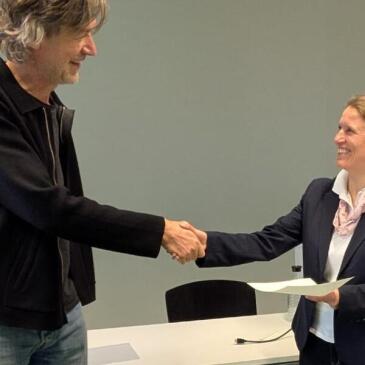
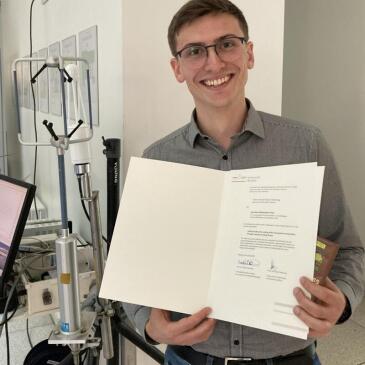
The study is the result of extensive synthesis work carried out over several years, involving various working groups from Germany and Switzerland active in biodiversity exploratories. Prof. Dr. Lena Neuenkamp, the lead author of the study, worked as a research assistant in the Biodiversity and Ecosystem Research working group at ILÖK since 2022 before accepting a junior professorship in biodiversity and ecosystem restoration at Bielefeld University in April 2025. Work on this extremely complex analysis began during Lena Neuenkamp's postdoctoral phase at the University of Bern and was finally completed this year in Münster and Bielefeld. We congratulate Lena on this outstanding publication and look forward to continuing our collaboration, including as part of the DFG Biodiversity Exploratories' core botany project, which we were able to secure together this year.
Original publication:
Lena Neuenkamp, Hugo Saiz, Noelle Schenk, Markus Fischer, Nico Bluethgen, Martin Gossner, Norbert Hölzel, Valentin Klaus, Till Kleinebecker, Daniel Prati, Sebastian Seibold, Nadja Simons, Wolfgang Weisser, Eric Allan, Caterina Penone: Congruent direction but different magnitude of biodiversity response to land use intensification in space and time. Nature Ecology & Evolution. DOI: 10.1038/s41559-025-02896-0.
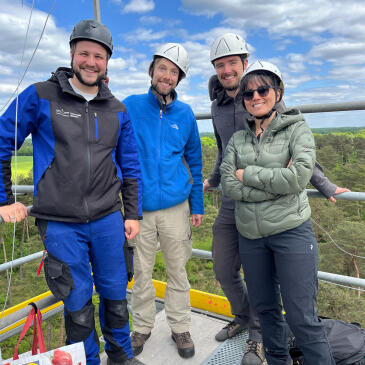

Das Institut für Landschaftsökologie trauert um sein Mitglied, den emeritierten Universitätsprofessor für Klimatologie Dr. Otto Klemm, der am 25. August 2025 im Alter von 66 Jahren verstorben ist.
Otto Klemm wurde am 27.05.1959 in München geboren. Ab 1978 studierte er an der Universität Bayreuth - im ersten Jahrgang überhaupt - den damals neu geschaffenen Studiengang Geoökologie, den er 1984 mit dem Diplom abschloss. Ebenfalls in Bayreuth erfolgte 1988 die Promotion zum Thema „Säure/Base- und redoxchemische Simulation des Verdampfens von Niederschlagswasser von Fichtennadeln“. Das Thema war im Kontext des sogenannten „Waldsterbens“ zu dieser Zeit politisch hoch relevant und mag eine der Wurzeln sein, weshalb Otto Klemm seine Forschungsergebnisse immer an deren Bedeutung für die Gesellschaft gemessen hat; andererseits war ein Thema gesetzt, das ihn in seiner weiteren akademischen Laufbahn nie mehr losgelassen hat: die Nebelforschung. Von 1989 - 1991 verbrachte er im Anschluss an die Promotion in Bayreuth eine PostDoc-Phase in den USA an der University of Delaware und der University of New Hampshire, bevor er von 1991 bis 1996 als Leiter der Arbeitsgruppe Flugzeugmessungen am Fraunhofer Institut für Atmosphärische Umweltforschung (IFU) in Garmisch-Partenkirchen forschte. Diese Erfahrungen sowohl in den USA und auch jene aus der Atmosphärenforschung vermochte er seinen Studierenden mit einer großen Wirkkraft zu vermitteln und so das Verständnis für komplexe atmosphärische Zusammenhänge zu fördern. Die Habilitation zum Thema „Anthropogenes Schwefeldioxid in der Atmosphäre: Oxidation in der wässrigen Phase, Transport in der Troposphäre“ erfolgte dann 1996 wieder an der Universität Bayreuth, wo er von 1996 bis 2002 als wissenschaftlicher Angestellter und Oberassistent am Bayreuther Institut für Terrestrische Ökosystemforschung (BITÖK) tätig war. Im Jahr 2002 folgte er einem Ruf auf die Professur für Klimatologie am Institut für Landschaftsökologie der Universität Münster, wo er für über 22 Jahre wirkte. Im Oktober 2024 schied er auf eigenen Wunsch vorzeitig aus dem Dienst aus, um sich an neuer Wirkungsstätte als Professor an der National Central University in Taoyuan, Taiwan, verstärkt der von ihm seit Jahrzehnten mit großer Leidenschaft betriebenen Nebelforschung widmen zu können.
Nach seiner Berufung an die Universität Münster übernahm er im Institut für Landschaftsökologie bereits 2004 das Amt des Geschäftsführenden Direktors, das er bis 2014 inne hatte. Eng verbunden mit dieser langjährigen Tätigkeit war eine sukzessive Modernisierung des Instituts hin zu quantitativen Methoden, drittmittelbasierter Forschung, Peer-review-Publikationen und Internationalisierung, eine Entwicklung, die von Otto Klemm angestoßen und maßgeblich befördert wurde. Ohne diese klugen Weichenstellungen wäre das Institut bezüglich internationaler Sichtbarkeit, Publikations- und Drittmittelstärke nicht auf dem heutigen Stand.
Sein eigenes wissenschaftliches Werk umfasst über 150 Publikationen in peer-reviewten internationalen Fachzeitschriften mit Schwerpunkten auf den Gebieten Nebel- und Aerosolforschung, Mikrometeorologie, Lufthygiene und Stadtklima. Am Institut für Landschaftsökologie betreute er bis zu seinem Ausscheiden aus dem Dienst insgesamt 19 Promotionen. Viele dieser Promovendinnen und Promovenden sind heute an Universitäten und Forschungseinrichtungen oder in leitender Funktion in Behörden und Firmen tätig.
Die Selbstverwaltung der Universität war für ihn ein hohes, nicht selbstverständlich von der Gesellschaft gewährtes Gut, und so setzte er sich wo er konnte für die Arbeit in den Selbstverwaltungsorganen ein. Dementsprechend engagierte er sich über seine Tätigkeit am Institut hinaus – teils in leitender Funktion – in zahlreichen Gremien der Universität wie z.B. in Rektoratskommissionen, der Kommission für die Verwendung von Studiengebühren oder dem Tenure-Board für Juniorprofessuren. Otto Klemm war von 2016 bis 2020 Prodekan für Personal und Finanzen am Fachbereich 14 Geowissenschaften. Auch dort wirkte er in den fachbereichsinternen Kommissionen und Ausschüssen mit – seine Expertise und seine Geradlinigkeit waren dort Weg weisend.
Otto Klemm war ein leidenschaftlicher Hochschullehrer und bei den Studierenden aufgrund seiner engagierten Lehre außerordentlich geschätzt und beliebt. Nicht nur die Studierenden der Landschaftsökologie und der Geographie, sondern insbesondere auch Lehramtsstudierende erfuhren dort seine Wertschätzung und Zuwendung. Mehrfach organisierte er logistisch extrem aufwändige Exkursionen mit Studierenden in das von ihm so geliebte und intensiv beforschte Taiwan, die den Studierenden einzigartige Einblicke in die faszinierende Natur und Kultur dieses Landes boten.
Hervorzuheben ist darüber hinaus sein frühes und diesbezüglich wegweisendes Engagement im Bereich des Wissenschaftstransfers. So war er für 7 Jahre von 2012 bis 2018 Vorsitzender des von ihm gegründeten Klimabeirats der Stadt Münster und engagierte sich während der CORONA-Pandemie als Sachverständiger für Aerosolpartikel.
Das Institut für Landschaftsökologie und die Universität Münster sind betroffen über seinen frühen Tod. Wir verlieren mit Otto Klemm einen erfolgreichen, extrem engagierten und leidenschaftlichen Hochschullehrer und Wissenschaftler, dessen kluge Weichenstellungen auch in Zukunft fortwirken werden. In unserer Trauer und Anteilnahme sind wir bei Familie und Angehörigen.
Prof. Dr. Norbert Hölzel
Prof Dr. Tillmann Buttschardt
Prof. Dr. Sascha Buchholz

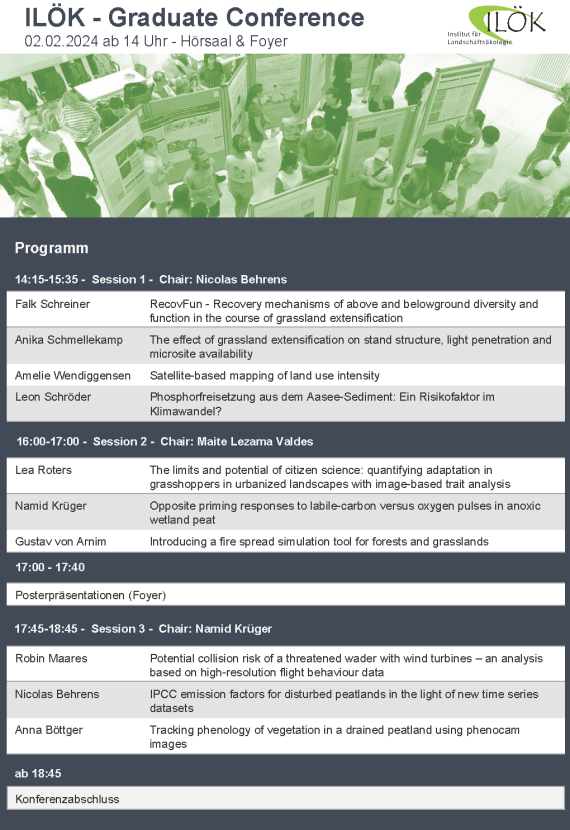
This year's ILök Graduate Conference, where graduates present their theses, will once again take place in the end of the summer semester. The program has now been finalized and can be found here.
We can expect an exciting program of lectures and scientific posters with stimulating discussions.
We are looking forward to all the contributions and an informative and relaxed end of the semester!
On Thursday, 26.06.2025 at 18:00, Dr. Jan Ole Kriegs (Institute of Landscape Ecology) will give his inaugural lecture in the lecture hall of GEO 1, Heisenbergstraße 2, on the occasion of his appointment as honorary professor.
We are looking forward to an exciting lecture on the topic:
“From the Pleistocene to the Anthropocene: Regional mammal fauna in transition”
All interested parties are cordially invited!
Afterwards, Jan Ole Kriegs invites you to a reception in the atrium of GEO 1.
Registration is requested for planning purposes.

As part of the university series “My Student Job,” our MSc Landscape Ecology student Vincent Flemming was recently featured in the university newspaper wissen|leben (Issue 3, May 2025). Since late 2023, he has been supporting the “Biosphere-Atmosphere Interaction” group with great dedication – in the lab, at the desk, and during exciting fieldwork. The article offers an authentic glimpse into his diverse day-to-day work. It is available here.

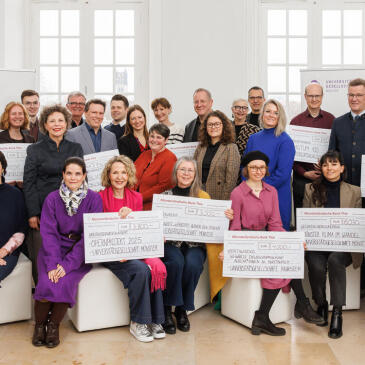
On February 6th, 2025, the final event of the project “Carbon stocks and metabolic processes in North Rhine-Westphalian natural forest cells” of the Soil Ecology and Land Use working group in cooperation with the Landesbetrieb Wald und Holz NRW took place. In seven talks, lively discussions and coffee rounds, the cooperation partners and graduates of the project presented the research program of the natural forest cells in North Rhine-Westphalia and discussed the latest results on carbon storage and the processes influencing it.
We are looking forward to the final papers and are delighted with the lively participation in the event!


The extraction of raw materials such as sand and gravel represents a major intervention in ecosystems. At the same time, quarrying sites can provide habitats for valuable species communities. In order to make better use of their potential, the Biodiversity and Ecosystem Research Group and the partners of the GiBBS project have published a joint handbook for holistic biodiversity management in the construction materials industry.
The current press release can be read here.
The handbook can be downloaded directly as a pdf version via this link (only available in German).


As part of the BiCO2 joint project, a practical handbook was produced with the involvement of scientists from the ILÖK, which shows the effects of silvicultural options on above- and below-ground biodiversity and carbon storage in the forest. The expected effects for various species groups, soil properties and silvicultural parameters are presented and specific implementation recommendations as well as funding opportunities for the respective measures are listed.
You can download the digital version here (only available in German).
In addition to the digital version, printed copies are also available from the ILÖK.

A team of three working groups at our institute recently conducted a study examining trends in moisture conditions across European peatlands based on satellite time-series data spanning the last four decades. The results reveal a significant increase in moisture in the boreal and oceanic regions of Europe, while peatlands in the temperate and continental regions show intensified drying trends. Particularly noteworthy is the high spatial heterogeneity of moisture trends on a local scale, which highlights not only the impacts of climate change but also the effects of management practices.
The study can be found here.
Prof. Dr. Otto Klemm retired from the ILÖK on 1 October 2024. The geoecologist came to Münster from the Bayreuth Institute for Terrestrial Ecosystem Research (BITÖK) in 2002. He established the field of climatology in Münster and thus set important accents for a fundamental and evidence-based contemporary landscape ecology. As the long-standing managing director of the ILÖK, he contributed significantly to the institute and the landscape ecology course becoming so broadly based and so successful overall. The research fields he established in fog and aerosol research and in the exchange of substances between the atmosphere and the surface were based on Otto Klemm's clear analytical approach, meticulousness in terms of (measurement) technology, and strict scientific rigour. He was held in high regard by his students and colleagues at the institute for many reasons. Even before his retirement, he had provided the impetus to expand the field of climatology research by setting up a new working group at ILÖK. As a result, the climatology research at ILÖK will be continued in the future as the ‘Biosphere-Atmosphere Interaction’ working group.
He also built up an international network, particularly with research institutions in Taiwan, which he repeatedly visited and where he conducted intensive research. Otto Klemm is by no means retiring. On the contrary: he has taken up the position of Chair Professor at the National Central University, Department of Atmospheric Sciences, in Taiwan, and will continue his scientific work there.
The ILÖK wishes him all the best in his future endeavours.
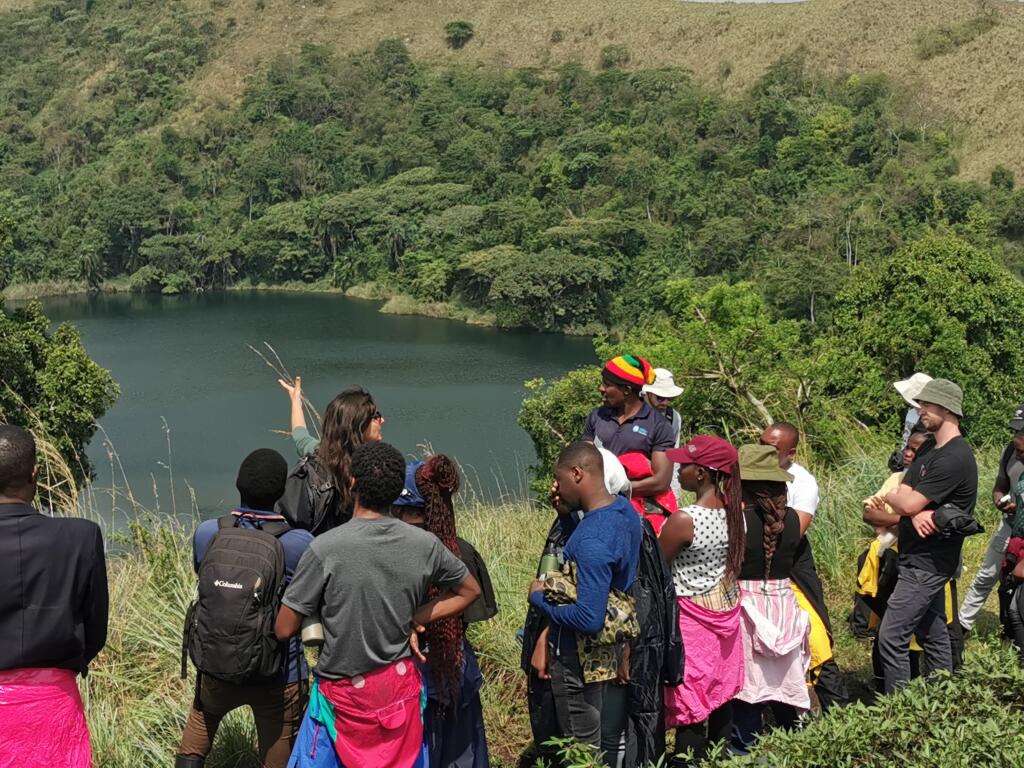
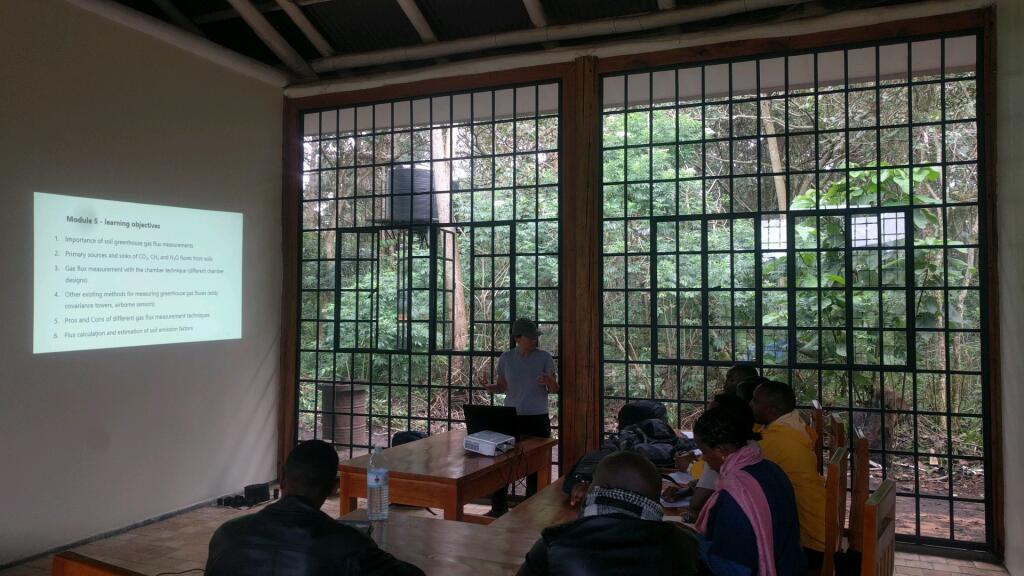
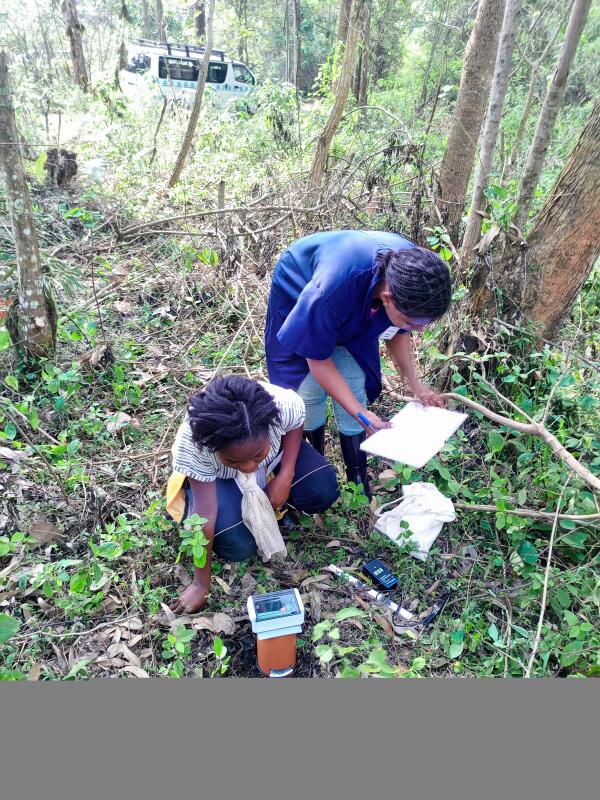
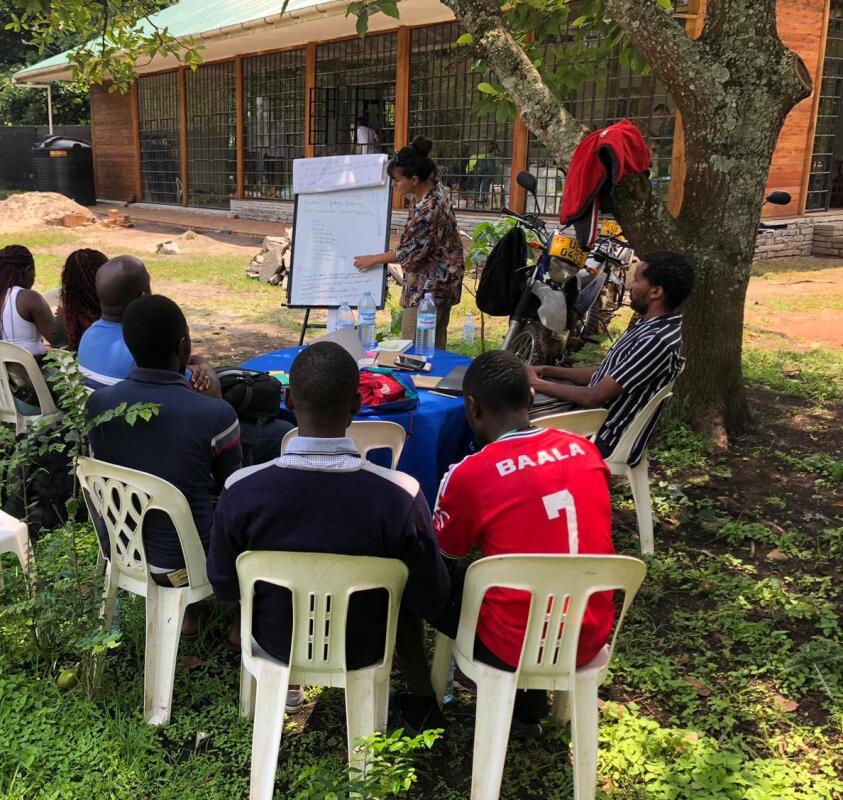
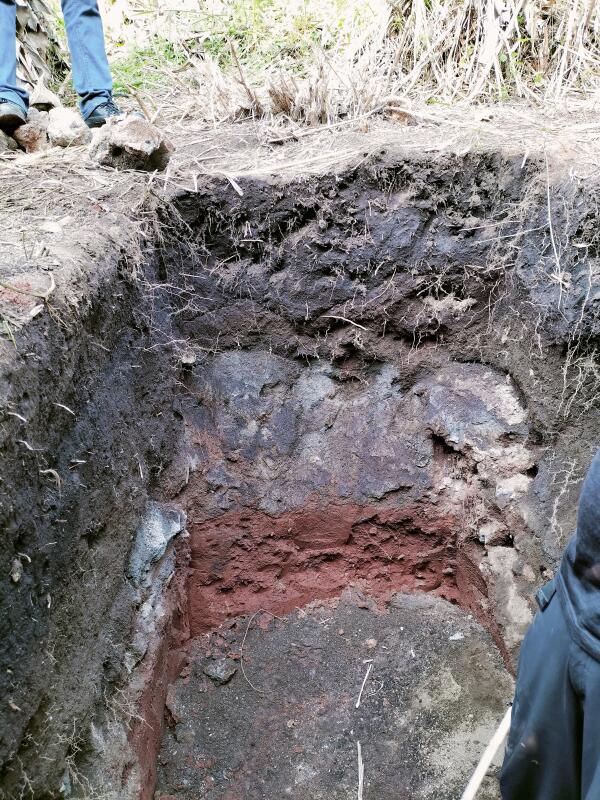
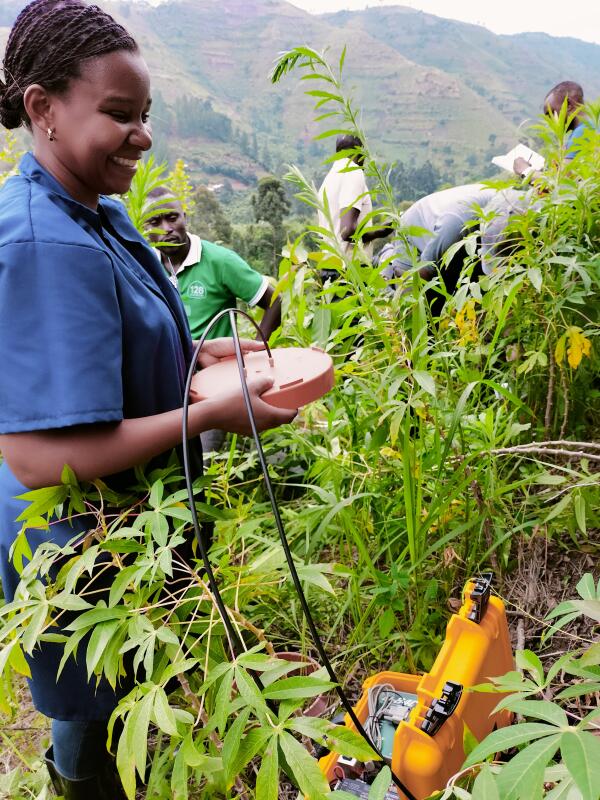
Professor Mana Gharun, from the Biosphere-Atmosphere Interaction Research Group, took part in the first Summer School on “Assessment of Tropical Forest and Soil Resources” in Fort Portal, Uganda. She taught participants about soil greenhouse gas fluxes and how to measure them with low-cost sensors. The event was a joint effort, organized with colleagues from ETH Zürich (Switzerland), Ghent University (Belgium), the University of Augsburg (Germany), the Kyaninga Forest Foundation (Uganda), and Mountains of the Moon University (Uganda).
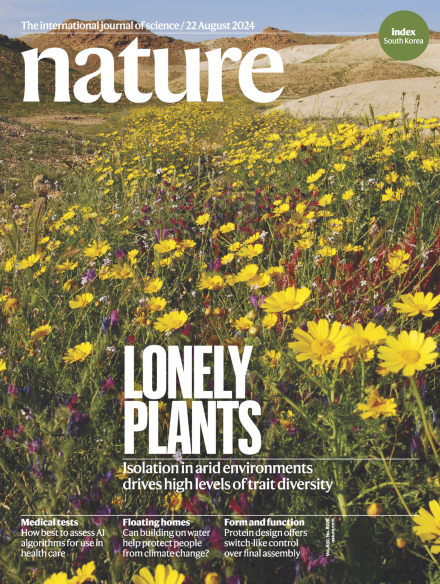
A new paper from the BIODESERT consortium has made it onto the cover of the current issue of NATURE. Norbert Hölzel and Frederike Velbert have contributed extensive data and vegetation ecology expertise from nine study sites in the steppes and semi-deserts of central Kazakhstan to this study. Using a global data set, the article shows for the first time that plants in arid regions are characterized by an unexpectedly large diversity of functional traits beyond a critical threshold of aridity.
Link to the article: Gross, N., Maestre, F.T., Liancourt, P. et al. Unforeseen plant phenotypic diversity in a dry and grazed world. Nature 632, 808–814 (2024). https://doi.org/10.1038/s41586-024-07731-3
Link to the podcast: https://www.nature.com/articles/d41586-024-02578-0

This year's Ilök Graduate Conference will once again take place in the summer semester, where graduates will present their theses. The program has now been finalized and can be found here. We can expect an exciting program of lectures and scientific posters with stimulating discussions.
We are looking forward to all the contributions and an informative and relaxed end of the semester!
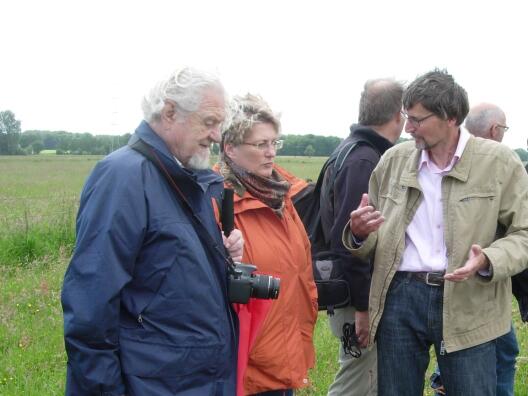
The Institute of Landscape Ecology mourns the loss of one of its pioneers, Prof. em. Dr. Karl-Friedrich Schreiber, who passed away on May 27th, 2024 at the age of 97. Our thanks and sympathy also go to his family, with whom we feel connected in mourning.
Karl-Friedrich Schreiber was born on January 9th, 1926 in Deutsch-Krone/Pomerania which is in Poland today. He studied Agricultural Sciences at the University of Hohenheim from 1949. Already in his first semester, he was gripped by the enthusiasm with which the vegetation ecologist Heinz Ellenberg, who was teaching at Hohenheim at the time, described the development of the cultural landscape, which prompted him to focus his studies on plant cultivation with the subjects of botany and soil science. Also in Hohenheim, he completed his doctorate in 1961 on the subject of "Site-related variation of Arrhenatherum elatius meadows in south-west Germany" and then his habilitation in 1968, when a venia legendi for fruit growing and landscape ecology was awarded for the first time in Germany. In 1973, Karl-Friedrich Schreiber was appointed to the then newly established Chair of Landscape Ecology at the University of Münster, which he held until his retirement in 1991.
Karl-Friedrich Schreiber was always an enthusiastic university lecturer. With an emphasis on practical aspects, he was particularly committed to the increased integration of biological-ecological disciplines such as vegetation science, animal ecology and soil science into the study of landscape ecology, which at the time was still a sub-discipline of geography. Together with his colleague Prof. Friedrich-Karl Holtmeier, he paved the way for the Institute of Landscape Ecology, which was founded in 1994 and whose degree courses are still in high demand today. The success of this reorientation can be measured by the fact that many of his students are now or were employed in responsible positions in environmental authorities, planning offices and biostations as well as in universities and universities of applied sciences throughout Germany.
A highlight of his scientific work is undoubtedly the fallow experiments in Baden-Württemberg, which he initiated in 1975 and actively supported until a few years ago. A similar large-scale management experiment was established by him in the 1980s in wet meadows in Münsterland and continued until a few years ago by his student Dr. Peter Schwartze. The fact that these elaborate field experiments could be maintained and scientifically monitored over decades is primarily due to the tenacious persistence and persuasiveness of the initiator.
Karl-Friedrich Schreiber was a founding member of the Society for Ecology, which he served as President and Vice President for several years, as well as co-editor of various journals in German-speaking countries. He has also contributed significantly to the international reputation of landscape ecology in Münster, whether through close and long-standing cooperation with the Arid Ecosystems Research Center at the Hebrew University in Jerusalem, as Vice President of the International Association for Landscape Ecology or as a member of the editorial board of the Journal Landscape Ecology.
In Karl-Friedrich Schreiber, the Institute of Landscape Ecology has lost a colleague who remained committed, thoughtful and people-oriented into old age and whose wise decisions continue to have an impact today.
Norbert Hölzel
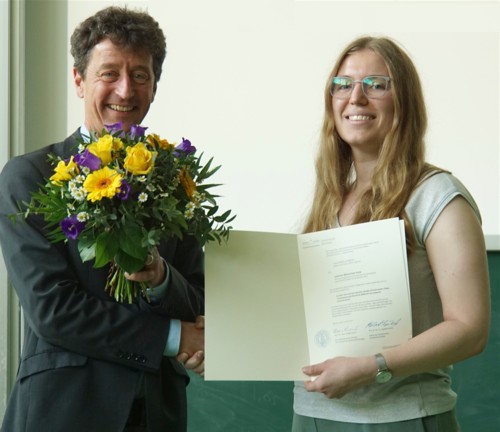
The Jeannine Böhmichen Prize was awarded during the Geo.Science.Day on 14 May 2024. The prize is awarded to a Bachelor's thesis that, among other things, presents complex issues from landscape ecology in a clear and concise manner, independently raises questions of high originality or topicality, presents multi-layered information in a clear and concise manner or demonstrates the creative scope of students. As a rule, only one prize is awarded per academic year.
Prof. Dr. Tillmann Buttschardt gave the laudatory speech and presented the award certificate to Hedda Lil Müller. She received the award for her Bachelor's thesis on the topic: "Growth rate and microplastic uptake of fresh water ciliate Tetrahymena pyriformis at different microplastic concentrations".
We warmly congratulate the award winner!
Read more
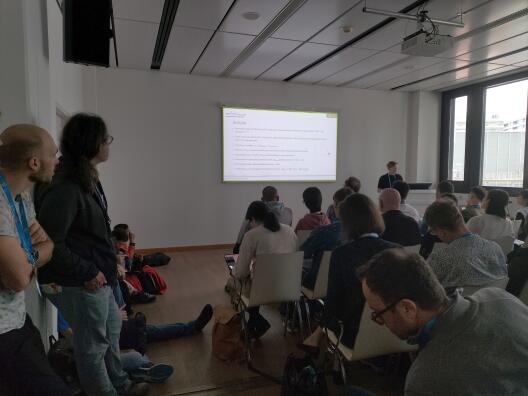
Last week, numerous colleagues from the Institute of Landscape Ecology took part in the EGU 2024, the General Assembly of the European Geosciences Union, in Vienna. Among them were members of the working groups Biosphere-Atmosphere Interaction, Remote Sensing and Spatial Modelling, Rhizosphere Biogeochemistry as well as Ecohydrology and Biogeochemistry.
Our BSc Landscape Ecology student Elisa Jordan presented the results of her BSc thesis project that she completed with the Biosphere-Atmosphere Interaction research group. The title of Elisa´s project and talk was "Assessing extreme temperature volatilities across Germany between 1990 and 2022" and her presentation was marked as the highlight of a session on Land-Atmosphere Interactions and Climate Extremes.
The two dates of the Ilök colloquium that were canceled in the winter semester will be rescheduled. You can find the new dates here. As always, the lectures will take place at 6 p.m. c.t. in the Geo1 lecture hall. They will be held in English with English slides.
On Tuesday, 07.05.24 Dr. Jörg Bendix from the University of Marburg will give a lecture on the topic "Machine learning in fog climatology, ecology and nowcasting –the ultimate approach?".
The second talk will take place on Monday, 13.05.24 Dr. Daniel Graeber from UFZ Magdeburg will speak about "Through The Stoichiometric Lens: Decoding Freshwater Ecosystem Responses to Anthropogenic Macronutrient Shifts".
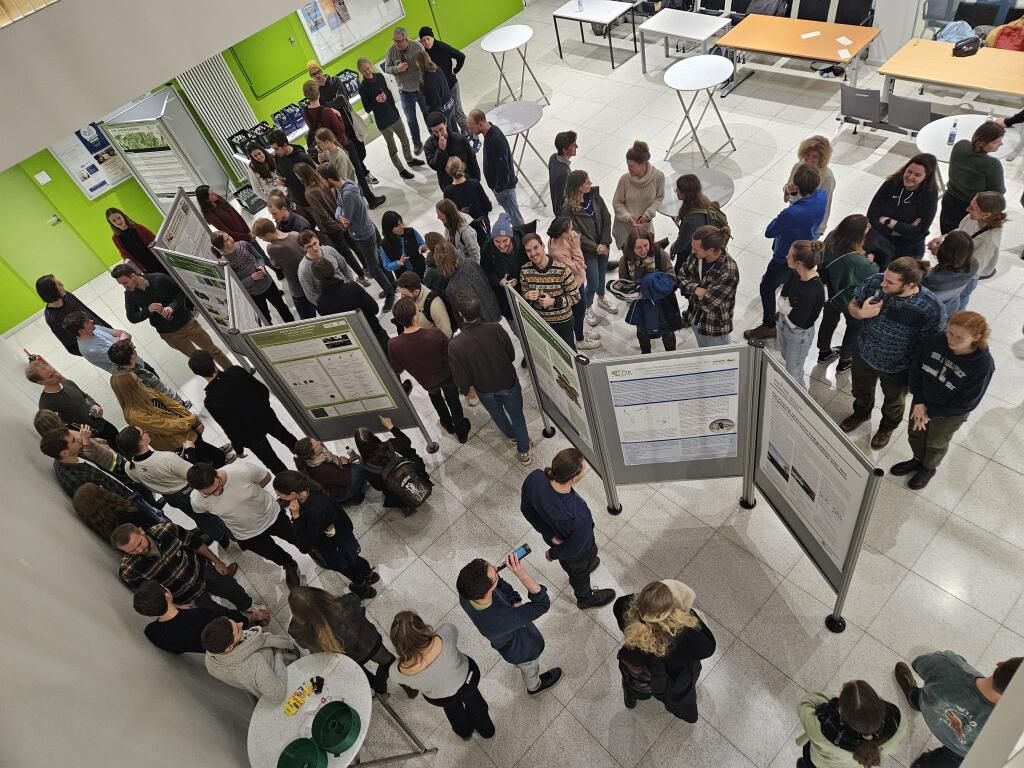
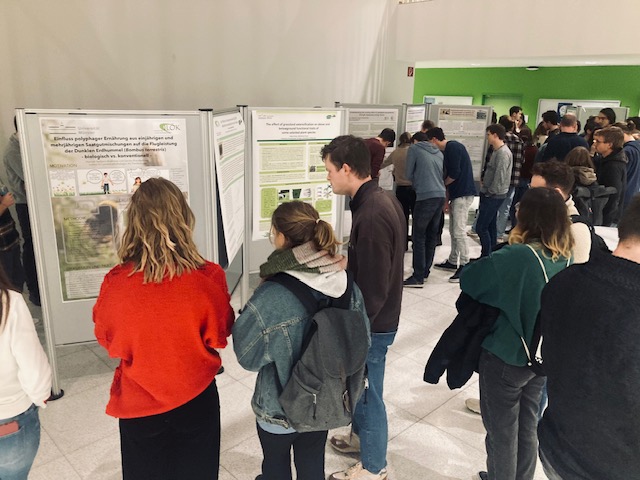
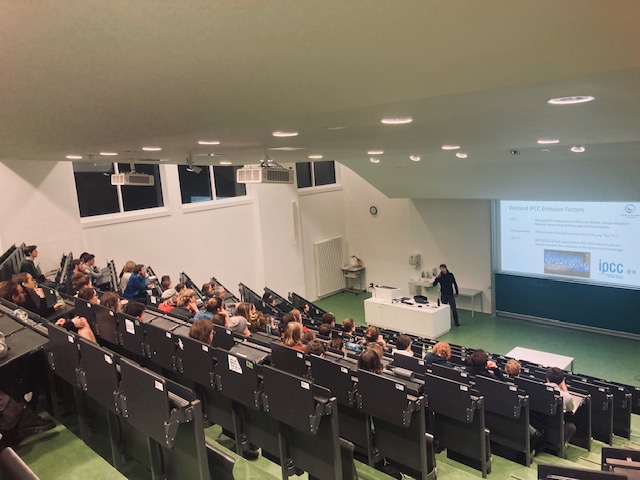
Our first ILÖK graduate conference was held on the 2nd of February. The conference featured a diverse range of topics, with 13 posters and 9 presentations by our master's students presenting their projects and theses. We would like to thank all participants, session chairs, and presenters for their contributions to the success of this conference. It was a lively event, fostering valuable presentations and discussions throughout. Congratulations at this point to the winners of the presentation and poster awards: Robin Maares and Fabian Karwinkel!
Save the date: our next ILÖK graduate conference will be on the 19th of July 2024.

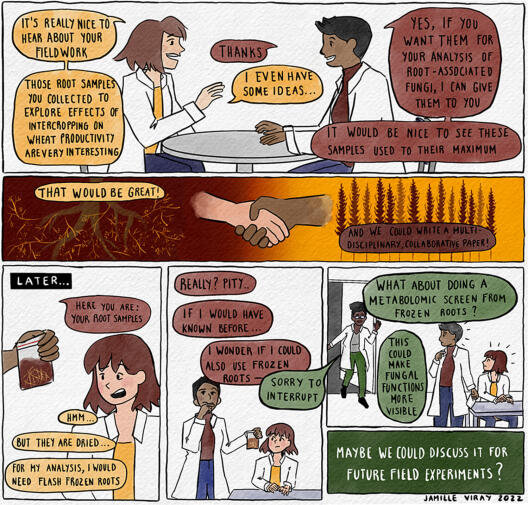
Interdisciplinary scientific collaboration is important for successful research and the establishment of young scientists. But sometimes it gets stuck - what is the reason?
Erica Mc Gale (Uni Lausanne) and Lena Neuenkamp from the Biodiversity and Ecosystem Research Group deal with this topic in this article. They find that there is a need for more information on the barriers to collaboration. To investigate this, they have created a short questionnaire and sincerely ask for your participation.
This will allow them to get to the bottom of collaboration hurdles in more detail in a follow-up study. It will take no more than 10 minutes and is done anonymously.
Here is the link to the questionnaire.
Thank you for your help!
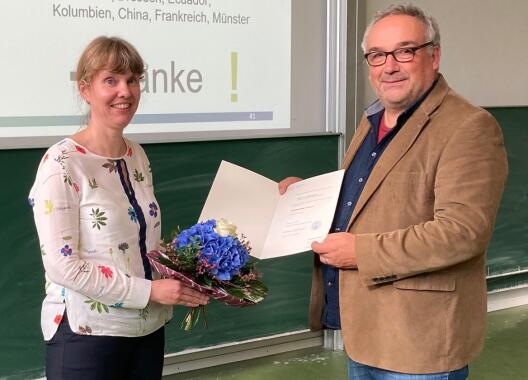
PD Dr. Ute Hamer wurde zur Außerplamäßgen Professorin ernannt.
Am 13. Okotber erhielt sie nach ihrer Antrittsvorlesung zum Thema Bodenökologie und die Bewertung von Bodenqualität von Dekan Prof. Dr. Dr. Hölzel die Ernennungsurkunde.
Das ILÖK gratuliert sehr herzlich und wünscht ihr alles Gute. Seit diesem Wintersemester können die Studierenden im M.Sc. Landschaftsökologie nun auch ein neues Wahlmodul zum Thema Bodenökologie belegen.
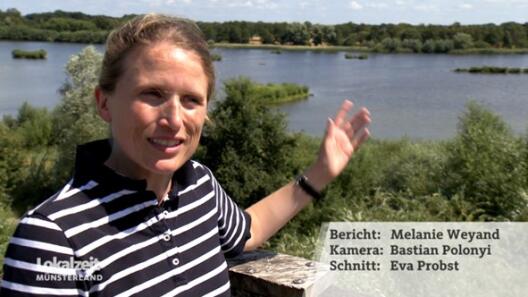
The Lokalzeit Münsterland of the WDR reported on 17.7.23 about the microplastic investigations in the sewage fields of Münster ("Rieselfelder"). The team around Dr. Friederike Gabel (ILÖK) and Prof. Dr. Bodo Philipp (Institute for Molecular Microbiology and Biotechnology) investigated the occurrence and distribution of microplastics in the bird paradise of the Rieselfelder. This revealed a very clear but heterogeneous contamination by microplastics. What effects this has on the animals living there still requires further research.
The report can be found here (German only).
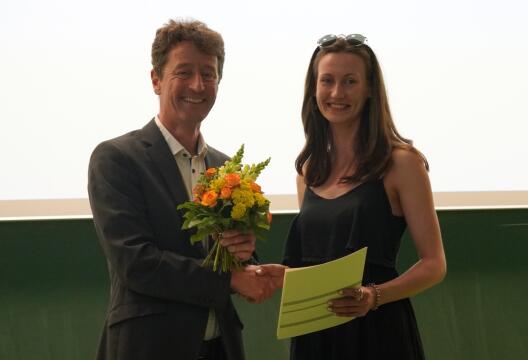
The Jeannine Böhmichen Prize for 2022 was awarded during the Geo.Science.Day on 15.06.2023. The prize is awarded to a Bachelor's thesis that, among other things, presents complex issues from landscape ecology in a clear and concise manner, independently raises questions of high originality or topicality, presents multi-layered information in a clear and concise manner or demonstrates the creative scope of students.
Prof. Dr. Tillmann Buttschardt gave the laudation and presented the award certificate to Isabelle Walgath. She received the award for her Bachelor's thesis with the topic: The effect size of watercourse margins of different widths on the ecological condition of an agriculturally influenced watercourse.
We warmly congratulate the award winner!
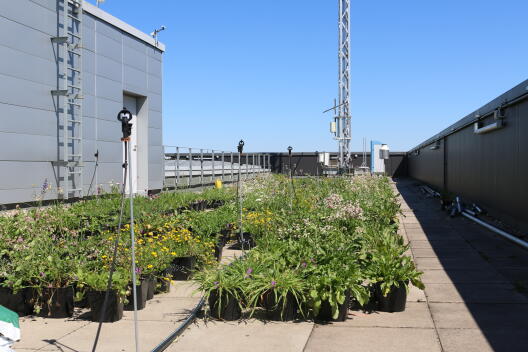
Wild plants can change when propagated agriculturally:
A new study examines the rapid domestication of wild plants that are agriculturally propagated for restoration purposes.
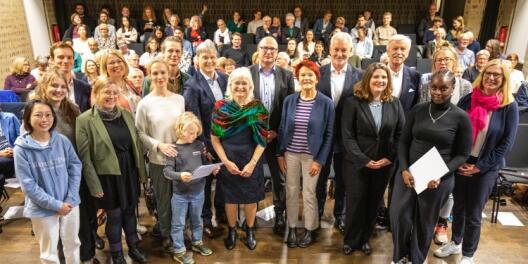
Urban gardening in the village and health promotion in the city district - these are the winning projects of the WWU Foundation's Citizen Science Competition 2022. They were now presented at the event "Mitdenken - Mitmachen - Mitforschen. An evening for civic engagement in science and research". The winners can look forward to a grant of 7,500 euros each.
After the successful student project "Monitoring of modern agroforestry ecosystems" in 2020, the CS Prize once again goes to researchers from the Institute of Landscape Ecology.
The artists' village Schöppingen is the focus of the winning project "Transformations in Münsterland". The community garden, kitchen, workshop, library, gallery and exhibition hall are understood as places of learning and knowledge for the citizens. What contribution can the village make as a socio-ecologically oriented actor for sustainable regional development? To this end, artists exchange ideas with students of landscape ecology and sociology on the significance of urban gardens for community building. Prof. Dr. Matthias Grundmann from the Institute of Sociology, Dr. Cornelia Steinhäuser from the Institute of Landscape Ecology and Julia Haarmann from the Foundation Künstlerdorf Schöppingen are leading the project.