
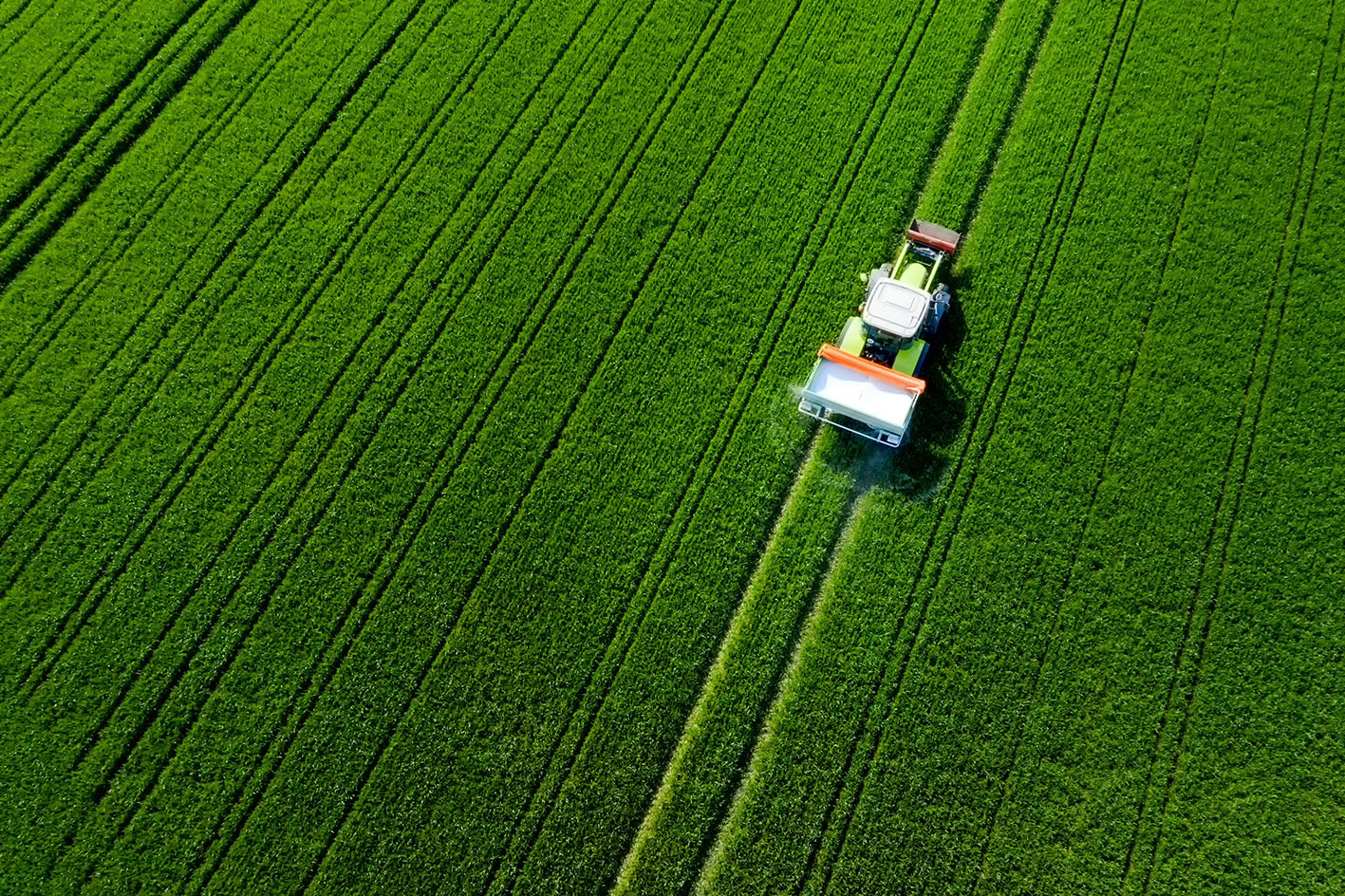
Autonomous, battery-powered farming robots could help conserve resources
Agriculture worldwide faces the challenge of meeting a growing demand for food while simultaneously reducing greenhouse gas emissions and the consumption of scarce resources. These problems are exacerbated further by rising input costs and increasing labour shortages. Battery-powered farming robots could help by performing tasks autonomously, applying water, fertiliser and crop protection agents more precisely, and partially replacing diesel-powered machinery. Using a modelling study in place of field trials, a research team from the University of Münster and the University of California, Davis (USA) has now analysed under which conditions small battery-powered farming robots could offer economic and ecological advantages. The study found that depending on the scenario, the modelled production ranged between 76 percent less and 17 percent more than the reference values reported in the scientific literature. For this comparison, conventional harvesting costs were added using literature data. Greenhouse gas emissions were predominantly in the lower range or even below the reported ranges. The results were particularly promising for onions and lettuce, especially in organic farming, where weed control without synthetic chemical herbicides is often labour- and cost-intensive.
According to the study, variable production factors, which include seeds and seedlings, water, fertiliser, herbicides, electricity and labour, are particularly important. Together, they accounted for 72 to 90 percent of the costs, depending on the scenario. Variable factors also accounted for between 72 and 95 percent of greenhouse gas emissions, with water, seeds, seedlings and fertiliser playing a particularly significant role. “A robot does not automatically make agriculture more sustainable. The modelled benefits arise when its precise deployment enables resources to be saved,” points out Professor Stephan von Delft from the Institute of Business Chemistry at the University of Münster. “Policymakers and farmers should therefore test and promote applications in which autonomous systems can reduce not only labour requirements and agricultural inputs, but also greenhouse gas emissions.”
Using their model, the team studied the cultivation of strawberries, onions, lettuce and peanuts in organic and conventional farming systems. In each scenario, a battery-powered farming robot weighing around 200 kilograms was modelled to perform soil preparation, sowing, weed control, irrigation and fertilisation. The researchers calculated the costs and greenhouse gas emissions per kilogram of harvested produce using data from scientific literature, technical specifications of existing agricultural robots and the life cycle assessment database “ecoinvent”. Harvesting was excluded from the robot model because harvesting technology, labour requirements and the degree of mechanisation vary considerably between crops, and some crops are still harvested partly by hand. For the comparison of total costs, conventional harvesting costs reported in the literature were added. The potential effects of harvesting on the greenhouse gas emissions were considered in a sensitivity analysis. This type of analysis shows how the results change when individual assumptions or input parameters are varied.
To the best of the research team’s knowledge, this is the first study to apply a consistent modelling framework that assesses the economic and environmental impacts of autonomous, battery-powered farming robots across multiple activities. Unlike previous studies, it considers not only individual farming operations, but several activities across the production cycle and a range of crops and farming systems.
Compact robots could be particularly attractive to small and medium-sized farms, for specific applications in organic farming, or for shared use by several farms or cooperatives. However, before making specific investment decisions, the model would need to be adapted to local conditions using farm-specific data. “The results can help farmers, manufacturers and policymakers identify promising applications,” adds Stephan von Delft.
Funding
Two authors from the Institute of Business Chemistry received funding from the Federal Ministry of Research, Technology and Space and the Ministry of Culture and Science of North Rhine-Westphalia (BMBFR: ProRec, 03XP0537A and MKW NRW: BIOSTORE, PB22-014).
Original publication
Schlehuber, S., Gutsch, M., Stegemann, L. et al. (2026): Techno-economic and environmental assessment of next-generation battery-powered farming robots. Nat Commun 17, 11336. DOI: 10.1038/s41467-026-78281-7