
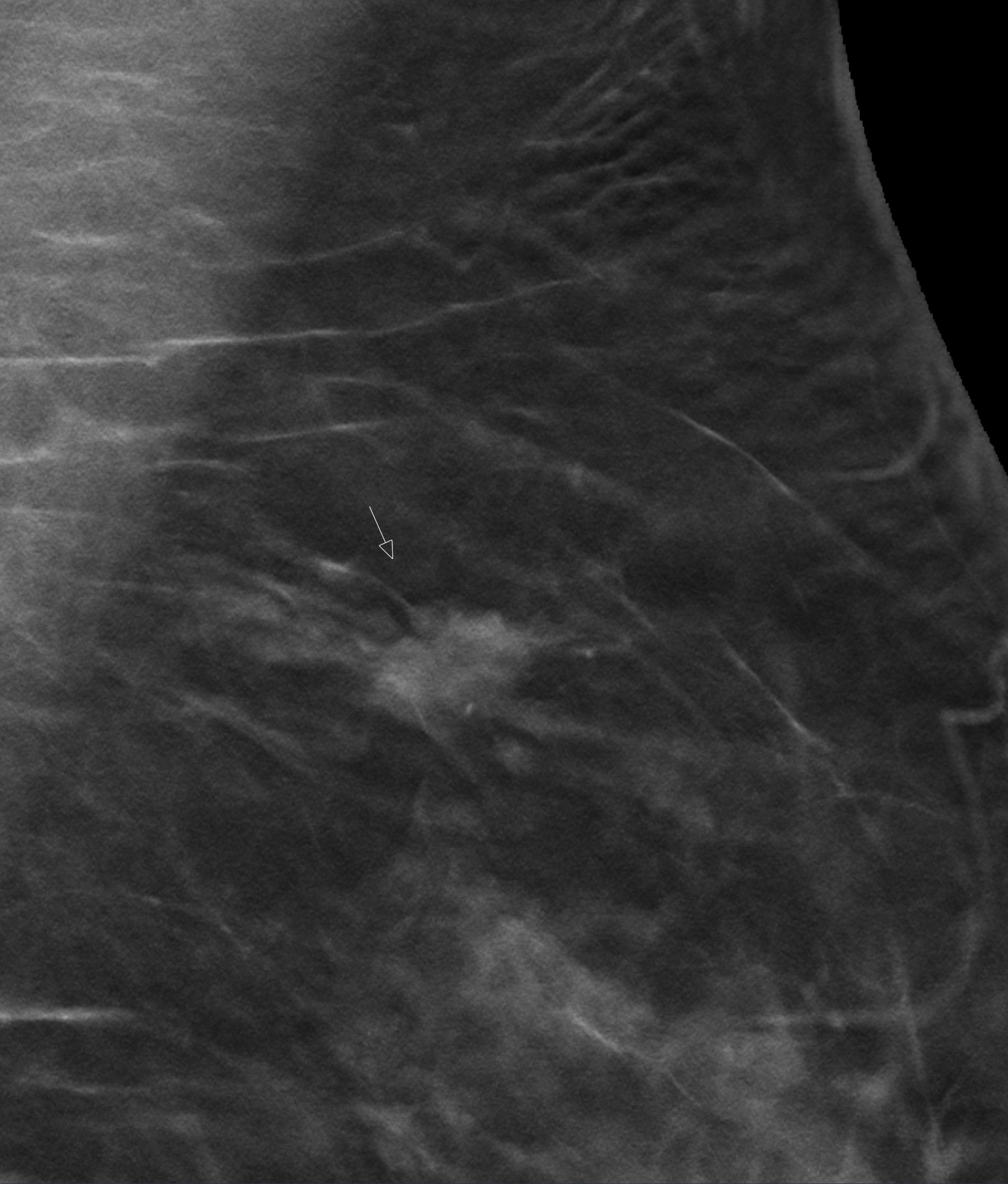
Tomosynthesis detects breast cancer more frequently during screening
With around 75,000 new cases per year, breast cancer is by far the most common cancer among women in Germany. Using digital breast tomosynthesis in the breast cancer screening programme could prevent around a quarter of invasive interval cancers that occur within two years after a digital mammogram. In the first year following a normal screening result, the rate of invasive breast cancer diagnoses was 29% lower in the tomosynthesis group than in the mammography group. These were the findings of the “TOSYMA” study, the largest comparative study of the two diagnostic methods conducted worldwide to date.

When breast cancer is diagnosed between regular screening appointments, experts describe it as “interval cancer”. These tumours tend to be more aggressive and have a poorer prognosis than those detected during screening. Therefore, experts use them as a proxy measure for the effectiveness of early detection.
The first analysis of the TOSYMA-1 study, published in 2022, showed that tomosynthesis detects a significantly higher number of invasive breast cancers – specifically 7.1 versus 4.8 per 1,000 women screened. However, it remained unclear whether tomosynthesis was also clinically more effective. The second analysis (TOSYMA-2) addresses this issue by comparing interval cancers in both groups.
In the tomosynthesis group, 4.5 out of 10,000 women were diagnosed with invasive cancer during the first year after receiving a normal screening result. In the mammography group, this rate was 6.3. However, the study focused on the rate over two years. In the tomosynthesis group, this was 14.2 per 10,000 women, which was 24% lower than in the mammography group (18.6 per 10,000 women). Unlike in the first year following screening participation, this difference is not statistically significant. The authors cite the impact of the pandemic, amongst other factors, as a possible reason for why some 20,000 fewer women were recruited than planned.
The diagnostic effect was particularly pronounced among women who participated in a second screening round. Among this group, the rate after two years was 13.5 per 10,000 women, whereas among women undergoing their first screening, it was almost identical (18.8 per 10,000 women). Furthermore, interval cancers in the tomosynthesis group were less likely to be locally advanced or to have spread to the axillary lymph nodes. These characteristics are generally regarded as indicators of effective early detection. ‘Our study decisively strengthens the scientific basis for tomosynthesis in breast cancer screening,’ says Professor Stefanie Weigel, from the Department of Radiology at the University of Münster and the UKM. ‘It expands and enhances the previously limited body of research on follow-up after tomosynthesis screening.’
As part of the study, almost 100,000 women aged 50–70 from 17 screening centres in North Rhine-Westphalia and Lower Saxony were randomly assigned to one of two groups between 2018 and 2020. One group underwent tomosynthesis, which was supplemented by a two-dimensional image calculated from the tomographic images. The other group underwent digital mammography. As the study was embedded within the nationwide, quality-assured mammography screening programme, it took place under real-world conditions. To identify interval cancers, the research team checked the participants’ data with the cancer registries of the two federal states. These registries cover more than 95% of new breast cancer cases. The research team reviewed the suspected cases using a multi-step process. Throughout the process, staff at the cancer registries and reference centres, as well as the independent data safety committee, were unaware of which group each woman had been assigned to.
83.5% of all invasive tumours diagnosed within the following two years for each participating woman (so-called programme sensitivity) were detected during the tomosynthesis screening examination. In the mammography group, the invasive programme sensitivity was 72.3%. The reliability with which women without breast cancer were classified as normal was similar in both groups. ‘The next step is to analyse the carcinomas detected during the regular follow-up screening for women in both groups using mammography,’ explains Professor Walter Heindel, leader of the study from the Department of Radiology at the University of Münster. ‘By analysing this data, we hope to determine whether tomosynthesis reduces advanced tumour stages more effectively than mammography in screening.’
The study was funded by the German Research Foundation (DFG).
Original publication
Weigel S, Hense HW, Weyer-Elberich V, Czwoydzinski J, Decker T, Kajüter H, Oesterling F, Heilmann J, Stang A, Kieschke J, Wienbeck S, Stephan O, Baier S, Krischke M, Sommer A, Gerß J, Heindel W; TOSYMA Screening Trial Study Group. (2026) Invasive interval breast cancer rates after digital breast tomosynthesis plus synthesised mammography versus digital mammography screening (TOSYMA): 24-month follow-up of the multicentre, open-label, randomised, controlled, superiority trial. The Lancet Oncology. DOI: 10.1016/S1470-2045(26)00341-4