
Against Erasure
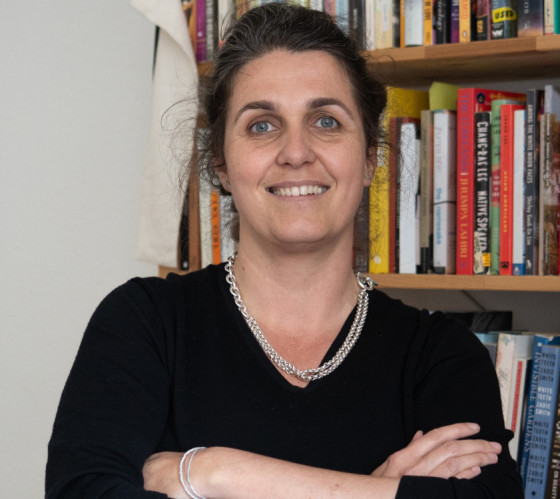
She was awarded the Nobel Prize in Literature in 1993, yet her first novel repeatedly appears on censorship lists in the USA. Toni Morrison published 'The Bluest Eye' in 1970, and since then the novel has been censored 116 times, for example in the state of Utah in 2026, on the grounds that it is too explicit for young people. The content is indeed disturbing: a Black girl growing up amid poverty, racism and domestic violence longs for nothing more than blue eyes, believing that only then will she be loved. She is broken by this longing and by being raped by her own father. But does that justify censorship? 'Those who want to ban books keep raising the argument that young people need to be protected. That's why novels dealing with difficult subjects such as race and sexuality face such fierce hostility, even when these subjects are handled appropriately in the books,' explains Dr Silvia Schultermandl, Professor of American Studies. 'But it's not just about denying children access to certain books. It's also about rejecting and erasing alternative ways of life beyond the white "cis-hetero mainstream",' adds her colleague Dr Corinna Norrick-Rühl, Professor of Book Studies.
'PEN America', an American association of writers, documented more than 10,000 cases of books being removed from US schools in the 2023/24 school year alone. What began in the United States as disputes in individual school districts has long since become a kind of culture war. At the English Department of the University of Münster, the two professors have drawn a conclusion from this that goes beyond their academic work. The 'Banned Books Network Münster' (BBNM), which they founded together with two postdoctoral researchers, deliberately steps outside the university setting and seeks to engage the public. 'We feel called upon to promote reading as a cultural practice, but also as a politically activist activity,' stresses Silvia Schultermandl. After all, one thing is clear: it is never just about books. 'These are proxy wars that often serve other political agendas.'
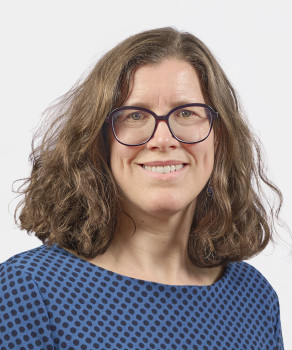
Censorship in the USA intensified at the beginning of 2025, not least due to Donald Trump's return to the presidency. Whereas the previous administration had opposed the removal of books, he legitimised such actions. The idea for the network arose 'out of this collective shock', Silvia Schultermandl points out. The academic foundation had been in place for a long time; what was new was the ambition. 'We cover these topics in our courses and publications,' explains Corinna Norrick-Rühl. 'But by founding the network, we stepped out of the academic "bubble" and became active.' The aim is knowledge transfer, so that research findings reach a wider audience. This includes an essay on Kirsten Miller's satire 'Lula Dean's Little Library of Banned Books'. The main focus, however, is on public events: lectures, panel discussions, 'book talks' and film screenings. In October, the 'Banned Books Week' will take place in cooperation with partners in Münster and Trier.
The BBNM avoids lecture halls as venues in order to reach people outside the university as well. Participants include teachers, staff from libraries and cultural institutions, and students from other disciplines. After one event, a teacher said she would take what she had learned straight into her lessons, the professors recall. 'That's exactly our goal.' Links have since been established with the city library and with universities in Germany and abroad, and almost 150 people are now on the mailing list.
The professors are convinced 'that there is social value in people meeting, reading and exchanging ideas'. They were therefore delighted when an offshoot emerged from among the students. Kare Mayurathan, then a student assistant in American Studies, founded the 'Banned Book(s) Club'. The group meets privately once a month: what began in a café has since moved into a living room. Over tea and cake, it is easier to discuss things that are hard to digest. There is no fixed programme. 'We bring along passages that have stayed with us, and conversations grow out of them,' explains Kare Mayurathan. The group decides which books to read by vote, guided by the PEN list. The reasons given for the bans are often discussed. 'They are never justified,' he says. 'Censorship doesn't protect young people; it protects certain parts of society from having to confront their own history.'
'The tactics of the American culture war have long since spilled over to us,' adds Kare Mayurathan. Libraries, for instance, are coming under pressure, for example through targeted campaigns against reading events such as 'Drag Queen Story Hours'. When literature that speaks uncomfortable truths is attacked in this way, all three agree, 'it stems from a deep fear of radical empathy'. Reading a book means spending time inside another person's head and getting to know realities of life that often do not fit into a rigid worldview. 'Because these topics weigh heavily on people, we like to end our events with a book recommendation. That's a concrete answer to the question of what you can do: read these books yourself and form your own opinion,' recommends Corinna Norrick-Rühl.
Author: Hanna Dieckmann
This article is taken from the university newspaper wissen|leben, issue no. 6, 7 October 2026.