
Assyria's Hidden Kings
For more than 100 years, research assumed that the rulers of the ancient Assyrian Empire in the Near East were completely listed in a king list – a prestigious text preserved in multiple exemplars on clay tablets. Assyriologists from the universities of Münster and Yale have now demonstrated that there were three additional kings. “Since the discovery of the king list in the early 20th century, no one has questioned the order,” explains Dr Alexander Johannes Edmonds from the Institute for Near Eastern Archaeology and Ancient Near Eastern Studies at the University of Münster. Together with his colleague Professor Eckart Frahm from Yale, Alexander Johannes Edmonds has, through a new analysis of cuneiform texts from the 10th and 8th centuries BC, found evidence of three hitherto unknown Assyrian kings. Previously, it was assumed that there was largely an undisputed father-son succession. With the study “Three New Kings of Assyria”, recently published in the Journal of Cuneiform Studies, it becomes clear that the political history of the first world empire, which spanned present-day Iraq and parts of Turkey and Syria, was far more fraught with conflict and more reminiscent of the bitter power struggles in the series “Game of Thrones” than an idealised rule at Camelot.
The stone was set rolling by Eckart Frahm with his book publication in 2023 on the rise and fall of Assyria: In a dated royal decree – a land grant – he discovered a king's name that was not recorded on the Assyrian king list. It concerns Tiglath-Pileser, who ruled around 763 to 762 BC. This short epoch was marked by rebellions and the outbreak of a plague epidemic. Tiglath-Pileser seized power after a solar eclipse. However, the troops of the then reigning king Ashur-dan III, Tiglath-Pileser's nephew, deposed him again. The scribes of the Assyrian Empire suppressed the existence of the rebel king Tiglath-Pileser and thus idealised the royal succession.

This is the starting signal for meticulous detective work. From his office on Rosenstraße, Alexander Johannes Edmonds searches through digitised sources and makes discoveries in his search for clues. The second “lost” king was Shalmaneser, who held power from 747 to 745 BC. His reign was also marked by unrest. His uncle Tiglath-Pileser III – the founder of the world empire – eventually removed him from office. A scribe removed the name “Shalmaneser” from a stele and replaced it with the name “Tiglath-Pileser (III)”. “However, there is also a later list which supplies a mysterious Shalmaneser as king around 747 BC,” emphasises Alexander Johannes Edmonds. That was the great breakthrough in his research. With this, there were now two pieces of evidence for the existence of further Assyrian kings.
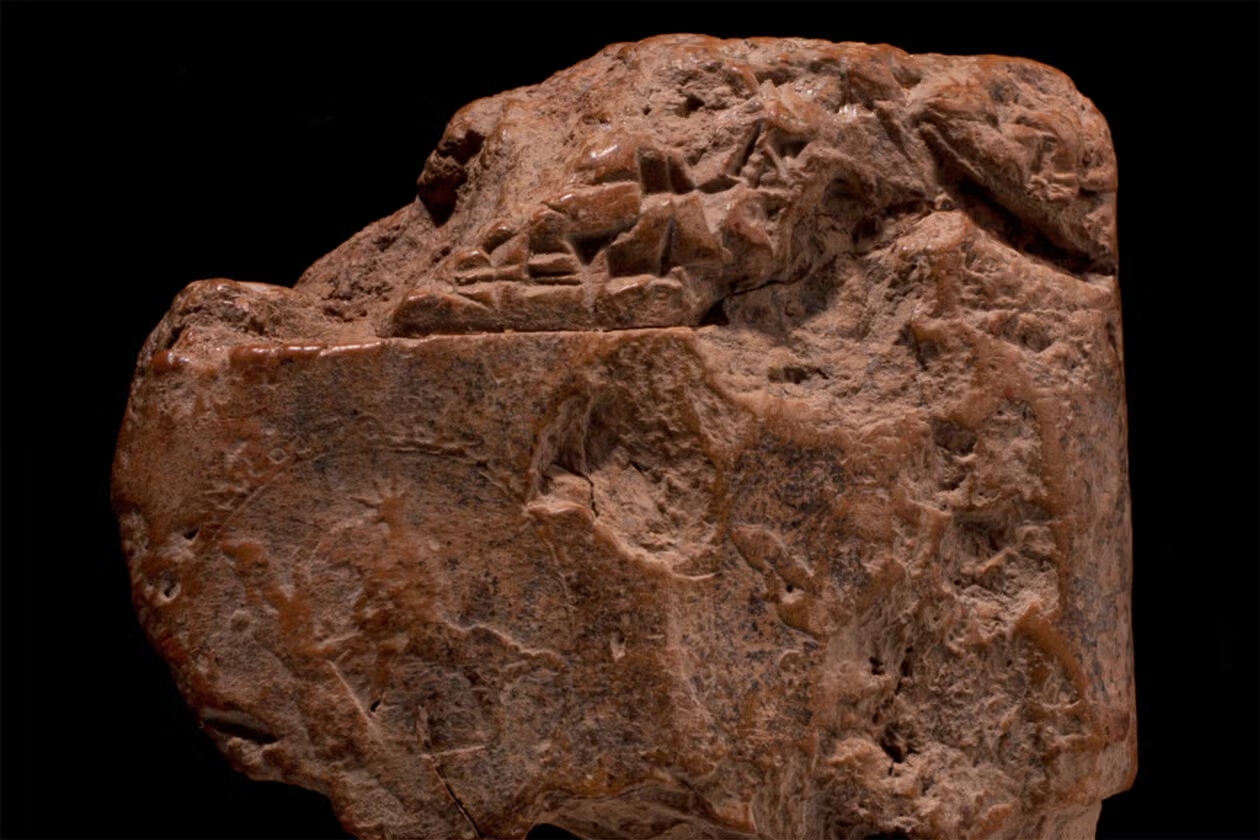
The third scenario lies earlier in time and concerns the reign of Ashur-uballit. He ruled from about 913 to 912 BC and fell victim to his ambitious brother Adad-narari II – the first great conqueror of the Neo-Assyrian Empire. Ashur-uballit is mentioned in a text on a clay tablet listing rulers who restored a silver ritual vessel for beer dedicated to the chief god Ashur. Unlike all other named individuals, Ashur-uballit is listed as the only person without a royal title. “That is very strange,” explains Alexander Johannes Edmonds. Eckart Frahm published the inscription of the clay tablet in 2009 and already noted the peculiarity of this mention. “But only with the discovery of the two other lost kings have I come to the conclusion that Ashur-uballit is the third example of our theory,” emphasises Alexander Johannes Edmonds. A destroyed royal statue of Adad-narari II’s immediate predecessor, which had long been overlooked by researchers, serves as further evidence for the existence of this unfortunate king.
Each of the three kings reigned for less than two years. They were crowned in the city of Ashur and enjoyed the support of part of the Assyrian population, if not the entire Assyrians. The two scientists presume that the names of these three rulers were deliberately removed from their own monuments and the king list by their successors. Only traces of their brief reigns remain to be found.
“The newly discovered kings illustrate that the path to the first world empire was indeed marked by rebellions and intrigues,” emphasises Alexander Johannes Edmonds. The Assyrian succession during the emergence phase of the great empire was no less chaotic than during the time of the Roman Empire or the great empires in the Middle Ages. Thus, the newly gained knowledge changes the hitherto prevailing picture of the ancient Assyrian Empire. “Our source research has shown that, quite literally, nothing is set in stone,” says Alexander Johannes Edmonds. “We are at the beginning of a new historical hunt.”
Original publication
Edmonds, A. J., Frahm, E. (2026), Three New Kings of Assyria. Journal of Cuneiform Studies, Volume: 78. DOI: 10.1086/741239