
Grateful for ten years of fascinating insights
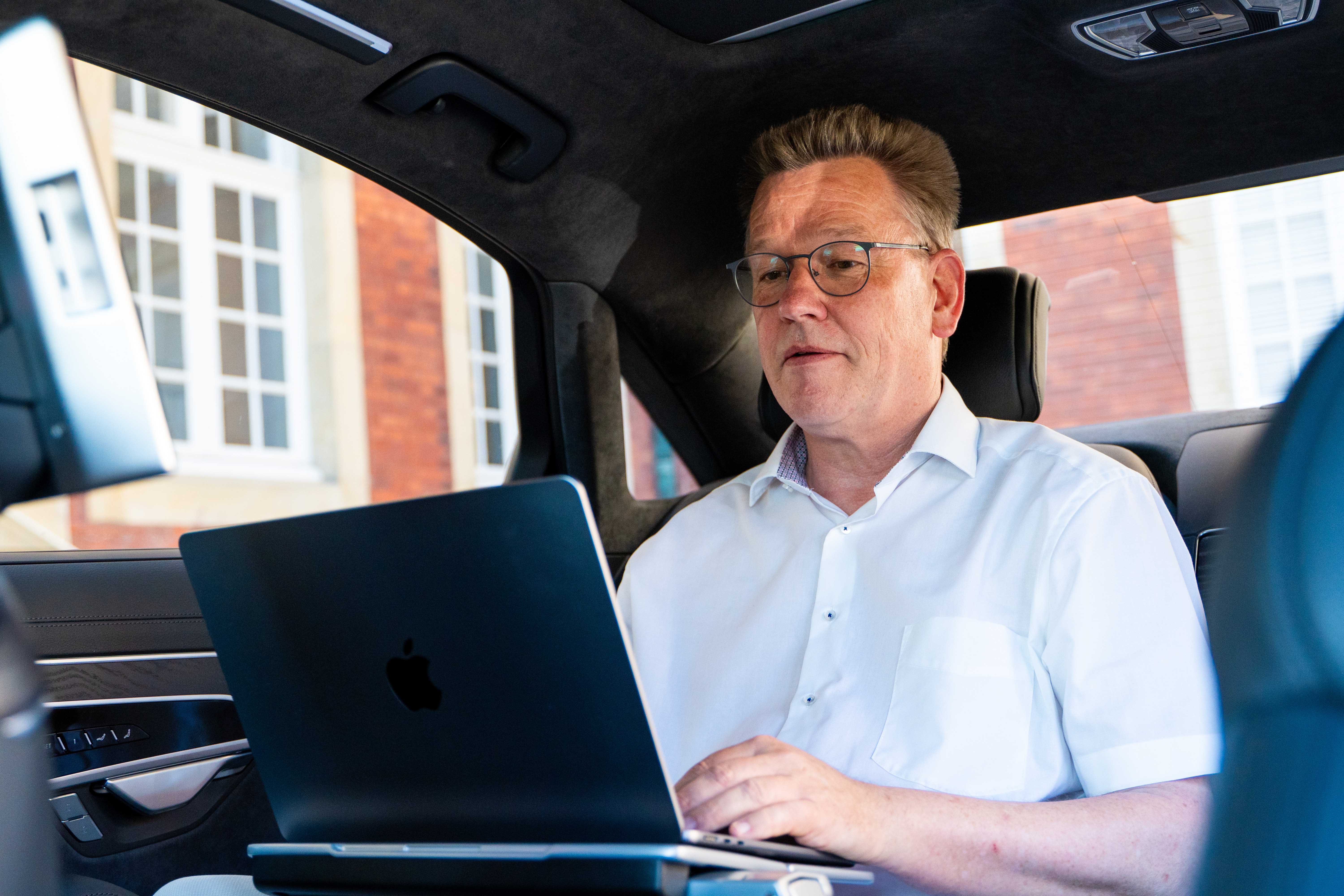
Expanding one’s knowledge and learning something new every day comes with the job of being a researcher and Rector of a university – something Prof Dr Johannes Wessels knows quite well. In the past years, there were three experiences that surprised the physicist after taking the helm of the University of Münster in October 2016. First, he says, he used to get by with a small pocket calendar for all of his appointments. But that was over as soon as he moved into the Rector’s office. ‘I had to quickly learn that my calendar was no longer under my control.’ Second, over the course of his ten-year term, he acquired a skill that he had once believed to be impossible. ‘I’m now able to do focused work in a car or train.’ And third, perhaps even more important in view of the many trips he takes, travelling back and forth every day, ‘Now and again, I manage to catch up on an hour of sleep when I’m on the road.’
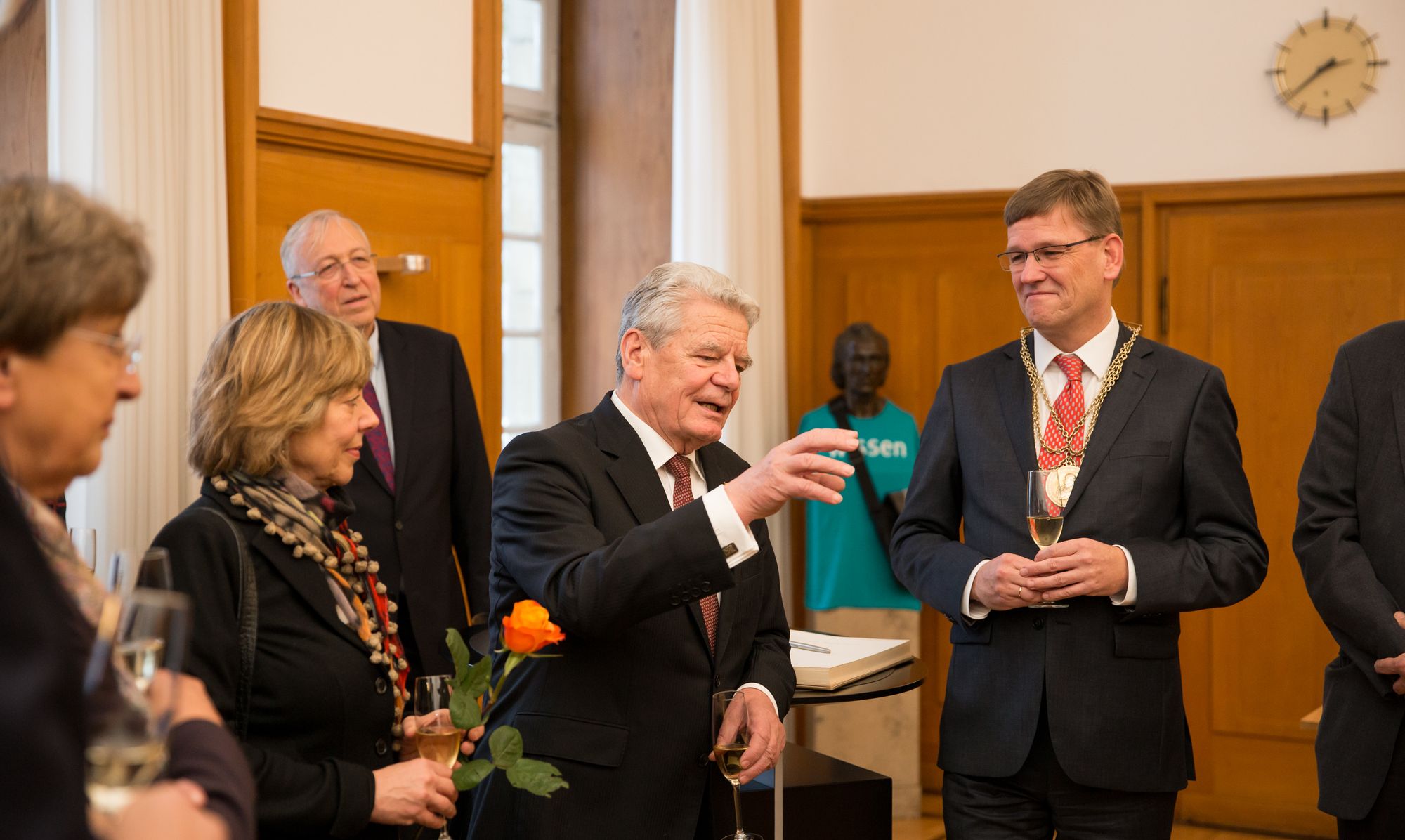
In fact, he thinks more often about the “privileges” he enjoyed week after week as the Rector. For example, the insights into the numerous institutes, with which he had previously been unfamiliar. He remembers the tours through “fascinating new facilities” like the Center for Soft Nanoscience, the Philosophikum, the LIMETTE, the PAN Centre and the very top floor of the Schloss all the way to the bell tower. He recalls the many inspiring conversations he had with senior employees, newly appointed academics and well-known political figures such as former German Foreign Minister Sigmar Gabriel and former Federal President Joachim Gauck. But when he considers the more interesting places at the University, he adds with a smile, ‘the most stunning institute, of course, is the Institute for Nuclear Physics.’ Once a physicist, always a physicist ...
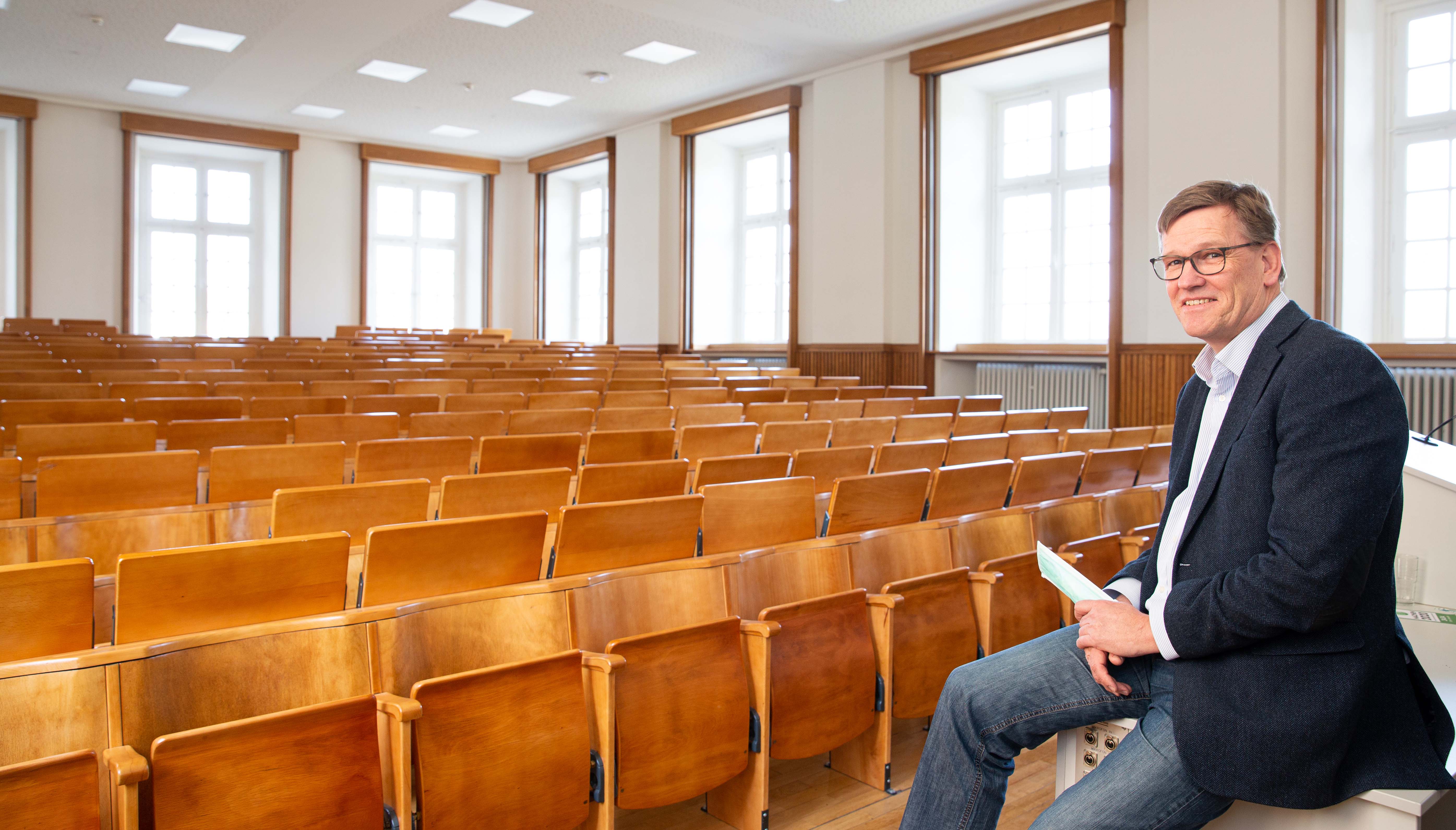
Johannes Wessels firmly believes that it was this solidarity that played a key role in those years that changed and continue to influence the University to this day – the almost three years of the Covid-19 pandemic starting in January 2020. It was an unprecedented, challenging and hectic time, during which one could draw on little to no prior experience for orientation, in which the Rectorate had to make far-reaching, consequential decisions almost every day. ‘We were fast and effective,’ says Johannes Wessels, ‘and we were spot-on with most of our decisions. We as a team mastered this difficult time very well.’ For example, since then, thousands of employees have been using the Zoom video conference tool almost every day, debates are being had on old and new examination forms more than ever, and the same applies to the fundamental significance of in-person study. ‘Many technical innovations are helpful as aids and supplements, and the same holds especially for artificial intelligence,’ says the Rector. ‘But I am absolutely convinced that learning is a social process above all else, and that the debates and encounters in the lecture halls and seminars are vitally important.’
Although he is leaving Münster, Johannes Wessels will continue shaping the “university of tomorrow”. Not exactly in the Far East, but in that general direction. About 160 km east of Münster’s Schloss, he will be taking the reins as president of the University of Göttingen. He is looking forward to the challenges that await him at the time-honoured institution of higher education in Lower Saxony. Not least of all because it’s where the first German professor of experimental physics, Georg Christoph Lichtenberg, taught, whom Johannes Wessels deeply admires. Not only was he known for his research achievements, but also for his pithy aphorisms and sharp sense of humour. There are people, he wrote in his now famous “Sudelbücher” (scribble books), who believed that ‘everything is reasonable if it’s done with a serious expression.’
There is just one thing that Johannes Wessels, a passionate sailor, dancer and biker, knows he will sorely miss: ‘I always enjoy the 30 minutes biking from home past the zoo to the Schloss each day.’
Author: Norbert Robers
This article is from the University newspaper wissen|leben No. 5, 22 July 2026.