
The Dream of the Synthetic Living Cell
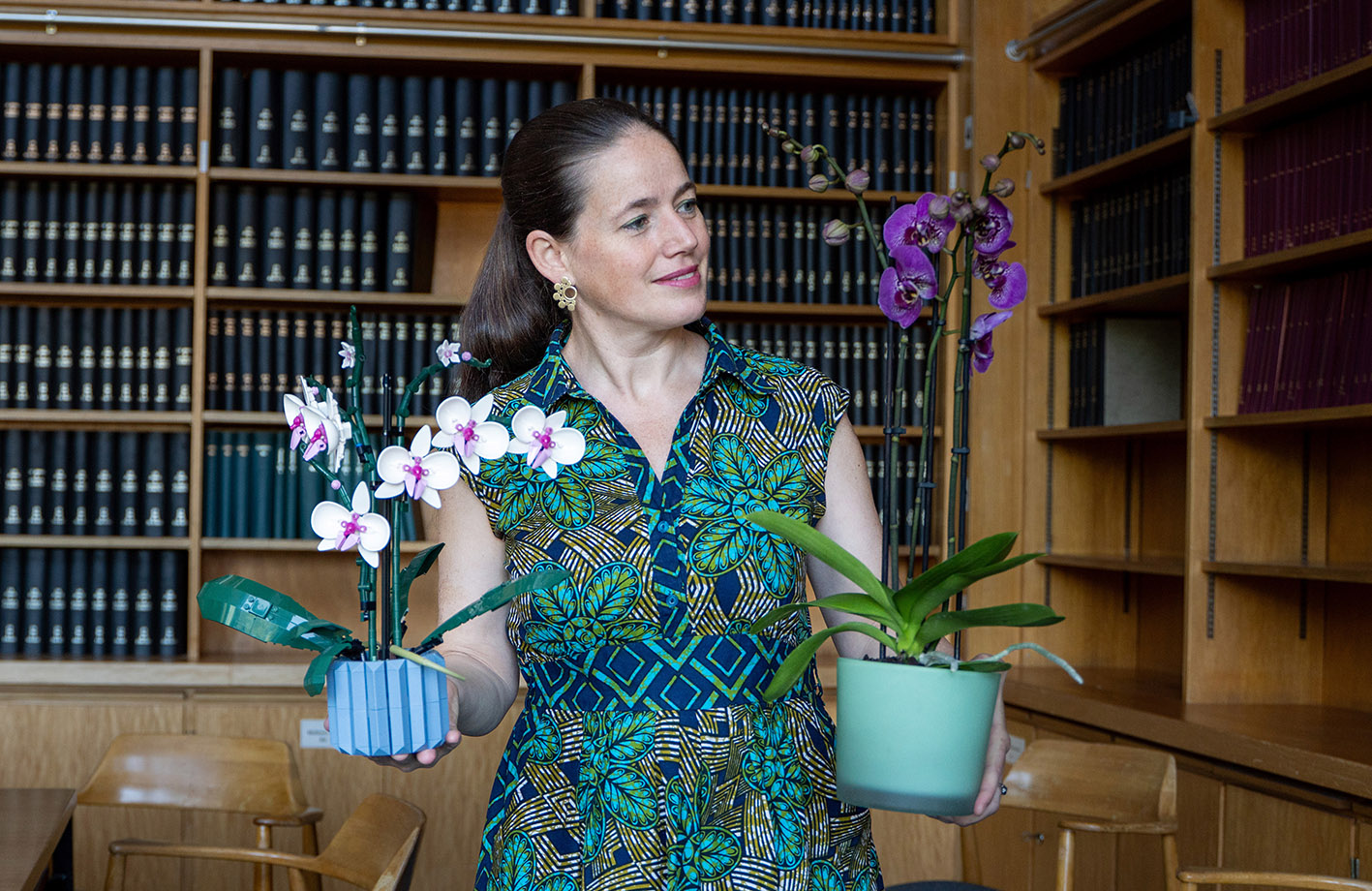
If Professor Seraphine Wegner had her way, she would create artificial life. A synthetic, living cell. She’s always dreamt of it – her personal “Big Bang” in the laboratory. However, the professor is quick to concede that her vision is little more than science fiction. Her research is miles away from creating even the most elementary life forms – let alone complex organisms.
Seraphine Wegner researches in the field of synthetic biology. The biochemist places particular emphasis on “synthesis”. How do different molecules have to come together to create life? Because the answer is beyond her grasp, her research is focused on reaching milestones. The spatial and temporal structuring of cells facilitates the various functions in a living organism. But how does it work in detail? To understand these processes, Seraphine Wegner builds cell-like compartments – enclosed, molecular spaces – within which reactions take place or which interact with other compartments. These synthetic “cells” allow her to regulate reactions, for example using light. They are well suited for revealing the underlying mechanisms of life. And yet they are not alive and cannot replicate.
Seraphine Wegner calls herself the “typical nerd”. ‘I always knew from the start that I wanted to research,’ she recalls. She originally wanted to study astronomy and make the universe her research topic. She ultimately decided to pursue chemistry. The now 42-year-old has been a professor at the Institute of Physiological Chemistry and Pathobiochemistry at the Faculty of Medicine of the University of Münster since 2019. The cell interior, she asserts, is like a universe in miniature – an expanse within that holds numerous mysteries waiting to be solved. ‘The great thing about my profession is that every day is exciting. When you’re doing research, every day is another chance at hitting upon the idea of a lifetime,’ she says.
The Düsseldorf native was raised by a French father and German mother. When Seraphine Wegner was seven years old, her family moved to Cappodocia in Turkey. After earning her degree in chemistry at the Middle East Technical University in Ankara, she transferred to the University of Chicago in the United States to pursue her doctorate. Twenty years since her family left Germany, she returned for her postdoc. She started at the University of Heidelberg and the Max Planck Institute (MPI) for Intelligent Systems, then transferred to the MPI for Polymer Research in Mainz and finally ended up in Münster. Over the course of her career, she received a number of awards and distinctions, including the “ERC Starting Grant”, an “ERC Consolidator Grant” and, most recently, a “Momentum” grant from the Volkswagen Foundation, which has allowed her to venture in a new research direction. For the project in question, she is working on developing a synthetic material in which embedded synthetic cells with enzymes become activated as soon as the synthetic material disintegrates into microplastics. Only then do the enzymes begin to biodegrade the plastic.
Seraphine Wegner’s grandfather on her father’s side was a biophysicist. ‘I was always fascinated whenever he talked about his work, about his colleagues from all over the world and the contacts he continued to maintain well after the Cold War,’ she says. Perhaps that’s why she is especially proud of her own research group which is not only comprised of members of different scientific disciplines but also from different countries like China, India, Russia, Egypt and Italy. ‘As a team, we’re making strong scientific progress. At the same time, my group is like my own personal microproject dedicated to international understanding.’
As a working mother of two children aged eight and five, greater equal opportunity is another of Seraphine Wegner’s goals. She is quite familiar with the difficulties of balancing family and career for young families on an academic career path. ‘I’m a full-time mother and scientist – two jobs that cannot be done part-time. But sometimes there’s not enough time in the day for both, and then I have to decide.’ Whenever people talk about women in science, they often only see the positive examples, the women who are still in the academic system. ‘Those who fail to balance both are then invisible. Only after taking a look at the statistics does one notice the low proportion of women academics after the post-doctorate.’
Should she eventually succeed in creating a living cell in her own lab or another somewhere else in the world, Seraphine Wegner would soon face the next hurdle. ‘When something is alive, it’s not a given that it will stay alive,’ she explains. Whether she’d be able to sustain whatever life she painstakingly created is a different matter altogether.
Author: Christina Hoppenbrock
This article is taken from the university newspaper wissen|leben, issue no. 4, 17 June 2026.