
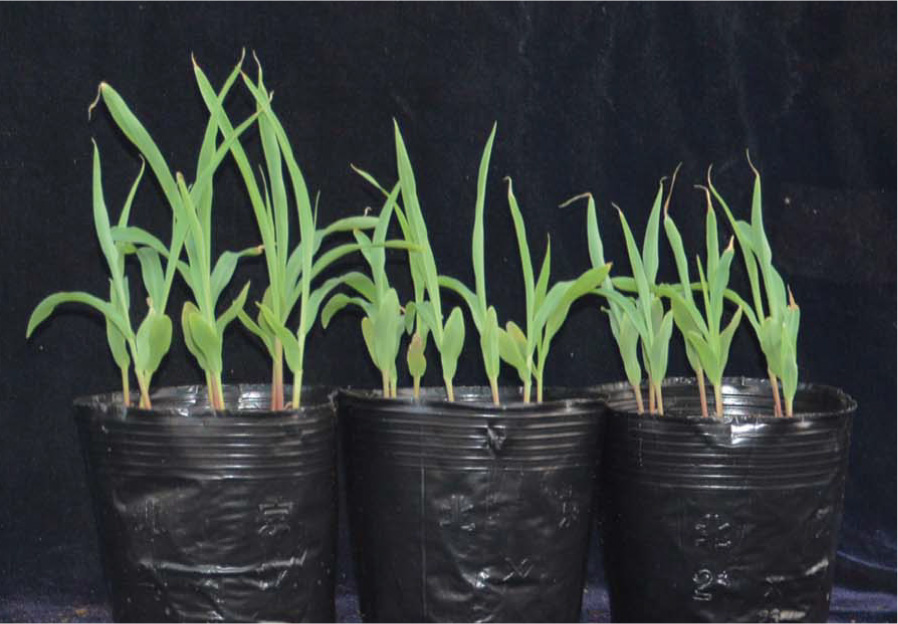
Research team discovers new mechanism of salt tolerance in maize
The increasing content of sodium salts in the soil in many places is a problem for feeding the world's population: many plants thrive less well or not at all on such soils. Against this background, crops that are as salt-tolerant as possible are needed. A Chinese-German research team from the laboratories of Professor Caifu Jiang (China Agricultural University Beijing) and Professor Jörg Kudla (Institute of Plant Biology and Biotechnology, University of Münster) has discovered a previously unknown molecular mechanism that contributes to the salt tolerance of maize. The team showed that salt stress activates a signalling pathway that enhances the initiation of autophagy in plant cells. Autophagy is a cellular remodelling programme that cells use to break down cell material that is no longer needed and use it to build new structures. This enables them to adapt to changing environmental conditions.
Plants respond to high salt concentrations with various defence mechanisms. Previously, it had been observed that salt stress also enhances autophagy in plants. In the new study, however, the team demonstrated for the first time that this mechanism contributes to stress tolerance and is not merely a consequence of poorer environmental conditions. A special enzyme – a protein kinase called "ZmMPK6" – responds to higher salt concentrations by activating a protein complex, which in turn triggers and enhances the cell's autophagy mechanisms. This protein complex is activated when the kinase transfers a phosphate group to a specific amino acid in a subunit of the protein complex. "The fact that we were able to conduct the study directly in maize, an important crop, increases the agricultural significance of the results," Jörg Kudla emphasises. "In this way, we have found a switching point that could potentially be used to create more salt-tolerant plants."
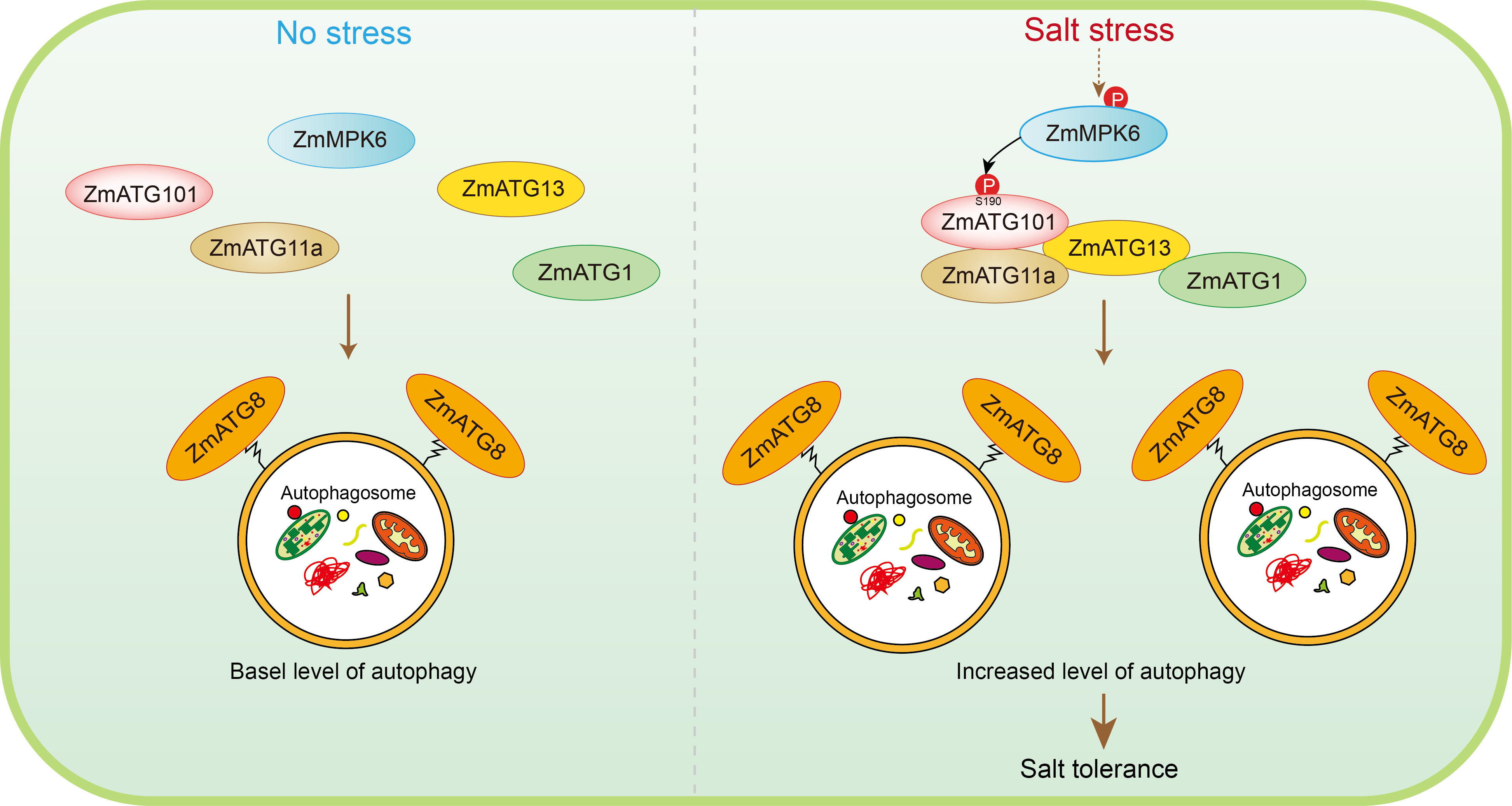
The team used a combination of genetic, biochemical and physiological investigations. Among other things, the researchers from the China Agricultural University in Beijing generated over 20 different maize lines with functional losses of kinases of the "MPK family" or "autophagy genes". They then compared the stress responses of these lines with wild-type plants to investigate the role of these kinases in salt stress. Their findings revealed that the kinase ZmMPK6 triggers the signaling cascade. Further investigations should reveal exactly which types of alterations take place inside the cell.
The Chinese Academy of Sciences, the National Science Fund for Distinguished Young Scholars, the National Science Fund for Excellent Innovation Group Program and a doctoral scholarship from the China Scholarship Council provided financial support for the work.
Original publication
Wenqi Jing, Pan Yin, Changyun Liu, Tao Zhou, Fenrong Li, Fang Liu, Kaitong Du, Jörg Kudla and Caifu Jiang (2026): Mitogen-activated kinase 6 facilitates autophagy initiation to confer salt tolerance in maize. Developmental Cell; DOI: 10.1016/j.devcel.2026.01.002