
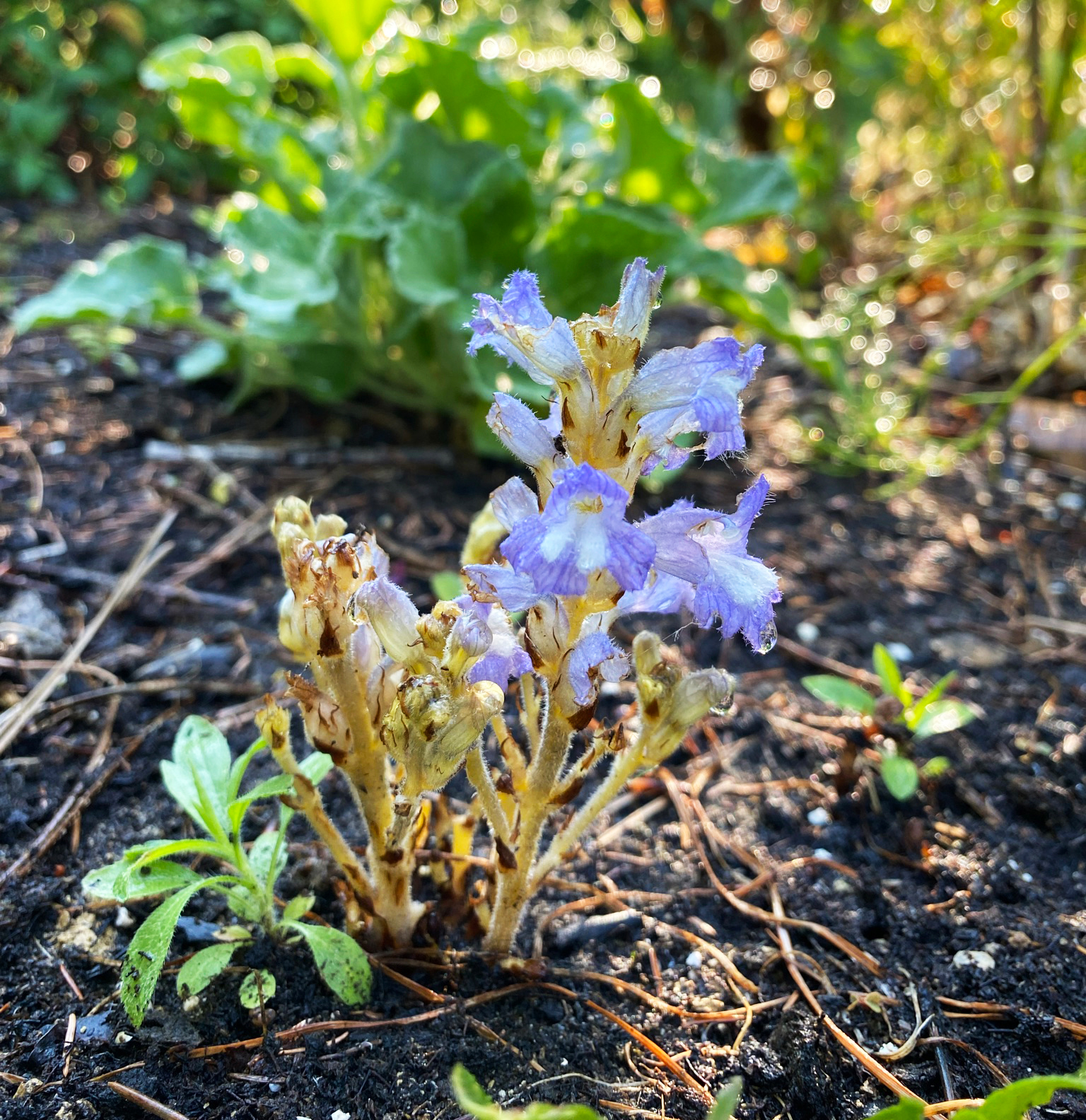
Study: ‘Self-activation’ is part of the success strategy of parasitic weeds
Parasitic weeds extract water and nutrients from their host plants. But what makes these parasites so successful? A team led by Prof Susann Wicke from the Institute for Evolution and Biodiversity at the University of Münster has now investigated how certain parasitic plants develop their feeding organs (haustoria), which they use to attach themselves to the roots of other plants and extract nutrients from them. The researchers found that the parasites already produce various substances in their seeds and release them. In this way, they trigger the development of their haustoria even without a host. This allows the young parasites to reach a state very early on in which they can attach themselves to a host plant particularly quickly and effectively. This ‘self-activation’ of the parasitic feeding organ increases their ability to successfully infest the host – a key factor that explains why these weeds are so difficult to control in agriculture.
The researchers observed this phenomenon in three species of parasitic plants of the broomrape family that infest oilseeds, field beans, rice or maize plants, for example, and can cause significant yield losses. These include species that live entirely off their hosts and others that are partially independent after a period of complete dependence below-ground. All of them showed independent pre-activation of their haustoria, albeit to varying degrees. According to Susann Wicke, the ‘study indicates that this mechanism may be more widespread than previously assumed.’ The results triggered a fundamental change in the previous understanding of parasitic plants. For a long time, it was widely believed that these pests only begin to develop their haustoria when a host secretes specific growth factors.
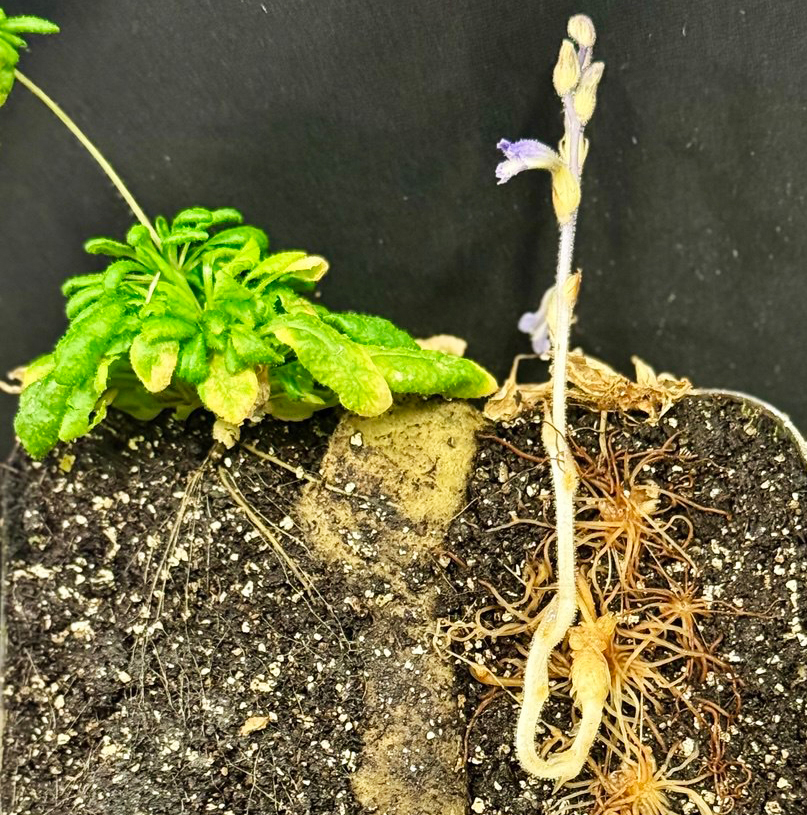
The study further demonstrates that distinct classes of compounds can exert substantially stronger effects on haustorial development when acting in combination than when applied individually, and that specific parasitic genes are activated at precise developmental points in time – including those required for establishing vascular continuity through which the parasite ultimately acquires water and nutrients from its host. Moreover, seeds of other plant species – whether they are hosts or non-hosts – release compounds that amplify this self-activation process. This highlights overall seed density in infested soils as a previously underappreciated ecological factor that may influence parasite establishment and could be exploited in future control strategies.
The researchers combined germination and growth experiments under strictly controlled conditions with various microscopy techniques to directly observe the development of the young parasitic plants. To determine the dissolved substances, the researchers used a particularly sensitive analysis method (UHPLC-MS/MS), which allowed them to precisely measure tiny amounts of different molecules. In addition, they recorded which genes are switched on in the cells at precisely determined points in time and control the development processes.
The study was conducted in collaboration with researchers from Humboldt University of Berlin and the University of Vienna (Austria).
Funding
The research was funded by the German Research Foundation (DFG) as part of an Emmy Noether grant to Susann Wicke.
Original publication
Guillaume Brun, Florian Schindler, Amal Bouyrakhen, Olivier Dayou, Wolfram Weckwerth, Susann Wicke (2025): Seed metabolites headstart haustoriogenesis and potentiate aggressiveness of parasitic weeds; Science Advances; DOI: 10.1126/sciadv.aea1449