

Studying for exams like a pro
When the tension rises among students and the fight for library carrels begins, it is a sure sign that the exam period has arrived! For many, it is a challenging time. Some have difficulty motivating themselves to study, while others work without pause, which can lead to physical and mental stress. In the following, Amrit Malhotra and Sebastian Gräfe from the Student Advice and Counselling Centre provide tips for the exam phase, and students Marie Schacht and Leo Nienhaus explain the strategies they use to prepare for their exams.
Amrit Malhotra, student advisor:

First of all, it’s a good idea to review the material that is important for the learning process, such as lecture slides or past exams. It often helps to summarise the information so that it’s more easily digestible. But don’t just copy the material. Try to structure the content and connect the dots, for example in the form of a mind map. This helps you to remember what you’ve learned.
It can also be helpful to present the content to another person. It is especially important to learn in small doses and to take breaks. Many students sit in the library for ten hours a day. As a rule, we can only stay concentrated for four hours at a time.
Sebastian Gräfe, student advisor:
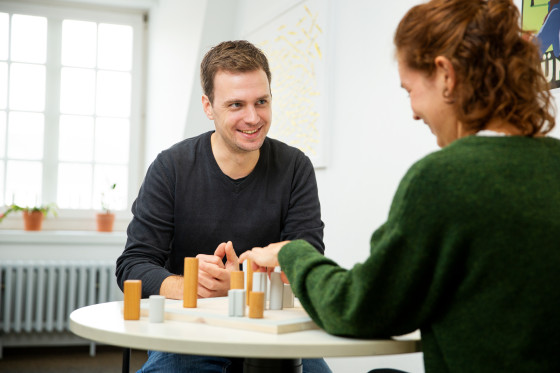
During difficult learning phases, ask yourself: How can I relax a little and maybe even inject some humour into the learning process? There are no limits to your creativity here. For instance, you can make up a story based on the learning content, or you can mentally link it to images that you will recall in the exam. For example, when I was in a difficult learning phase, it often helped to repeat what I had learned out loud in the dialect of my home state.
If you have a hard time sticking to your learning plans, commit by sharing them with others. For example, you can make an arrangement with your fellow students: “We will now study in the library for two hours and then eat lunch in the Mensa.” This way, your fellow students will know about your plans, and at the same time you will create a nice balance to the stress of studying.
Marie Schacht, student:

When I sit down at my desk, I often feel overwhelmed by all the material and don’t even know where to start. I often get frustrated and think that I don’t understand the material and won’t be able to memorise it by the time the exam comes around. Many of my fellow students feel the same way, so I go over everything with them to understand the content. After that, we just have to repeat it.
During the exam phase, I also try to structure myself and set deadlines, as well as keep to my sleeping and eating times. Getting enough sleep helps me to concentrate when studying and to process the material I’ve learned. Deadlines keep me from procrastinating. When I can’t motivate myself, I listen to music while studying. I also set highlights for myself to work towards. This could be a coffee break, doing some sports or cooking dinner. The main thing is that I look forward to it.
Leo Nienhaus, student:
Laptops and tablets are an indispensable part of our lectures and seminars – and no wonder: clear, beautifully visualised notes and a wealth of digital tools and educational videos facilitate and support the learning process. But they also tempt you to procrastinate and get distracted.

That's why I've found that I can remember content better when I write it down by hand. While I often work with a laptop during lectures, I reach for a pen and notebook during the exam phase. The writing process inevitably leads to a more intensive engagement with the subject matter, promotes concentration and helps to internalise the material. Various studies show that handwritten learning strengthens brain networking. I use digital tools as a supplement, but when it comes to exams, the traditional method remains unbeatable for me – timeless and effective.