



The Münster Lectures seek to combine the merits of theoretical and literary insight, inviting both well-known scholars and writers to discuss current political and cultural issues. Aiming to shed a new light on controversial debates, the lectures and discussions are open for participation to scholars, students, and the interested public. The Münster Lectures strengthen not only the interdisciplinary exchange in academia, but also connect academic discourse with local aspects and knowledge.
This year's Münster Lectures are closely related to and part of the Summer School Tacet ad Libitum! Towards a Poetics and Politics of Silence (24-29 July 2022). The organizers of the summer school invited two speakers: Jennifer Kamau and Urvasha Butalia.
Jennifer Kamau from International Women* Space Berlin will share her story of being a refugee woman in Germany and give a talk on her work as a political activist. Her contribution will be complimented by Urvashi Butalia’s perspective on women’s rights and activism. Urvashi Butalia co-founded Kali for Women in 1984 and in 2003, Zubaan, and she has over 35 years of experience in feminist and independent publishing. She has been long involved in the women’s movement in India and is a well-known writer, both in academia and in the literary world. These two talks will be followed by a conversation between the two speakers. The Münster Lectures are free and open to the public.
Further information on the event will soon be made available on this website.
The international Women's March in January and the #MeToo debate show clearly: Feminism is booming. But how do these grassroots movements relate to academic practice? What's up with Alice Schwarzer's recent allegations that gender studies a la Judith Butler is too abstract and unworldly?
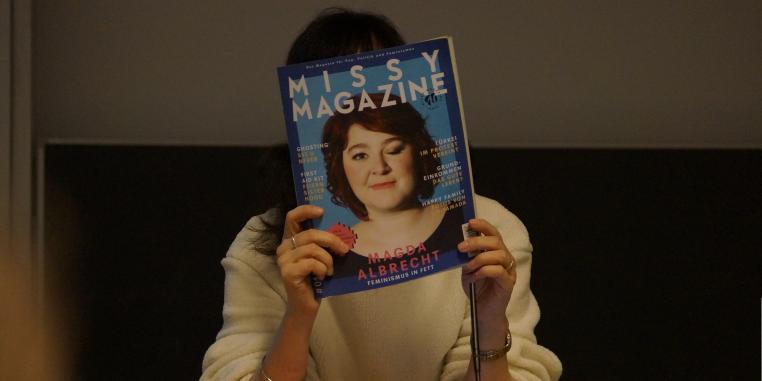
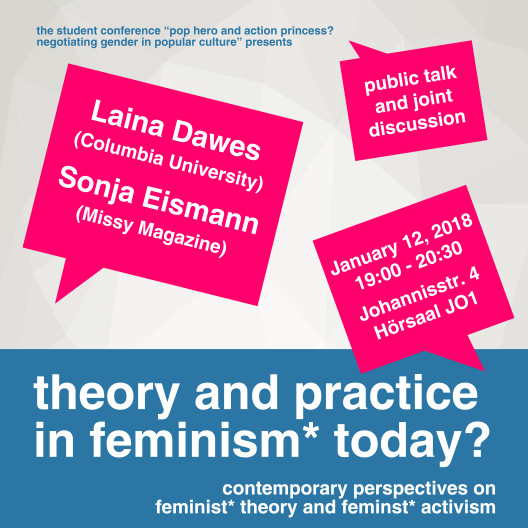
2018's Münster Lectures deal with the relationship between feminist theory and activism. To this end, the organizers invited cultural theorist Laina Dawes from the Department of Music at Columbia University (USA) and Sonia Eismann, co-founder, co-publisher and editor-in-chief of Missy Magazine: Magazin für Pop, Politik und Feminismus (Berlin, Germany).
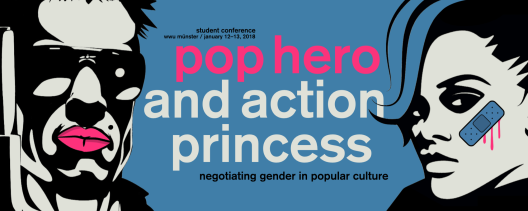
The discussion is part of the student conference Pop Hero and Action Princess: Negotiating Gender in Popular Culture, which is organized by doctoral students of GS PoL, among others.
The GS PoL is pleased to welcome Dr. Kristin Dombek to a reading for Münster Lectures 2016 on the topic of "The Selfishness of Others" from her recently published book The Selfishness of Others: An Essay on the Fear of Narcissism.
The reading and the following discussion will be moderated by Marie Schmidt, literary editor of the German newspaper DIE ZEIT.
A workshop on November 4th and the reading is organized by the Graduate School Practices of Literature of the School of Philology of the WWU Münster in cooperation with the Research Training Group Literary Form and the smartNETWORK. If you would like to participate in the workshop "Writing Narcissism - Rhetoric of Self and Selfishness in Literary and Academic Writing" please apply at m.conrad@uni-muenster.de (Coordinator of the GS, Dr. Maren Conrad).
For further information click here.
For impressions of the event click here.

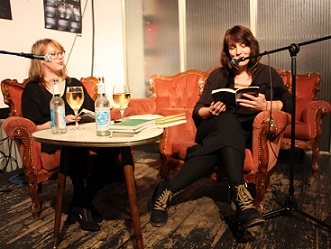
Behind the pseudonym @NeinQuarterly is the U.S. Germanist and cultural nihilist Eric Jarosinski, who, with his cultural satirical aphorisms dressed up in tweet form, quickly became an icon of international resistance against current (educational) politics, the scientific establishment and cultural tradition. Picked up by the worldwide opinion press such as the New Yorker, the Süddeutsche Zeitung, Spiegel-Online or the ZEIT, NeinQuarterly's subtle and cynical thought splinters now reach an audience of millions, both inside and outside the university. The event series "Münster Lectures - Literature & Society in Dialogue" is delighted that @NeinQuarterly is now also venturing to Münster. All cultural pessimists and defenders of culture are cordially invited to his public evening lecture. Admission is free.
The Münster Lectures and the lecture by Eric Jarosinski take place in the context of Digital. Social. Marginal? Literature and Computer Games in the Digital Society. Interdisciplinary Conference of the GSPoL. This asks about the status quo of digital literature(s) in the present.
For further information please contact Katharina Fürholzer.


The Münster Lectures 2014 will deal with the issue of developments in genetic research and its ethic consequences. We are glad to welcome Charlotte Kerner (writer) and Prof. Dr. Bettina Schöne-Seifert (expert on medical ethics) to this years Münster Lectures.
Program
Everyone interested in the issue of developments in genetic research and its ethic consequences is cordially invited to attend the Münster Lectures 2014. The program is scheduled as followes:
16.06.2014, 20 p.m.
Lecture: Prof. Dr. Bettina Schöne-Seifert, Zeitungslesesaal, Stadtbibliothek, Alter Steinweg 11, Münster
17.06.2014, 18.30 p.m.
Lecture: Charlotte Kerner, Hörsaal S9, Schlossplatz 2
18.06.2014, 10.00 a.m.
Filmscreening and discussion Charlotte Kerner, Cinema, Warendorfer Straße 45

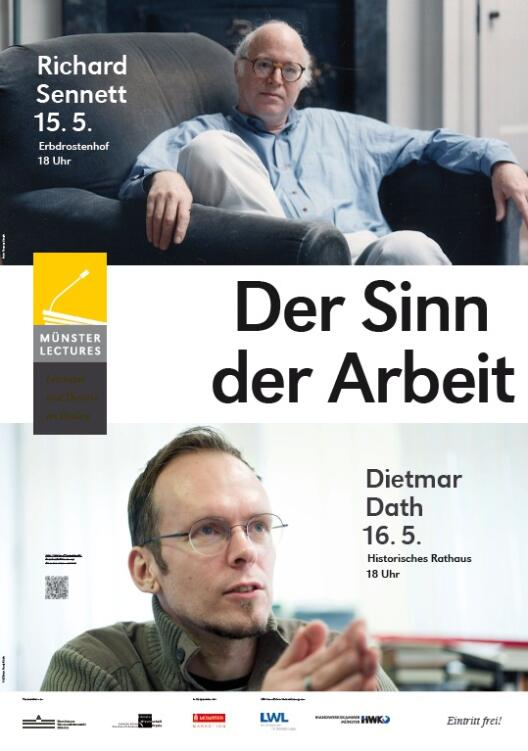
Work has a high value in the life of a human being. It is not only a matter of meeting material needs by earning a wage; the activity we pursue professionally should ideally also correspond to our talents and values. In modern times, this understanding of work has prevailed with the growing prosperity of broad sections of the population. Through specialized training and courses of study, everyone should have the opportunity to train in such a way that he/she can pursue a profession that suits him/her. However, due to economic and political developments, there are sometimes narrow limits to the self-realization of the individual. Not infrequently, the pragmatic task is to secure one's own survival financially. For many young people, even this step often turns out to be problematic. A secure and adequately paid job is seen by many of them as a stroke of luck that is denied to other peers who have to live in precarious circumstances. In their lectures, Richard Sennett and Dietmar Dath will address the question of the function of work in the age of mechanization and globalization and the extent to which it can give life meaning, both positively and negatively. The question of what identificatory and meaning-giving potential lies in the processes of traditional crafts will form the basis of the considerations.