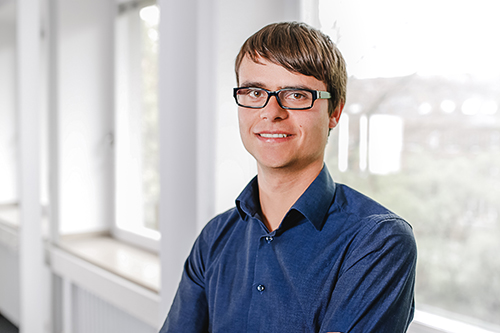
Dr. Lars-Ole Wehden
Research assistant
Department of Communication
Room: E 023
Bispinghof 9-14
D-48143 Münster
Phone.: +49 251-83-23009
lars-ole.wehden@uni-muenster.de


Department of Communication
Room: E 023
Bispinghof 9-14
D-48143 Münster
Phone.: +49 251-83-23009
lars-ole.wehden@uni-muenster.de
Journalistic transparency efforts
Journalism and innovation
News selection
Quantitative methods
2010–2015: Studied Communication Science and Political Science at Free University Berlin and the University of Helsinki. From 2015 to 2016 research associate at the Communication Theory and Media Effects Unit at FU Berlin (Prof. Pfetsch), including on the third-party funded project commissioned by the German Federal Chancellery, “Scientific Evaluation of the Citizens’ Dialogue – Living Well in Germany.” From October 2016 to March 2026, research associate at the Department of Communication (IfK) at the University of Münster, initially as a PhD researcher in the Online Communication Lab (Prof. Quandt) and, following the completion of the doctorate in 2022, as a postdoctoral researcher at the Journalism Studies Team (Prof. Springer). 2024–2025: Program Coordinator for the Master’s degree programs. During the summer term of 2026, associate at the Department of Journalism and Communication Research at the Hanover University of Music, Drama and Media. Since October 2026, DFG Project Lead of the independently acquired third-party project “From Novelty to Norm: Habitualization and Internalization of Footnote Journalism as an Example of an innovative Journalistic Transparency Practice” (INN-FJ; DFG project number: 574191299), in cooperation with the University of Vienna.
WS 25/26 Einführung in das wissenschaftliche Arbeiten im Fach Kommunikationswissenschaft
(Vorlesung, B.A. Kommunikationswissenschaft)
SS 25 (Nachrichten-)Selektionsprozesse experimentell erforschen
(Forschungspraxis-Seminar, B.A. Kommunikationswissenschaft)
WS 24/25 Einführung in das wissenschaftliche Arbeiten im Fach Kommunikationswissenschaft
(Vorlesung, B.A. Kommunikationswissenschaft)
SS 24 Selektion im Journalismus
(Seminar, M.A. Kommunikationswissenschaft & M.A. Strategische Kommunikation)
WS 23/24 Experimentaldesigns in der kommunikationswissenschaftlichen Forschung
(Methodenseminar, M.A. Kommunikationswissenschaft & M.A. Strategische Kommunikation)
WS 23/24 Einführung in das wissenschaftliche Arbeiten im Fach Kommunikationswissenschaft
(Vorlesung, B.A. Kommunikationswissenschaft)
SS 23 Datenauswertung und Datendarstellung
(Übung, B.A. Kommunikationswissenschaft)
WS 22/23 Journalistische Nachrichten in den Sozialen Medien
(Forschungspraxis-Seminar, B.A. Kommunikationswissenschaft)
WS 22/23 Einführung in das wissenschaftliche Arbeiten im Fach Kommunikationswissenschaft
(Vorlesung, B.A. Kommunikationswissenschaft)
SS 22 Datenauswertung und Datendarstellung
(Übung, B.A. Kommunikationswissenschaft)
WS 21/22 Einführung in das wissenschaftliche Arbeiten im Fach Kommunikationswissenschaft
(Vorlesung, B.A. Kommunikationswissenschaft)
SS 21 Journalistische Nachrichten in den Sozialen Medien
(Online-Forschungspraxis-Seminar, B.A. Kommunikationswissenschaft)
WS 20/21 Einführung in das wissenschaftliche Arbeiten im Fach Kommunikationswissenschaft
(Online-Vorlesung, B.A. Kommunikationswissenschaft)
SS 20 Aufgewachsen vor Flatscreen und Smartphone: Die Kultivierungstheorie
(Online-Seminar, B.A. Kommunikationswissenschaft)
WS 19/20 Einführung in das wissenschaftliche Arbeiten im Fach Kommunikationswissenschaft
(Vorlesung, B.A. Kommunikationswissenschaft)
SS 19 Aufgewachsen vor Flatscreen und Smartphone: Die Kultivierungstheorie
(Seminar, B.A. Kommunikationswissenschaft)
WS 18/19 Selbstvermessung, das quantifizierte Ich, und die Kommunikation von Lifestyle im Wintersport
(Forschungspraxis-Seminar mit Auslands-Exkursion, B.A. Kommunikationswissenschaft)
WS 18/19 Öffentlichkeitsplattform News Feed: News und Debatten in Social Media
(Seminar, B.A. Kommunikationswissenschaft)
WS 18/19 Einführung in das wissenschaftliche Arbeiten im Fach Kommunikationswissenschaft
(Vorlesung, B.A. Kommunikationswissenschaft)
SS 18 Aufgewachsen vor Flatscreen und Smartphone: Die Kultivierungstheorie
(Seminar, B.A. Kommunikationswissenschaft)
WS 17/18 Öffentlichkeitsplattform Social Feed: Welche Inhalte, News und Diskussionen finden sich auf Facebook, Twitter und Co.?
(Seminar, B.A. Kommunikationswissenschaft)
SS 17 Aufgewachsen vor Flatscreen und Smartphone: Die Kultivierungstheorie online und offline
(Seminar, B.A. Kommunikationswissenschaft)
WS 16/17 Medienwirkungen im Kontext von Politikern und Produkten: Effekte der aktuellen Berichterstattung auf das Publikum
(Seminar, B.A. Kommunikationswissenschaft)
SS 16 Einführung in die empirische Kommunikationsforschung
(Seminar, B.A. Publizistik- und Kommunikationswissenschaft)
Funding period: 1 October 2026 – 30 September 2029
Funding bodies: German Research Foundation (DFG) and Austrian Science
Fund (FWF)
Funding amount: €643,848 (of which €403,940 is allocated to the German
project component)
Cooperation partner: Dr. Bernadette Uth (University of Vienna)
Professional journalism is essential in democratic societies as it provides citizens with relevant information. However, representative surveys indicate a decline in trust in journalism. Innovation plays a central role in maintaining trust. As a result, the profession is undergoing transformation, with established norms and practices being reassessed and renegotiated. Before
they can become established, however, these norms and practices must first be introduced, discursively legitimized, habitualized, and internalized – both by journalistic actors and by audiences. Little is currently known about these
processes. Building on the theoretical conceptualization of journalism as an
institution, the project examines these processes using the practice of source
transparency through footnote journalism as an example of a new norm that is gaining increasing importance. To this end, four empirical studies will be conducted: a qualitative interview study with journalists from Germany and Austria who use footnote journalism (lead: University of Vienna); a qualitative longitudinal interview study with audience members from both countries who are exposed to footnote journalism news over an extended period (lead: University of Vienna); a longitudinal experimental study with audience members with and without exposure to footnote journalism (lead: University of Münster); and an experimental eye-tracking study focusing on design and layout (lead: University of Münster). The findings will be used to develop practical guidelines and recommendations for journalists, helping them develop effective trust-building strategies in times of crisis.
Links:
The project in the DFG GEPRIS project database: https://gepris.dfg.de/project/574191299
More information on the project: https://www.uni-muenster.de/Kowi/en/forschen/projekte/habitualisierung_und_internalisierung_des_fussnotenjournalismus.shtml
As part of the governmental strategy “Gut leben in Deutschland, was uns wichtig ist” more than 200 group discussions were conducted in the year of 2015. Moreover, citizens had the opportunity to send their ideas on quality of life to the government via an online form or a postcard. The scientific analysis of about 200 group discussion protocols, 2.500 online documents and 4.500 postcards was carried out by a team led by Prof. Barbara Pfetsch and Dr. Annie Waldherr in cooperation with the software engineering company CiD GmbH. The further team consisted of Peter Miltner, Sophia Ostner, Lars-Ole Müller and Daniela Stoltenberg. The analysis consisted of qualitative and quantitative content analysis with the help of the text mining software Topic Analyst by CiD GmbH. The results have been documented in a scientific report and formed the base of the Report on Life Quality by the German Government (2016).