

Sarah Albiez-Wieck becomes new Research Professor
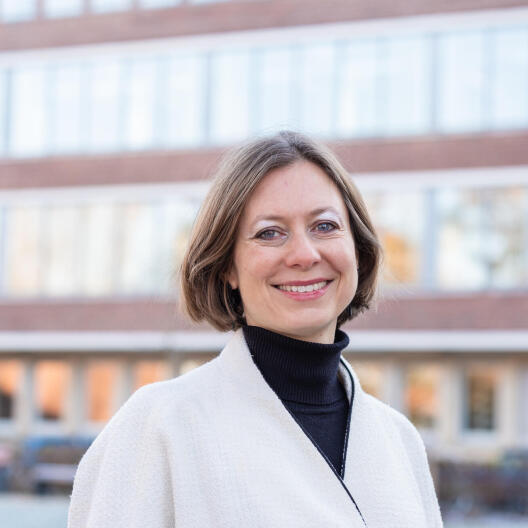
In the winter semester 2026/2027, historian Prof. Dr Sarah Albiez-Wieck will take up the Research Professorship at the Käte Hamburger Kolleg. During this period, she will provide important impulses for the Kolleg’s academic work.
Sarah Albiez-Wieck obtained her PhD in Anthropology of the Americas at the University of Bonn and completed her habilitation in Modern History at the University of Cologne. She subsequently served as an Interim Professor and Senior Researcher at the Institute for Iberian and Latin American History at the University of Cologne and, interrupted by one semester at the University of Bochum. Since 2022, she has been Professor of Latin American History at the University of Münster and one of the spokespersons for the Centre for Empire Studies.
During her research professorship, Sarah Albiez-Wieck will examine legal categorisations and petitions within the Spanish colonial empire. Specifically, she will study the case of the Chinese population in the Spanish Philippines, the so-called sangleyes (later known as chinos). The project addresses the interplay between legal and fiscal categorization, religion, and mobility, as exemplified by the disputes over regulations on hairstyle. Transimperial mobility formed the backdrop to these developments.
On 26 October 2026, Sarah Albiez-Wieck, together with her co-authors Raquel Gil Montero and Xosé M. Núñez Seixas, will present her new book ‘The Spanish Empire: A Global History 1478–1975’. In this book, she traces the history of the Spanish Empire from the beginning of European expansion to its end in the 20th century. The book focuses on the motives behind imperial expansion, its impact on conquered populations and economic regions, and the transformation of imperial rule.
As a new research professor, Sarah Albiez-Wieck is looking forward to working with the Kolleg’s team, engaging in academic exchange with the fellows, and integrating the Kolleg’s activities even more closely with those of the Department of History and the Centre for Empire Studies.