


Project MUSE (2025-2027)
Monitoring Urban Surface Exchange of gasses and energy
Städte sind für einen Großteil der weltweiten Kohlendioxidemissionen (CO₂) aus fossilen Brennstoffen verantwortlich und spielen daher eine zentrale Rolle bei den Strategien zur Erreichung der Klimaneutralität bis 2050. Die Entwicklung realistischer Strategien zur Emissionsminderung erfordert genaue und kontinuierliche Beobachtungen der Dynamik zwischen Senken und Quellen in Städten.
Project MUSE liefert solche Beobachtungen für die Stadt Münster durch kontinuierliche Eddy-Kovarianz-Messungen (EC) von CO₂- und Energieflüssen. Diese Daten erfassen Schwankungen auf unterschiedlichen Zeitskalen im Austausch zwischen Stadt und Atmosphäre.
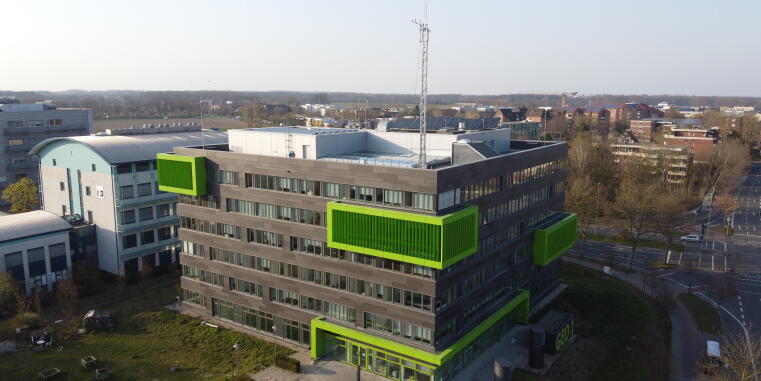
Das primäre EC-System ist auf einem Gerüstturm installiert, der auf dem Dach des Gebäudes des Instituts für Landschaftsökologie in einer Gesamthöhe von 34 m über dem Straßenniveau steht. In dieser Höhe erfasst das System Flüsse aus einem großen und heterogenen städtischen Gebiet (typischerweise mit einer Ausdehnung von >1 km), das gemischte Wohn-, Verkehrs- und Vegetationsflächen umfasst.
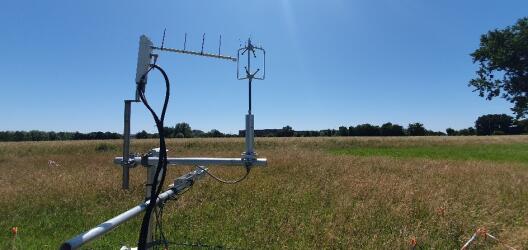
Um die integrierten Turmflüsse nach Oberflächenart aufzuschlüsseln, werden zwei sich ergänzende Messanlagen parallel betrieben:
- Ein EC-System auf städtischem Grünland in 2,4 m Höhe, das die Flüsse aus der niedrigen Vegetation erfasst.
- Eine Wetterstation in 3 m Höhe über einer undurchlässigen Oberfläche, die das lokale Mikroklima charakterisiert.
Zusammen ermöglichen uns diese Messungen ein besseres Verständnis dafür, wie verschiedene Oberflächenarten zum gesamten Kohlenstoff- und Energieaustausch der Stadt beitragen.
Unser langfristiges Ziel ist es, den Turm als dauerhaftes städtisches Observatorium zu etablieren und eine solide wissenschaftliche Grundlage für die Klimaüberwachung und die Klimaschutzplanung in Münster in den nächsten 5–10 Jahren zu schaffen.