

Photos
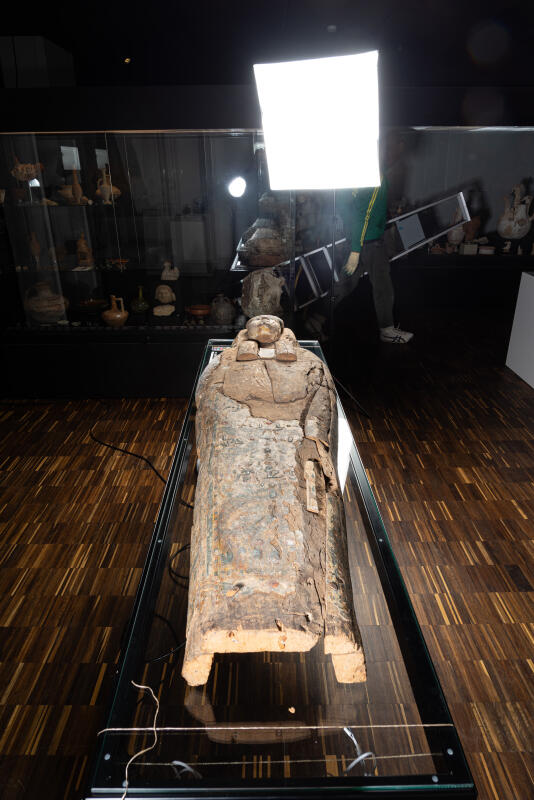
The lid of the Egyptian coffin was removed from the display case for the photograph to be taken. Lighting is provided to ensure adequate illumination. A ladder is provided for taking photographs of the top.© Archäologisches Museum/Yannick Oberhaus 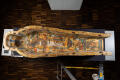
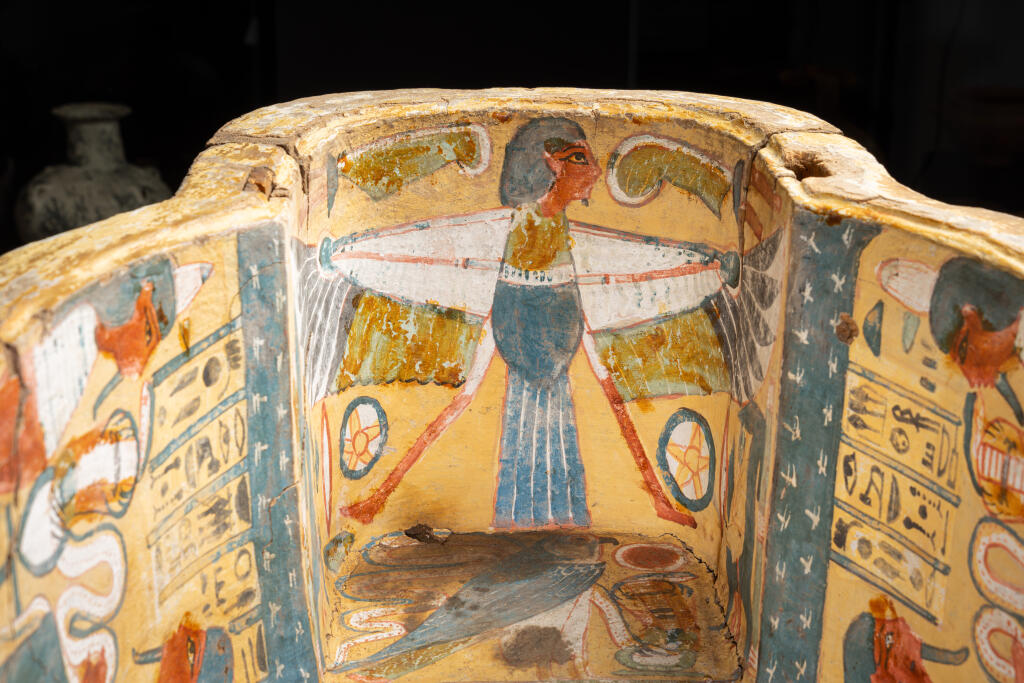
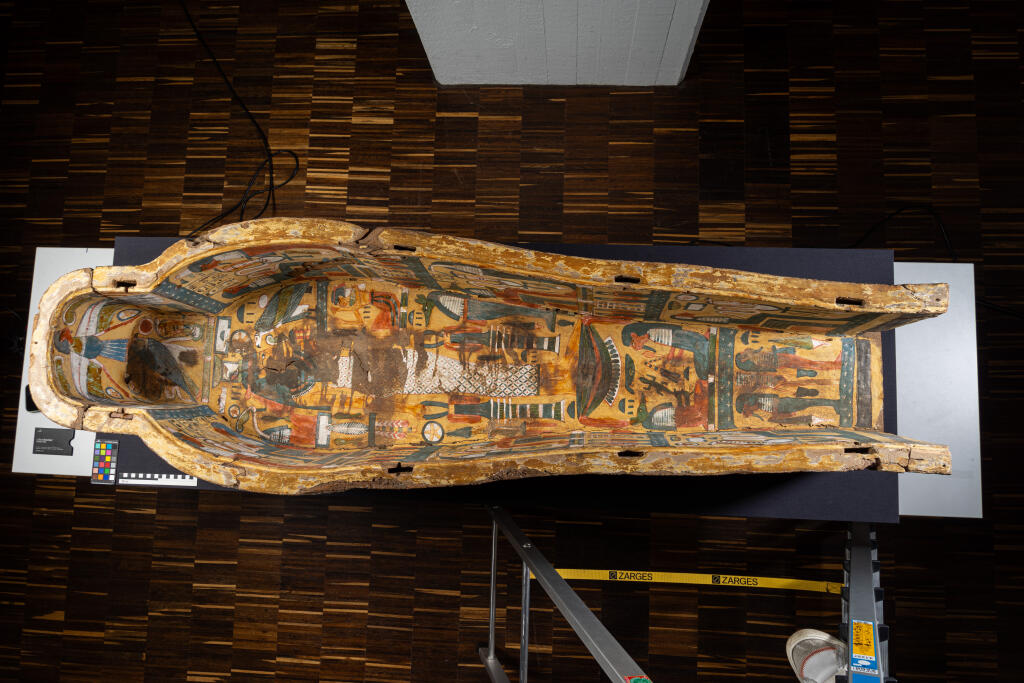
The interior of the coffin still features well-preserved coloured paintings. The photographer takes wide-angle shots from a ladder. A scale and a colour chart (next to the headboard) are used to document colour values and lengths.© Archäologisches Museum/Yannick Oberhaus 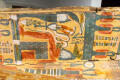
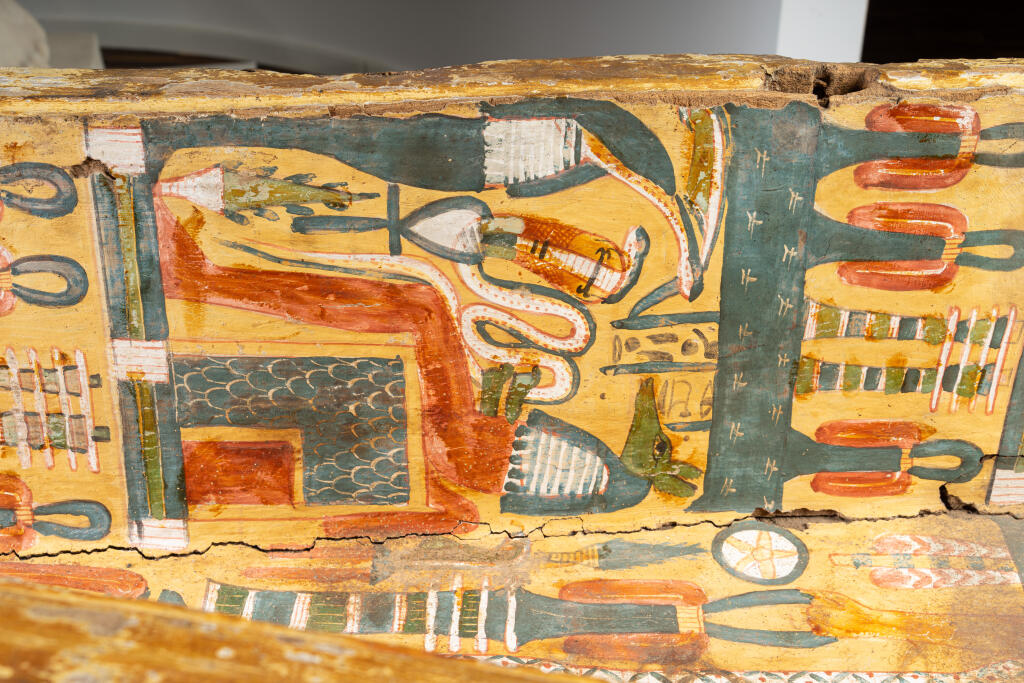
The scene in the coffin chamber depicts two anonymous deities with mummified bodies. The one on the left has a serpent’s head adorned with an ostrich feather and a goatee, whilst the one on the right, with the head of a jackal or wolf, is holding a cobra.© Archäologisches Museum/Yannick Oberhaus 
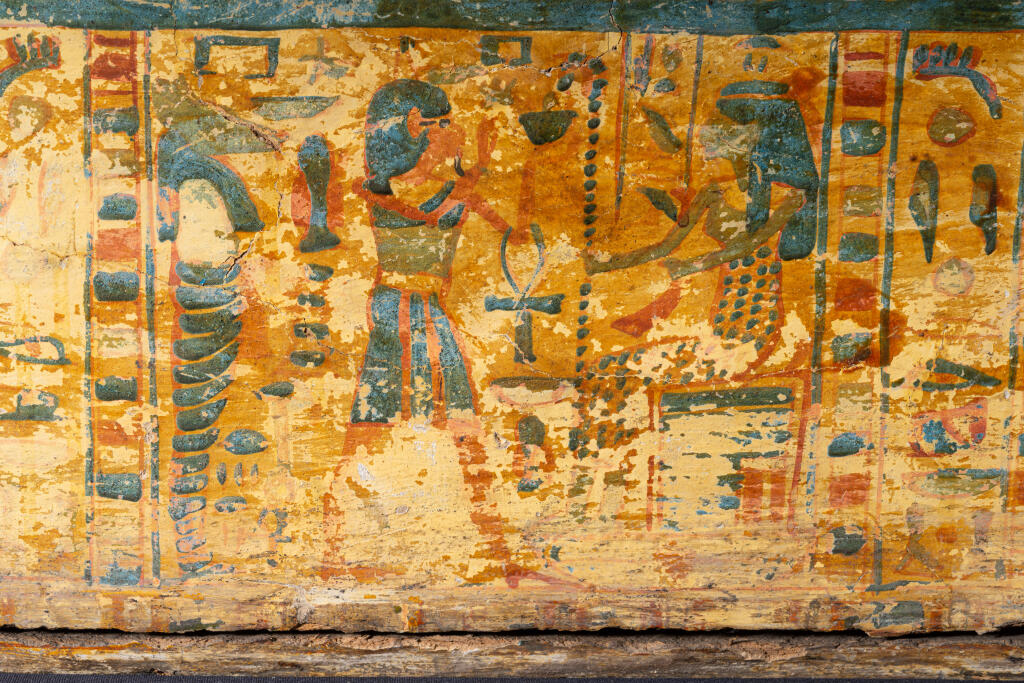
The owner of the coffin can be seen on the outside of the coffin lid. He is offering a censer to a seated goddess, identified in the inscription as Isis. She is regarded as the wife of Osiris, the god of the dead, a mother goddess and a powerful sorceress.© Archäologisches Museum/Yannick Oberhaus
First-ever Photographs of the Coffin
Last year, Yannick Oberhaus was able to produce the first complete photographic record of the approximately 3,000-year-old coffin. This was important, as various methods of visual documentation are key tools in recording archaeological objects and form an essential part of their publication.
This involves high standards in terms of quality, completeness and accuracy – for example, in the reproduction of colours. A professionally trained photographer such as our institute and museum photographer, Yannick Oberhaus, is best placed to meet these requirements. Experience, good equipment and sufficient time are essential for producing images suitable for scientific use. Sometimes, photographic documentation is only possible with considerable effort, for example in terms of lighting or capturing large objects from all angles. For instance, taking an overhead view of the coffin was only possible from a ladder.
Using the ‘Structure from Motion’ technique, a three-dimensional ‘digital twin’ of the coffin was created from photographs. It is a valuable tool for researching the coffin and also a means of preserving cultural heritage, as it can be used by future researchers and conservators without having to handle the original.