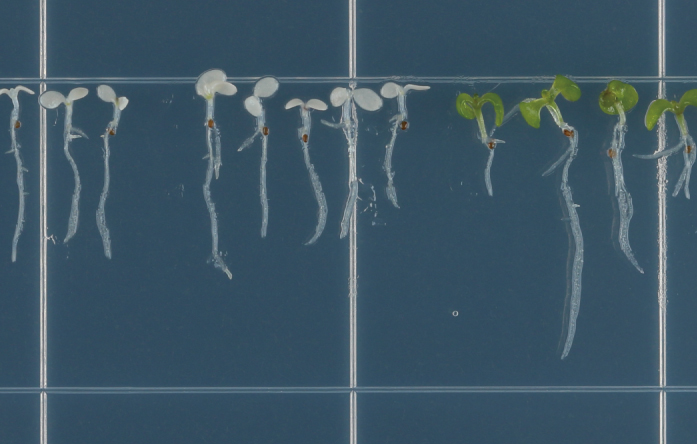
The researchers investigated the “histone code” and its role in adapting to salt stress in thale cress (Arabidopsis thaliana). Histones are proteins within the genome. They do not carry genetic information but regulate, along with other factors, whether and to what extent information in the DNA is used to produce proteins. This epigenetic control is based on chemical modifications to histones, known as histone marks, which influence the interaction between histones, DNA and regulatory proteins. The researchers discovered a histone mark that is essential for the plant's stress response.
The project was funded by the German Research Foundation (DFG), the Japan Science and Technology Agency, the RIKEN institute and the Japanese Ministry of Education, Culture, Sports, Science and Technology.
Original publication
Florian Kotnik, Minoru Ueda et al. (2026): HDA19-mediated deacetylation of histone H3.3 lysine 27 and 36 regulates plant sensitivity to salt stress. PNAS; 123 (29) e2534315123; DOI: 10.1073/pnas.2534315123