
Three-dimensional molecules through “domino cascade”
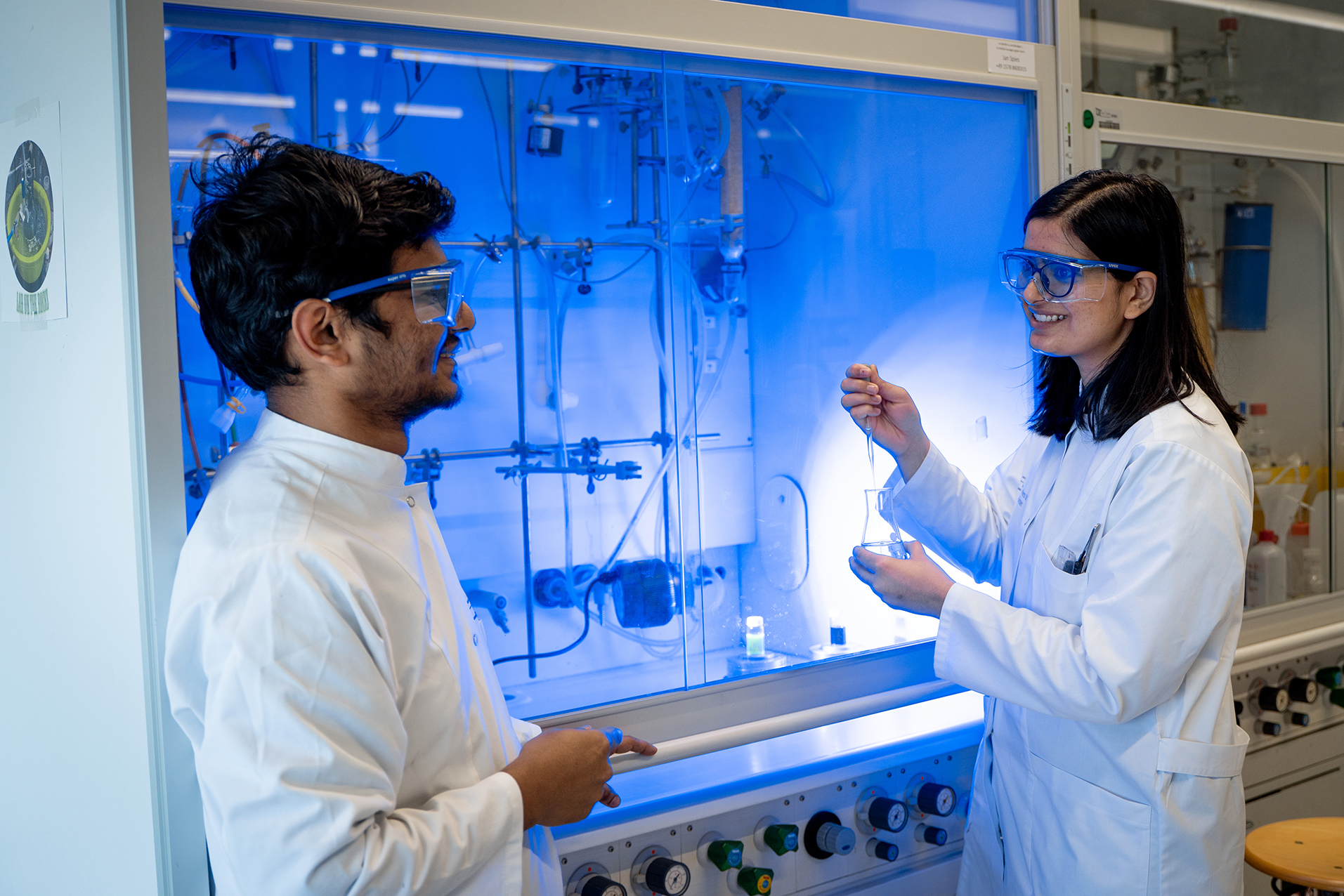
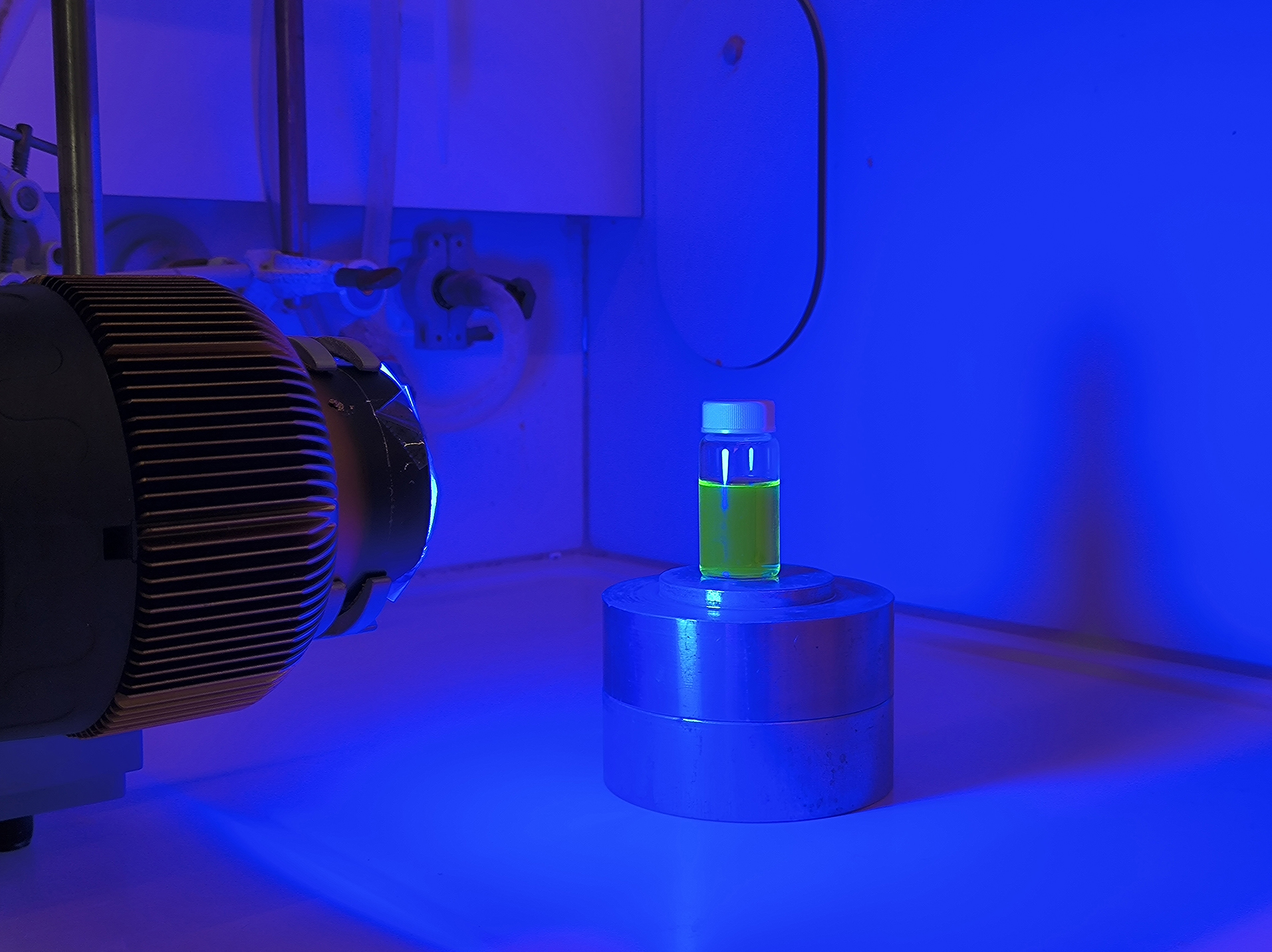
A team led by chemist Professor Frank Glorius from the Institute of Organic Chemistry at the University of Münster has developed a new light-driven reaction sequence. In this triple catalysis, one reaction step triggers the next like three dominoes in a row toppling one after the other. The molecular transformations occur sequentially in a single reaction vessel. Such one-pot synthesis is considered an ideal process because it is particularly resource- and energy-efficient. Central to the success of the current study is a photocatalyst, in this case a molecule that absorbs visible light and transfers the energy to the reactive molecules at each stage of the sequence. Using this method, the chemists converted bicyclic azaarenes, a class of nitrogen-containing aromatic carbon rings, into complex three-dimensional molecular scaffolds that frequently appear in pharmaceutical active ingredients. The study is published in the journal Nature Catalysis.
‘The design of triple-catalysis expands the chemical toolset by introducing a new reaction protocol to construct complex architectures that have traditionally relied on “harsh” reaction conditions,’ explains doctoral student Preeti Chahar. The triple catalysis also simplifies the molecular synthesis considerably, as only one reaction vessel and one photocatalyst are needed. As the team was able to show using various starting molecules, the method has the potential for broad applicability.
The project was funded by the German Academic Exchange Service (DAAD), an ERC Advanced Grant, and the German National Academic Foundation (Studienstiftung des deutschen Volkes).
Original publication
Preeti Chahar, Utpal Kundu, Subhabrata Dutta, Niklas Hölter, Florian Boser, Fabian M. Hugel, Luca Stadtmann, Constantin G. Daniliuc, Frank Glorius (2026): Triple Energy Transfer-Enabled Dearomative Cycloaddition/Rearrangement Cascade of Bicyclic Azaarenes to Structurally Complex Products. Nature Catalysis; DOI: 10.1038/s41929-026-01566-z