Symposium on Digital Ecologies of the Far Right: Tracing Green Narratives Across Brazil and Germany
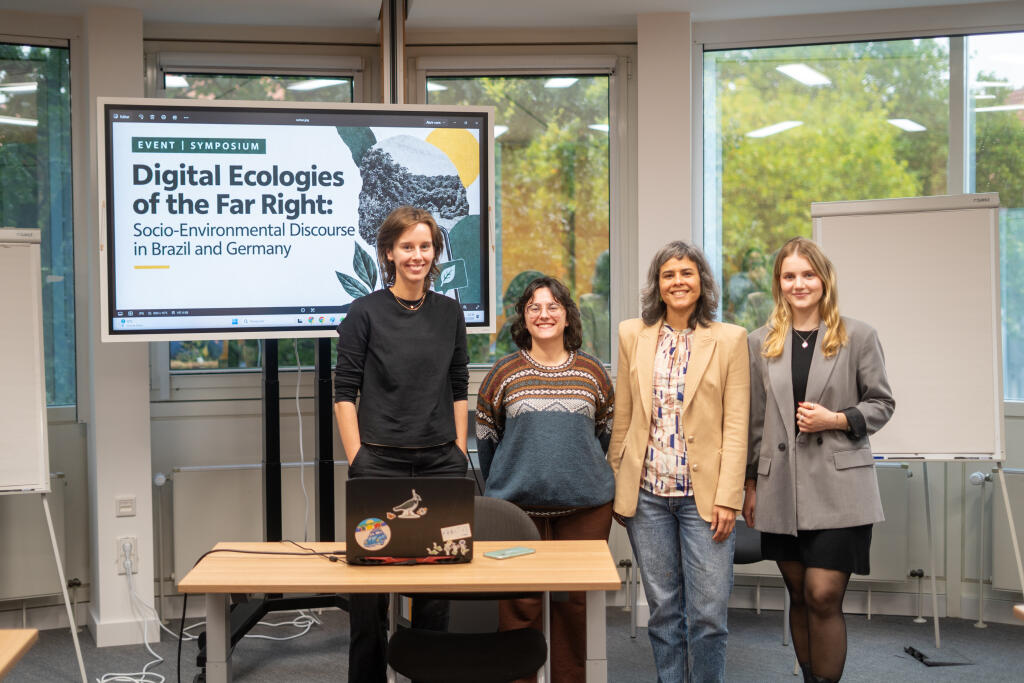
The symposium "Digital Ecologies of the Far Right: Socio-Environmental Discourse in Brazil and Germany" can be considered a prime example of productive interdisciplinary and international exchange.
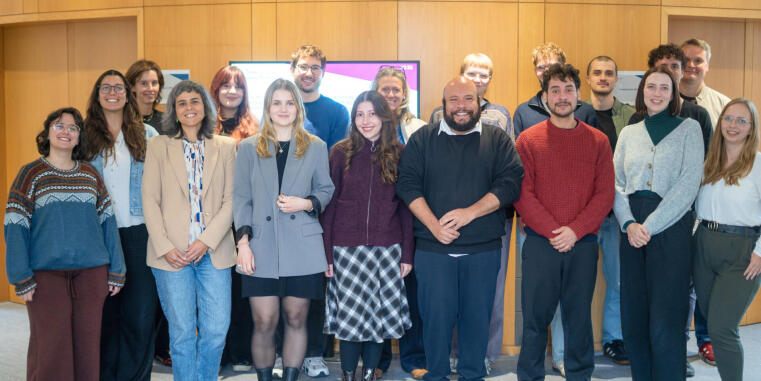
Organized by Dr. Bruna Távora as part of her WiRe Fellowship, the event convened researchers, students, and engaged observers to explore how far-right movements appropriate environmental narratives. Despite differing political contexts, overarching patterns emerged, particularly in how ecological rhetoric deepens political divides.
From Collaborative Research to Shared Insights
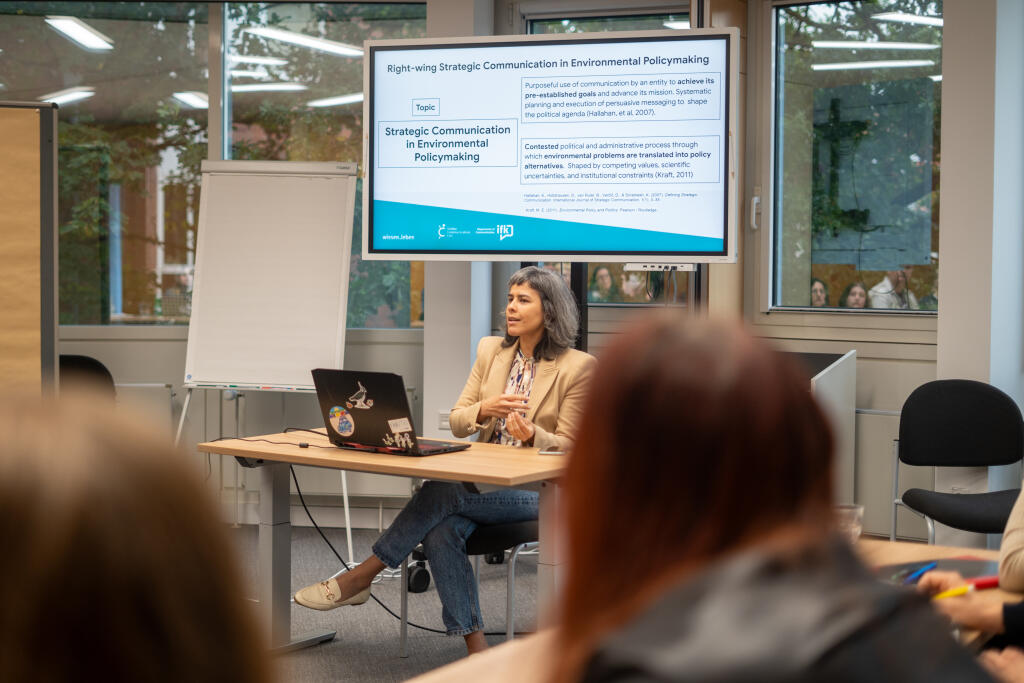
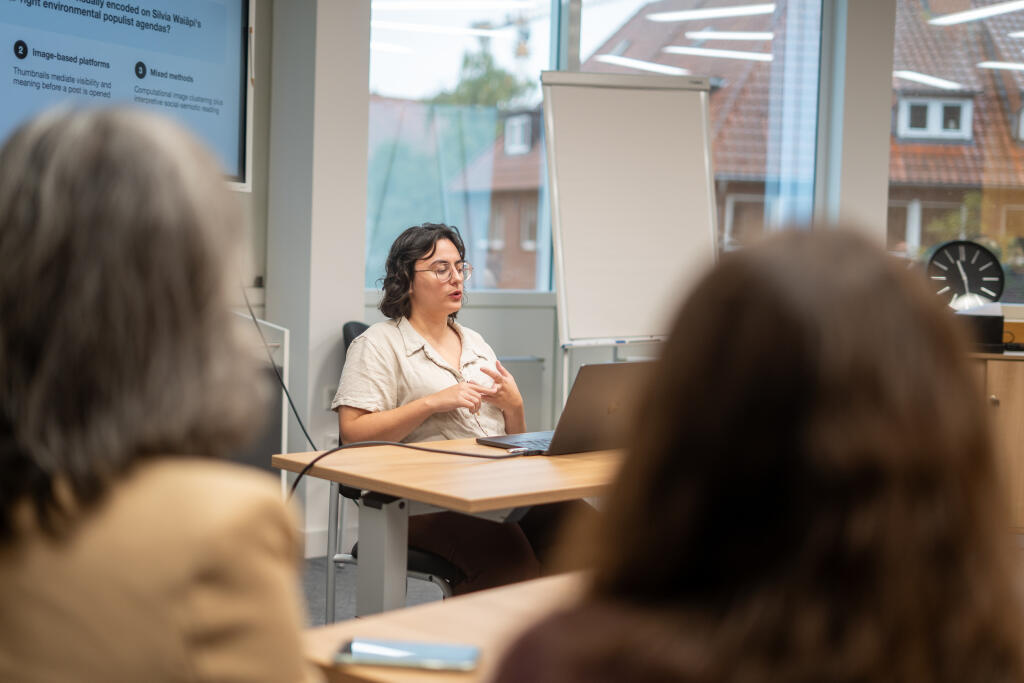
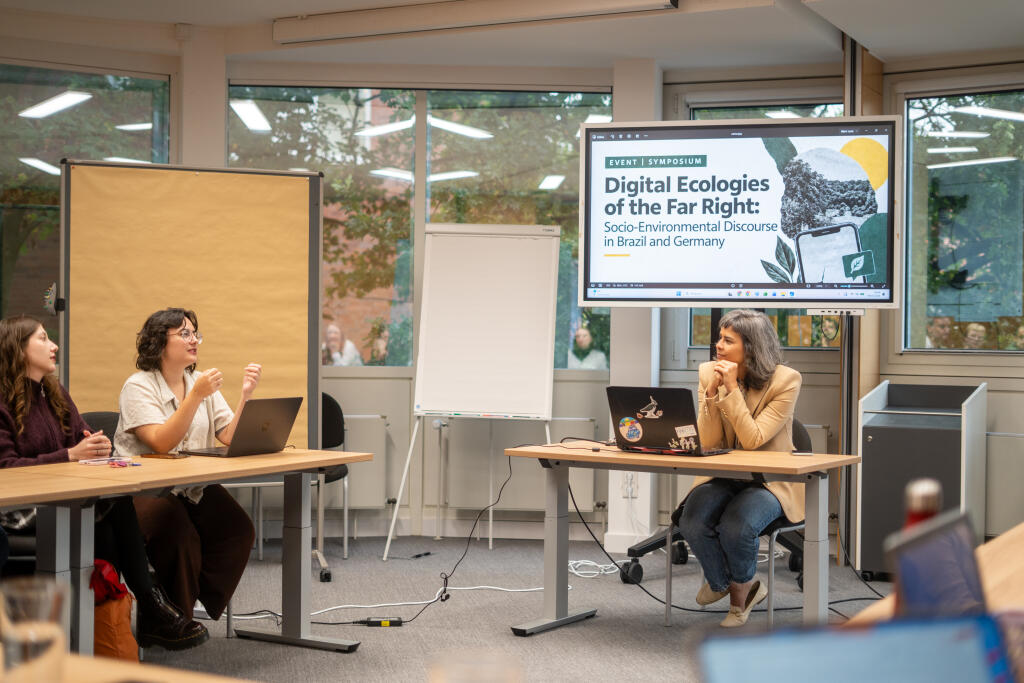
The symposium’s discussions were deeply rooted in international collaboration. Dr. Bruna Távora presented her analysis of far-right politicians’ environmental messaging across the Meta platforms, investigating differences between various administrations in Brazil. Their research demonstrated how ecological rhetoric often serves to legitimize exclusionary agendas, even though these strategies do vary considerably among parties and political alignments. Luana Moraes Costa focused specifically on methodology, introducing a new approach to image clustering analysis using the example of a far-right Indigenous parliamentarian’s visual strategy.
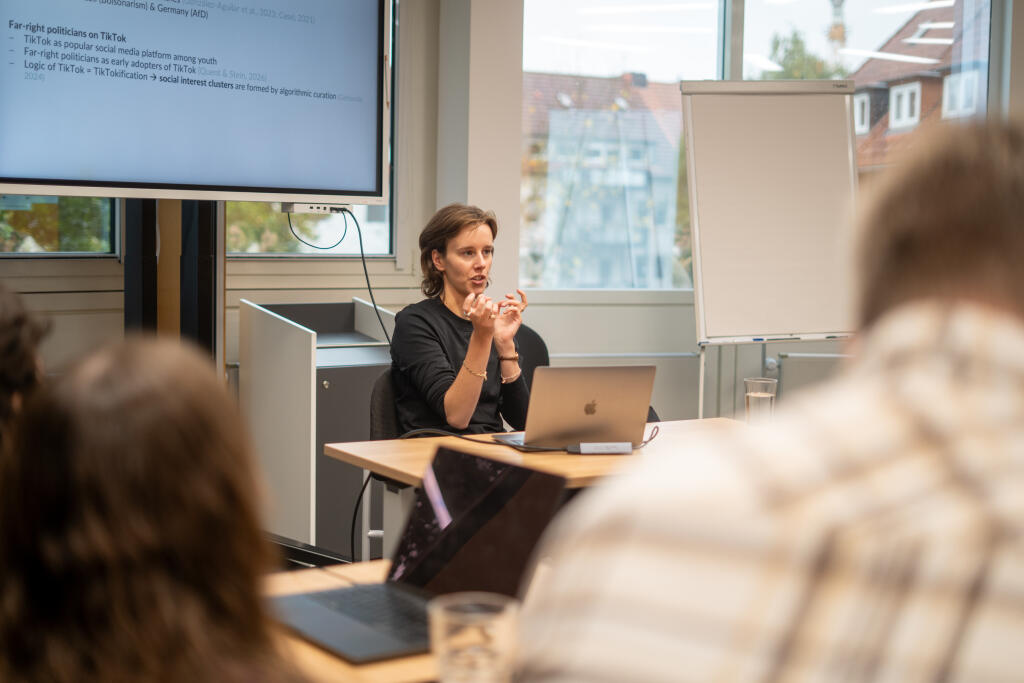
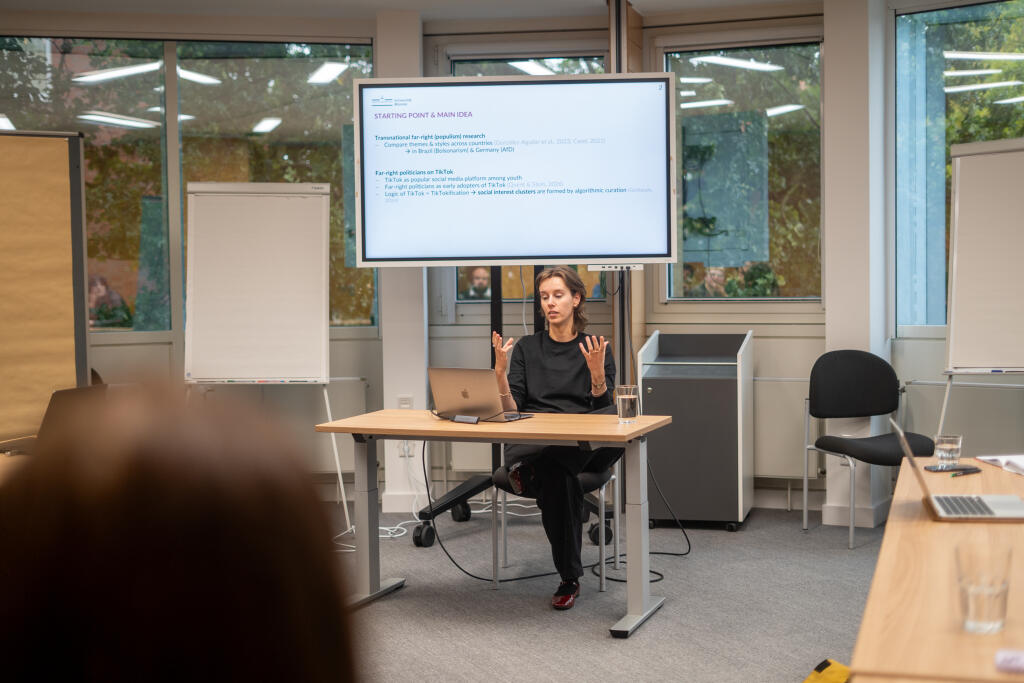
Presenting on behalf of a research team including Bruna Távora, Thorsten Quandt, and Johanna Klapproth, Sofie Beisemann gave insights into a comparative study of TikTok narratives in Brazil and Germany. She highlighted shared strategies between Bolsonarism and the AfD. The study underscored how far-right actors frame “green topics“ in ways that both resonate with broader audiences and deepen ideological divides.
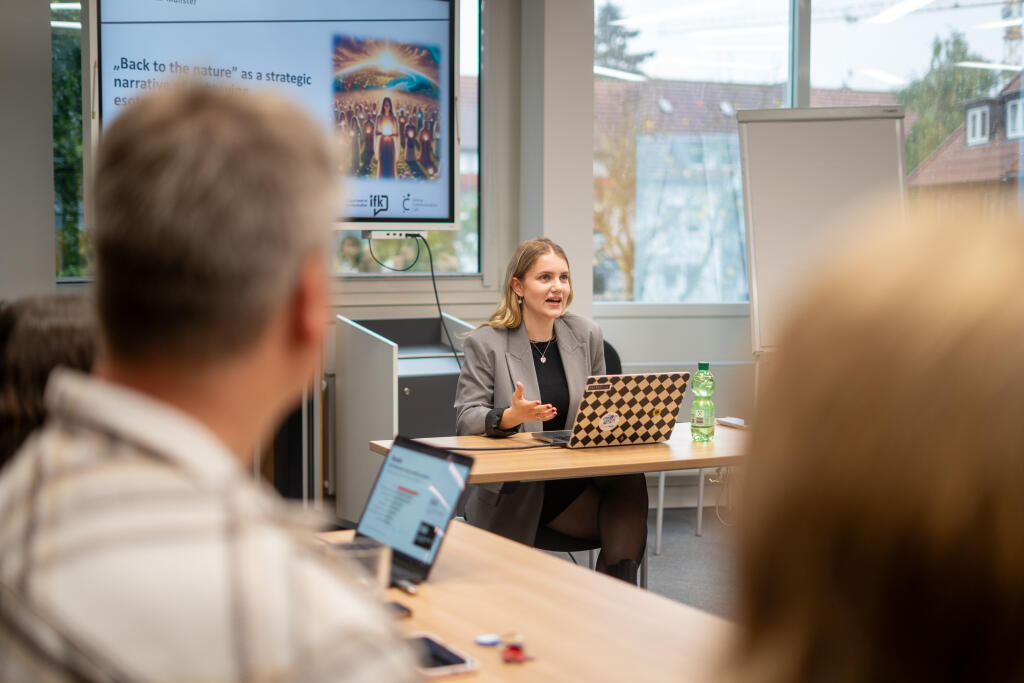
Anna Davydova, whose work is embedded in the Excellence Cluster "Politics and Religion", explored "Back to Nature" as a strategic narrative within right-wing esotericism, linking ecological longing to reactionary politics. Across various fringe groups - from the völkisch movement to the Reich Citizens - there are recurring references to nature, though these are closely intertwined with right-wing extermist, racist and nationalist ideology. The analysis demonstrated how nature rhetoric is mobilized to justify exclusionary worldviews.
Interdisciplinary Dialogues: Bridging Methods and Contexts
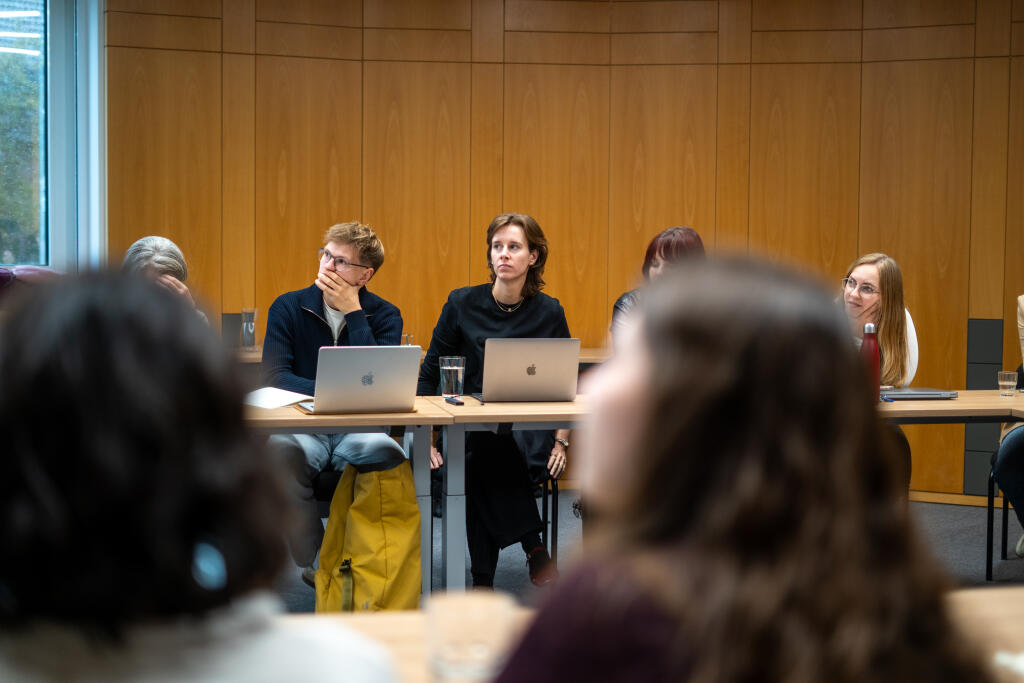
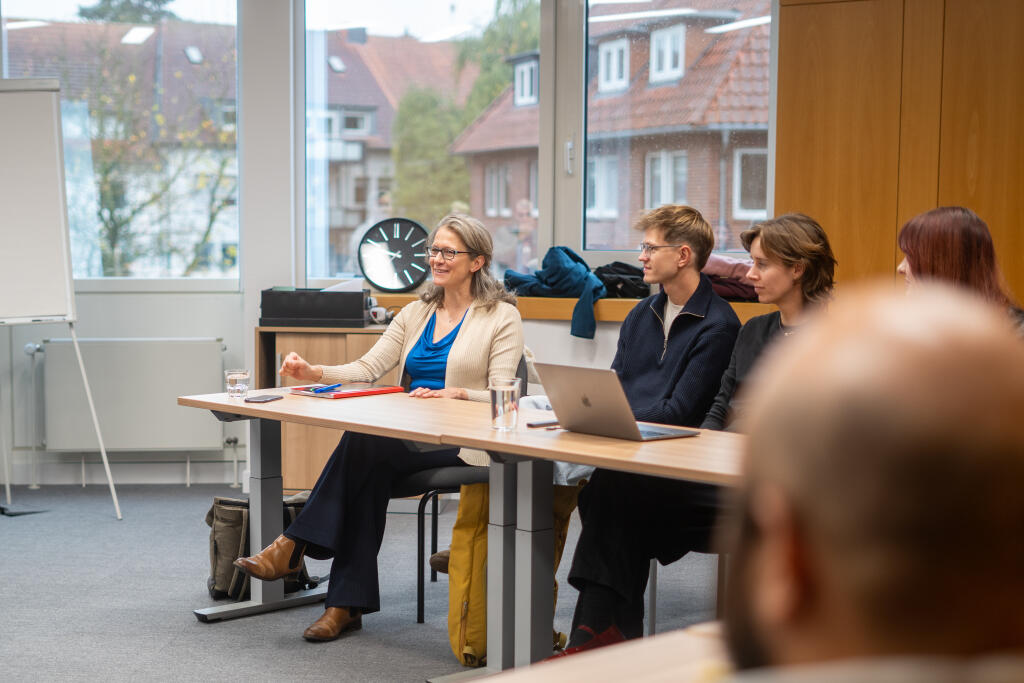
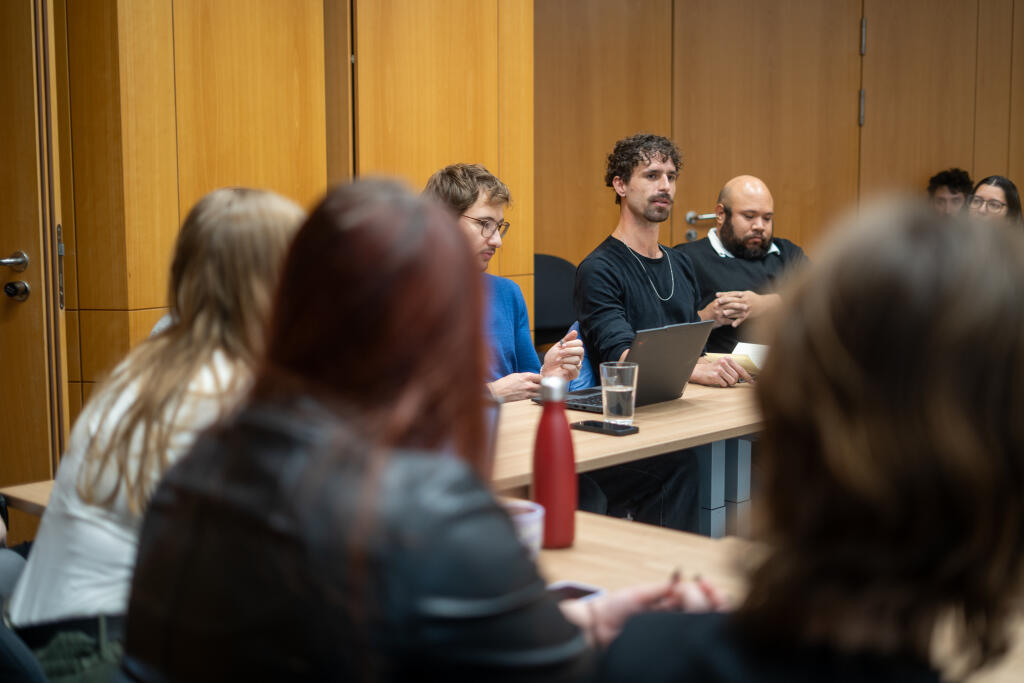
The event drew an interdisciplinary audience, spanning political science, law, urban studies, and beyond. This rich mix of perspectives sparked rich discussions on methodological adaptation and the challenges of "Western-centric" perspectives in research. Participants shared experiences from international collaborations, emphasizing the need to contextualize findings within local political ecosystems while remaining attentive to broader patterns.
Despite differences in party systems, political communication styles, and understandings of sustainability, the event revealed striking parallels in how far-right environmental narratives function across contexts. The discussions also highlighted the limitations of text-centered analyses, as visuals, symbols, and memes emerged as powerful tools in shaping these discourses.
Rethinking Research Frameworks
One central question emerged: How can scholars balance global comparisons with the necessity of contextualization? The symposium’s exchanges suggested that while each case - from Germany’s AfD to Brazil’s Bolsonarism - has its unique characteristics, certain strategies persist across geographies, offering valuable lessons for future research.
Photos
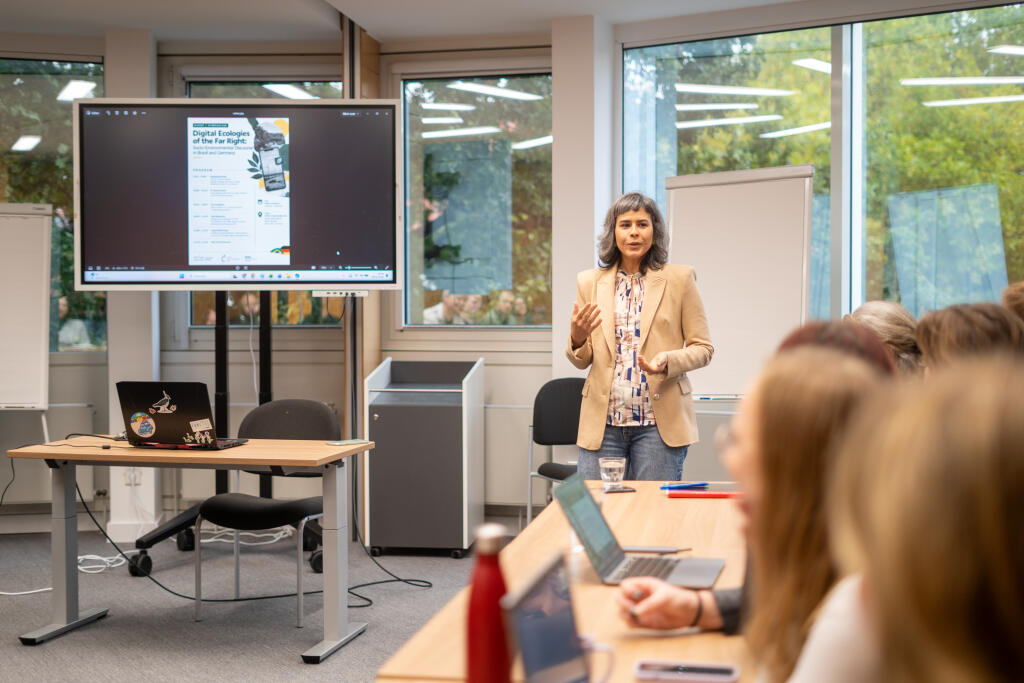

Dr. Bruna Távora examined far-right politicians’ environmental messaging, focusing on agribusiness stakeholders, and looking at the Meta platforms.© Max Henkler 
Anna Davydova explored "Back to Nature" as a right-wing esoteric strategy“.© Max Henkler 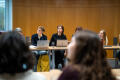
© Max Henkler 
Sofie Beisemann presented a comparative study of Bolsonarism and the AfD’s sustainability narratives on TikTok. © Max Henkler 
© Max Henkler 
Luana Moraes Costa introduced a new multimodal methodology for analyzing far-right visual strategies. © Max Henkler 
© Max Henkler 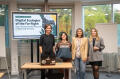
© Max Henkler 
© Max Henkler 
© Max Henkler