
Vacancies for positions in the project will be published shortly.
Historical narratives shape collective identities and public memory. In digital communication envionments, however, references to the past are increasingly reframed, strategically adapted, and mobilized for political purposes. Digital platforms enable the rapid dissemination of such narratives across national borders while amplifying their visibility and reach.
The project “Manipulating the Past: Far-Right Ideologies and the Instrumentalization of History” investigates how far-right actors strategically use historical narratives in digital communication to advance contemporary political agendas. It focuses on the appropriation of the histories of National Socialism, Italian Fascism, and the Franco regime, as well as the dissemination and algorithmic amplification of these narratives on platforms such as TikTok and YouTube.
Adopting a comparative European perspective, the project examines communication processes in Germany, Italy, and Spain. Using computational methods in digital communication research, the research team analyzes how historical narratives emerge, evolve, and spread across digital media. Beyond advancing fundamental research, the project develops evidence-based educational materials and a toolkit for teachers to foster critical engagement with historical narratives and digital information.
The research is organized into four interconnected work packages:
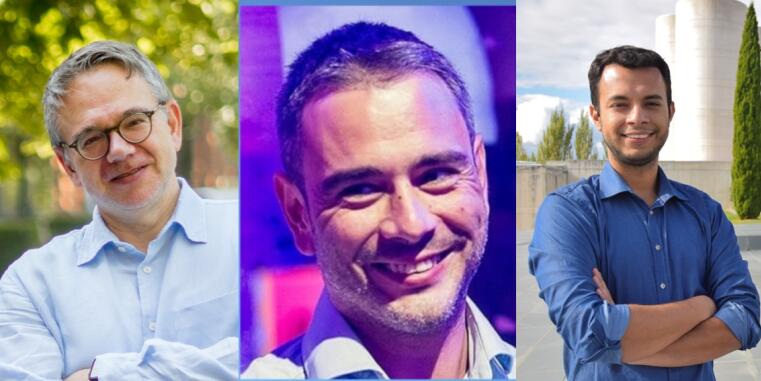
The project is led by Prof. Thorsten Quandt at the Online Communication Lab (OCL), together with co-PIs Prof. Dr. Walter Quattrociocchi and Dr. Mathias Felipe De Lima Santos. It is funded by the Volkswagen Foundation with approximately €1.3 million through its programme “Transformational Knowledge on Democracies under Change”.