From Kinematics to Meaning: The Neural Basis of Action Understanding
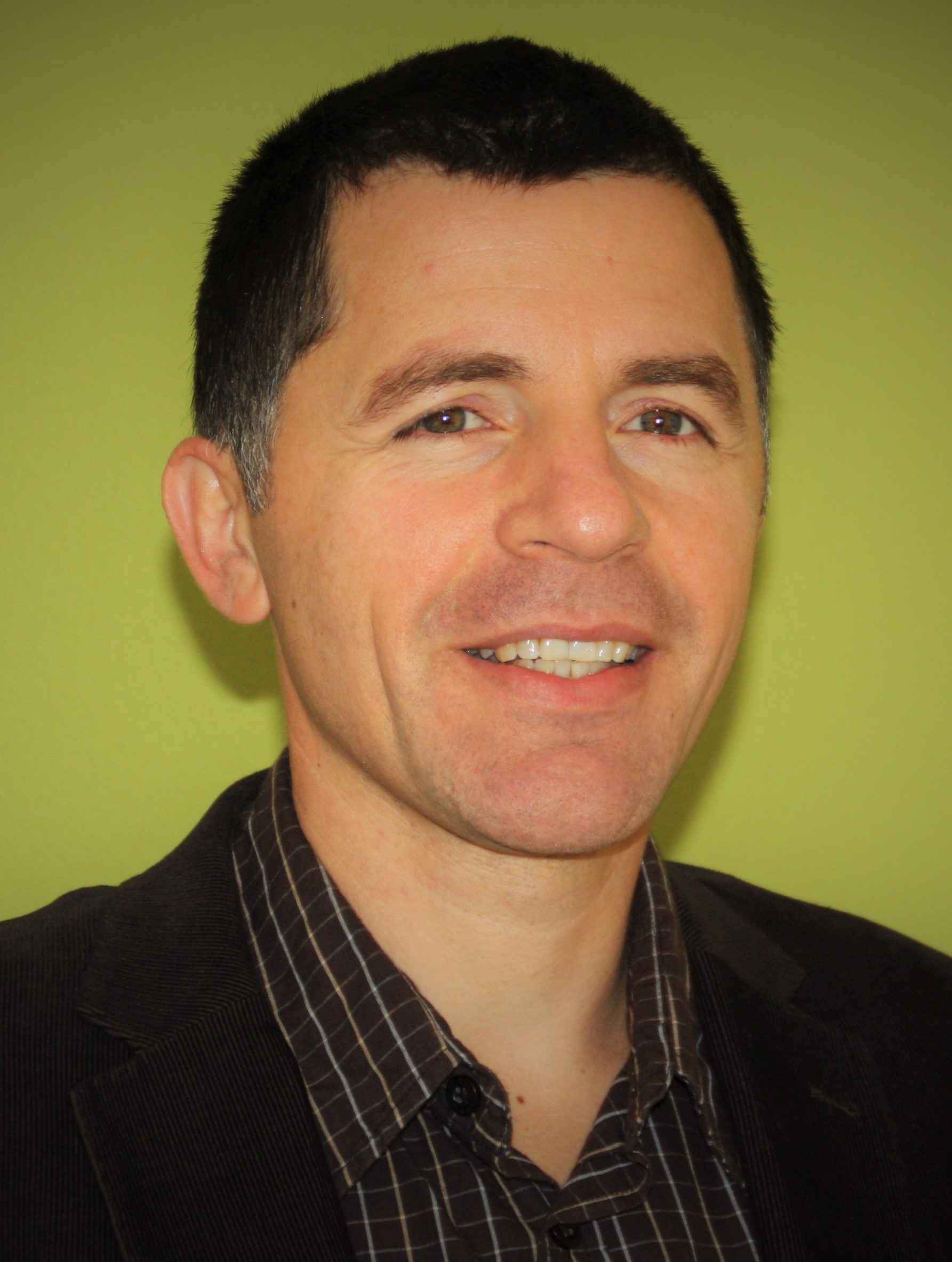
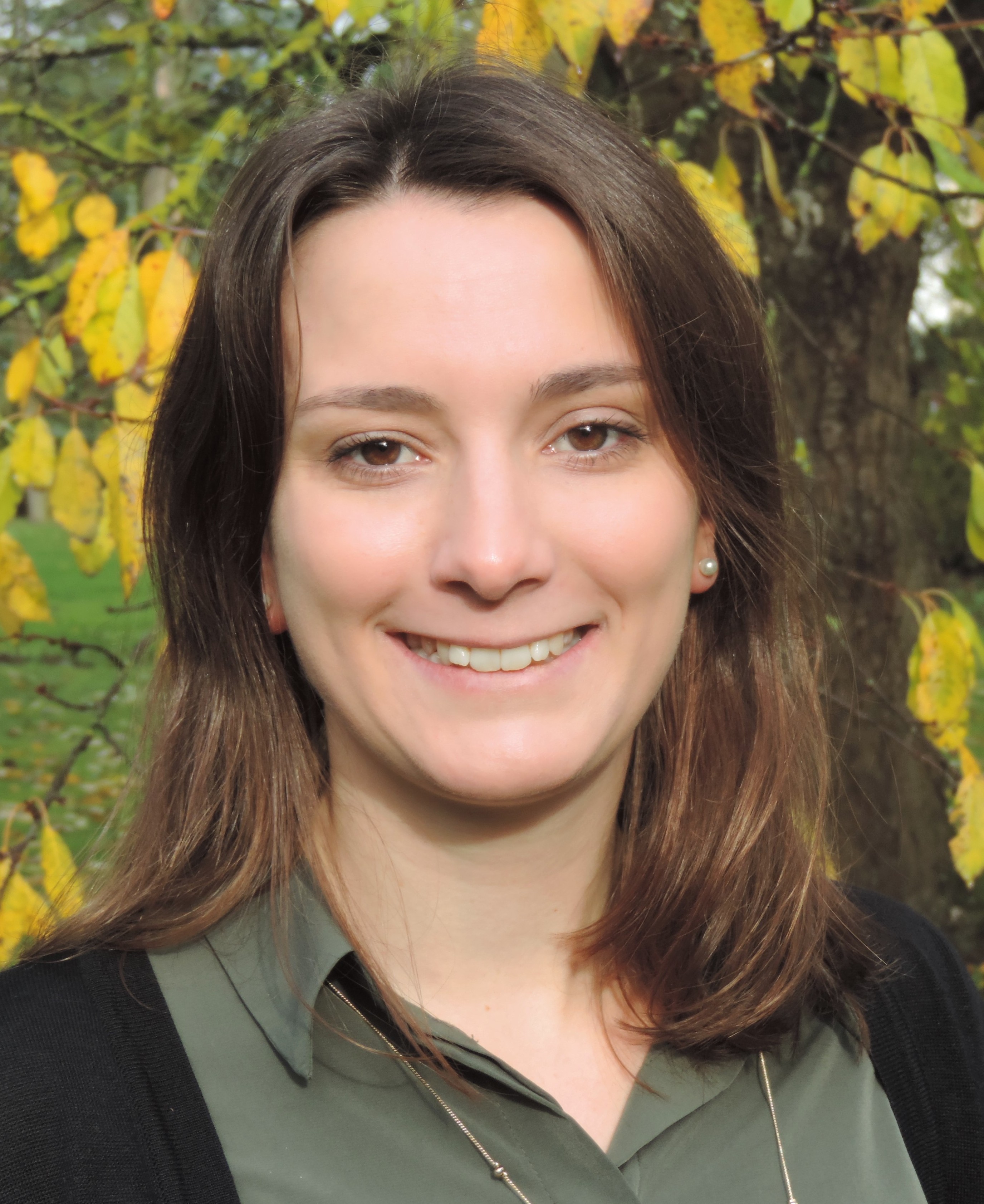
Our next speaker in the OCC Colloquium Series is Prof. Dr. Angelika Lingnau from the Royal Holloway University of London, UK and the Center for Mind/ Brain Sciences, University of Trento, Italy.
Time: January 10, 2018 (Wed), 16.15 h
Location: Lecture Hall, Department of Psychiatry and Psychotherapy, Albert-Schweitzer-Campus 1, Building A9, 2nd Floor, Room 120.074
| Thesis Defense
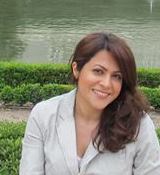
PhD for Roja Saffari
We are very happy to announce that another OCC PhD student successfully defended her thesis this week. Roja Saffari attained her PhD for her thesis "Investigation of the role of GABAergic inhibitory neurons in neuronal circuits within the prefrontal cortex of mouse". The members of the PhD committee were Prof. Dr. Sylvia Kaiser (Department of Behavioural Biology), Prof. Dr. Thomas Budde (Institute of Physiology I) and Prof. Dr. Patricia Ohrmann (Department of Psychiatry and Psychotherapy).
We congratulate Hugh Riddell on successfully defending his thesis entitled "Interactions Between Biological Motion And Optic Flow". The thesis was supervised by Prof. Dr. Markus Lappe (Institute of Psychology), Prof. Dr. Karen Zentgraf (Goethe University Frankfurt am Main) and Prof. Dr. Rebekka Lencer (Department of Psychiatry and of Psychotherapy).
We are glad to welcome another new OCC PhD student. Vasiliki Salvari is currently working on her thesis at the Institute for Biomagnetism and Biosignalanalysis (IBB) under the supervision of OCC member Prof. Dr. Christo Pantev (IBB). Additional members of the PhD Committee are the OCC members Prof. Dr. Pienie Zwitserlood (Institute of Psychology) and Prof. Dr. Markus Junghöfer (IBB).
Prof. Dr. Nexhmedin Morina from the Institute of Psychology is our newest member of the Otto Creutzfeldt Center. His main concern is with the treatment of posttraumatic stress disorder, depression and anxiety disorders. He also investigates the impact of war on mental health and cognitive mechanisms of anxiety and depression. Furthermore, his team studies technology based interventions like virtual reality exposure therapy. Welcome!
We welcome Vanessa von Kortzfleisch as a new member of the OCC PhD program. She started her dissertation "Facing the reproducibility crisis - strategies to improve the validity of animal experiments" under the supervision of OCC member Prof. Dr. S. Helene Richter at the Department of Behavioural Biology. The PhD committee is completed by OCC member Prof. Dr. Norbert Sachser and Prof. Dr. Matthias Gamer (Department of Psychology, University of Würzburg).
We welcome Viktoria Krakenberg as a new member of the OCC PhD program. She started to work on her PhD research project entitled: "Effects of Serotonin Transporter Genotype and Early Life History on Emotion and Cognition in Mice" under the supervision of OCC member Prof. Dr. Norbert Sachser. The PhD committee is completed by OCC members Prof. Dr. S. Helene Richter and Prof. Dr. med. Volker Arolt.
As a result of the collaboration of OCC PhD students José Walter Tolentino-Castro and Hugh Riddell the article „Perception of Biological Motion Speed in Individuals with Down Syndrome“ by the two PhD students and OCC member Heiko Wagner has been published in the Journal of Down Syndrome & Chromosome Abnormalities. In a recently published article the authors could already show that individuals with Down syndrome (DS) cannot differentiate between biological and unbiological motion. In the current study the authors now found that individuals with DS in addition are not able to differentiate between biological motion of different speeds. Since such impairments can lead to dangerous situations in daily life, the findings highlight the need of adequate intervention in individuals with DS.
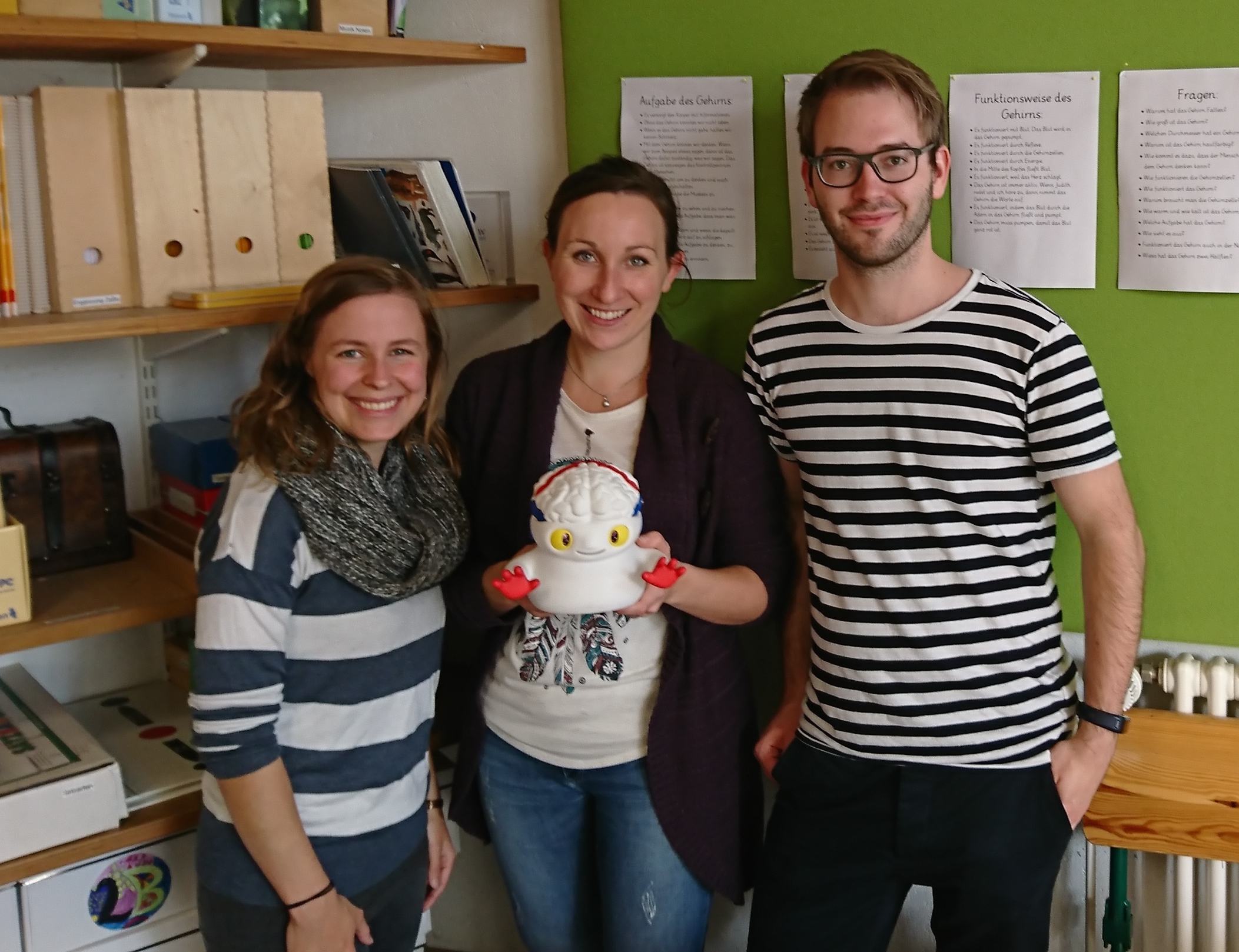
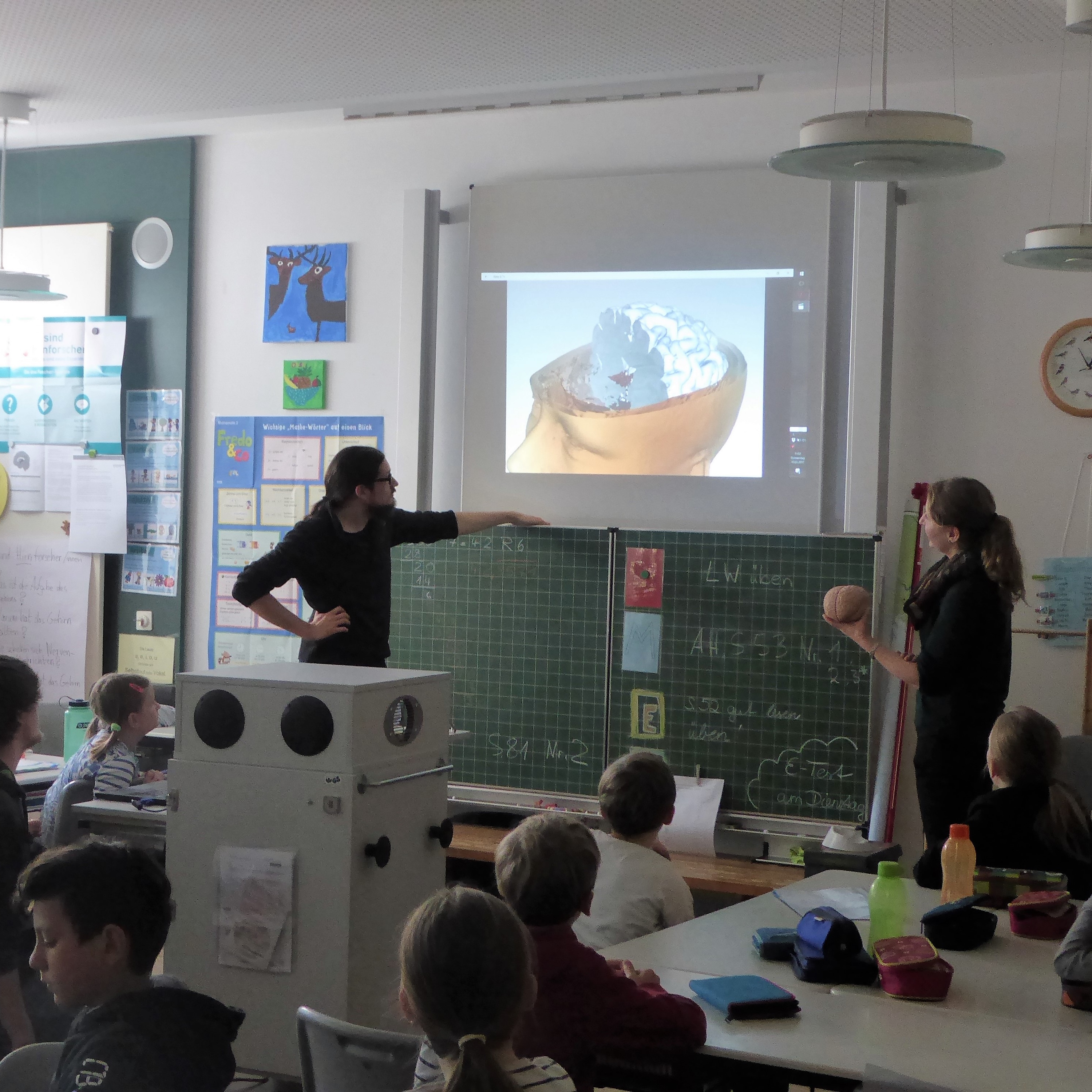
„Mr. Tie“ is back! The children in the Wombat Class and the Dingo Class of the Wartburg-Grundschule in Münster Gievenbeck now became early stage brain researchers when they completed the teaching unit „Wir sind Hirnforscher“ designed by the Hertie Foundation. Together with their teacher Verena Holz-Stuft during the 2-week project the pupils studied the form and the function of the brain, conducted several experiments and even expressed their own research questions like: Does a bigger brain mean higher intelligence? In the end of the project, two groups of OCC PhD students visited the classes to answer the pupils’ numerous further questions about the brain and to present their own neuroscientific research to the children. You can find the children's own report on the project here.
The OCC offers the teaching material including the robot „Herr Tie“ from the Hertie Foundation to primary and secondary schools in Münster. Each project can be completed with the question-and-answer session with our OCC brain experts. Interested schools and teachers can contact the OCC coordinator.
We have one more addition to the OCC membership: Prof. Dr. Joachim Groß. Since September 2017 Prof. Groß is the Director of the Institute for Biomagnetism and Biosignalanalysis. He uses functional neuroimaging and MEG/EEG to study brain oscillations in functional and dysfunctional brain states.
We welcome Prof. Dr. Ralf Stanewsky as a new member of the Otto Creutzfeldt Center. Prof. Stanewsky investigates how the daily natural environmental cycles of light and temperature influence or reset circadian clocks in Drosophila melanogaster. Furthermore, his team studies the genetic and molecular bases of these self-sustained molecular oscillators as well as the timing of locomotor activity and sleep in Drosophila melanogaster.
Senior Prof. Dr. Pienie Zwitserlood has been elected during the OCC general assembly in July 2017 as a new Executive Board member. She succeeds Prof. Dr. Karen Zentgraf (formerly Institute of Sport and Exercise Sciences), who accepted a professorship at the Goethe University in Frankfurt.
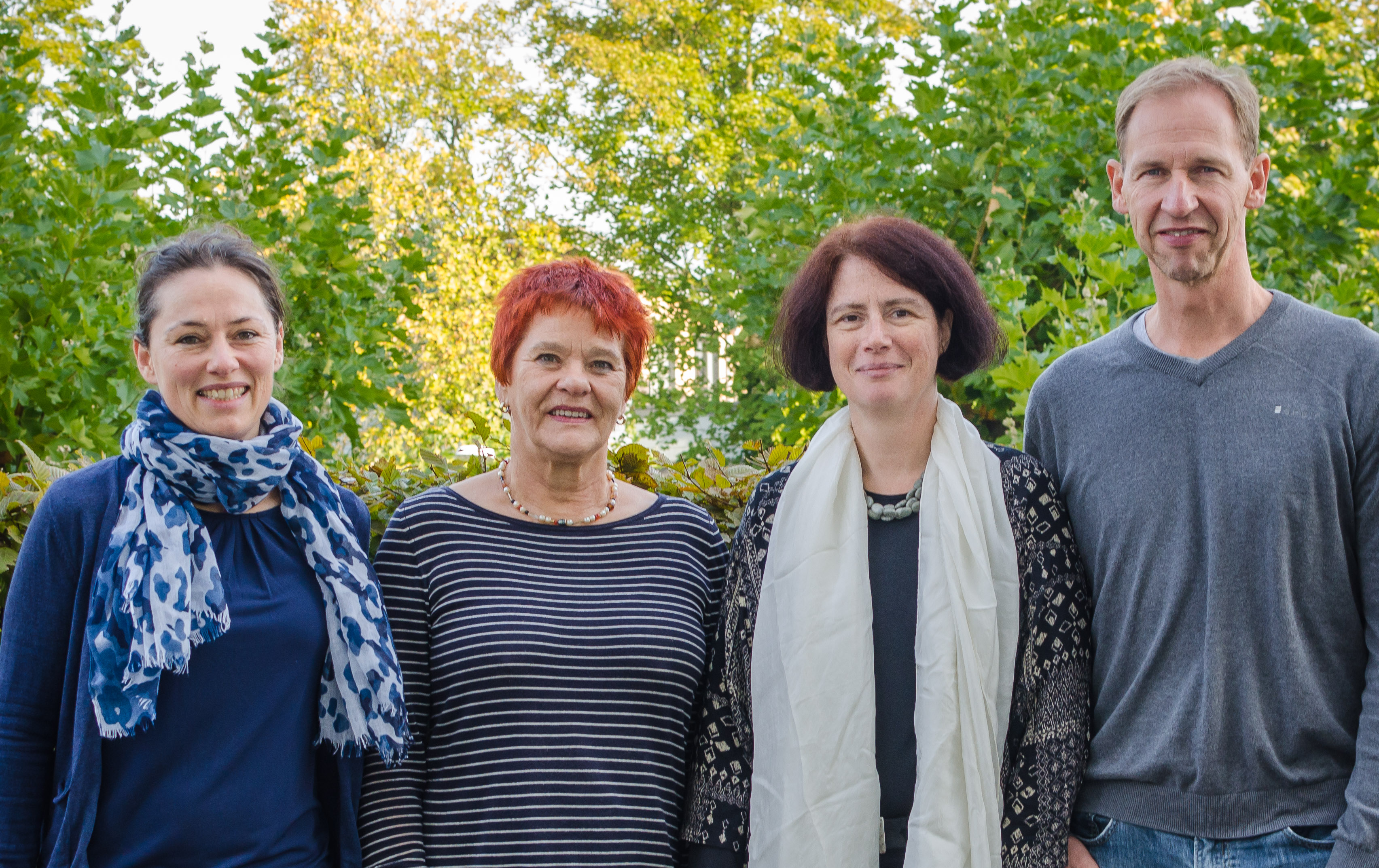
From left: Prof. Dr. Ricarda Schubotz (Institute of Psychology), Senior Prof. Dr. Pienie Zwitserlood (Institute of Psychology), Prof. Dr. Rebekka Lencer (Department of Psychiatry and Psychotherapy), Prof. Dr. Markus Junghöfer (Institute for Biomagnetism and Biosignalanalysis)
A paper titled “New is always better: Novelty modulates oculomotor learning” by OCC PhD student Annegret Meermeier and OCC member Markus Lappe has been published in the Journal of Vision. In a saccadic adaptation experiment of scanning saccades, the authors found an increased amount of saccadic adaptation towards novel target stimuli compared to repeating target stimuli. This result indicates that novelty contributes to a targets’ rewarding character, which in turn triggers stronger oculomotor learning.
A paper titled "Strategic adaptation to non-reward prediction error qualities and irreducible uncertainty in fMRI” by OCC PhD student Daniel Kluger and OCC member Ricarda Schubotz has been accepted for publication in Cortex. The authors investigated predictive processes in the brain and found distinct neural networks associated with different ways in which these predictions may go wrong. Furthermore, the way our brains try to anticipate upcoming events appears to depend on the stability of the current environment: in order to avoid prediction errors, participants were found to employ a more cautious, stepwise predictive strategy in highly uncertain contexts.
A paper titled “Impairments in the Visual Processing of Global Biological Motion Cues in Down Syndrome” has been published in the journal Perception as part of a joint project between the OCC PhD students Hugh Riddell and José Walter Tolentino-Castro. OCC members Markus Lappe and Heiko Wagner also contributed to the project. The authors found that individuals with Down syndrome performed significantly worse than control subjects in a task requiring the discrimination of visually presented videos of walking people. The results suggest that this difference in performance may stem from an impaired ability to process the global configural cues related to the organisation of the human body, which are necessary for the perception of biological motion.
We'll finish our OCC Colloquium Series in the summer semester with a talk by Prof. Dr. Rufin VanRullen from the Centre de Recherche Cerveau et Cognition (CerCo), CNRS, Toulouse, France. Note the earlier start time!
Time: July 26, 2017 (Wed), 14.15 h
Location: Lecture Hall, Department of Psychiatry and Psychotherapy, Albert-Schweitzer-Campus 1, Building A9, 2nd Floor, Room 120.074
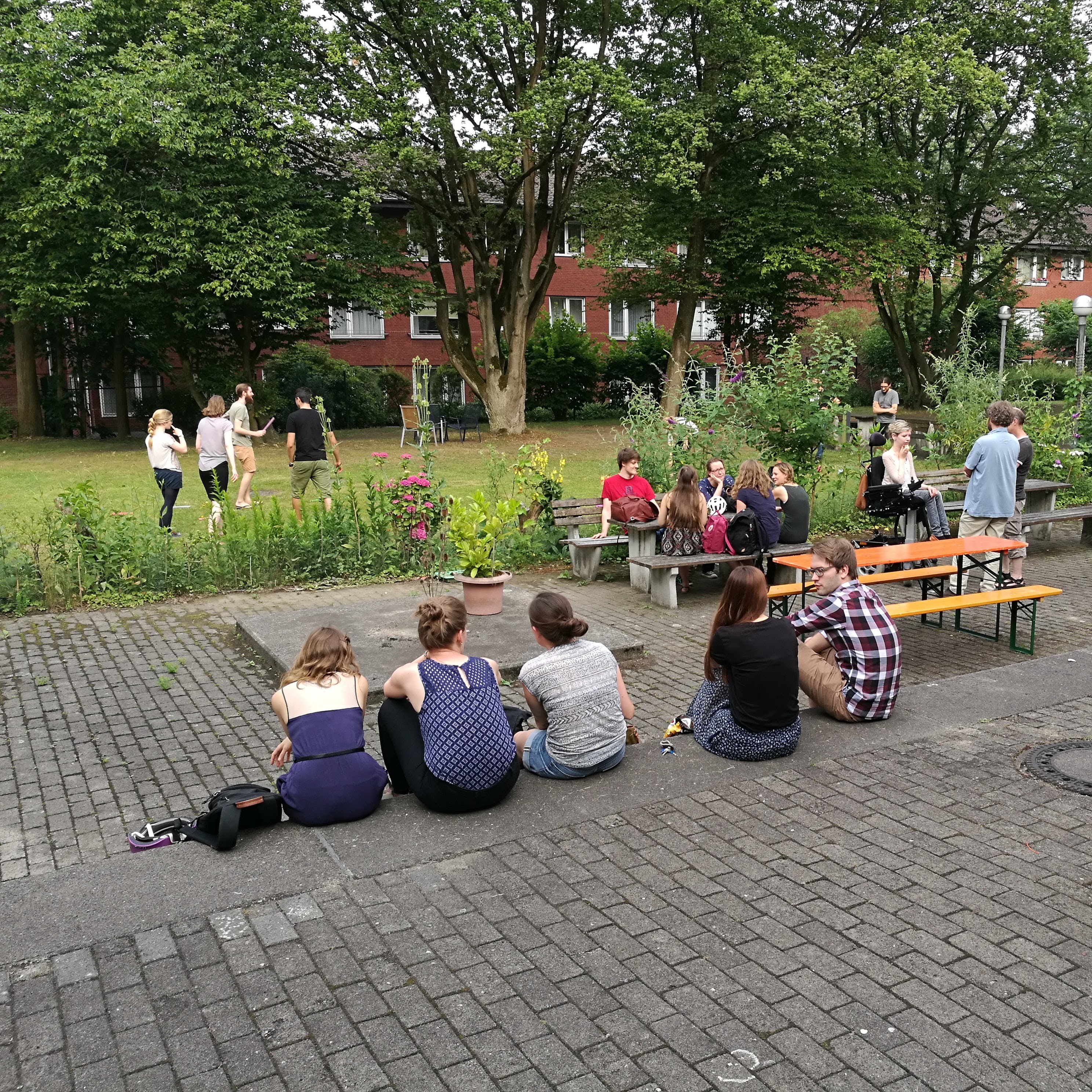
This year's OCC Retreat was held at the Institute of Psychology on July 7. The OCC PhD students presented the current state of their projects in talks and poster presentations. The contributions were of very high quality and especially the diversity of the covered topics was impressive. After the talks, everybody was eager to get outside to have a few drinks and BBQ in the green area surrounding the institute. The main sporting activity was "Viking chess" (Kubb), where OCC members and students mingled to conclude the evening in a relaxed atmosphere (see pictures here).
| OCC Retreat 2017
Annual Workshop on OCC Projects
This week, our OCC PhD students will present their work during the annual OCC Retreat. Everybody interested in the progress of the projects is invited to join for talks and poster presentations. You can find the program here.
Time: July 7, 2017 (Fri), 9.15 h to 16.30 h
Location: Seminar Room Fl 129, Institute of Psychology, Fliednerstr. 21, 2nd Floor
Guinea baboons as a test case for studying the link between social systems, communication and cognition
Our next speaker in the OCC Colloquium Series in the summer semester is Prof. Dr. Julia Fischer from the German Primate Center, Leibniz Institute for Primate Research, Göttingen, Germany.
Time: June 21, 2017 (Wed), 16.15 h
Location: Lecture Hall, Department of Psychiatry and Psychotherapy, Albert-Schweitzer-Campus 1, Building A9, 2nd Floor, Room 120.074
In May, some of our OCC PhD students visited a fourth grade in the Kardinal-von-Galen Elementary School, Münster-Handorf. Together with their teacher, Babette Havers, the kids had learned about brain research during a two-week project. The teaching unit, including specifically designed material and the interactive robot "Herr Tie", was developed and made publicly available by the Hertie Foundation. The OCC organizes the school visits in Münster in collaboration with the Hertie Foundation. Using the material, the students learned about our sensory systems and tackled questions like "Why is the brain folded?" and "How do nerve cells communicate?". To conclude the project, our OCC experts visited the school for an intense question-and-answer session. They also gave an impression of their research and showed pictures illustrating their daily work. The project will continue during the next school year. Interested schools and teachers can contact the OCC coordinator.
A new paper with the title "Noninvasive stimulation of the ventromedial prefrontal cortex enhances pleasant scene processing" has been published in the Journal Cerebral Cortex by our OCC PhD student Constantin Winker (Institute of Biomagnetism and Biosignalanalysis, IBB). Together with his OCC colleagues Dr. Maimu Rehbein and Prof. Dr. Markus Junghöfer and in collaboration with Prof. Dean Sabatinelli from the University of Georgia, he shows in an MEG and fMRI study that transcranial direct current stimulation (tDCS) of the ventromedial prefrontal cortex tunes affective processing of emotional scenes in a valence-specific manner. This finding may suggest the ventromedial prefrontal cortex as alternative target for add-on therapies of affective disorders such as depression or generalized anxiety.
A new perspective on body image disturbance in anorexia nervosa
We are very happy to welcome our first speaker in the OCC Colloquium Series in the summer semester, Dr. Anouk Keizer from the University of Utrecht, The Netherlands.
Time: May 10, 2017 (Wed), 16.15 h
Location: Lecture Hall, Department of Psychiatry and Psychotherapy, Albert-Schweitzer-Campus 1, Building A9, 2nd Floor, Room 120.074
Abstract
Patients with anorexia nervosa are generally very thin, nevertheless they experience the size of their body as bigger than it actually is. This body image disturbance is a core symptom of anorexia and difficult to treat. Traditionally body image disturbance is defined as having negative attitudes about the own body and visually perceiving the body as larger than it is. In this talk I will give an overview of the studies conducted in my group that show that body image disturbance is a multisensory disturbance. We have shown that patients for example perceive touch on their skin different from healthy females, and that they move around in space as if their body is larger, without being aware of doing so.
| Thesis Defense
PhD for Sebastian Geukes
We are very happy to announce that our OCC PhD Student Sebastian Geukes has successfully defended his thesis entitled On necessary conditions for learning new words and their meanings - behavioral and event-related potential studies. The thesis was supervised by Prof. Dr. Pienie Zwitserlood (Institute of Psychology), Prof. Dr. Jens Bölte (Institute of Psychology) and Prof. Dr. Gareth Gaskell.