

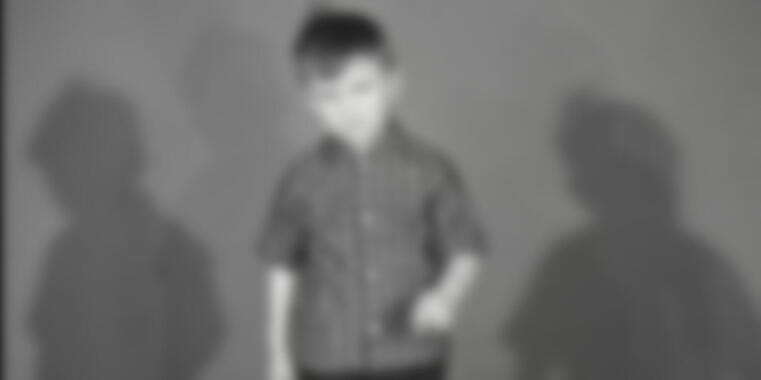
On 29 June 2026, Carolin Pommert gave her Fellow Lecture on the topic of “Patient:innen auf Film und Foto: Ethische Grenzen vs. Notwendigkeit der Digitalisierung” (“Patients in Films and Photographs: Ethical Limits vs Necessity to Digitise”).
In medicine, work is carried out with and on human beings. The aim is to detect, diagnose and treat illnesses preventively. When it comes to researching clinical pictures, human beings, as ‘research subjects’, are at the centre of medicine: they have been and continue to be observed, measured and evaluated.
Medical history collections predominantly contain data on patients in the form of medical records and administrative documents, but also, to a large extent, in the form of photographs and film footage. These images are often held as bound collections: in educational image collections, photographic albums or as individual items amongst research documents, correspondence and teaching materials, or as inserts in patient records.
Depending on the thematic focus, the images concentrate on specific parts of the body, for example in the documentation of maxillofacial disorders. People are often depicted in full as part of administrative records and are directly linked to personal data. In contrast, when documenting wards, buildings, medical equipment or operations, patient data is rarely attached directly to the objects. Nevertheless, those affected can be seen in these images, often depicted in a stereotypical manner and deliberately staged.
Work on historical artefacts is increasingly carried out today using digital reproductions. In this context, the institutions responsible for managing these artefacts bear not only legal but also significant ethical responsibilities: To what extent are we willing to reproduce forms of stigmatisation? How much digitisation is actually necessary? Can we ensure that the data will not be misused?
Using case studies from the Medical Humanities collection, the ethical challenges of digitising and making historical image collections available were discussed in the lecture. What responsibility do collections and archives have towards the people depicted? Where do the boundaries lie between academic accessibility and the protection of personal rights? The lecture addressed these questions and invited a discussion on how to handle sensitive images of patients in research, teaching and collection practice.
Carolin Pommert is Head of the Medical Humanities Library & Collection at the Institute for the History of Medicine and Medical Ethics at Charité – Universitätsmedizin Berlin. Her research focuses, amongst other things, on issues relating to the handling of sensitive medical images in historical medical teaching image collections and in educational and scientific films.