
In line with the transfer strategy of the University of Münster, the Centre for Advanced Study also focuses on the transfer of knowledge to cultural heritage and other public institutions, to art and museum education and to the interested national and international public (e. g. as an art audience).

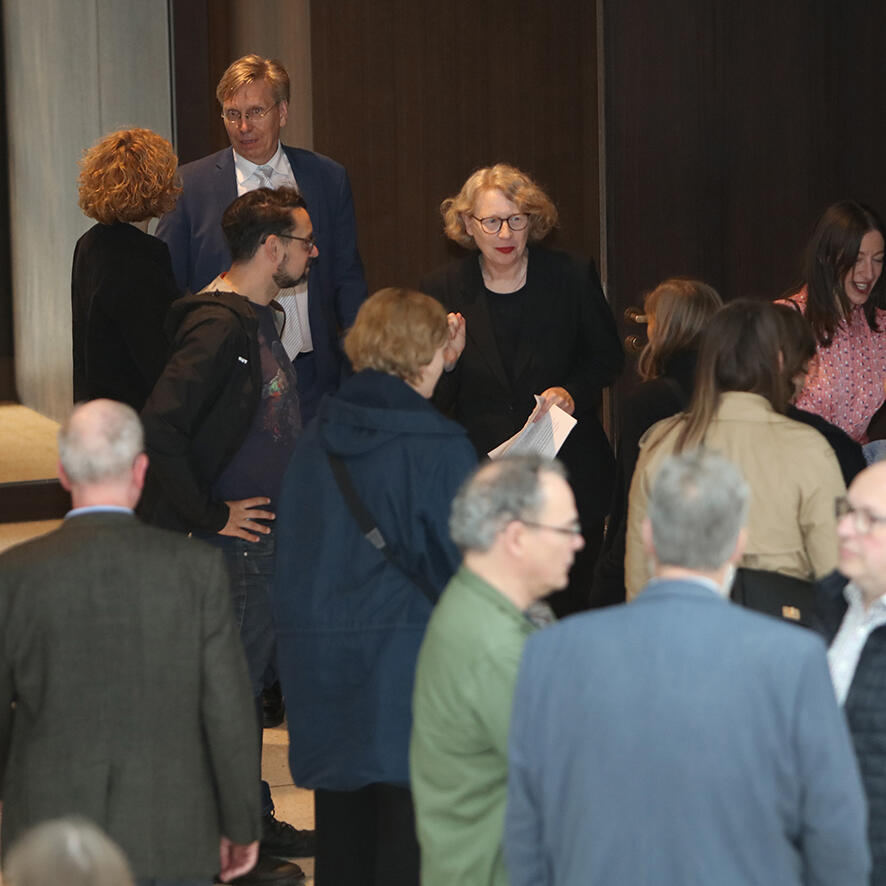
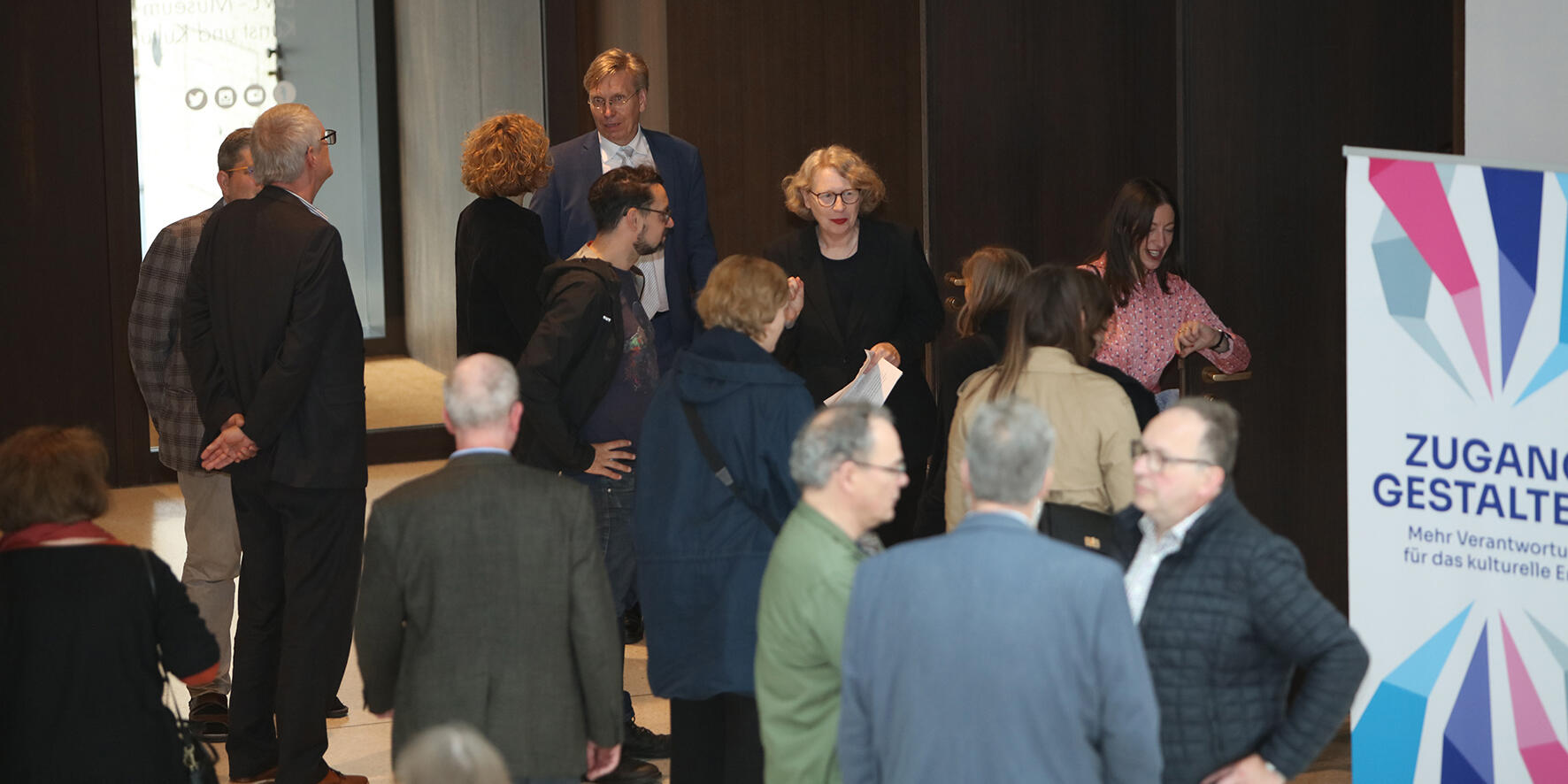
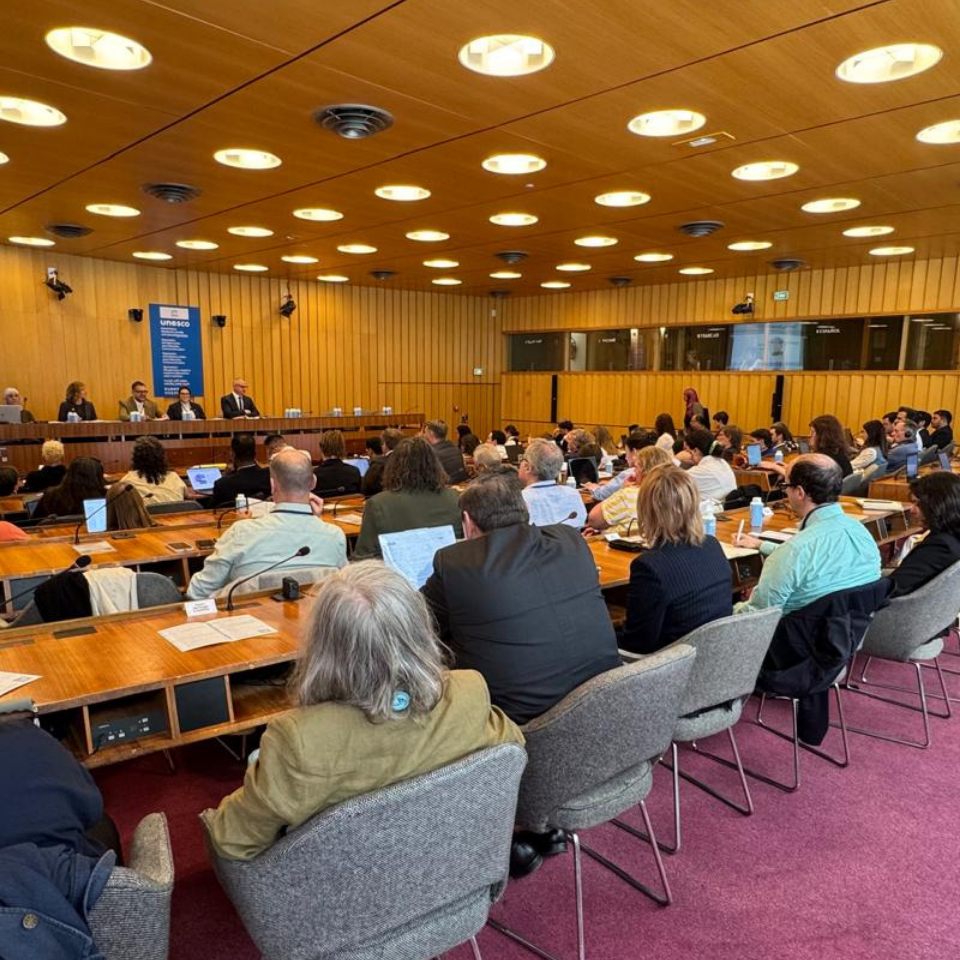
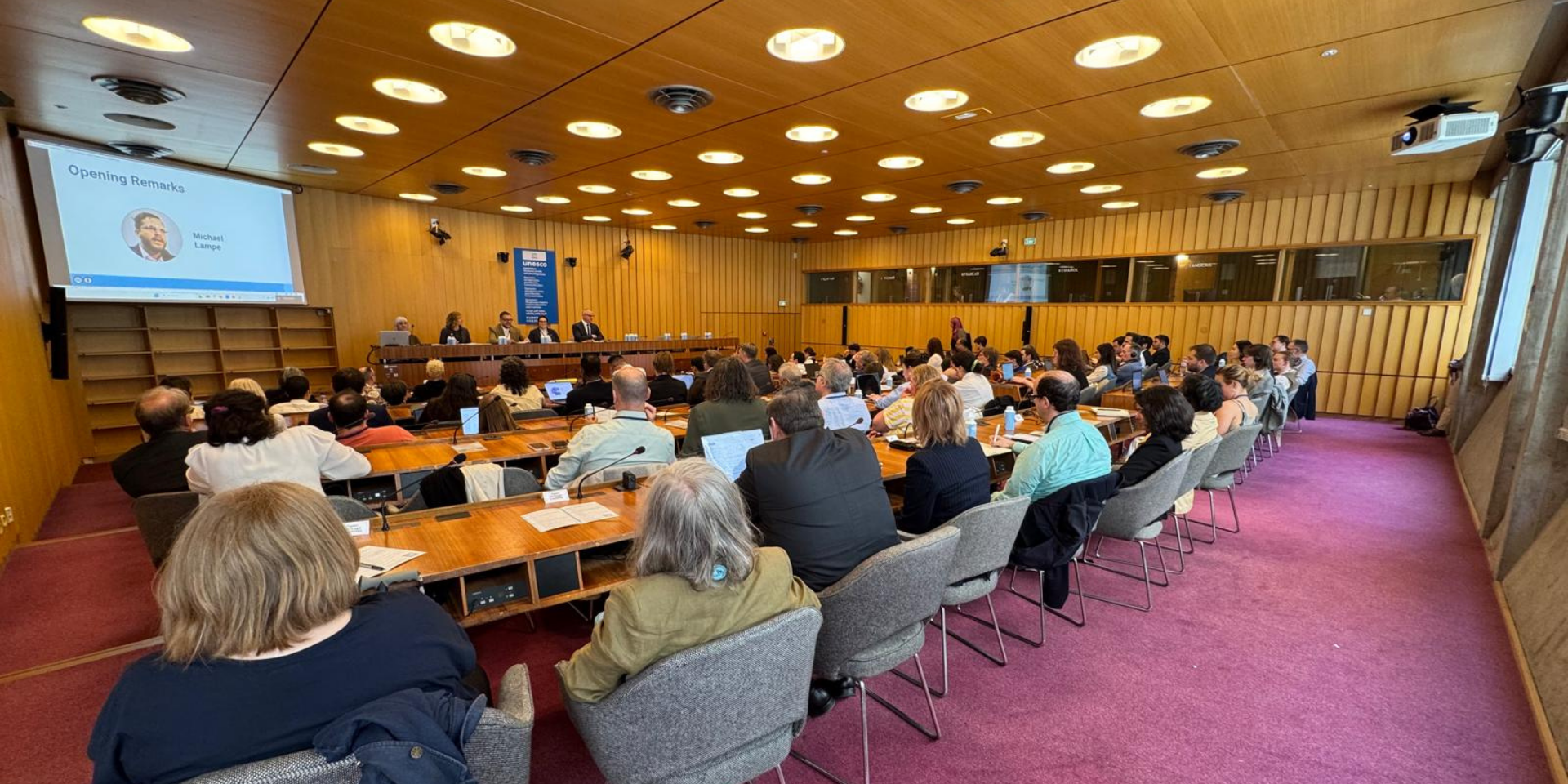
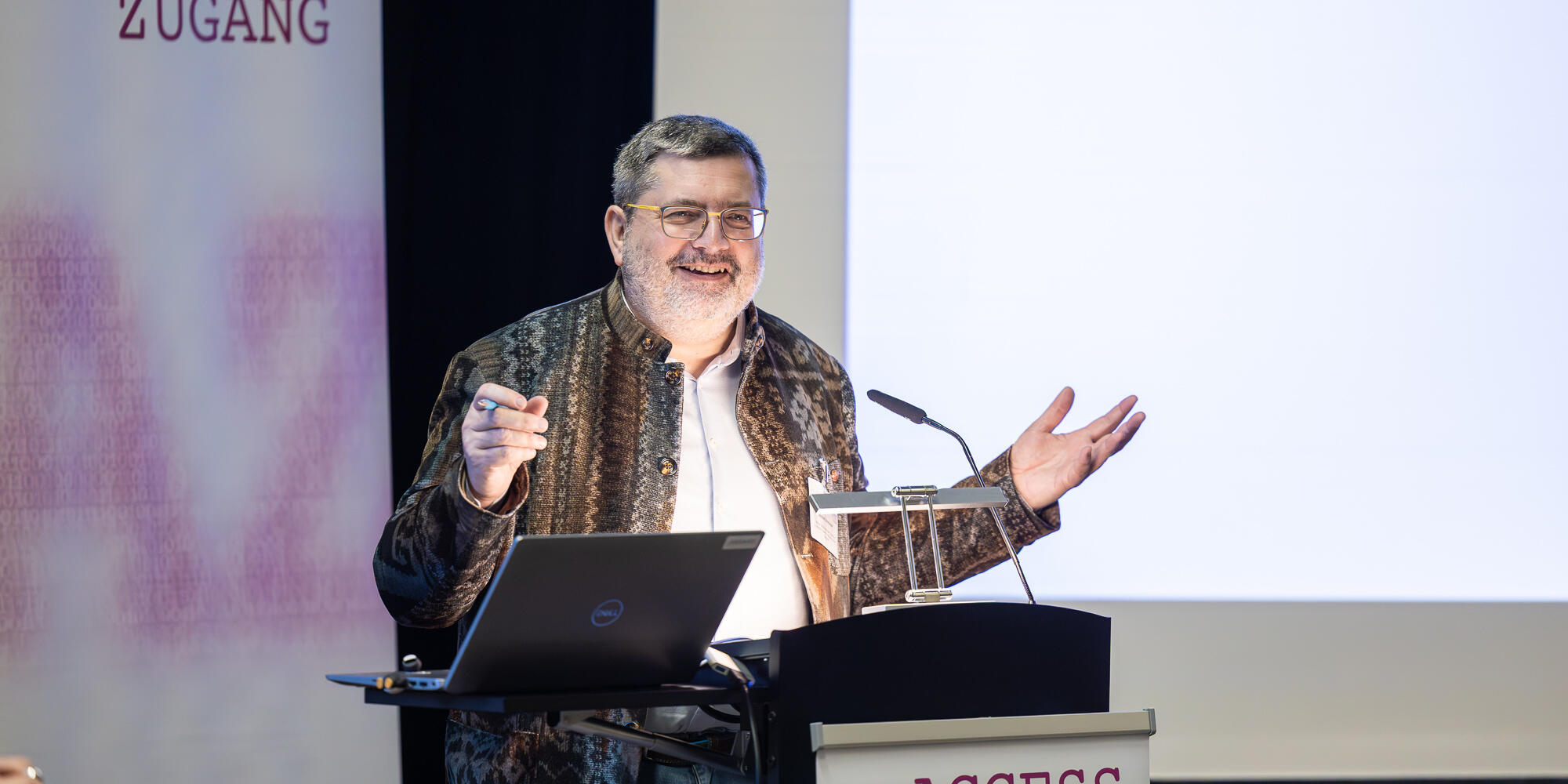
In October 2023, the Centre – together with the initiative Zugang gestalten! Mehr Verantwortung für das kulturelle Erbe (Shaping Access! More Responsibility for Cultural Heritage) – organized a conference on the question of how far and to what extent law influences curatorial decisions, which is primarily aimed at a specialist audience from the field of cultural heritage institutions.

Memoranda and statements are planned, for example for the German Federal Ministry of Justice, which will critically accompany the legal development with regard to access to cultural goods from an art-scientific and ethical perspective.

In addition, with the participation of the artist-in-residence fellows and based in renowned museums and art institutions, exhibitions are to form another mode of transferring research results.
| Events
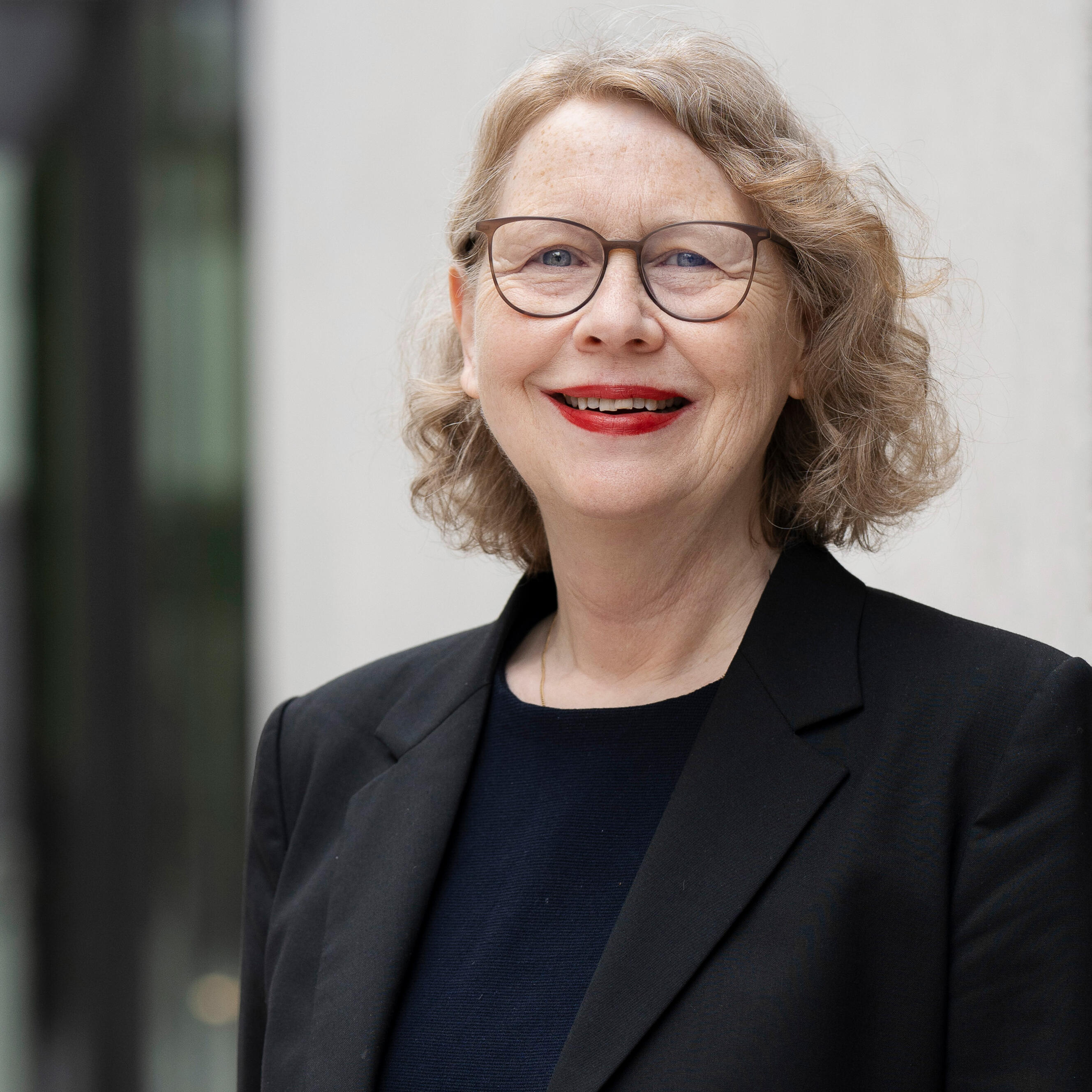
© Lioba Keller-Drescher

Sixth Summer School Museology: Curating Materialities

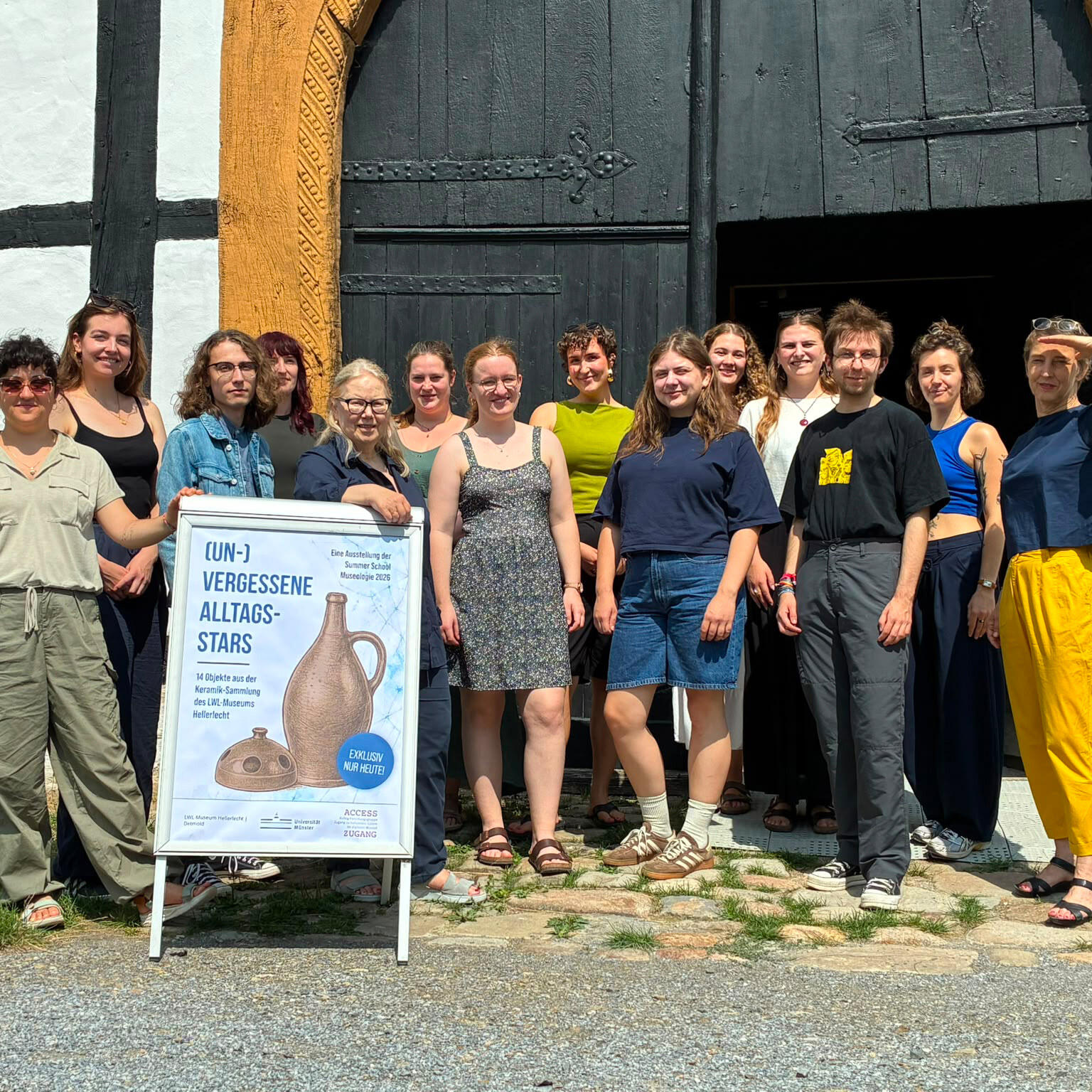
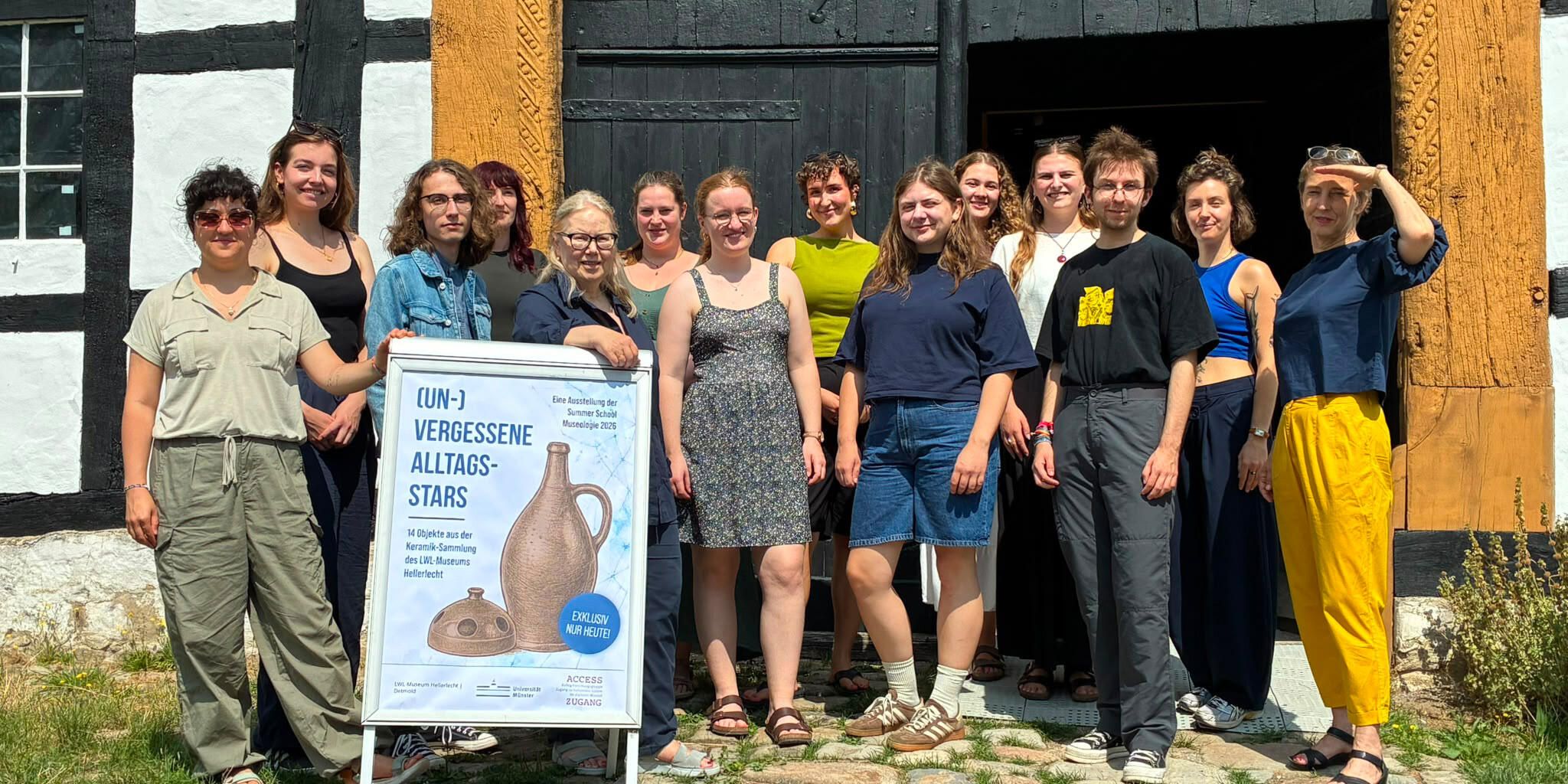
A week of research and teaching, learning and living in (the heart of) the museum: From 27 July to 1 August 2026, the Centre for Advanced Study “Access to Cultural Goods in Digital Change” and the Institute of Cultural Anthropology/European Ethnology, are organising a one-week practical course (in German) on current topics and tasks of museums, in cooperation with the LWL-Freilichtmuseum Detmold (Westphalian State Museum of Everyday Culture). Under the title “Curating Materialities”, participants will gain in-depth insights into the museum as a field of practice, a place of research, a collecting and educational institution, and much more. The course is chaired by Prof. Dr. Lioba Keller-Drescher (Münster), Professor of European Ethnology and In-House Fellow of the Centre for Advanced Study, and International Guest Curator Hon.Prof. Dr. Birgit Johler (Graz/Vienna), Curator at the Volkskundemuseum Graz – Universalmuseum Joanneum and Senior Fellow of the Centre for Advanced Study. Participants will gain in-depth insights into the museum as a field of practice, a place of research, a collecting and educational institution, and much more. Master’s students of cultural anthropology, history, art history and other courses in Faculty 8 (History/Philosophy) at the University of Münster are eligible to participate. The offer is also open to Master’s students of museum-related subjects and, where applicable, interested doctoral students from other universities. Registration deadline: 1 April 2026.

| Events
© Stefan Klatt

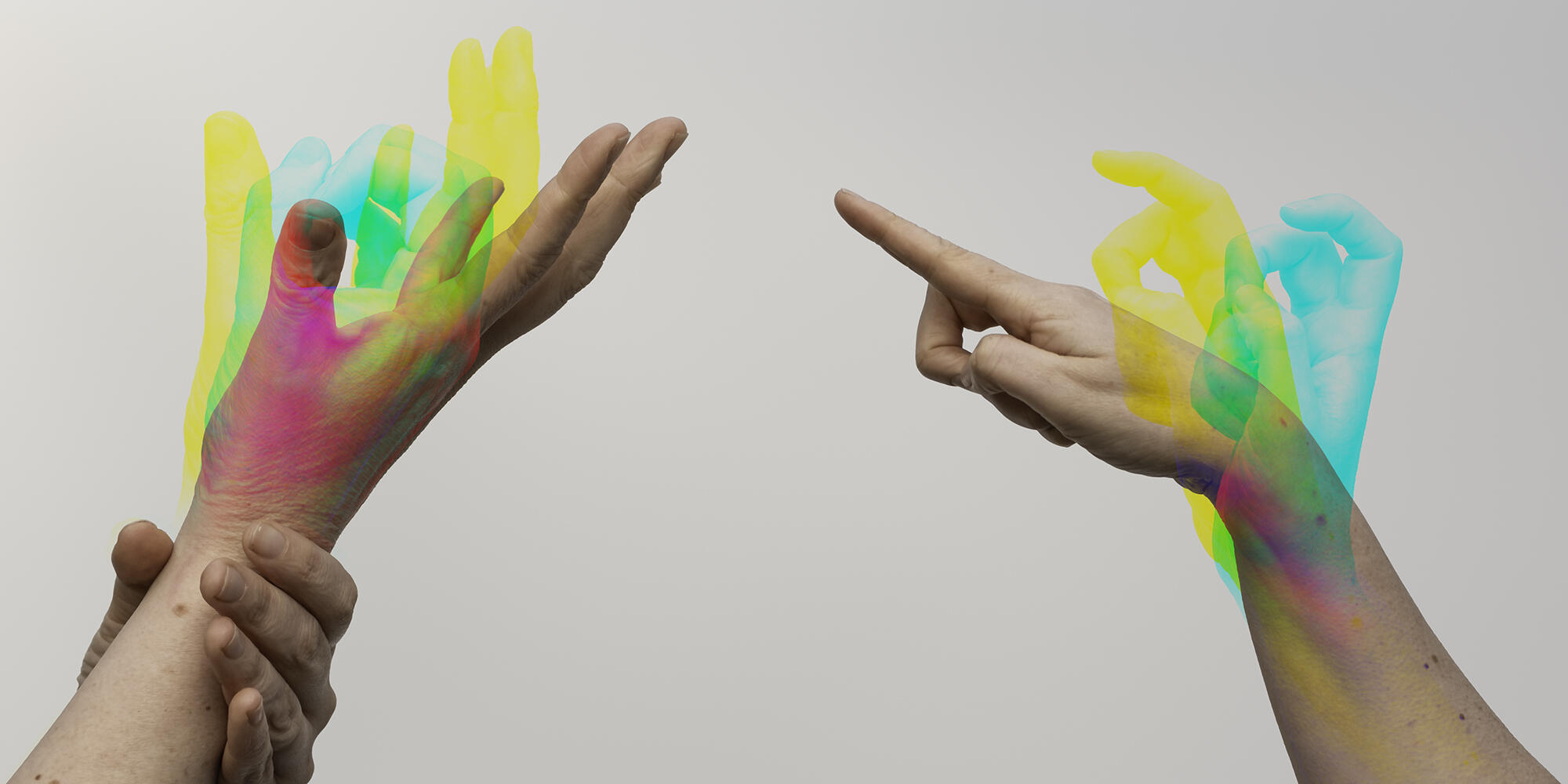
Conference: “Kulturelle Teilhabe im digitalen Wandel – Ethik, Ästhetik und Praxis des Zugangs zu kulturellen Gütern von Menschen mit Behinderungen”

How does digitalisation change cultural participation of people with disabilities? Does it open up new ways of access, forms of expression, and spaces for self-determination – or does it create new barriers, standardisations, and exclusions? From 18 to 20 March 2026, the conference “Kulturelle Teilhabe im digitalen Wandel – Ethik, Ästhetik und Praxis des Zugangs zu kulturellen Gütern von Menschen mit Behinderungen” (“Cultural participation in the digital transformation – ethics, aesthetics and practice of access to cultural goods for people with disabilities”, in German) will adress these questions from ethical, aesthetic and practical perspectives. It brings together scientific, artistic and activist forms of knowledge and creates space for dialogue, reflection and joint practice.
The programme includes lectures, artistic contributions and participatory formats on topics such as universal design, inclusive design, ethical, legal and political frameworks, and media and technology-related perspectives. The event is aimed at researchers, students, cultural professionals, people with disabilities, representatives from politics, administration and civil society, as well as the interested public.

| Podcasts
© Stefan Klatt

Podcast: “Digitalgespräch” with Prof. Dr. Reinold Schmücker

Prof. Dr. Reinold Schmücker, Director of the Centre for Advanced Study, is a guest at the podcast “Digitalgespräch hosted by the Centre Responsible Digitality (ZEVEDI) at the Technical University of Darmstadt. He talks about digital access to cultural goods. Valuable works of art and historical documents are kept in secure locations that the general public can access only under certain conditions — if at all. If digital images capture what we consider essential about an object, it is often sufficient to view the copy. As is expected in democratic societies, access to these images should be as unobstructed as possible. Open access is the keyword here. Additionally, digital processing goes beyond mere reproduction, creating entirely new possibilities for access and potentially breaking down barriers to reception. However, digital reality also includes software, hardware, and license agreements, which are subject to historical developments, decay processes, and the power of private, global companies that operate according to their own rules. What does this mean for a contemporary sense of responsibility in the arts and culture sector?

| Events
© Anna Sokolova

Conference: “Digital Curating: Ethics of Access and Sustainability”

From 4 to 6 March 2026, the international conference “Digital Curating: Ethics of Access and Sustainability” addressed changes in curatorial practices in the wake of digital transformation and the resulting ethical, ecological and social challenges. Experts from museums, universities and cultural institutions discussed how digital technologies are expanding access to cultural heritage, challenging existing hierarchies and enabling new forms of participatory knowledge production. The focus was on questions of authenticity, representation and responsibility in dealing with digital artefacts, reproductions and virtual spaces. The possibilities and risks of artificial intelligence for curatorial processes and the ecological impact of digital infrastructures also were addressed. The aim of the conference was to open up perspectives on sustainable and equitable cultural access in the digital age and to bring together the aesthetic, ethical and ecological dimensions of globally networked cultural practice.

| Transfer
© KFG 33

Photo Competition: Contribution of the Centre to the DFG calendar

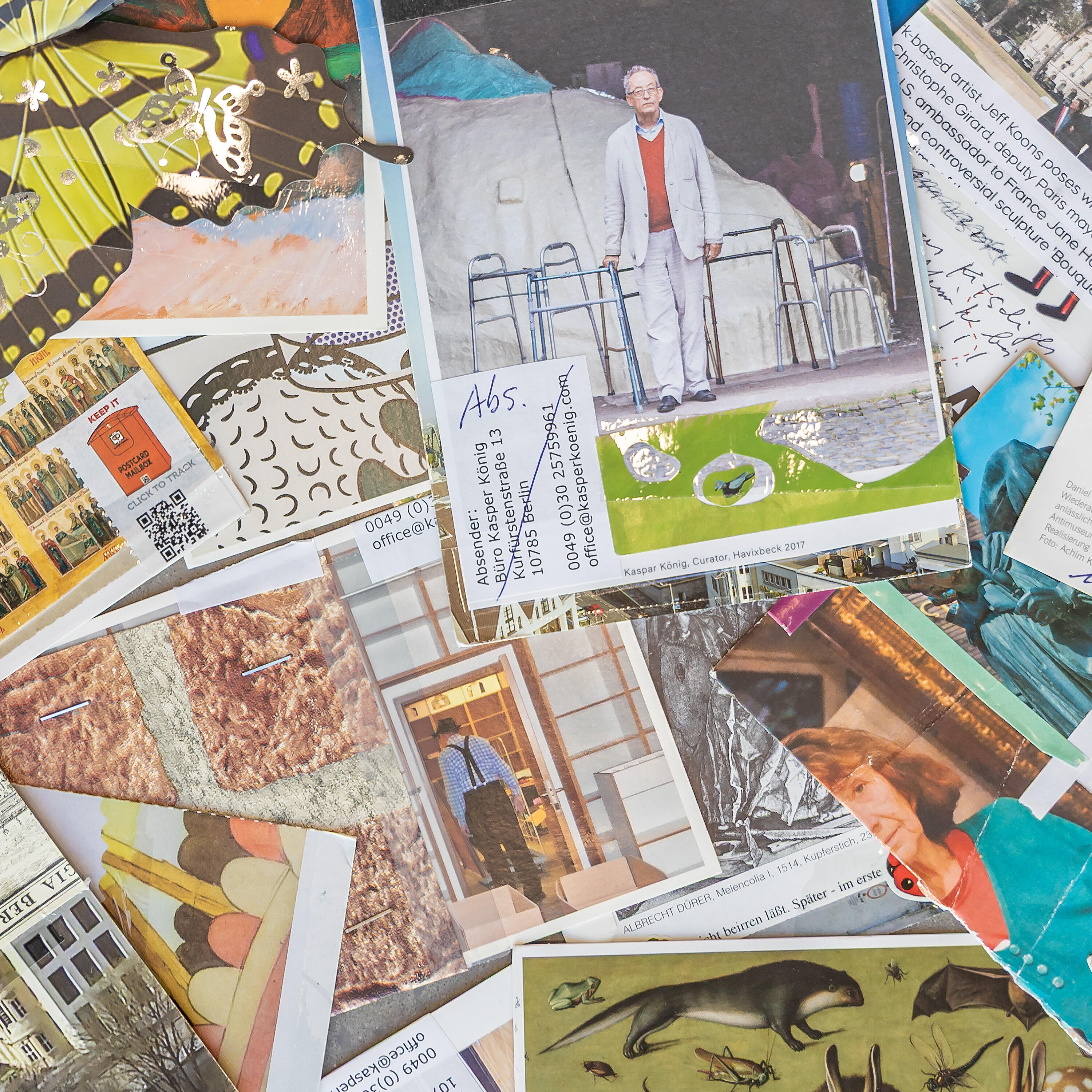
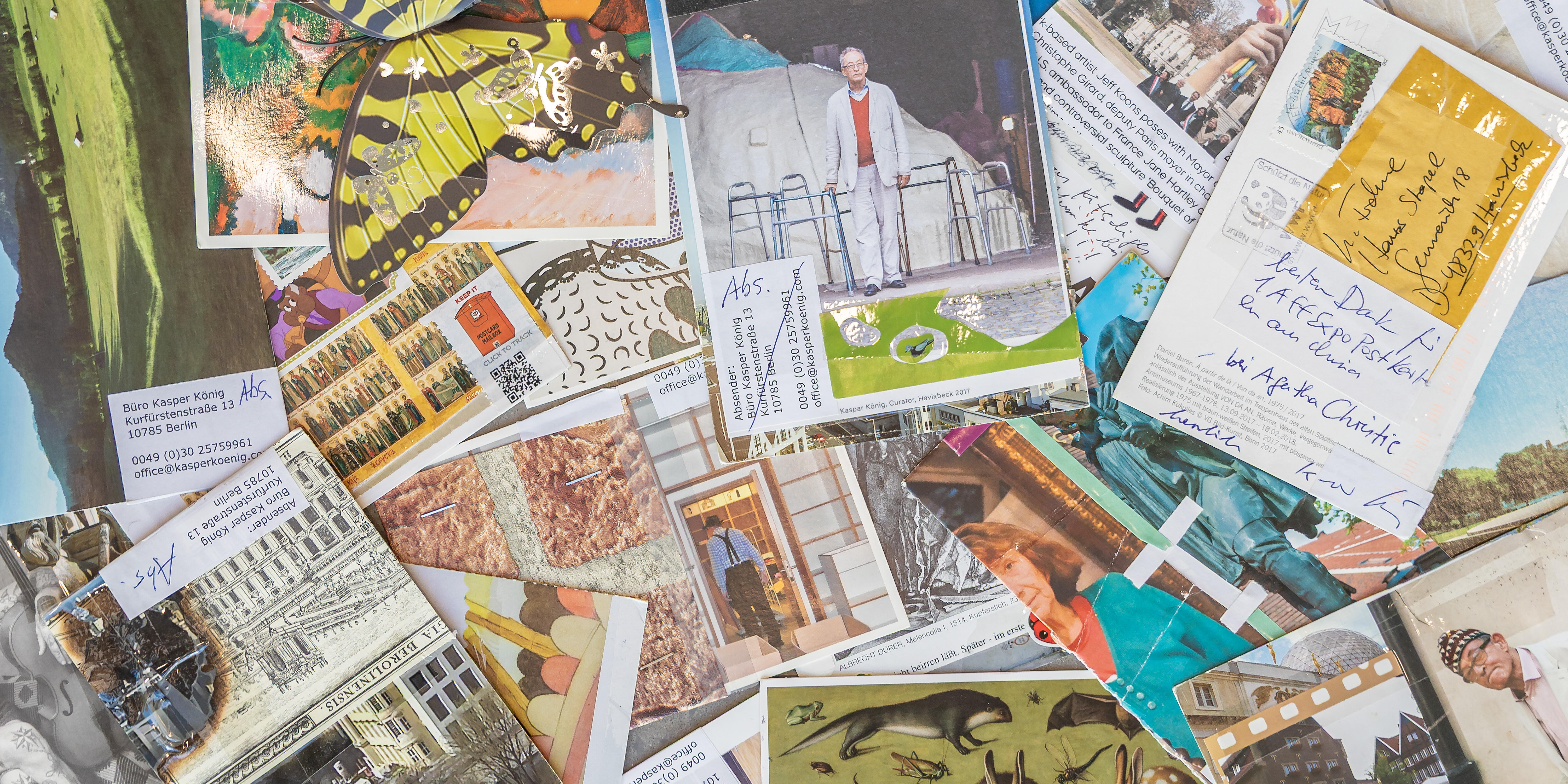
The Centre for Advanced Study “Access to Cultural Goods in Digital Change” is one of the twelve winners of the DFG photo competition and features in the German Research Foundation’s 2026 photo calendar with the March image. On display are postcards by Kasper König. Kasper König was co-founder of Skulptur Projekte Münster and director of the Museum Ludwig in Cologne. Over the decades, he sent numerous collaged postcards, full of wit and with a clearly recognisable style, to artists, colleagues and companions. As testimonies to the networks on which curatorial practices are based, the cards point to biographical traces, hinting at relationships and personal as well as professional constellations. For the exhibition “Access to Curatorial Networks” organised by the Centre for Advanced Study, students have, for the first time, compiled postcard collections from several of König’s contacts, thereby revealing this informal communication system.

| Events
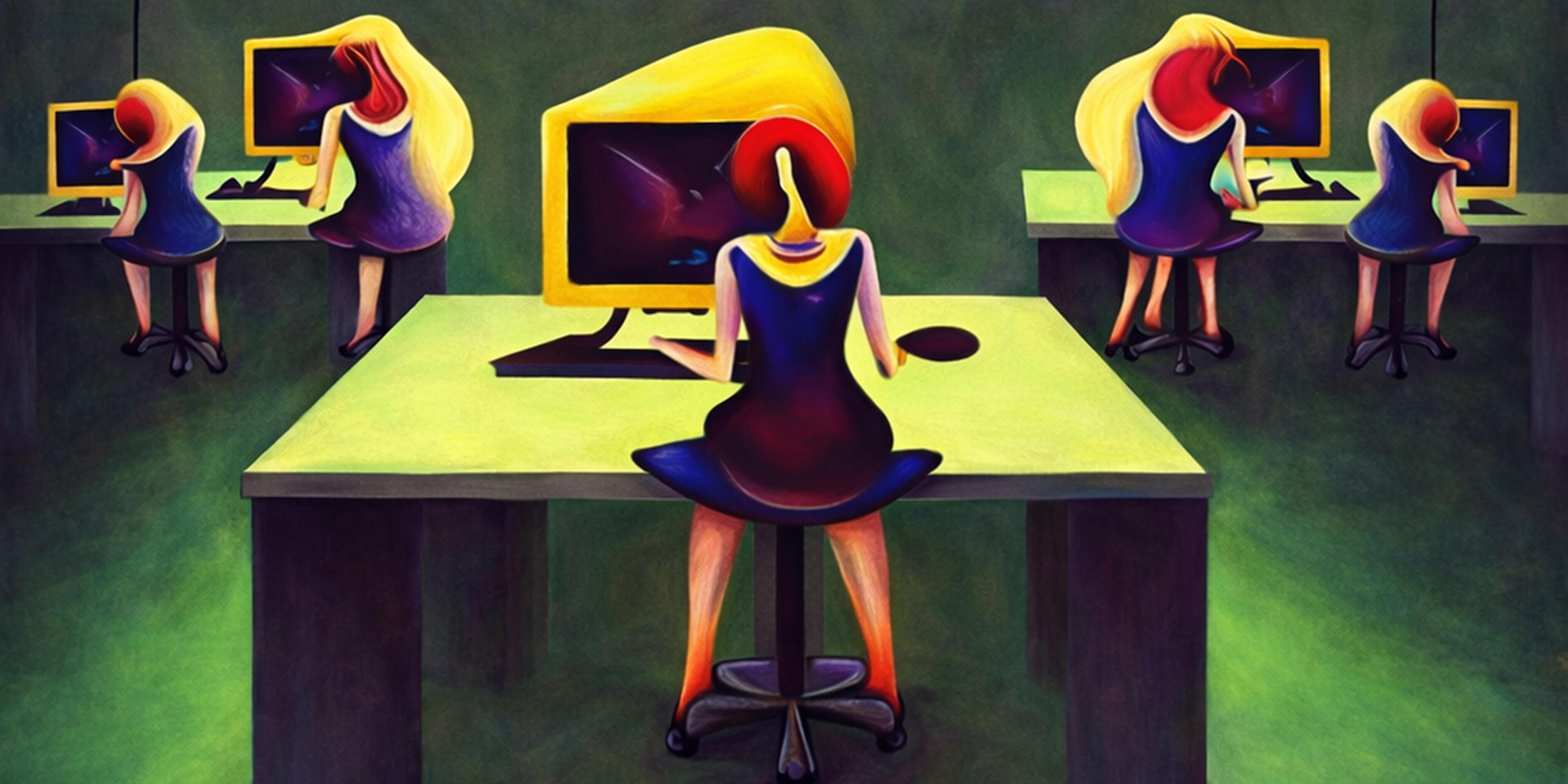
AI-generated image
AI-generated image

Wikipedia Edit-a-thon – Workshop in Kooperation mit dem ZKM Karlsruhe

The Wikipedia Edit-a-thon workshop will take place from 27 February 2026 to 1 March 2026 at ZKM Karlsruhe. The workshop is a joint project of the Centre for Advanced Study “Access to Cultural Goods in Digital Change”, the Center for Art and Media | ZKM Karlsruhe, and Wikimedia Germany. Who decides which artists are seen – and which receive little attention? Social media plays a role, but the most important and reliable source of information on the internet remains Wikipedia. This is where knowledge is created that is read and used worldwide. At the second edit-a-thon at ZKM Karlsruhe, students can actively help to shape this knowledge and help to give media artists greater visibility online.

| Transfer
© Kunsthalle Osnabrück/Universität Osnabrück | Angela von Brill

Keynote speech at the themed day “Silent Monuments. Speaking Spirits” at the Kunsthalle Osnabrück

As part of the themed day “Stille Monumente. Sprechende Geister(Silent Monuments. Speaking Spirits) at the Kunsthalle Osnabrück, Prof. Dr Ursula Frohne, co-director of the Centre for Advanced Study, delivered the keynote lecture entitled “Stille Monumente, neue Stimmen: Kunst im öffentlichen Raum zwischen Erinnerung, Archiv und Zukunft” (Silent Monuments, New Voices: Art in Public Space between Memory, Archive and the Future)”. The lecture examined contemporary artistic strategies in public space that challenge traditional notions of monumentality and develop new forms of remembrance work. The focus was on artistic positions that do not understand monuments as fixed historical entities, but as dynamic, processual structures linking the archive, the present and the future. It became clear how “silent” monuments can gain new voices through performative, media-based or participatory interventions – particularly within the tension between politics of memory, visibility and social negotiation. Furthermore, the symposium explored how digital archives, networked visual practices and hybrid publics are shifting the conditions of access, reception and cultural participation. Art in public space thus emerges as a field in which analogue cultures of remembrance and digital knowledge circulation are increasingly intertwined.

| Events
AI-generated image

Conference: “Strukturwandel des Publikums? Konsequenzen des digitalen Wandels für den Zugang zum Theater”

The conference “Strukturwandel des Publikums? Konsequenzen des digitalen Wandels für den Zugang zum Theater” (“Structural transformation of the audience? Consequences of digital change for access to theatre”, in German) from 5 to 7 February 2026 focused on the transformation of theatre in the present day. Audiences and performers no longer always share the same physical space; immediate co-presence is being transformed by digital formats. Theatre streaming, hybrid performances, immersive spaces and interactive performances are changing the relationship between stage and audience and also raise the question who makes theatre – and for whom. How is digital transformation changing the conditions of access to theatre, opening up new opportunities for participation and posing potential challenges? How are the aesthetics and social functions of theatre changing, and what are the consequences for the relationship between stage and audience? Does theatre still represent an independent art form alongside film and gaming?

| Videos
© Universität Münster | Stefan Klatt

Video: Lecture „Mastering the Art of Systematic Literature Review"

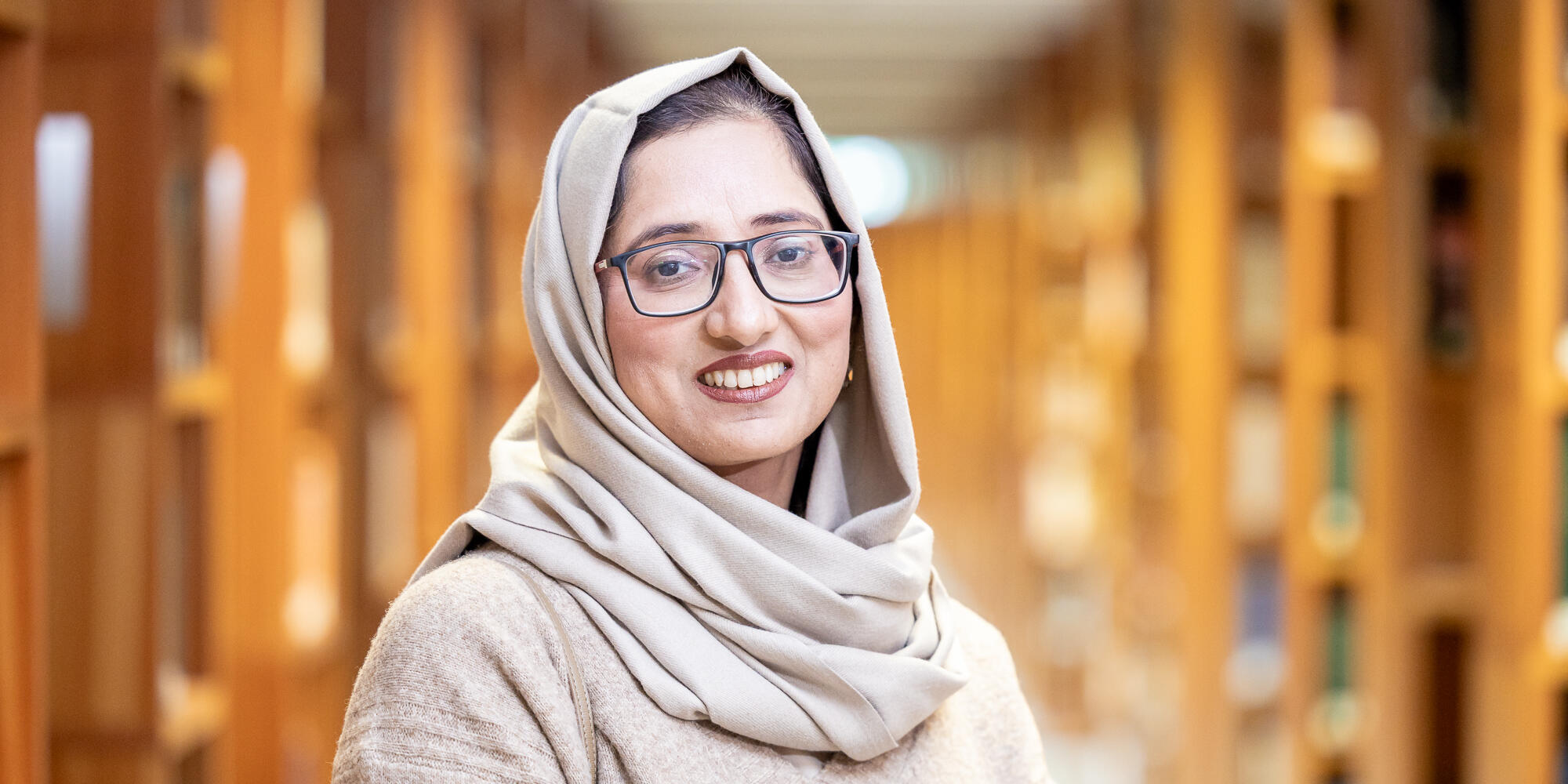
On 22 January 2026, Prof. Dr. Nosheen Fatima Warraich, Senior Fellow of the Centre for Advanced Study and Professor at the Institute of Information Management, University of the Punjab in Lahore (Pakistan), gave a lecture for students on the topic of “Mastering the Art of Systematic Literature Review – Techniques, Tools, and Best Practices” at the University Library of FernUniversität Hagen. The lecture is available as a video.
 

| Podcast
© pixabay/wokandapix

Podcast: „RadiHum“ with Prof. Dr. Ursula Frohne and Prof. Dr. Reinold Schmücker

Prof. Dr. Ursula Frohne and Prof. Dr. Reinold Schmücker, the directors of the Centre for Advanced Study, are guests on the “RadiHum – Digital Humanities Podcast” (in German). As part of the series “Barriers, obstacles and opportunities for participation in the digital humanities”, they talk about the topic of “Access to cultural goods in the digital sphere”. The discussion focuses on so-called second-order access conditions (such as proprietary software, license conditions, or infrastructural decisions made by large companies) security and authenticity in the digital space, digital barrier poverty, and case studies on human rights and ethical aspects. From minute 33:33, listeners learn more about the everyday work of the Centre for Advanced Study “Access to Cultural Goods in Digital Change”.

| Exhibitions
© Universität Münster | Stefan Klatt

Exhibition: “Re:Set: From Slide to Database – Media Change in Art History”

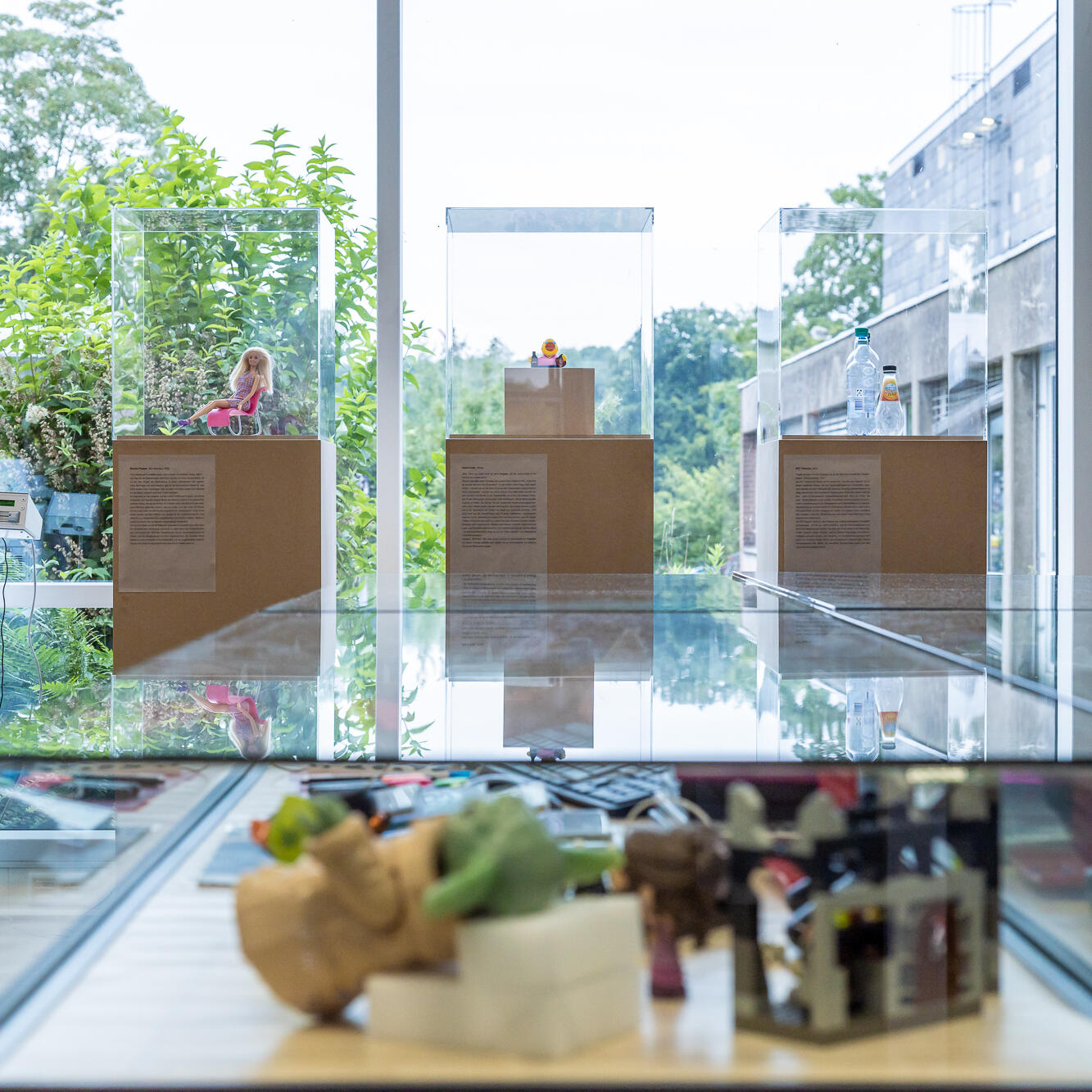
From 3 July to 5 September 2025, the Centre for Advanced Study presented the exhibition case study #2: Re:Set: From Slide to Database – Media Change in Art History” – an exhibition by students of the Institute of Art History. It took media change in art history as its starting point to illuminate the historical, aesthetic, and epistemological dimensions of art-historical image practices. Among other things, poster presentations and an installation by artist Dr. Philipp Goldbach featuring historical glass slides were on display. On 27 August 2025, Georg Imdahl reported on the exhibition in the arts section of the Frankfurter Allgemeine Zeitung under the headline “Glass behind glass – students in Münster exhibit the tools that art historians used to learn to see”.

| Events
© H. Wiedemann, S. Rittmeier, S. Hopkins

Workshop: “Digital Restitution: Bridging Access, Conservation, and Ethical Challenges”

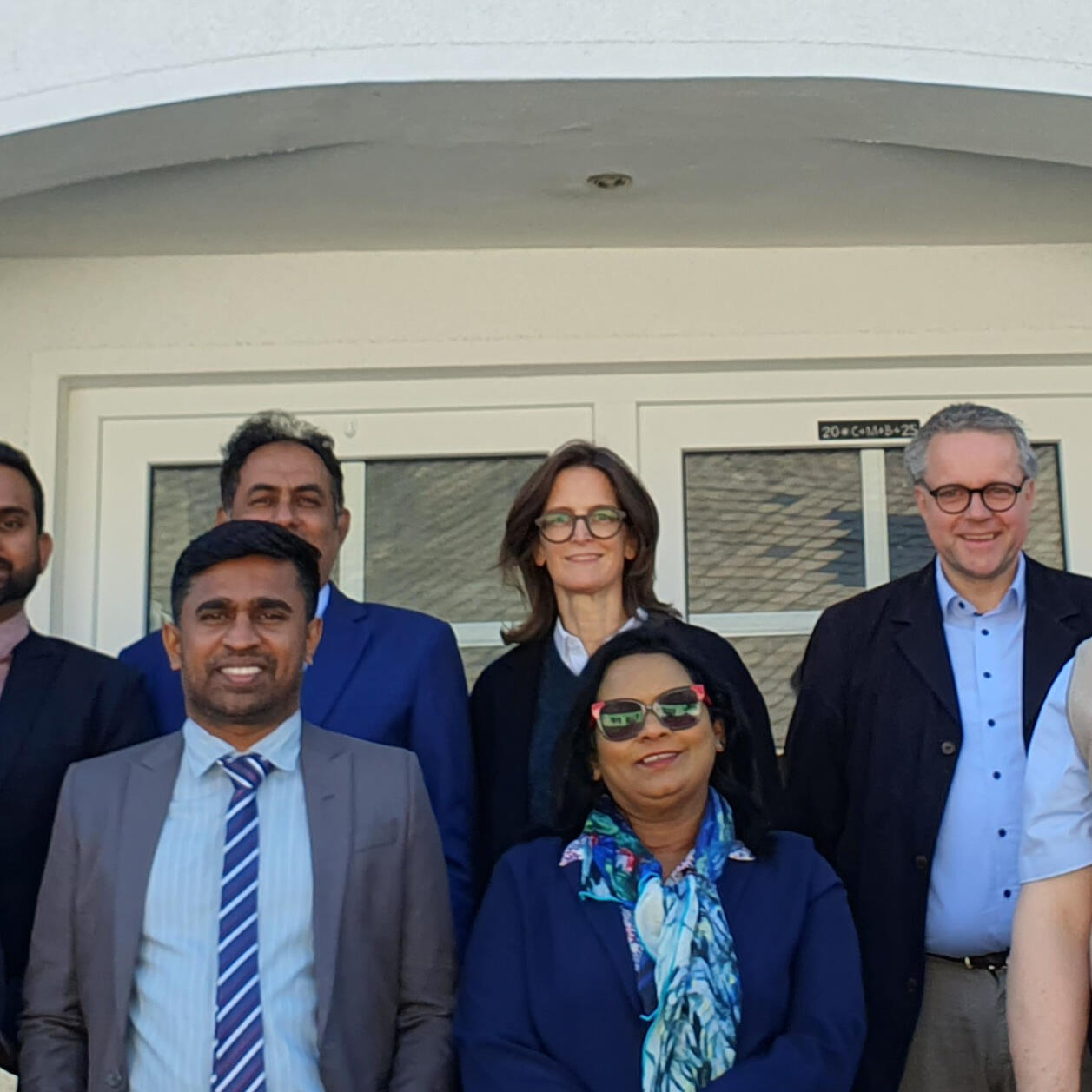
From 3 to 5 September 2025, the Centre for Advanced Study held a workshop entitled “Digital Restitution: Bridging Access, Conservation, and Ethical Challenges.” The workshop engaged in rethinking restitution in the digital age—where heritage, ethics, technology, and sustainability converge to shape the future of cultural preservation. It brought together scholars, museum professionals, heritage practitioners, and digital technologists to participate in this interdisciplinary discourse on digital heritage preservation and the ethical dimensions of cultural digitization in the field of restitution policies.

| Events
© Natascha Unkart

Fifth Summer School Museology

A week of researching and teaching, learning and living in (the middle of) the museum: from 21 to 26 July 2025, the Institute of Cultural Anthropology/European Ethnology organized a one-week practical course on current topics and tasks of museums together with the LWL Open-Air Museum Detmold (“Westfälisches Landesmuseum für Alltagskultur”) and the Centre for Advanced Study “Access to Cultural Goods in Digital Change”. Participants gained in-depth insights into the museum as a field of practice, as a place of research, as a collection and educational institution and much more. The Summer School was headed by Prof. Dr. Lioba Keller-Drescher, In-House Fellow of the Centre for Advanced Study. Guest curator was Hon.-Prof. Dr. Birgit Johler, Senior Fellow of the Centre for Advanced Study.

| Events
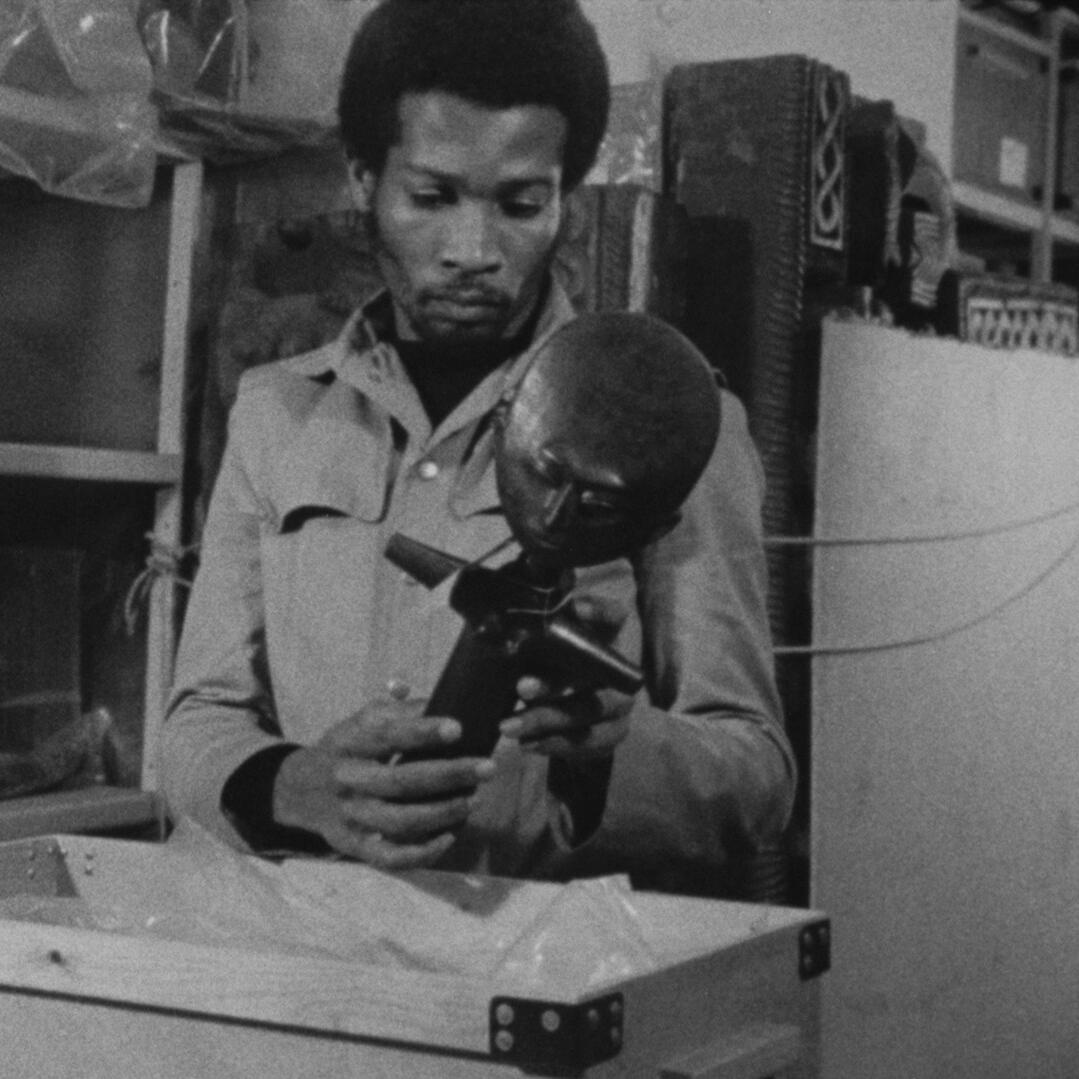
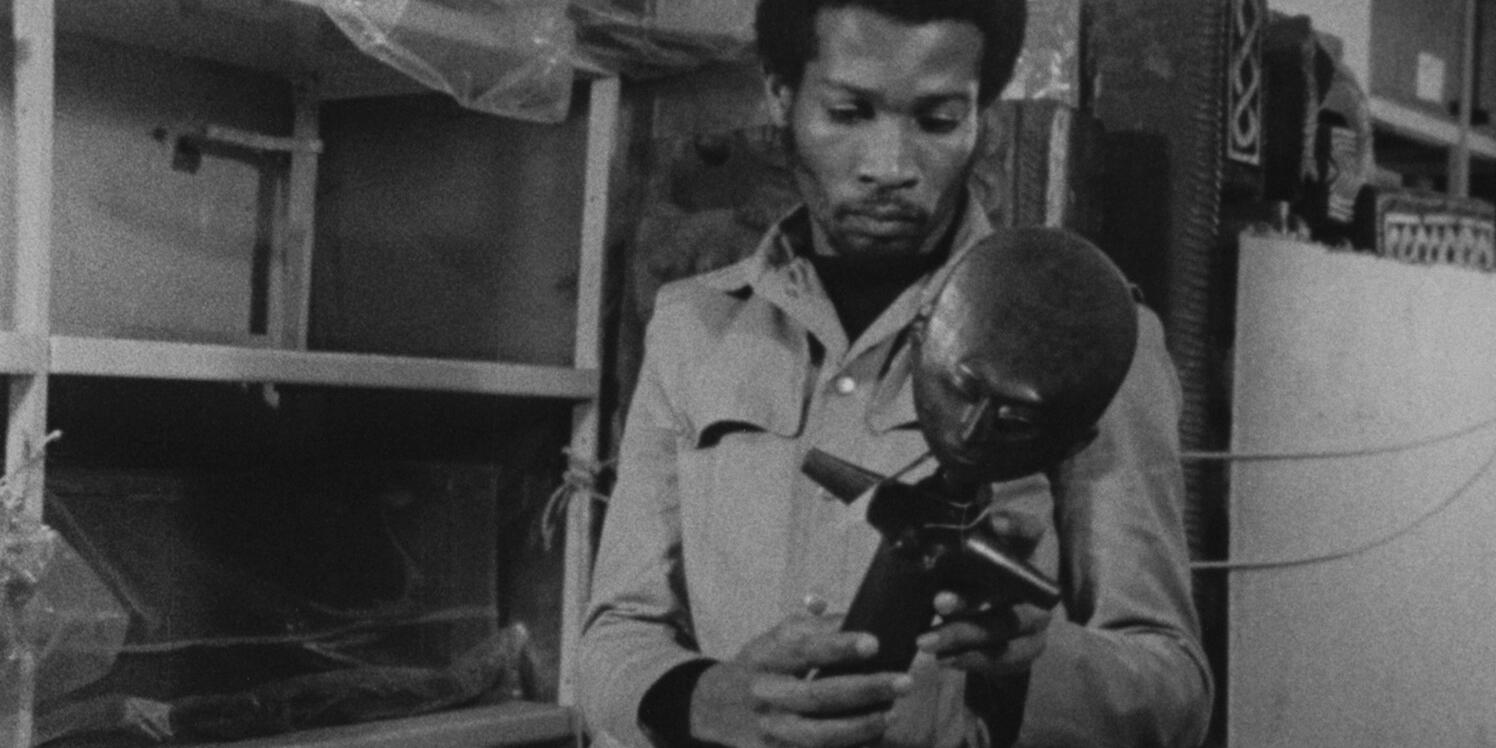
© Nii Kwate Owoo & Arsenal (Nii Kwate Owoo, YOU HIDE ME, 1970)

Film series: “Access and Return: Restitution in films”

What does it mean when a piece of history is missing and cultural identity has been stolen? The film series “Access and Return: Restitution in films” investigated the struggle for cultural self-determination, dealing with continuing colonial power relations and the question of what restitution means and can mean today, focusing on “Restitution as an Act of Recognition” (17 June 2025), “Counter Voices and Rhythms of Resistance” (24 June 2025) and “Reparative Practices of Remembrance” (1 July 2025). It aimed to look at where objects are absent – and thus understand restitution not only as a gesture of reparation, but also as a social challenge. The film series was a cooperation with the LWL-Museum für Kunst und Kultur).

| Exhibitions
© Universität Münster | Stefan Klatt

Exhibition: “Access to curatorial networks – Postcards by Kasper König”

From 26 May to 22 June 2025 the exhibition “case study #1: Access to Curatorial Networks – Postcards from Kasper König” was presented by the Centre for Advanced Study. The exhibition was designed by students of the colloquium course taught by Ursula Frohne and Berit Hummel. It featured collaged cards that Kasper König (1943–2024), co-founder and long-time artistic director of Skulptur Projekte Münster and director of the Museum Ludwig, sent to artists, colleagues and companions. The personal messages are a unique testimony to his curatorial practice.

| Veranstaltungen
© Kunsthaus Dahlem | Yevheniia Havrylenko

Panel Discussion with Fellow Josina Dehn at Kunsthaus Dahlem

Josina Dehn, Junior Fellow of the Centre for Advanced Study, was a panel guest at the “Lunch Talk: Rethinking Curatorial and Museum Approaches: Current Challenges” at Kunsthaus Dahlem on 15 June 2025. Together with María Fernanda López-Canaán (moderator and translator), Izaira López Sánchez, and Philine Pahnke (from left to right), she discussed current curatorial challenges in museums. The event took place as part of the Kunsthaus Dahlem's anniversary festival “10 YEARS – 10 DAYS!” and was a collaboration with “ARENET – The Americas Research Network.”


| Podcasts
© Universität Münster | Stefan Klatt

Podcast: “Digitalgespräch” with Dr. Thomas Kater

Dr. Thomas Kater, Senior Fellow at the Centre for Advanced Study, is a guest at the podcast “Digitalgespräch hosted by the Centre Responsible Digitality (ZEVEDI) at the Technical University of Darmstadt. He talks about his research topic “Simplifying literature – with AI? Digitality and cultural participation.” Access to cultural goods and works of art should be open to as many people as possible. “Access” here means both the sensory experience of essential aspects of the work and the opportunity to understand what one is confronted with. In the case of literature, however, sophisticated written language is a barrier for many people. Should we intervene here by changing the literary works themselves—perhaps even using AI? A passionate debate has arisen around the approach of radically simplifying literature, which Thomas Kater gives an overview of.

| Events
© Universität Münster | Nora Kluck

Guided Tour “Art on the Campus”

On 13 May 2025, the “Art on the Campus” tour took place for members of the Centre for Advanced Study. Dr. Eckhard Kluth, head of “Zentrale Kustodie & Kulturbüro” at the University of Münster, provided an insight into the works of art on the Old Town Campus. In everyday university life, we encounter works of art on a daily basis. Contemporary artworks were created, for example, as art in architecture or as part of the “Skulptur Projekte” exhibitions. This has resulted in a heterogeneous collection of artworks that is constantly challenged by everyday life as “art on the campus”. When encountering the various works, questions of access, participation, and use in the analogue world also become relevant.

| Events
© „Whose Expression? Die Künstler der Brücke im kolonialen Kontext“, Brücke-Museum, 2021. Foto: Roman März

Master class “Access to Contested Collections – Digital and Analog”

The Center for Advanced Study Access to Cultural Goods in Digital Change's master class “Access to Contested Collections – Digital and Analog” took place on 2–4 April 2025. Master’s and doctoral students, postdocs, and research trainees working at museums or art institutions who are engaged with collections with colonial backgrounds or artworks and artifacts with sensitive content were invited. The masterclass offered them the opportunity to discuss, together with colleagues from museums and art institutions in an interdisciplinary environment, which new perspectives or challenges arise from digital access to contested collections.

| Events
© Lioba Keller-Drescher

Conference “Zugänge zum Textilen”

The conference “Zugänge zum Textilen. Wissenschaftliche, kuratorische und digitale Perspektiven.” (Approaches to Textiles. Scholarly, Curatorial and Digital Perspectives. Conference of the Commission for Material Culture and Museum in the DGEKW, Deutsche Gesellschaft für Empirische Kulturwissenschaften e. V.) took place from 11 to 12 November 2024 at the Erbdrostenhof in Münster (in German). Among other topics, it addressed the following questions: How can access to textile collection areas be regained or re-established, and what role can digitization play in the scientific and curatorial re-examination? How does digitality change access to textiles? The conference was organised by Prof. Dr. Lioba Keller-Drescher (Institute for Cultural Anthropology/European Ethnology, Inhouse Fellow at the Centre for Advanced Study “Access to Cultural Goods in Digital Change”) and Dr. Kirsten Bernhardt (LWL-Museumsamt für Westfalen, Münster).

| Events
© Natascha Unkart

Fourth Summer School Museology

A week of researching and teaching, learning and living in (the middle of) the museum: from 22 to 27 July 2024, the Institute of Cultural Anthropology/European Ethnology organized a one-week practical course on current topics and tasks of museums together with the LWL Open-Air Museum Detmold (“Westfälisches Landesmuseum für Alltagskultur”). Participants gained in-depth insights into the museum as a field of practice, as a place of research, as a collection and educational institution and much more. It was headed by Prof. Dr Lioba Keller-Drescher, in-house fellow of the Centre for Advanced Study. Guest curator was Dr. Birgit Johler, Senior Fellow of the Centre for Advanced Study.

| Exhibitions & Videos
© Universität Münster | Stefan Klatt

“Where the plastics live”: Video about the exhibition online

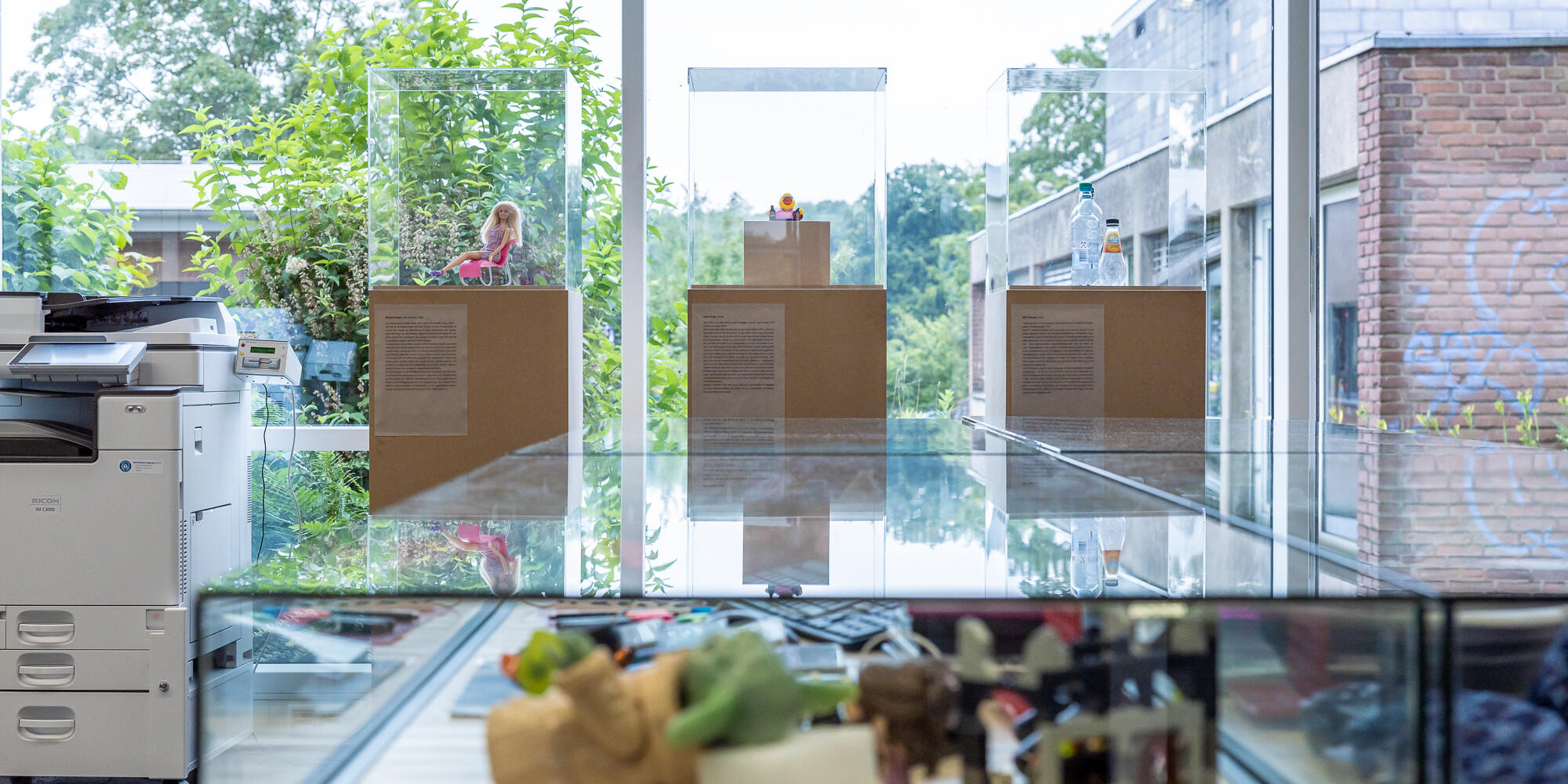
In the winter semester 2023/24 the study project “Kunststoffalltage” of the Institute of Cultural Anthropology/European Ethnology presented its results with an exhibition. Plastic artefacts were presented as “roommates” of student daily life: Objects such as remote controls and toothbrush mugs were used to interpret the everyday dimensions of plastic use. The project was directed by Prof. Dr. Lioba Keller-Drescher, Professor for European Ethnology and in-house fellow of the Centre for Advanced Study. This video provides an insight into the exhibition.

Further information on the exhibition can be found on the homepage of the Institute of Cultural Anthropology/European Ethnology.

| Events
© CC BY-SA 4.0 Deed/Justyna Lubecka

Video: Students' day at the Bremer Kunsthalle

Students from the University of Münster learned how access to art is created in museums at the students' day at the Bremen Kunsthalle on 23 January 2024. In tours, lectures and discussions with curators, they gained insights into museum work and were able to find out how an exhibition is created – from the initial idea to the installation of the pictures shortly before the opening. Jule Welling, Adelina Meyer and Felix Bomkamp, who are studying at the Institute of Art History at the University of Münster, talk about their experiences at the students' day in a TV report on SAT.1 (in German).

| Videos
© Universität Münster | Stefan Klatt

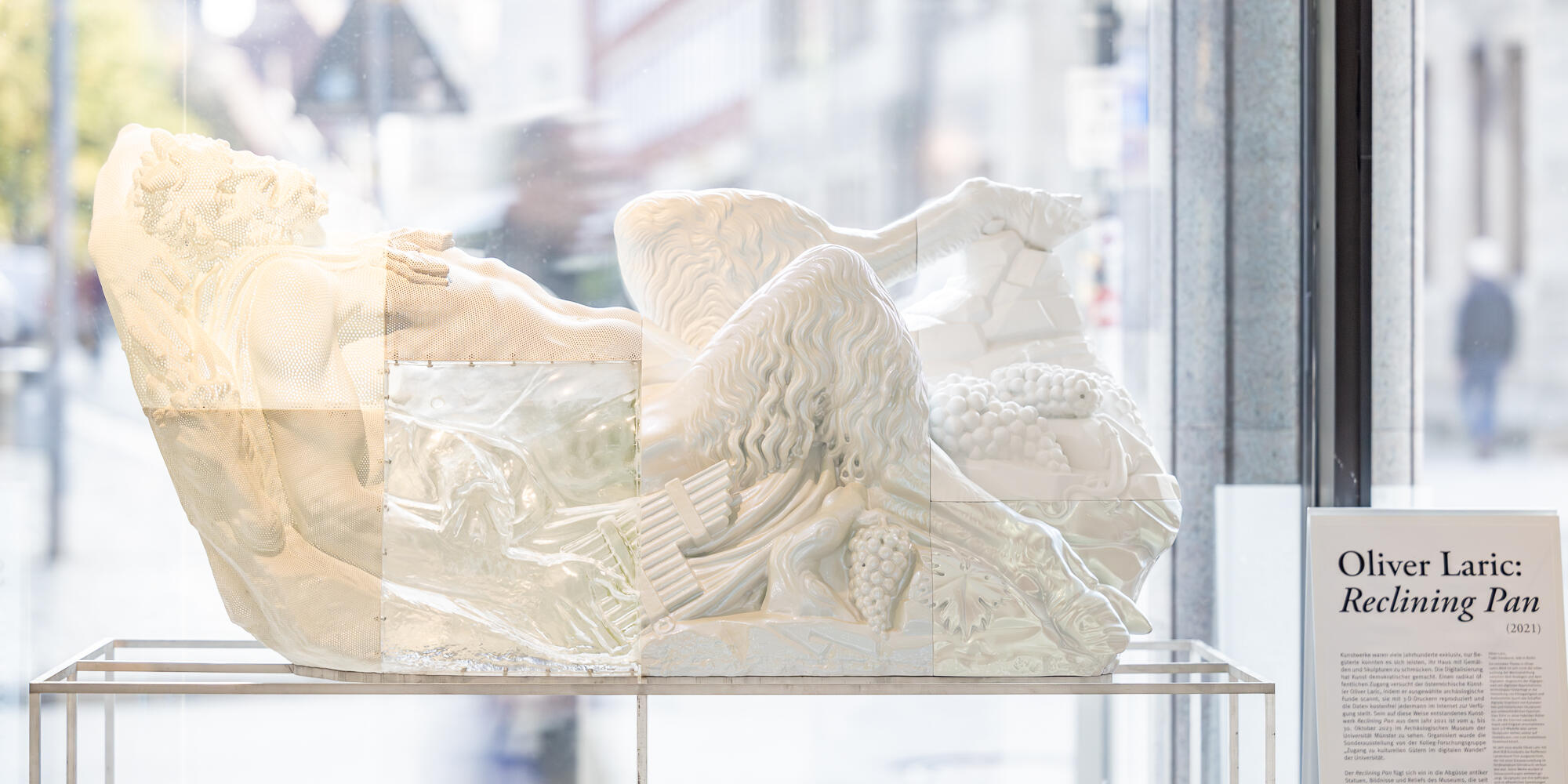
Short video on the „Reclining Pan“

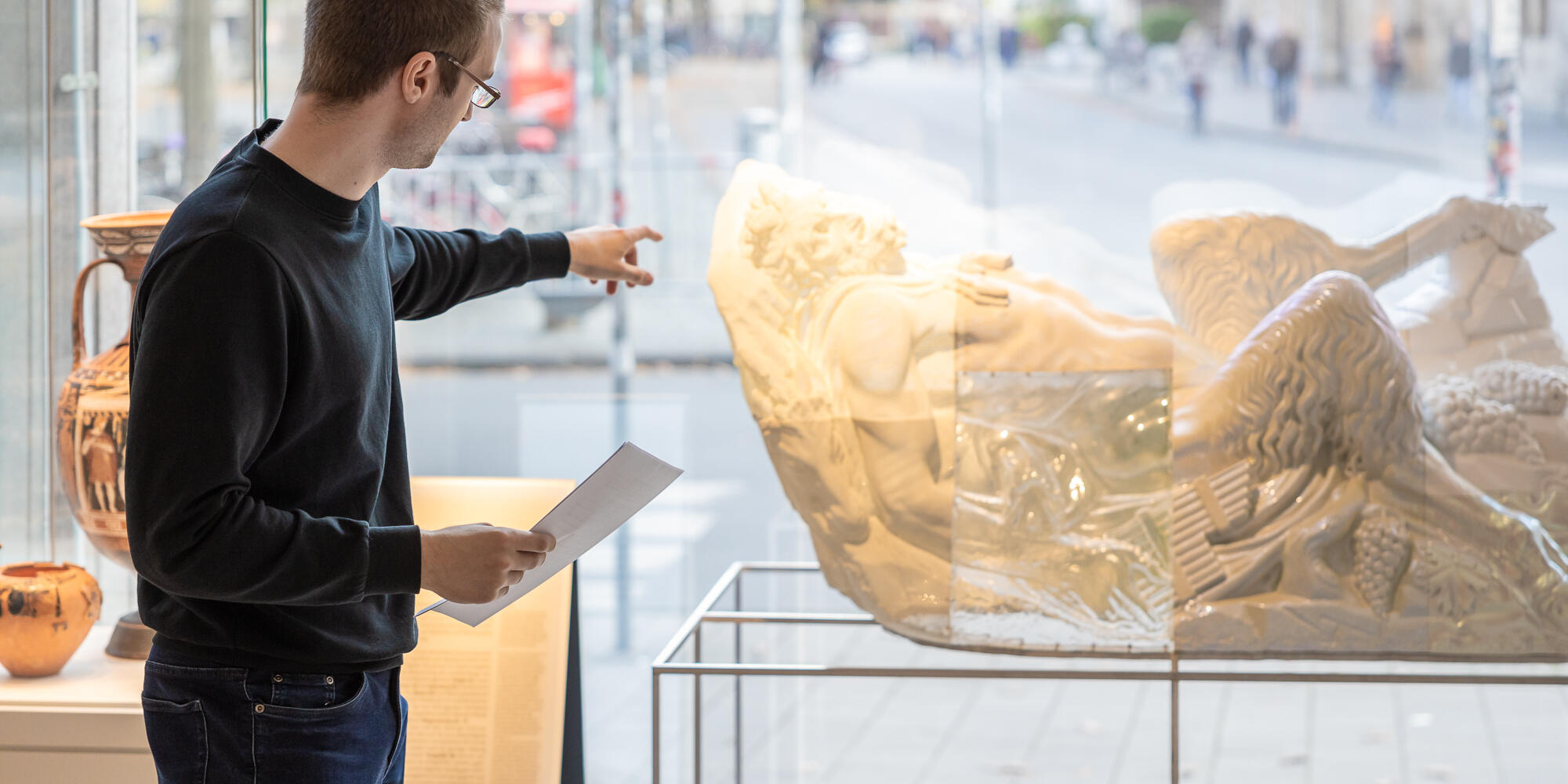
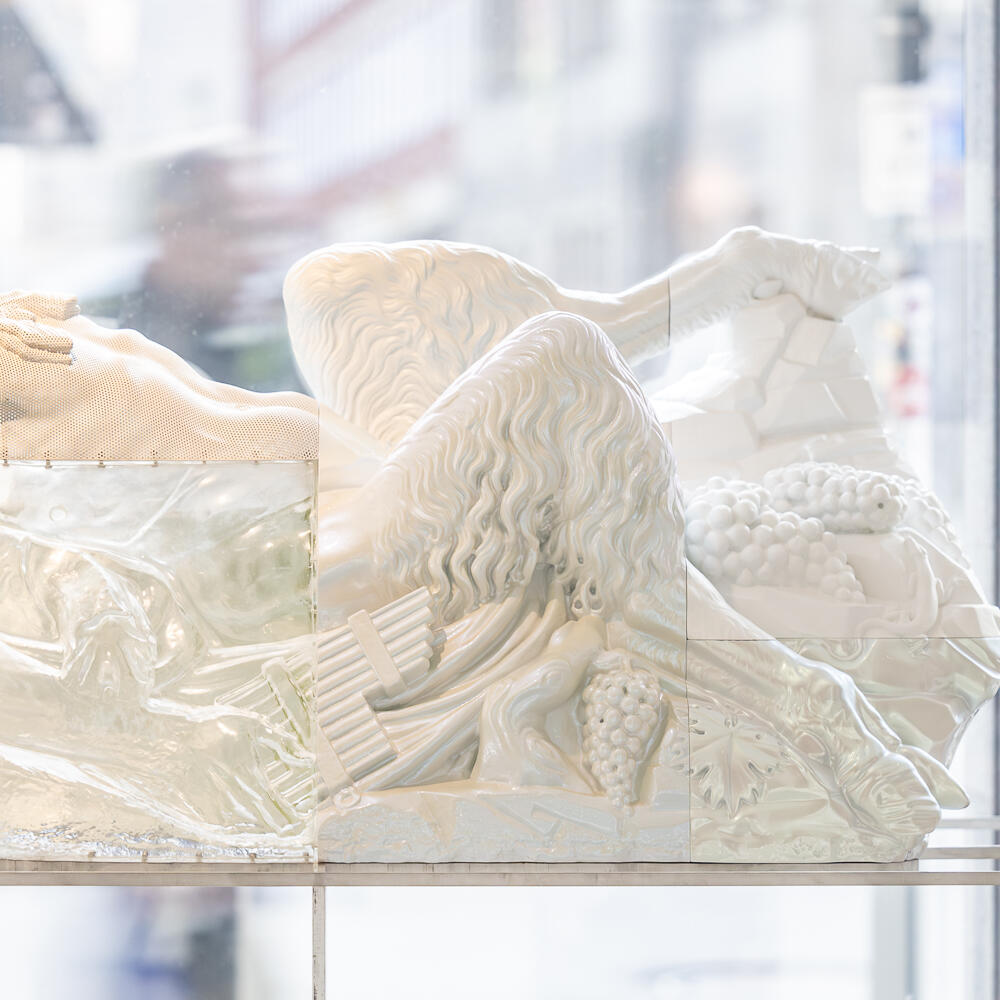
Jon Wiggermann, student of art history and philosophy, explains the special features of Oliver Laric’s “Reclining Pan” in the video – and what questions the artwork raises. From 4 to 30 October 2023, Oliver Laric’s sculpture “Reclining Pan” was on display at the Archaeological Museum of Münster University. The exhibition was a cooperation between the Centre for Advanced Study and the museum on the occasion of the conference „Zugang gestalten! Hindernisse überwinden“.

| Videos
© Foto: Hansgeorg Schöner | Video: Stefan Klatt

Video: Lecture “Access and loss of control – The new dependencies in the age of AI”

Digitization is accompanied by a loss of control and authority of interpretation for established cultural heritage institutions, but at the same time it also offers new opportunities for participation. How can this opportunity be used and at the same time prevent the spread of “powerful lies”? The lecture “Access and loss of control – The new dependencies in the age of AI” by cultural studies expert Dr. Michael Seemann as part of the “Zugang gestalten!” conference is available as a video here.

| Exhibitions & Events
© Universität Münster | Stefan Klatt

Oliver Laric – “Reclining Pan”: Exhibition and Lectures

From 4 to 30 October 2023, Oliver Laric’s sculpture “Reclining Pan” was on display at the Archaeological Museum of Münster University. The exhibition was a cooperation between the Centre for Advanced Study and the museum on the occasion of the conference „Zugang gestalten! Hindernisse überwinden“. Based on the idea of scanning and digitisation, Oliver Laric measures archaeological finds such as sculptures and reliefs and transfers the 3D data into a digital archive, thus providing the opportunity to participate in the production, dissemination and interpretation of his works.

| Events
© Hansgeorg Schöner

Conference „Zugang gestalten!“

From 4 to 6 October 2023, the Centre for Advanced Study Access to Cultural Goods in Digtal Changehosted the conference Zugang gestalten! Mehr Verantwortung für das kulturelle Erbe. The 13th edition of the conference series was dedicated to the topic Hindernisse überwinden (Overcoming Obstacles)”: What prevents the digitization of cultural heritage, what hinders accessibility? More than 50 speakers contributed their expertise both in lectures and in parallel working groups. Director of the conference series is Prof. Dr. Paul Klimpel, who is fellow at the centre in 2023.