

Photos


© Hansgeorg Schöner (dasschöne.de), CC BY-SA 4.0 
© Hansgeorg Schöner (dasschöne.de), CC BY-SA 4.0 
© Hansgeorg Schöner (dasschöne.de), CC BY-SA 4.0 
© Hansgeorg Schöner (dasschöne.de), CC BY-SA 4.0 
© Hansgeorg Schöner (dasschöne.de), CC BY-SA 4.0 
© Hansgeorg Schöner (dasschöne.de), CC BY-SA 4.0 
© Hansgeorg Schöner (dasschöne.de), CC BY 4.0 
© Hansgeorg Schöner (dasschöne.de), CC BY-SA 4.0 
© Hansgeorg Schöner (dasschöne.de), CC BY-SA 4.0 
© Hansgeorg Schöner (dasschöne.de), CC BY-SA 4.0 
© Hansgeorg Schöner (dasschöne.de), CC BY-SA 4.0 
© Hansgeorg Schöner (dasschöne.de), CC BY-SA 4.0 
© Hansgeorg Schöner (dasschöne.de), CC BY-SA 4.0 
© Hansgeorg Schöner (dasschöne.de), CC BY-SA 4.0 
© Hansgeorg Schöner (dasschöne.de), CC BY-SA 4.0 
© Hansgeorg Schöner (dasschöne.de), CC BY-SA 4.0 
© Hansgeorg Schöner (dasschöne.de), CC BY-SA 4.0 
© Hansgeorg Schöner (dasschöne.de), CC BY-SA 4.0 
© Hansgeorg Schöner (dasschöne.de), CC BY-SA 4.0 
© Hansgeorg Schöner (dasschöne.de), CC BY-SA 4.0 
© Hansgeorg Schöner (dasschöne.de), CC BY-SA 4.0 
© Hansgeorg Schöner (dasschöne.de), CC BY-SA 4.0 
© Eberhard Ortland, CC BY 4.0 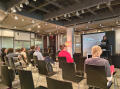
© Eberhard Ortland 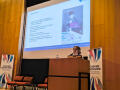
© Eberhard Ortland


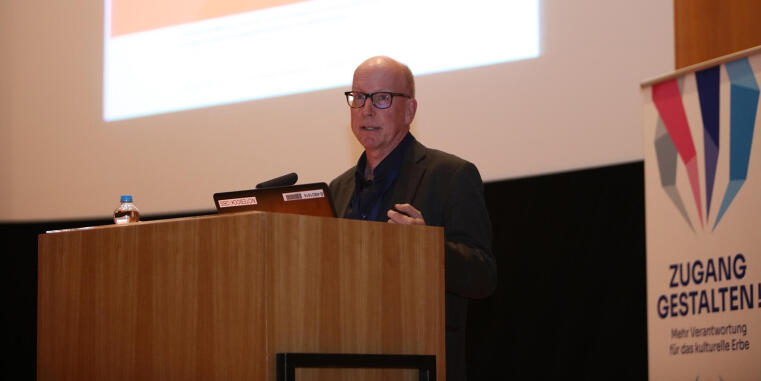
From 30 September 2026 to 2 October 2026, the conference “Zugang gestalten! Mehr Verantwortung für das kulturelle Erbe” 2026 took place at the Berlin State Library. The main topic of this year’s conference was “Geschichtspolitik und Erinnerung” (“Politics of History and Memory”) . The Centre for Advanced Study was one of the conference’s partners.
Chair: Prof. Dr. Paul Klimpel, Senior Fellow of the Centre for Advanced Study
Project & Event Management: Anna Katharina Heizmann
Contributions by members of the Centre for Advanced Study:
Panel presentation: “Access Denied: Moralische Gründe für ein Recht auf Zugang und Zugangsbeschränkungen”
Dr. Eberhard Ortland, Senior Researcher at the Centre for Advanced Study
30 September 2026, 3:00 pm, Panel 1 (Zugang zu Erinnerung: Recht, Moral und Verantwortung)
Working group: “Digitale Erinnerungskultur zwischen Universalismus und Identitätspolitik”
Prof. Dr. Bernadette Collenberg-Plotnikov, Senior Researcher at the Centre for Advanced Study
1 October 2026, 1:30 pm, working groups on the topic “Orte, Objekte, Deutungen. Geschichtspolitik im kulturellen Erbe”
In-depth discussion group: “Spätkoloniale Geschichtspolitik. Das Beispiel der Stiftung Preußischer Kulturbesitz”
Jolanda Saal-Basar, Junior Fellow of the Centre for Advanced Study
1 October 2026, 1:30 pm, working groups on the topic “Orte, Objekte, Deutungen. Geschichtspolitik im kulturellen Erbe”
Politics of History and Memory
How do cultural heritage institutions deal with the records of the past? Do they use them to support specific perspectives on historical developments, or do they leave the assessment to users and, above all, facilitate access to the sources? Whilst museums, with their curated exhibitions, often adopt a more interpretative approach, archives and libraries traditionally see themselves as institutions that focus on providing access to their collections. However, this division of roles comes under pressure when it comes to a difficult legacy – such as racist or anti-Semitic records: archives face criticism when they appear to grant unfiltered access, whilst at the same time, interventions in cultural heritage institutions based on historical politics are the subject of heated debate. This is particularly evident at present in the USA, where, under the Trump administration, new historical-political guidelines have been imposed on archives and museums, and historical artefacts are even being removed. Yet in Germany, too, interpretations of the past are changing, and with them expectations of museums, archives and libraries. They are entrusted with a great deal of confidence to present records of the past responsibly – yet at the same time, the court-banned attempt by Münster City Library to provide controversial books with contextual notes illustrates just how sensitive such positioning can be.
These issues also have a direct bearing on the legal framework within which cultural heritage institutions operate. Copyright law, in particular, has a decisive influence on which records of the past can be presented or made digitally accessible, and in what form. Gaps in the digital record frequently arise, particularly in the case of sources whose protection periods have not yet expired or whose legal status remains unclear. This can lead to unintended distortions of the historical narrative if certain materials are not visible, or are only visible to a limited extent, for legal reasons. Reflection on such – unintended but de facto effective – effects of the law on the culture of memory and historical narratives has characterised this conference series from the outset and took once again centre stage in 2026.