
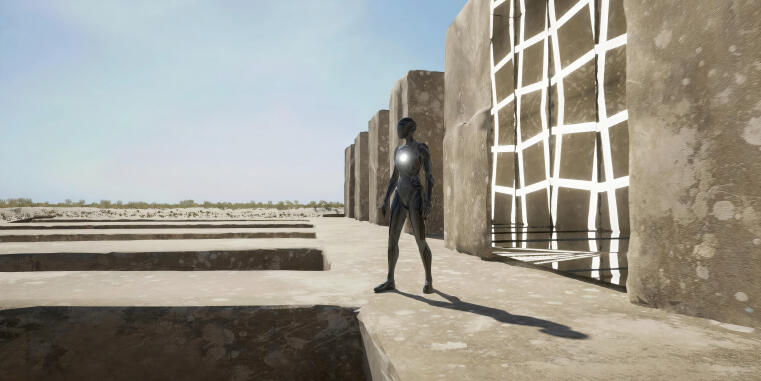
From 4 to 6 March 2026, the Centre for Advanced Study “Access to Cultural Goods in Digital Change” held a international conference entitled “Digital Curating: Ethics of Access and Sustainability”. The conference addressed changes in curatorial practices in the wake of digital transformation and the resulting ethical, ecological and social challenges. Experts from museums, universities and cultural institutions discussed how digital technologies are expanding access to cultural heritage, challenging existing hierarchies and enabling new forms of participatory knowledge production.
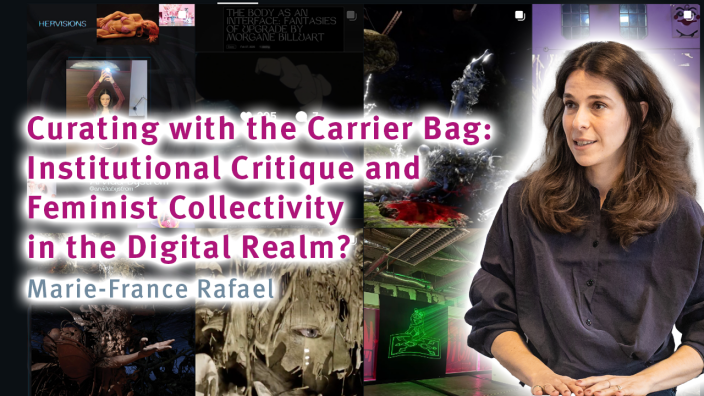
“Curating with the Carrier Bag: Institutional Critique and Feminist Collectivity in the Digital Realm?”
Prof. Dr. Marie-France Rafael (Zurich University of the Arts)
To play the video, it will be loaded from a Webserver of Google™ LLC. Therefore data will be transmitted to Google™ LLC.
In her lecture, Marie-France Rafael (Zurich University of the Arts) examines how new discursive artistic practices of curating under current socio-technical conditions make specific use of feminist and collective approaches to create reflexive forms of meaning-making and challenge the institutionalized and infrastructural hierarchies in digital archives and exhibitions.
“Changing Museums with Swarm Curation”
Alina Fuchte (Kunstpalast/NRW-Forum Düsseldorf) und Marina Nething (Museum Ulm, Deutschland)

To play the video, it will be loaded from a Webserver of Google™ LLC. Therefore data will be transmitted to Google™ LLC.
In their lecture, Marina Nething and Alina Fuchte present “nextmuseum.io”, a digital platform for swarm curation in museums. In light of digital transformation and societal changes, the project tests new participatory approaches. It introduces platform development, open calls, and digital experiments. At its core is the question of how swarm intelligence changes curatorial processes and what challenges arise.
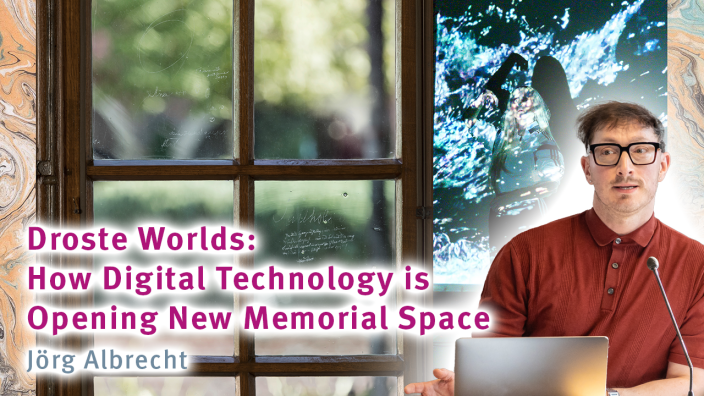
“Droste Worlds: How Digital Technology is Opening New Memorial Space”
Dr. Jörg Albrecht (Burg Hülshoff – Center for Literature, Münster/Havixbeck)
To play the video, it will be loaded from a Webserver of Google™ LLC. Therefore data will be transmitted to Google™ LLC.
In his lecture, Jörg Albrecht introduces “Droste Worlds”, a project at Burg Hülshoff blending physical heritage sites with a digital venue. The speaker defines “curating in digital times“ as distinct from digital curating, rooted in a long durée of digitality. The presentation outlines three propositions: creating access to layered time and text, embracing glitches and bugs in technology, and building environments that challenge established narratives.
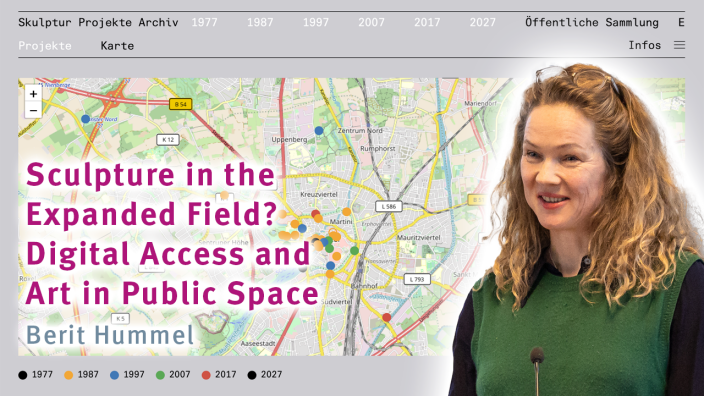
“Sculpture in the Expanded Field? Digital Access and Art in Public Space”
Dr. Berit Hummel (University of Münster)
To play the video, it will be loaded from a Webserver of Google™ LLC. Therefore data will be transmitted to Google™ LLC.
In her lecture, Berit Hummel (University of Münster) examines art in public space through the lens of digital access as a form of translation. Drawing on Rosalind Krauss’s “expanded field” and historical debates on sculptural representation, it analyzes contested cases like Richard Serra’s “Tilted Arc” and Olu Oguibe’s “Monument for Strangers and Refugees”. Focusing on works from Skulptur Projekte Münster, she explores how absent or relocated public artworks are mediated through digital platforms, raising questions about the parameters of such translations without resolving their inherent conflicts.
Further videos will be published shortly.