

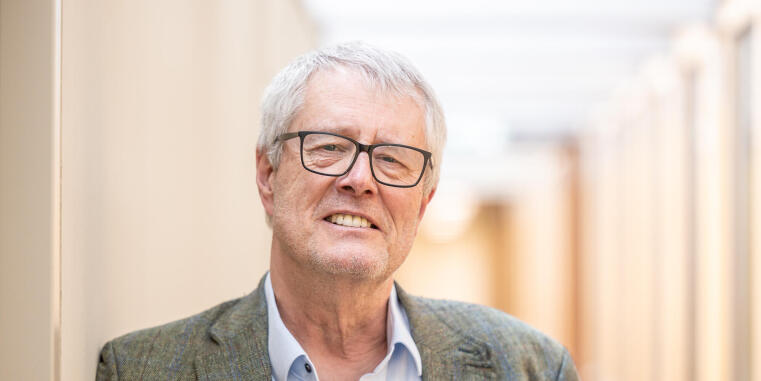
On 9 May 2023, Prof. Dr. Hubertus Kohle (Ludwig-Maximilians-University of Munich) gave his Fellow Lecture on the topic “Power to the people. Crowdsourcing in Museen – Das Beispiel ARTigo.org”.
In 2026, a study on the topic of the Fellow Lecture, Crowdsourcing in Museen (und anderen Kulturinstitutionen) (Crowd sourcing in museums (and other cultural institutions)) was published as volume 6 of the open access series Access Points of the Centre for Advanced Study.
The development of social media, with its tendency to spread fake news, has disappointed some of the expectations that were once centred on the potential for broad public participation in the generation and dissemination of knowledge. Yet the “wisdom of the crowd” can certainly be put to productive use if it is tapped into in the right way. For instance, users in libraries and, in particular, museums can contribute to improving data and even to the interpretation of works of art. Classification projects are one example of this. In his lecture, Hubertus Kohle presented the ARTigo.org project, which was initiated by Ludwig Maximilian University of Munich and enables the annotation of artworks from a wide variety of museums. This is a joint project between the Teaching and Research Unit for Programming and Modelling Languages (François Bry) and the Chair of Art History (Hubertus Kohle). It was recently subjected to a thorough overhaul by Stefanie Schneider. In what is known as “social tagging”, participants assign keywords to the artworks on display. To prevent misuse, only terms that have been assigned identically by two people in a single session are included in the database. There is no subsequent editorial review. The advantage of this method of classification is that users often search databases for keywords that differ from specialist terminology. Classification by non-experts can therefore make the content more accessible.
ARTigo has already collected over 10 million annotations and was awarded the “European Union Prize for Citizen Science”. In future, as Hubertus Kohle explained, museums could also use this type of project for promotional purposes, for example by limiting the annotation game to artworks from a specific museum.
Prof. Dr Hubertus Kohle holds the Chair of Middle and Modern Art History at the Ludwig-Maximilians-Universität in Munich. His main areas of work are the visual arts of the 18th and 19th centuries up to Classical Modernism, especially in France and Germany, as well as digital art history. He was one of the first scholars to address the significance of digitisation for art history.