Form follows function: morphology as a map of mechanisms in neurodegenerative disease pathology
DOI:
https://doi.org/10.17879/freeneuropathology-2026-9241Keywords:
Inclusion, Aggregate, Proteostasis, Transport, Tau, AmyloidAbstract
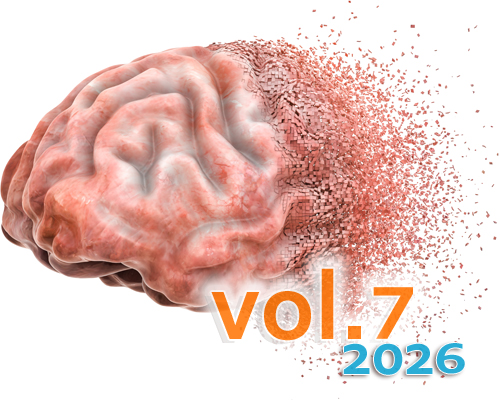
Across neurodegenerative diseases, the shape and spatial organization of pathology carry rich mechanistic information. Vacuoles, spongiosis, oligodendroglial coiled bodies, dendritic dystrophic neurites, amyloid plaque compactness, and phase-separated droplets each reflect distinct cellular identities, subcellular compartments, trafficking pathways, and biophysical material states. Here, I synthesize morphological signatures across neurodegenerative diseases to propose a framework that links morphology to mechanism. Morphology is neither incidental nor merely descriptive. Rather, it is a readout of the basic mechanisms that govern self-assembly of proteins into aggregates, the cell’s attempts at proteostasis (clearance, sequestration, and transport), and the failure that ensues.
Published
How to Cite
Issue
Section
License
Copyright (c) 2026 Edward B. Lee

This work is licensed under a Creative Commons Attribution 4.0 International License.
Papers are published open access under the Creative Commons BY 4.0 license. This license lets others distribute, remix, adapt, and build upon your work, even commercially, as long as they credit you for the original creation. Data included in the article are made available under the CC0 1.0 Public Domain Dedication waiver, unless otherwise stated, meaning that all copyrights are waived.