High school students explore Münster’s legal history
During the 2025/26 school year, pupils on the History Elective course in Year 13 at Münster Mitte Comprehensive School (Gesamtschule Münster Mitte) explored the history of law in Münster. Under the guidance of teachers Julia Börger and Dirk Männicke, they examined a range of fascinating topics and gained new insights into Münster’s legal history. The course took place in cooperation with the Käte Hamburger Kolleg “Legal Unity and Pluralism”.
The starting point for the pupils’ project work was input provided by Lennart Pieper and Kathrin Schulte, the Kolleg’s science communication team, at the beginning of the school year. They introduced the course to the Kolleg project “Places of Law”, which makes various historical legal sites in Münster accessible via an interactive map. During a visit to the city archive, the course also gained an insight into the holdings and the work involved in using historical sources.
Over the following months, the individual project groups gained experience in academic and project-based work. With the support of their teachers, they developed research questions, narrowed down their topics and carried out research. They consulted experts arranged by the school, contacted archives and worked with historical sources there. However, the groups were not only engaged in researching legal history topics, but also in processing and communicating the content they had developed: they produced podcasts and radio plays, created websites, videos and brochures, recreated historical newspapers, and devised city tours and audio guides.
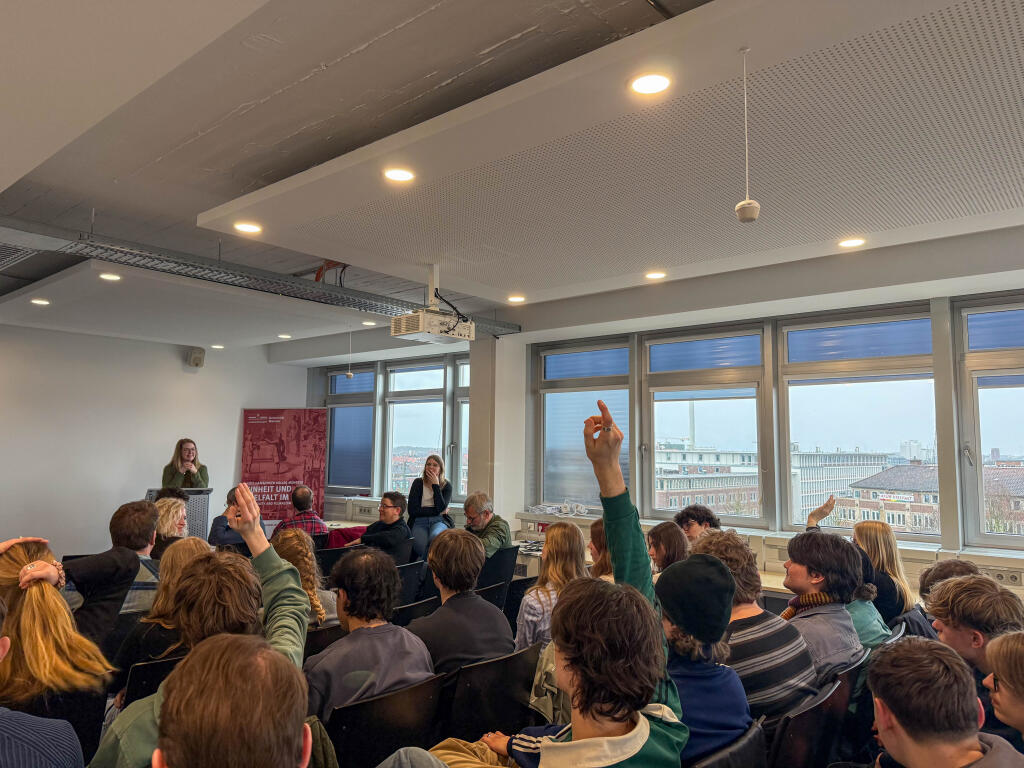
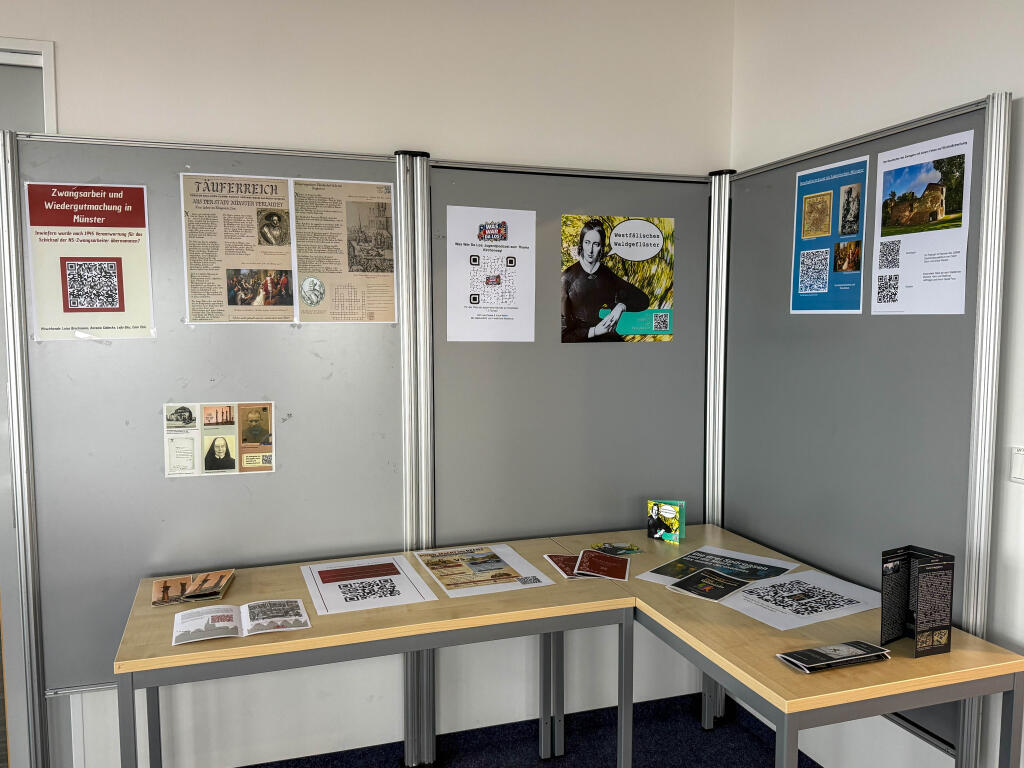
The results were presented on 13 March 2026 at the Käte Hamburger Kolleg in the form of a workshop, attended not only by the students and teachers but also by numerous members of the Kolleg. Following a brief overview of the individual projects, students, teachers and members of the Kolleg were able to discuss the projects in detail. The range of topics from Münster’s legal history was wide-ranging: it spanned from the Wiedertäufer (Anabaptists), the history of a band of robbers and aspects of the witch hunts to buildings such as the Zwinger and the prison. A radio play explored new perspectives on Annette Droste-Hülshoff’s ‘Judenbuche’, whilst other projects dealt with ‘euthanasia’ and forced labour during the Nazi era, issues of church asylum, the history of the Hanseatic League in Münster, and further historical legal cases, including the enforcement of sentences from a historical perspective.
To conclude, everyone looked back on the work of the past few months. “What I enjoyed most was being able to work independently and to do research in a different way for a change. […] We went to the city archives, dug through files there and gathered the information that way. That was an experience I found really interesting,” says Erik Lutherer during the workshop. “Here you can work much more freely, just as it really is later on [in working life]: finding out information yourself and checking how true it actually is,” adds Elisabeth Czajka. Julia Börger, one of the two supervising teachers, is also enthusiastic about the project work and its results: “What I find really interesting is this initial phase, when you realise the pupils have caught the fire and now they are starting to research and look into things, and you can tell that they have really got into their topic.”
And Ulrike Ludwig, one of the college’s two directors, explains: “I am impressed by the pupils’ work – both by the perspectives they have developed and their analysis of the sources, as well as by the diverse and highly creative ways in which they have presented their findings. What has been produced here is both entertaining and insightful. The collaboration with Münster Mitte Comprehensive School is truly enriching for us and also instructive. For it demonstrates just how successfully engaging with questions of legal history can be achieved when working with pupils.”
Workshop on 'Orte des Rechts' (‘Places of Justice’)
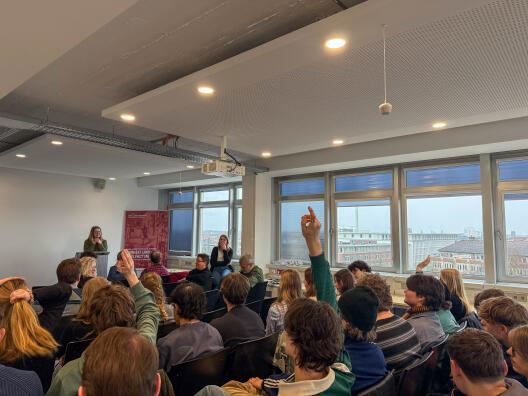
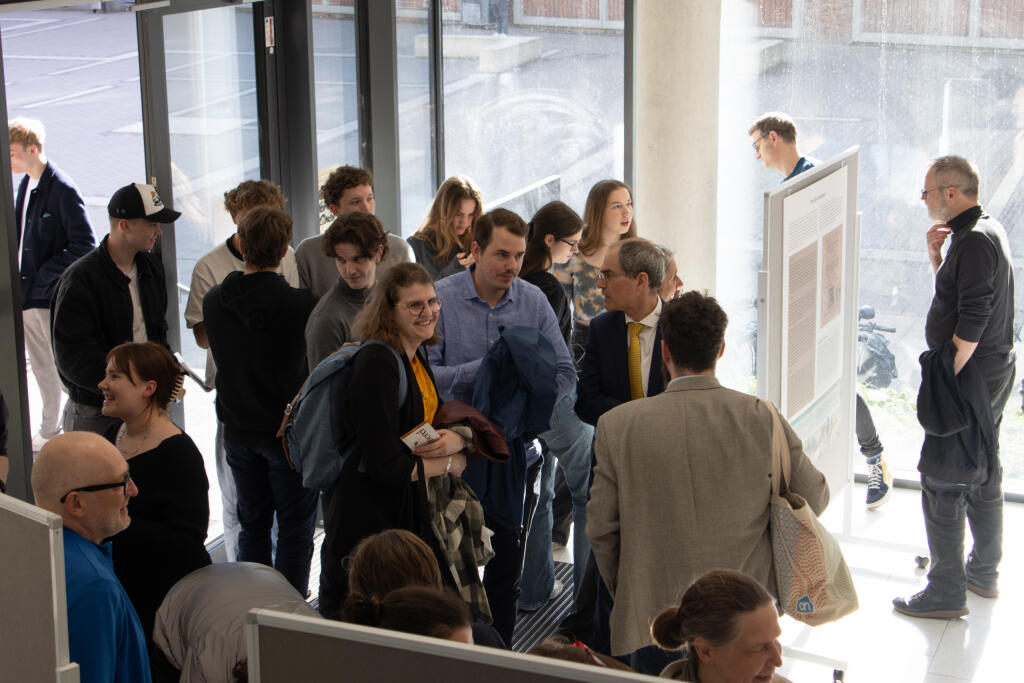
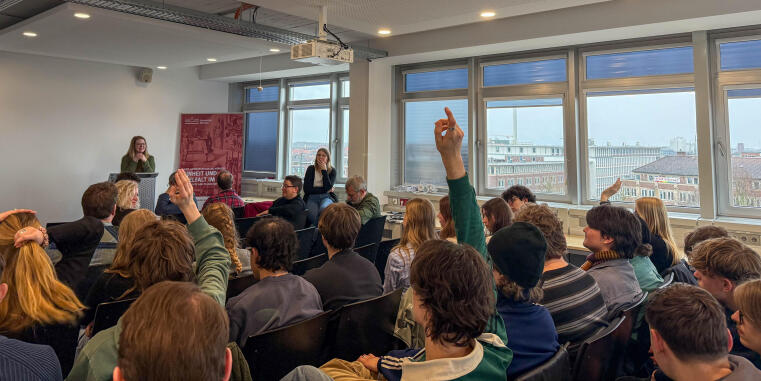
Following the ‘project fair’, the workshop participants discussed their experiences.© KHK EViR 
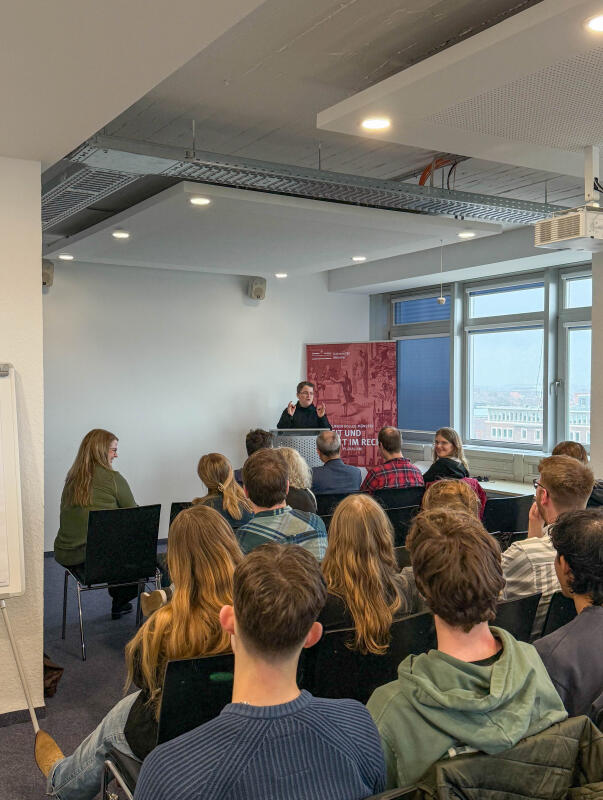
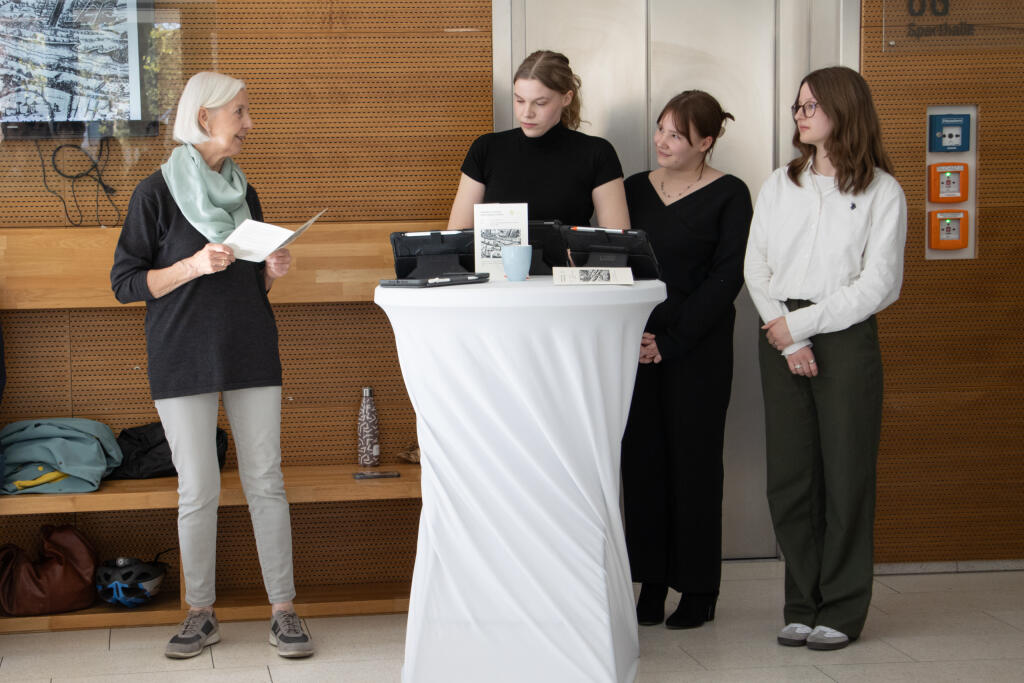
Ulrike Ludwig, one of the directors of the Kolleg, welcomed the workshop participants on behalf of the Kolleg. © KHK EViR 
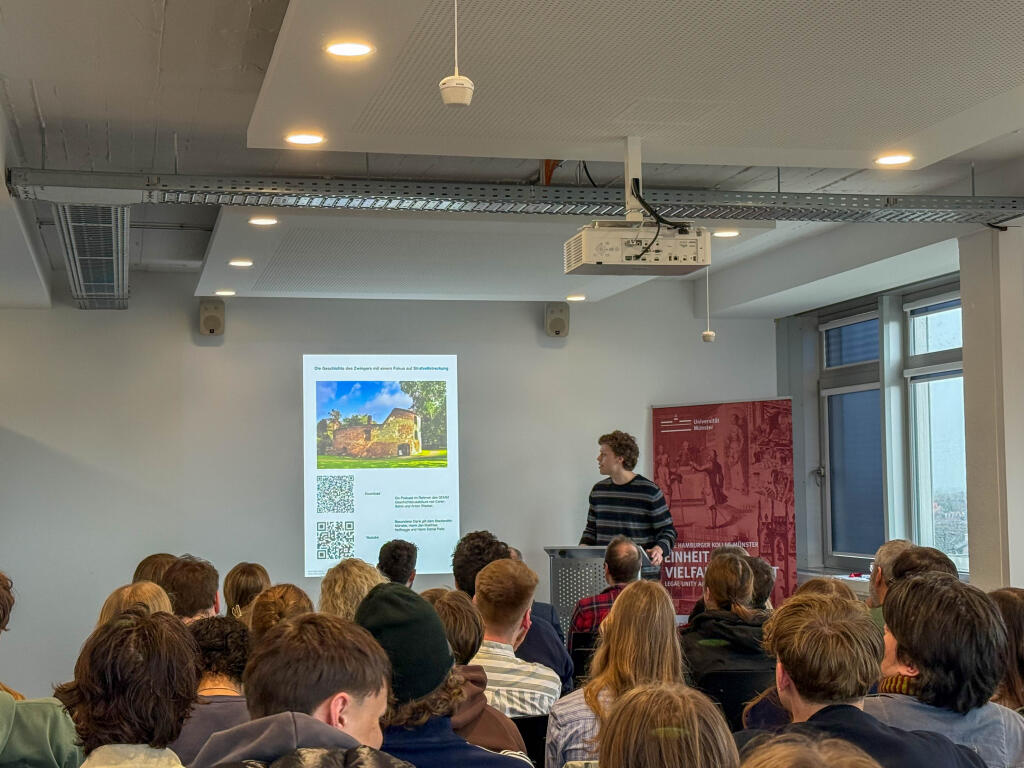
The students on the project course gave a brief presentation of their projects, after which the ‘project fair’ provided an opportunity to explore the individual topics in greater depth. © KHK EViR 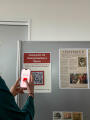
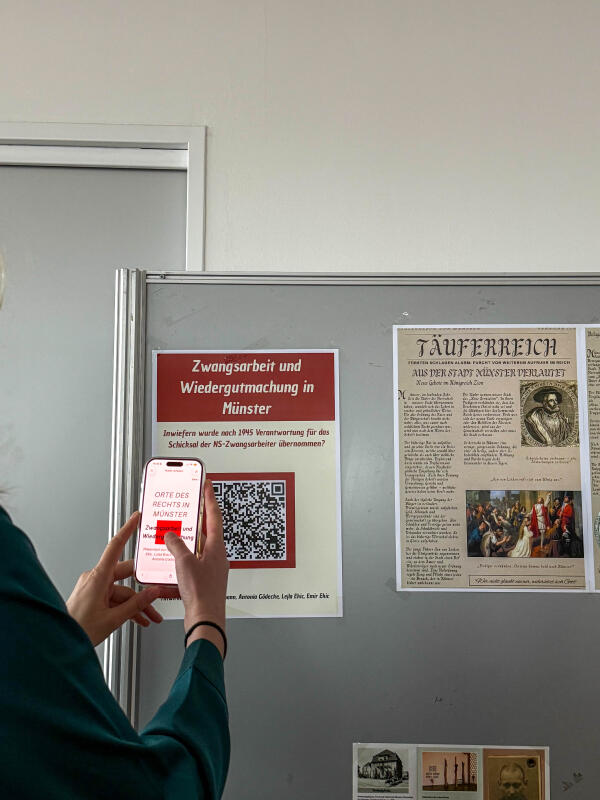
Workshop participants were able to access the project results via QR codes, allowing them, for example, to listen to podcasts or audio dramas, take part in guided tours of the city, visit websites and so on. © KHK EViR 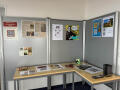
The pupils presented the results of their projects at a “project fair”.© KHK EViR
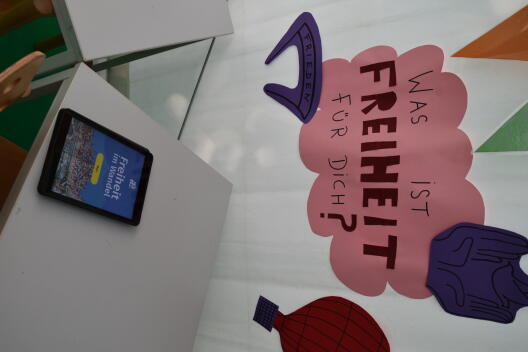
© KHK EViR Käte Hamburger Kolleg presents an interactive quiz at the Q.UNI Camp 2024
From 23 June to 21 July 2024, the Q.UNI Camp took place as usual in the Schlossgarten in Münster. This open-air science festival, which runs for several weeks, introduces children and young people to scientific phenomena in a fun and engaging way. The Käte Hamburger Kolleg contributed an interactive quiz that allowed young visitors to test their knowledge of the history of freedom. Through the quiz, they learnt what was understood as freedom in German-speaking regions from the Middle Ages right up to the recent past, and in which periods the struggle for freedom played a particularly significant role.
Pupils explore the history of witch-hunts in Münster
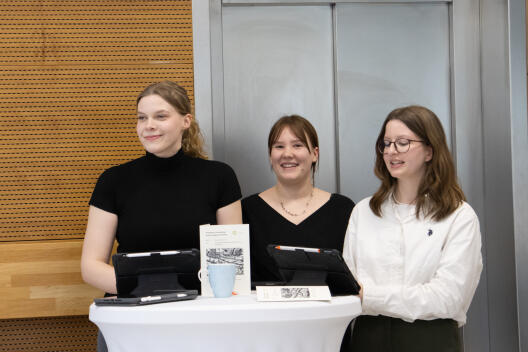
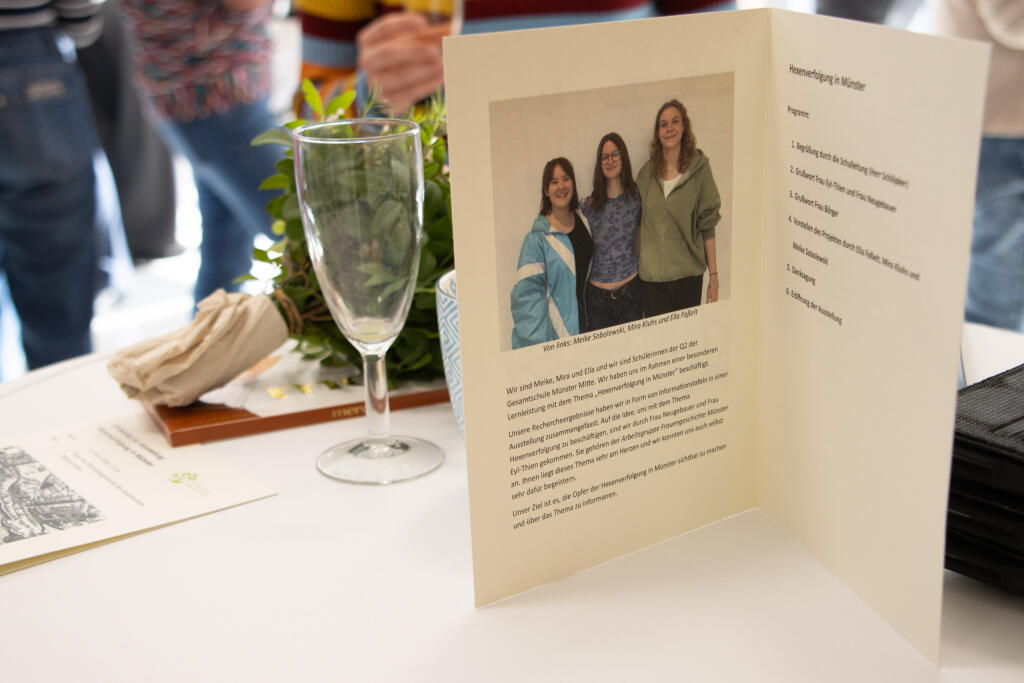
Intensive research into the persecution of witches in Münster: (from left) Ella Faßelt, Meike Sobolewski and Mira Kluhs© KHK EViR Exhibition in the Gesamtschule Münster-Mitte | cooperation with the Käte Hamburger Kolleg
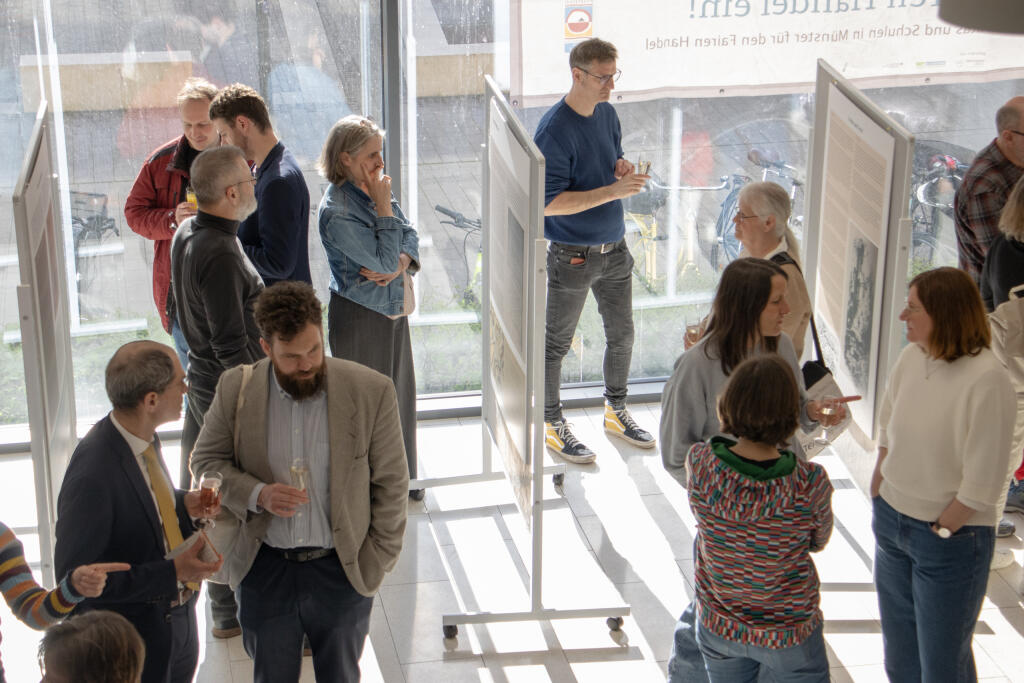
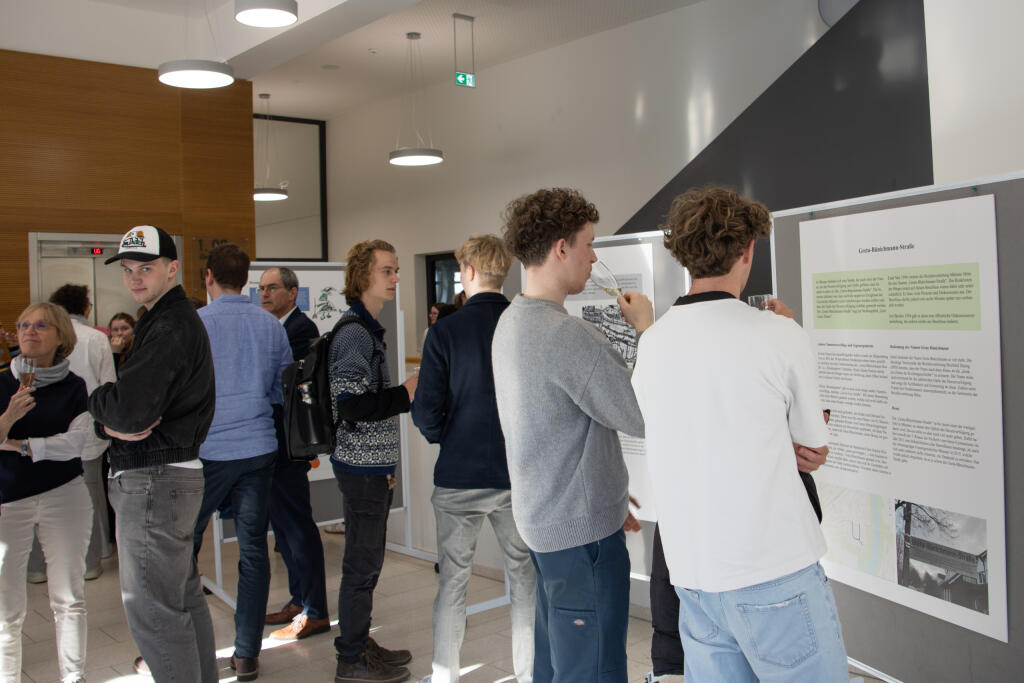
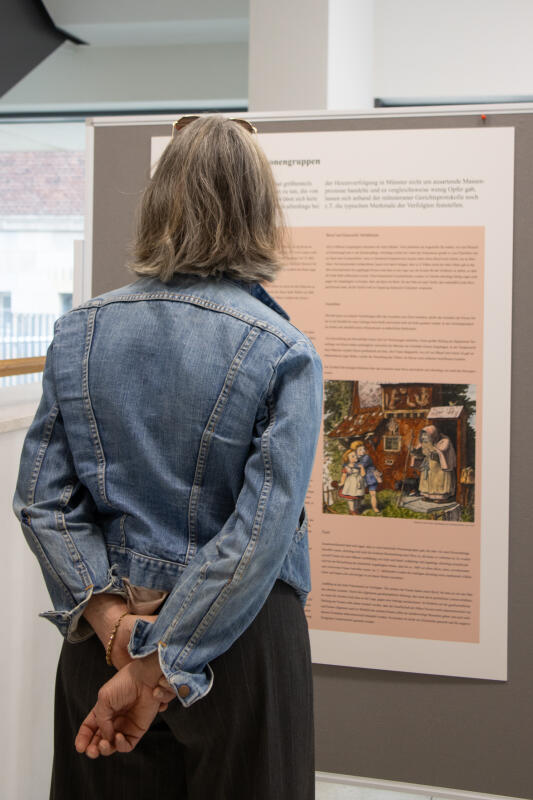
Three pupils from the Gesamtschule Münster-Mitte have investigated the topic of witch-hunts in Münster. The results of their research project can now be seen in an impressive exhibition. The Käte Hamburger Kolleg provided (legal) historical expertise and also helped with the design of the posters.
For Meike Sobolewski, Mira Kluhs and Ella Faßelt, it was a very special experience to spend six months working intensively on the topic. They came across it thanks to a suggestion from the Arbeitsgruppe Frauengeschichte Münster (Women's History Working Group). "It was important to us that the victims of witch-hunts finally receive the attention they deserve so long after their deaths," said Kluhs at the opening ceremony on Wednesday (10 April). Although Münster was not a centre of witch-hunts, 40 people, mainly women, were put on trial between 1552 and 1644. Julia Börger, the supervising teacher, emphasised that the pupils' results were remarkable and reflected the intensive work process, which she also enjoyed very much. The exhibition is an exceptional result for a “besondere Lernleistung” (special learning achievement) in the Abitur.
The pupils began with extensive research in the Stadtarchiv and an exchange with experts such as Professor Peter Oestmann from the Käte Hamburger Kolleg "Legal Unity and Pluralism" (University of Münster). The legal historian met with the three young researchers several times to discuss the legal aspects of witch hunts. "I am impressed by the motivation and seriousness with which the three of them approached the topic. They had already heard of many things, such as the penal code Constitutio Criminalis Carolina from 1532."
In addition to providing expertise, the Käte Hamburger Kolleg also helped with the professional design of the exhibition posters. Student assistants Marla Kaminsky and Nele Aßmann compiled the content developed by the pupils into eleven large-format posters.
The exhibition deals with legal aspects such as the course of an interrogation as well as the fate of individual women burned as witches, such as Anna Holthaus and Greta Bünichmann. The pupils also carefully trace the discussion surrounding the naming of a street after the latter and thus the city's approach to the topic in terms of remembrance policy.
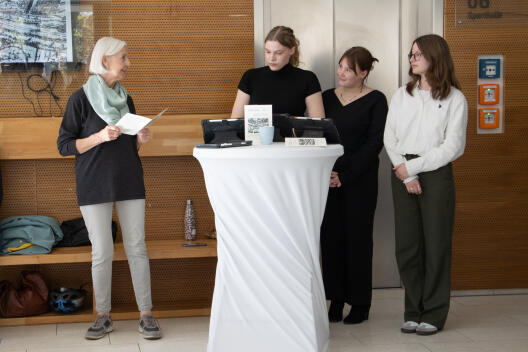
The exhibition in the foyer of the Oberstufengebäude, Gesamtschule Mitte (Jüdefelderstraße 10) can currently be seen on weekdays until 5.00 pm.
Photos
© KHK EViR 
© KHK EViR 
© KHK EViR 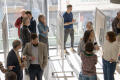
© KHK EViR 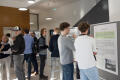
© KHK EViR 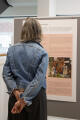
© KHK EViR