Religious Pluralism in Indonesia
Indonesia is a culturally and religiously diverse country with a colonial past and a turbulent history of struggles for independence, as well as political negotiations concerning participation and equality. As the world’s largest country with a Muslim majority, it brings together diverse Islamic traditions and strong civil society organisations, whilst at the same time being governed by a state that comprehensively regulates religious life. Religion is not a separate sphere here, but permeates many areas of public and private life. It is precisely in the tension between lived religious practice, state regulation and the reality of indigenous religions that questions of belonging, visibility and equality are constantly being renegotiated.
What is the project we're talking about today?
When we talk about the cooperation with Indonesia, we are really referring to an entire network of partnerships that has developed over many years. I would like to highlight two key collaborations in particular. The first is our partnership with the Indonesian Consortium for Religious Studies (ICRS) in Yogyakarta. This consortium is unique worldwide because it brings together an Islamic state university, a Christian university, and a public university to conduct joint research on religious pluralism. The second is our close cooperation with the Indonesian Ministry of Religious Affairs, particularly in the areas of theological education and doctoral training. These two partnerships exemplify a much broader network of relationships that we have established with various partner institutions throughout Indonesia.
Who are you, and what is your role in these projects?
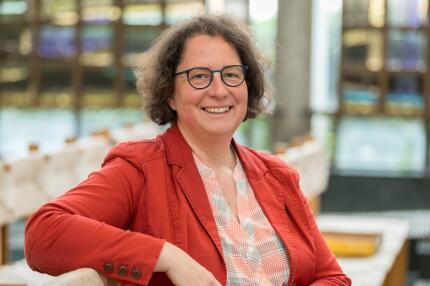
I am Professor of Religious Studies and Intercultural Theology at the University of Münster. My research focuses, among other things, on religious pluralism, intercultural theology, and socio-ecological transformation, with Indonesia serving as one of my main research regions. Within these collaborations, I combine research and teaching. I work closely with our partner institutions, supervise doctoral candidates from Indonesia, and contribute to the strategic development of our partnerships as well as to ongoing research projects. What is particularly important to me is not only to study religious diversity theoretically, but also to make it tangible through concrete forms of exchange.
How did the cooperation begin? Who were the key initiators?
The cooperation developed gradually over a longer period of time and was driven by several different initiatives. I completed my doctorate on Indonesia at the University of Münster between 2009 and 2013, during which I initiated collaborations through three periods of fieldwork.
Professor Hans-Peter Grosshans subsequently institutionalized these connections with Indonesia and, among other things, established the Sandwich Programme in cooperation with the Indonesian Ministry of Religious Affairs. Over the years, these relationships have continued to expand through initiatives such as the Memorandum of Understanding with the ICRS and more recent agreements with the Indonesian Ministry of Religious Affairs. Overall, this illustrates a key point: partnerships of this kind do not emerge overnight. Rather, they grow over many years through personal trust, sustained commitment, and continuous exchange.
Why Indonesia? What drew you there?
My connection to Indonesia began in a very practical way. In 2003, I volunteered with an interreligious non-governmental organization in Yogyakarta, a city that I have returned to ever since and that continues to play a central role in my work. Animportant academic turning point came in 2009, when I attended my first conference organized by the ICRS. The conference focused on the theme of Freedom and Responsibility in Muslim-Christian dialogue. That collaboration had a lasting impact on me and helped shape the direction of my research. What fascinates me most about Indonesia is the way religious diversity is negotiated within society. One example comes from a relatively recent research project on Indigenous communities. Many of their traditions are not officially recognized by the state as religions but are instead classified as cultural practices. This has very concrete consequences—for example, regarding whether a marriage is legally recognized.
These negotiations between the state, established religious communities, and Indigenous groups raise fundamental questions: What counts as a religion? Who has the authority to decide? And how do these classifications shape identities and social structures?
At the same time, I think it is important not to idealize Indonesia. Like any society, it is characterized by tensions, hierarchies, and competing claims to authority among different religious communities. The often-cited national motto of "Unity in Diversity" can sometimes obscure these conflicts. It is precisely this ambivalence that makes Indonesia so fascinating to me. On the one hand, there is a deeply rooted idea that people of different religious and cultural backgrounds share and collectively shape one common "house." On the other hand, the conflicts that arise reveal just how fragile and contested this social order can be. Indonesia is also particularly interesting because it raises questions that are highly relevant for Europe. While discussions in Europe often structure religious diversity primarily through legal concepts such as freedom of religion, diversity in Indonesia is negotiated much more through relationships and mutual recognition. This suggests that successful coexistence depends not only on formal legal frameworks but also on lived social practices and shared understandings of belonging.
These perspectives have also attracted considerable interest in Germany. I am regularly invited to speak, for example by churches and academic institutions, about interreligious coexistence and what Germany might learn from Indonesia.
What does the collaboration with your partner institutions look like in practice?
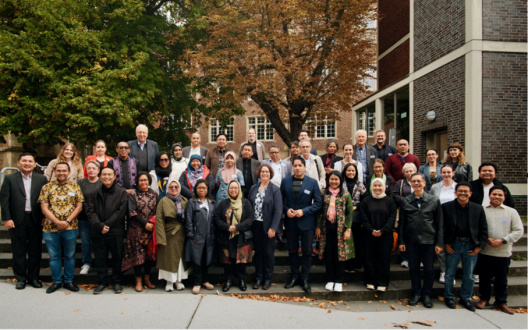
The collaboration is highly diverse and brings together various formats in both research and teaching. One of its central components is the so-called Sandwich Programme, which is funded by the Indonesian Ministry of Religious Affairs, specifically by its Directorate for Christian Affairs. This year, for the first time, eleven doctoral candidates from Indonesia are spending approximately six months in Münster. During their stay, they participate in teaching, attend seminars, and receive academic supervision.
This cooperation was largely established through Binsar Pakpahan, the director of a theological seminary in Jakarta, who is actively involved in relevant academic and governmental committees and serves as an important bridge between the institutions. The collaboration is also reflected in our shared research priorities. For example, one international visiting scholar at my chair conducted research on feminist theology and trauma therapy in the Indonesian context. More recently, we have developed a new focus on ecotheology and sustainability—an area of particular relevance in Indonesia as an ecologically sensitive region. It is exciting to see how different religious perspectives come together within this field. Following the work of a Christian theologian, a Muslim theologian will now join my chair as a visiting scholar to conduct research on similar questions. At the heart of this work lies the question of how different religious traditions can motivate and contribute to sustainable action. Within the framework of the ICRS, we also collaborate on research topics such as permaculture. In addition, our partnership includes joint conferences and continuous academic exchange.
Who are these collaborations aimed at?
The partnerships address several different groups, particularly doctoral candidates, but also lecturers and researchers. Indonesian PhD students benefit greatly from the exchange opportunities, while academic staff play an equally important role through joint conferences, collaborative research, and teaching.
What have been the major milestones of the collaboration so far?
One particularly important milestone was the international conference "Islam and Christianity in Public Space," which I co-organized with Professor Mouhanad Khorchide from Islamic Theology. The conference explored the role of religion in the public sphere and its contribution to societal negotiations, both in Indonesia and in Germany.
The event clearly demonstrated that many of the challenges faced in both contexts are remarkably similar—for example, questions concerning religious diversity, democracy, education, and social cohesion. At the same time, it highlighted the extent to which Indonesian scholars are already conducting innovative research in areas such as interreligious relations, environmental issues, and social transformation. In June 2026, I was invited to present these topics at a conference in West Sumatra.
Another important development has been the growing collaboration within the University of Münster itself, particularly with Professor Thomas Stodulka from the Department of Anthropology. The new Campus for Theology and Religious Studies also provides an excellent framework for these partnerships. The close collaboration between Protestant Theology, Catholic Theology, Islamic Theology, and Religious Studies is particularly attractive to our Indonesian partners and further strengthens Münster's visibility as an international academic hub.
Above all, however, it is the personal relationships that sustain these collaborations. Our Indonesian partners are remarkably open-minded, engaged, and genuinely interested in academic exchange, which makes working with them especially rewarding.
What are your hopes for the future?
Looking ahead, I see tremendous potential both in deepening our existing partnerships and in developing new formats for collaboration. One particularly exciting next step would be to open these exchange opportunities more broadly to students. The necessary institutional agreements are already in place; the next challenge is to put these opportunities into practice. In this context, we are currently planning an English-language Master's programme that will further strengthen international exchange. We also intend to expand our cooperation with the Indonesian Ministry of Religious Affairs. Over the years, a highly trusting partnership has developed, one that has the potential to bring Germany and Indonesia even closer together academically.
At the same time, it is important to me not to view Indonesia solely from the perspective of Jakarta. I have worked in various regions, including North Sumatra and Sulawesi, and I believe it is essential that this regional diversity is reflected in our collaborations. The fact that one of our doctoral candidates from Papua is conducting research on the Old Testament vividly illustrates the diversity of perspectives that exist within Indonesia itself. Strengthening these regional connections and building new partnerships across the country is therefore one of my major priorities.
What recommendations would you give to others who want to establish similar collaborations?
International collaborations are always built on personal relationships. Formal agreements are important, but they do not emerge in a vacuum. On the contrary, they are almost always rooted in the concrete collaboration of two or three individuals who develop mutual trust over an extended period of time. This also means that it is not enough to visit a place for a week. One has to be genuinely willing to engage with the partners and with the shared research topics over the long term. The goal should not simply be to pursue one's own agenda, but rather to develop research questions together.
At the same time, I believe it is important to question our own perspectives and to rethink our mental maps. For a long time, countries such as Indonesia have received relatively little attention, while academic and political interest has often focused on major geopolitical powers. Yet so-called "middle powers" are home to highly dynamic developments and fascinating scholarly environments that deserve far greater recognition.
Finally, international cooperation always has a science policy dimension. German scholarship is highly respected in Indonesia, but at the same time we remain aware of the colonial power asymmetries that can shape international academic partnerships.
For that reason, it is essential to reflect critically on these dynamics and to develop forms of collaboration that are based on mutual respect and equality. When this succeeds, international cooperation not only functions effectively but becomes genuinely enriching for everyone involved. This is especially true when considering the broader question of how academic research can contribute to addressing societal challenges.
Prof. Dr. Simone Sinn is a professor of Religious Studies and Intercultural Theology. Her research focuses on religious pluralism, intercultural theology and socio-ecological transformation, with a particular regional focus on Indonesia. Her work combines theoretical questions with concrete processes of social negotiation, particularly in the field of interreligious relations. Contact