


University of Twente
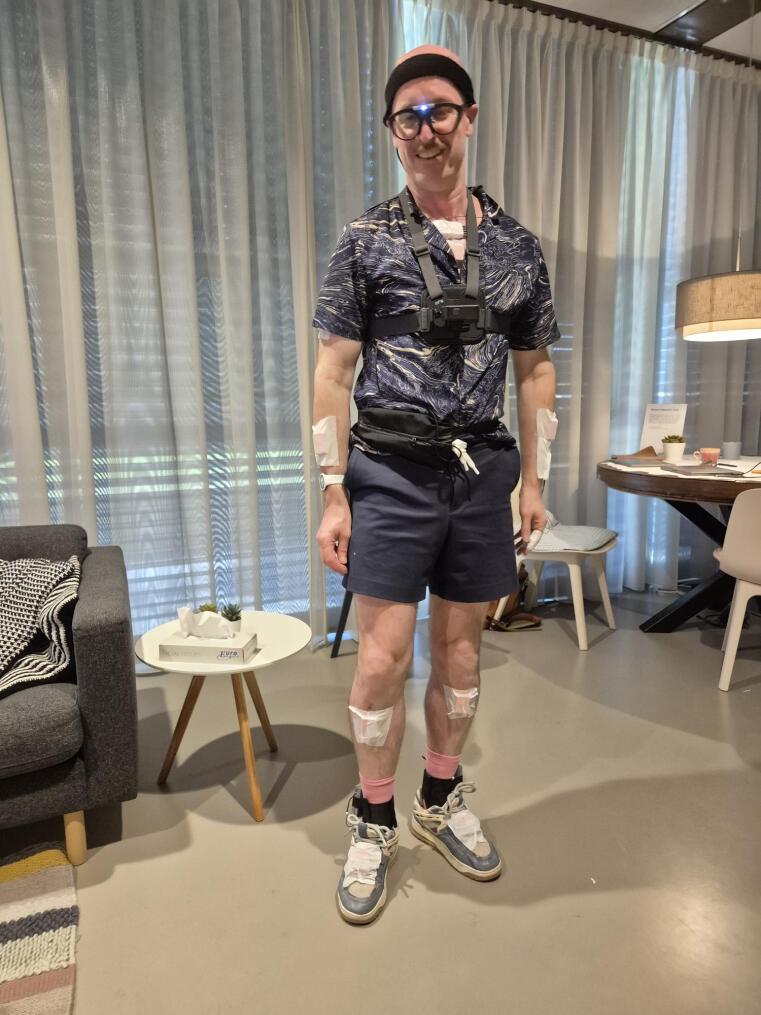
In February 2025, shortly after receiving ethical approval from the Medical Research Ethics Committee (METC), we (University of Twente) started data collection at the University of Twente to investigate how wearable technology can support people with Parkinson’s disease in their daily life.
Patient recruitment required careful consideration, as the study focused on people with more advanced Parkinson’s disease. We are very grateful to all patients who dedicated their time and energy to participate.
On 28/05, we successfully completed all study visits and included a total of 32 participants. During each full‑day visit in the eHealth House, participants were equipped with multiple sensors (including motion sensors, physiological sensors, and an eye tracker) and asked to perform everyday activities such as walking, turning, passing through doorways, and carrying objects. These activities are known to be challenging moments in which Freezing of Gait (FOG) often appears.
During the study visits, the central technology under investigation was the vibrating socks: wearable socks that provide rhythmic vibrotactile cues to the feet during walking. Many participants showed considerable interest in the socks, and several indicated enthusiasm about using the device and a willingness to purchase it should it become commercially available.
The rich dataset collected during these visits combines motion data, physiological signals, and environmental context. This will be used to better understand FOG episodes and to develop predictive models that could eventually support real‑time detection and personalized cueing strategies in daily life. The next steps in the project will focus on data processing, model development, and evaluation of the socks’ performance. We look forward to sharing the results with you!