

‘We are entering what is in some respects completely new territory’
Interview with sinologists Kerstin Storm and Lisa Kerl
The research project ‘News from China? – Knowledge-ressources, Knowledge-acquisition and Knowledge-transfer of Missionaries in China in the 19./20. Century’ at the Cluster of Excellence ‘Religion and Politics’ addresses the key question of for what purpose and in what context Christian missionaries acquired so-called ‘knowledge of China’ during the period in question. Sinologist and project leader Kerstin Storm and doctoral candidate Lisa Kerl report on their work with the sources from the archives of the Basel Mission and the Monumenta Serica Institute in St. Augustin, as well as their findings on how knowledge was transferred to individuals, groups and institutions across nations.
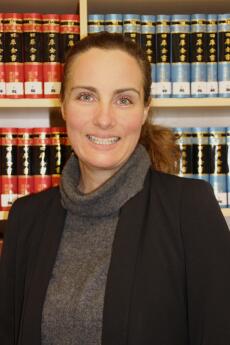
Your project at the Cluster of Excellence is entitled ‘News from China? – Knowledge-resources, Knowledge-acquisition and Knowledge-transfer among missionaries in China in the 19th and 20th century’. Where do you place your research?
Kerstin Storm: Much attention has so far been paid in sinology as well as in mission research to the so-called ‘old mission’, i.e. the large Roman Catholic orders of the Jesuits, Franciscans, Dominicans and Augustinians. Europe was then still shaped by a veritable sinophilia, with people admiring the exotic civilisation on the other side of the world and wanting to bring the Christian kingdom of heaven to the Chinese people. Since the first Christian missionary efforts in China in the 16th and early 17th centuries, and at least since Matteo Ricci (1552–1610), who is considered the father of Christian mission in China, missionaries have often been keen to take up their pens. On the one hand, texts were written for use in missionary practice on the ground. Dictionaries and grammars of the Chinese language were produced, these being aimed primarily at missionary personnel. Bible translations and Bible-based works such as catechisms and apologetic writings in Chinese were used in everyday missionary work, with textbooks for missionary schools also being produced. However, the missionaries also wrote works primarily for a European audience, such as numerous translations of Chinese literature – mainly, but not exclusively, Confucian classics – and monographs and articles on Chinese history, geography, botany, etc., which shaped the image that people had of China. One example is Athanasius Kircher’s encyclopaedic China illustrata from 1667. These translations and the scholarly interest in pre-modern and modern Chinese language also laid the foundations for sinology as an academic discipline. In general, the interests of the missionaries were broad and they did not focus solely on religion, but sought to understand Chinese culture as a whole.
In contrast, academics have given far less attention to the missionary societies of the so-called ‘long 19th century’ and thus to the ‘new mission’. Our project therefore focuses on the China mission in the 19th/20th century, and examines the phenomenon of knowledge transfer, addressing the central questions of for what purpose and in what context Christian missionaries in China acquired so-called ‘knowledge of China’, what sources were available to them, and how this knowledge was transferred to individuals, groups or institutions across nations.
Who exactly were the agents of knowledge transfer in the 19th/20th century?
Kerstin Storm: Our project focuses on two of the approximately several hundred missionary societies that were active in China during this period: the Swiss Pietist Evangelical Missionary Society of Basel and the Roman Catholic Society of the Divine Word, i.e. the German Steyl Mission that was founded in the Netherlands. We will use these examples to illustrate the contribution that missionary societies of different denominations made to contemporary knowledge of China in Europe, the foundations underlying this knowledge, and the form in which it was passed on or, in some cases, censored.
We understand missionary societies and orders as knowledge networks in which knowledge of China circulated and was processed. Individuals are involved in these so-called knowledge networks, e.g. missionaries, their wives and Chinese converts, but also groups such as the missionaries’ home communities in Europe, Chinese village communities and even entire institutions such as churches, universities, academies and governments.
You have just highlighted the role of individuals in knowledge networks. How did they disseminate their knowledge of China?
Lisa Kerl: In concrete terms, the dissemination of knowledge could take the form of, say, a Catholic missionary order such as the Societas Verbi Divini, or Steyler Missionaries, deciding that it needed to support the work of its still relatively young mission in China with personnel trained in sinology. For example, newly ordained priest Franz Xaver Biallas (1878–1936) was chosen for his outstanding academic achievements to attend a state university to study sinology. After completing his studies as well as a PhD in Berlin, Paris and Leipzig, he went to China for his missionary work and, besides his daily duties as a missionary and with the help of literature now available to him in China, he completed his hitherto unpublished dissertation. In it, he translated and annotated – for the first time ever in a Western language – the poem “Yuanyou” (Journey afar) from the Chuci (Songs of Chu), one of the most important ancient Chinese poetry collections. He published this translation in two parts in 1927 and 1932 in the journal Asia Major, which was one of the first sinological journals and remains one of the most important sinological publications to this day. Biallas’ work was praised in sinological circles both in Europe and in China itself, but was given mixed feedback by his own order, since it deemed the sinological path to be a detour that did not directly serve the goal of spreading the Christian faith.
What particular challenges did the missionaries in China face?
Kerstin Storm: Now largely forgotten outside the field of missiological scholarship, Father Biallas’ dissertation sheds light on the tension between academic and missionary work, and gives us an insight into issues such as translation methods, academic practice and the question of possible censorship. Other missionaries worked ethnographically and wrote reports on, for example, funeral customs (which may have varied from region to region). Among the greatest challenges were certainly the unfamiliar climate, the language barrier, but also the fundamentally different understanding of religion that the Chinese had: most people in China were and are unfamiliar with monotheism and the exclusivity of belonging to only one religion. It was perfectly normal to worship the kitchen god in the morning, receive medicine for a sick mother from a Daoist priest at noon, and sing sutras and pray to Buddha or bodhisattvas in a Buddhist temple in the evening. This is, of course, diametrically opposed to the Christian faith and is something that the missionaries also found intolerable. In addition, Chinese emperors had since the 18th century been very sceptical and sometimes even restrictive towards Christian missionaries.
One focus of your project is how religious belonging influenced the transfer of ‘knowledge about China’ to the West. How do denominational differences affect the transfer of knowledge?
Kerstin Storm: When answering this question, it is very important to distinguish between the individual denominations. Mission societies and orders are often lumped together, which ignores the key influence that the rules of an order or the institutional guidelines of a mission society can have on the transfer of knowledge. One important aspect, for example, is that publications from a Roman Catholic missionary printing house such as the Steyl Mission had to pass through the hands of a church censor of the Roman Catholic Church, the Censor librorum, who examined the texts for compliance with doctrinal and moral teachings, and could only be published after this censor had declared them unobjectionable (‘nihil obstat’). But Protestant missionary societies did not have to undergo such censorship. In Protestant societies, however, the family of a missionary plays an essential role in the transfer of knowledge, which of course is not the case in Catholic orders: wives in particular, who were never employed, were indispensable to the mission because only they could come into contact with Chinese women and convey the Christian faith through Bible study groups or charitable activities, for example. Recent research has strongly highlighted this. In addition, the educational background of the Basel and Steyler missionaries differed greatly: while the latter often sent highly educated priests to China, the Basel Mission recruited craftsmen who did not necessarily have an academic interest in Chinese culture.
Much of the practical work in your project takes place in the archives. What are the advantages of working with previously unexplored archival material?
Lisa Kerl: Unlike the documents already published, the originals allow us to explore not only the content, but also the writing process. A good example is a quarterly report that a young missionary from the Protestant Basel Mission had to write on his own activities, which he did on his typewriter at his mission station in rural southern China in the late 1920s before duly sending it to his superior in Hong Kong. This superior made handwritten comments in the text, these being supplemented in turn by one of the board members in Switzerland. At the end of the report, there is a judgment to the effect that the report was successful overall, but that it needed to be checked again for spelling and could then be published in a mission magazine.
Kerstin Storm: Such details reveal a lot about the conditions under which texts were written in the context of the China mission, including the fact that reports underwent institutional review, that the activities of the missionaries were supervised, and that the image of China conveyed to Europe was subject to further filtering beyond the missionary. However, we do not yet dare to generalise on this matter, since our studies are case studies. What is also exciting about the archive material is that much of it has never been the subject of research before and we are entering what is in some respects completely new territory.
For our research, the archives of the Basel Mission (BM) and the Society of the Divine Word (SVD) proved to be of particular importance. At both locations—Basel and Sankt Augustin—we received generous and dedicated support in our research.
Speaking of typewriters and handwriting, both of which are becoming increasingly rare, what technology was used to bring knowledge to Europe?
Lisa Kerl: Most of the documents we have examined so far were actually typed on a typewriter, sometimes with handwritten notes added. They travelled by post from China to Europe and from Europe to China, sometimes taking weeks or months to arrive, usually by ship via India to Canton in southern China or vice versa.
What effect does the ‘new knowledge about China’ that was transmitted have on the image of China in the West today?
Kerstin Storm: Religion, not only Christianity, is a sensitive issue in today’s People’s Republic, even though China has freedom of religion under its constitution. This is why it is particularly important in intercultural exchange to understand why structures have developed in the way we see them today. Our project sheds light on the connections between imperialism, Christianity and the history of knowledge in the late Chinese empire, thereby helping to see and better understand the current position of the Chinese Communist Party on the subject of religion. However, because China has changed since the fall of the empire, the founding of the People’s Republic in 1949, and the reform and opening-up policy of the 1980s, which enabled rapid economic growth, the image of China conveyed in Germany since then differs completely from that conveyed by the missionaries at the time. Cultural interest in China has demonstrably declined, and media coverage is unfortunately all too often limited to China as a foreign policy threat – beyond that, knowledge of China is rather scarce.
It is also essential for the history of the discipline itself to engage with the field of missionary history: a large proportion of the first generation of sinologists were missionaries. Many translations of Chinese literature, some of which are still rightly considered standard translations today – such as the translations of the Confucian classics into German by Richard Wilhelm (1873–1930) or into English by James Legge (1815–1897) – were produced in a very specific context, one whose Christian terminology, for example, also has an impact on the image of China conveyed. It is essential for scholars to be aware of the academic world and its assumptions in which they learn and work. (pie/fbu)
In cooperation with:
Research Archive of the Basel Mission and Mission 21
Missionsstr. 21
4055 Basel, Switzerland
Kontakt: info@bmarchives.org
Research Library of the Institute Monumenta Serica
Arnold-Janssen-Str. 20
53757 Sankt Augustin, Germany
Kontakt: library@monumenta-serica.de